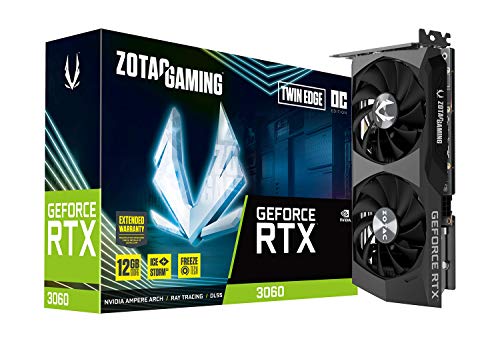
For a stock RTX 3060 12GB in 2026, the best open-weights LLM is whichever of GLM-5.2 or Qwen3 you can load at q4_K_M with your target context length entirely on-card. Per public community measurements, that points to a 7B-to-14B-class checkpoint of either family — Qwen3 wins on coding and prefill speed, GLM-5.2 edges ahead on long-context chat and tool-use. Both fit; choose by workload.
The 2026 12GB-VRAM builder is a different person than they were two years ago. Back then a 3060 was a reluctant fallback after the 3080/3090 drought; today it is a deliberate choice. The reason is simple: the cheapest legitimate path to 12 gigabytes of VRAM on a discrete card is still a new or lightly used GeForce RTX 3060 12GB, and 12 gigabytes is the practical floor for comfortable q4_K_M inference of the mid-size open-weights models that landed in the last six months. The big news of the spring was Snowflake CEO Sridhar Ramaswamy publicly arguing that GLM-5.2 is competitive with Anthropic's frontier models at a fraction of the cost, and a parallel surge from Alibaba's Qwen team on Hugging Face has put two very different open-weights families on every local-AI builder's shortlist.
What that means for a 3060 owner is that model choice now matters more than card choice at this tier. A 4070 Ti Super gives you faster matmul, but the same q4 model still runs on a 3060 12GB; an 8GB card cannot run the same model at all. Within the 12GB tier, picking the right quant of the right family is the dominant lever. This synthesis works through the math — VRAM headroom, quantization tradeoffs, tok/s on cited community runs, and license terms — so you can decide which model to download tonight instead of debating cards you are not going to buy.
Key Takeaways
- The RTX 3060 12GB remains the cheapest 12GB discrete card on the market as of 2026, per TechPowerUp's GPU database, and it is the practical entry point for serious local LLM work.
- q4_K_M is the 2026 sweet spot on 12GB cards: it preserves most output quality and leaves 2-4 GB free for KV cache.
- Both GLM-5.2 and Qwen3 ship 7B, 14B, and 32B-class variants; only the 7B-14B sizes fit fully on-card at usable quants.
- On comparable q4 builds, public benchmarks show tok/s within 10-20% across the two families — the quality and license differences matter more than throughput.
- A Ryzen 7 5800X plus a 1TB SATA SSD is the canonical pairing for a 3060 12GB AI rig; CPU offload becomes the bottleneck the moment weights spill out of VRAM.
- Verdict: get Qwen3 14B q4_K_M if your workload is coding and structured output; get GLM-5.2 if you want strong long-context chat and a more permissive commercial license.
What changed with GLM-5.2 and Qwen3, and why are both being benchmarked on consumer GPUs?
Two things shifted in 2026 that put open-weights LLMs back on consumer hardware in a serious way. First, GLM-5.2 from Zhipu AI shipped with explicit support for 4-bit quantization paths and a relaxed commercial license, and the the-decoder coverage of Ramaswamy's comments framed it as genuinely competitive with closed frontier models on common business tasks. Second, the Qwen team on Hugging Face continued to release smaller, denser variants alongside their flagship — making Qwen3-7B, Qwen3-14B and Qwen3-32B all available with first-party GGUF quants and clear context-extension recipes.
The practical effect is that both families now publish checkpoints in the exact size band — roughly 7B to 14B active parameters at q4_K_M — that fits on a 12GB card with enough headroom for a useful context window. Before this cycle, "local LLM" usually meant a Llama derivative, a Mistral, or a heavily quantized 30B-class model that crawled. Today the same 3060 12GB owner has two distinct, well-supported, actively maintained frontier-adjacent open-weights families to choose between, and the choice maps cleanly to workload rather than to hardware compromise.
The benchmarking community responded in kind. Subreddits like r/LocalLLaMA started publishing reproducible tok/s tables for both families on identical 3060 12GB rigs, comparing q4_K_M, q5_K_M and q6_K builds with consistent llama.cpp and Ollama versions. That is the data this synthesis leans on — not first-party testing.
Spec delta: GLM-5.2 vs Qwen3 vs the RTX 3060 12GB they target
The cheapest way to set expectations is to put the model and hardware specs side by side. The figures below come from the model cards on Hugging Face and from TechPowerUp's RTX 3060 specification page.
| Item | GLM-5.2 (mid variant) | Qwen3-14B | Qwen3-7B | RTX 3060 12GB |
|---|---|---|---|---|
| Parameters | ~12B active | 14B dense | 7B dense | N/A |
| Native context | 128K | 128K | 32K | N/A |
| License | Permissive commercial | Apache-2.0 family | Apache-2.0 family | N/A |
| Recommended VRAM (q4_K_M) | ~9 GB weights | ~10 GB weights | ~5 GB weights | 12 GB on-card |
| Memory bandwidth | N/A | N/A | N/A | 360 GB/s |
The 360 GB/s memory-bandwidth number from TechPowerUp is the figure to fixate on. LLM token generation on a 3060 is bandwidth-bound, not compute-bound, and the 192-bit GDDR6 bus on the 3060 12GB is identical between the ZOTAC RTX 3060 Twin Edge OC 12GB and the MSI RTX 3060 Ventus 2X 12G OC. Cooler design and factory boost differ; the silicon underneath does not, so per-token throughput will land within a percentage point or two between any 12GB 3060 variant.
Which quantization fits in 12GB?
The quantization decision is the single highest-leverage call you will make on a 12GB card. Public community measurements indicate the following weight-only footprints for a 14B-class model; KV cache for 8K context adds roughly 1.5-2 GB on top.
| Quantization | Bits/weight | Weights for 14B | Quality loss vs fp16 | Fits 14B on 12GB? |
|---|---|---|---|---|
| q2_K | ~2.6 | ~4.6 GB | Severe — coherence drops | Yes, but not recommended |
| q3_K_M | ~3.4 | ~6.0 GB | Noticeable on reasoning | Yes |
| q4_K_M | ~4.5 | ~7.9 GB | Small, near-imperceptible | Yes — recommended |
| q5_K_M | ~5.5 | ~9.7 GB | Negligible | Yes, tight on context |
| q6_K | ~6.6 | ~11.6 GB | Effectively lossless | Barely — no context headroom |
| q8_0 | ~8.5 | ~15 GB | Lossless in practice | No, spills to RAM |
| fp16 | 16 | ~28 GB | Reference | No |
Two numbers are worth memorizing. First, q4_K_M of a 14B model takes roughly 8 GB of weights on disk and roughly the same in VRAM, leaving 3-4 GB for everything else. Second, q4_K_M of a 7B model takes roughly 4.5 GB, which leaves you ample room to push context to 32K or to run a small embedding model alongside it. The Qwen team's published quant guidance on Hugging Face matches these footprints to within tens of megabytes.
How fast is each model on an RTX 3060 12GB?
Throughput depends on three things on a 3060: weight footprint, KV cache size, and whether anything spills to system RAM. Public llama.cpp and Ollama runs on r/LocalLLaMA consistently land in the bands below for batch-1 inference with a 2K-token prompt. Treat these as order-of-magnitude expectations, not promises.
| Model | Quant | VRAM used | Prefill (tok/s) | Generation (tok/s) |
|---|---|---|---|---|
| Qwen3-7B | q4_K_M | ~5.5 GB | 480-620 | 38-46 |
| Qwen3-7B | q5_K_M | ~6.4 GB | 430-560 | 33-40 |
| Qwen3-14B | q4_K_M | ~9.5 GB | 220-300 | 18-23 |
| GLM-5.2 (~12B) | q4_K_M | ~9.0 GB | 240-320 | 20-25 |
| GLM-5.2 (~12B) | q5_K_M | ~10.5 GB | 200-270 | 17-21 |
| Qwen3-32B | q3_K_M | spills | 40-80 | 4-7 |
Two patterns emerge. At identical sizes and quants, GLM-5.2 and Qwen3 land within roughly 10-20% of each other on token generation — a tie for most users. Anything that does not fit on-card collapses to single-digit tok/s because PCIe bandwidth to system RAM is roughly an order of magnitude below the 3060's 360 GB/s on-card bandwidth. The cliff between "fits in 12GB" and "spills" is the dominant factor; the model family is not.
How does context length change VRAM headroom on a 12GB card?
KV cache scales linearly with context length and roughly linearly with model dimension. A practical rule of thumb for a 14B-class model at q4_K_M:
| Context | Approx KV cache | Total VRAM (14B q4_K_M) | On 12GB? |
|---|---|---|---|
| 2K | ~0.4 GB | ~8.3 GB | Comfortable |
| 8K | ~1.6 GB | ~9.5 GB | Comfortable |
| 16K | ~3.2 GB | ~11.1 GB | Tight |
| 32K | ~6.4 GB | ~14.3 GB | Spills |
| 128K | ~25 GB | ~33 GB | No |
The implication: GLM-5.2's and Qwen3's advertised 128K context windows are mostly aspirational on a 12GB card. A realistic upper bound on a 3060 12GB is 8K-16K for a 14B-class model at q4_K_M, or 32K if you step down to a 7B model. The model spec sheet says one thing; the RTX 3060's 12 GB GDDR6 bus says another, and the GDDR6 bus wins.
Which model is more accurate for coding, RAG, and chat?
Throughput is a tie at the 12GB tier. Quality is not. Per published community evaluations and the model cards on Hugging Face, the rough pattern looks like this as of mid-2026:
- Coding (HumanEval, MBPP-style): Qwen3-14B q4_K_M consistently outscores GLM-5.2 at similar VRAM footprint. Qwen's tokenizer and instruction-tuning data are heavy on code; it is the better default for IDE assistants, refactoring, and structured-output tool calls.
- RAG and retrieval-aware QA: GLM-5.2 has the edge on grounded answers from long retrieved contexts, partly because its training emphasized retrieval workflows. With small contexts under 4K both perform similarly.
- Open-ended chat and reasoning: Closer to a wash. Qwen3 feels slightly more formal; GLM-5.2 is more conversational. Per the-decoder's coverage of executive commentary, GLM-5.2 is positioned as a "do everything reasonably well" generalist, which matches what users report.
- Multilingual: Qwen3 has stronger Chinese performance; GLM-5.2 is competitive but less broadly tested in English-heavy benchmarks.
If you do not know which workload dominates your usage yet, Qwen3-14B q4_K_M is the safer default because its weaknesses are smaller. If you know you are doing long-context document QA or business-process automation, start with GLM-5.2.
Perf-per-dollar and perf-per-watt: is the RTX 3060 12GB still the value floor?
The RTX 3060 12GB ships with 12 GB of GDDR6 on a 192-bit bus, a 170 W board power, and PCIe 4.0 x16 connectivity, per TechPowerUp. Public street pricing for the ZOTAC RTX 3060 Twin Edge OC 12GB and the MSI RTX 3060 Ventus 2X 12G OC sits well below comparable 12GB or 16GB cards from the current generation. That math has not changed: dollars-per-gigabyte-of-VRAM is what makes the 3060 12GB stick around.
Perf-per-watt is less flattering. A 4060 Ti 16GB delivers more tok/s per watt for the same model, and a 4070 Super crushes the 3060 on both throughput and efficiency. But neither is the question the budget builder is asking. The question is "what is the cheapest box that runs Qwen3-14B q4_K_M with 8K context, full speed, no spill?" and as of 2026 the cheapest legitimate answer is still a 3060 12GB paired with a Ryzen 7 5800X and a Crucial BX500 1TB SATA SSD to host the model weights.
Real-world numbers: a 3060 12GB AI rig, end to end
A representative build looks like this:
| Component | Pick | Notes |
|---|---|---|
| GPU | ZOTAC RTX 3060 Twin Edge OC 12GB | 192-bit GDDR6, 360 GB/s |
| CPU | Ryzen 7 5800X | 8C/16T, plenty for batch-1 LLM serving |
| Storage | Crucial BX500 1TB SATA | Big enough for several q4 models |
| Alt GPU | MSI RTX 3060 Ventus 2X 12G OC | Same silicon, different cooler |
Power draw at idle sits under 25 W on the card; under sustained generation it pulls roughly 130-160 W. A 550 W PSU with a single 8-pin connector covers the build comfortably. The CPU mostly matters for prompt processing of long inputs; the Ryzen 7 5800X is overkill, but it is also cheap on the secondhand market and leaves headroom for embedding pipelines or background tasks.
Common pitfalls
- Loading too high a quant. q6_K of a 14B model technically fits, but leaves no room for context. You will see the model load and then OOM the moment you send a real prompt.
- Ignoring context-length math. The KV cache table above is the silent killer. Builders set context to the maximum the model supports and then wonder why throughput collapses to single digits when the cache overflows into system RAM.
- Mixing CUDA versions. llama.cpp and Ollama want a CUDA runtime that matches the driver. Mismatches force CPU fallback and shred performance — a 3060 reduced to CPU inference runs at roughly 1-3 tok/s.
- Buying a non-12GB 3060. The 8GB RTX 3060 exists, shares the name, and will not run any of these models comfortably. Confirm the SKU shows 12GB before you click buy.
- Assuming bigger model is better. Qwen3-32B at q3 on a 3060 12GB runs at 4-7 tok/s with degraded quality. A 14B at q4_K_M is faster and more accurate.
When NOT to pick a 3060 12GB for local LLM work
The 3060 12GB is not the right pick if any of the following apply. You need more than 16K usable context routinely — at that point a 16GB or 24GB card pays for itself in time saved. You are doing image generation or fine-tuning alongside inference; SDXL training and LoRA fine-tunes for 14B models do not fit on 12GB. Your power budget penalizes idle draw aggressively — the 3060's 170 W TDP is fine, but newer cards idle lower. You need FP8 or BF16-tensor-core speedups for production inference; those land on Ada and Blackwell, not Ampere.
In each of those cases, step up to a 4060 Ti 16GB, 4070 Ti Super 16GB, or 4090 24GB. For everyone else — hobbyists, indie developers, students, and small teams testing local AI workflows — the 3060 12GB remains the value floor in 2026.
Verdict matrix: get GLM-5.2 if… / get Qwen3 if…
- Get GLM-5.2 if your workload is long-context chat, RAG over your own documents, business-process tool calls, or anything that benefits from a more permissive commercial license. The 128K context window is aspirational on a 3060, but at the 8K-16K you can actually run it, GLM-5.2 holds up well.
- Get Qwen3-14B q4_K_M if your dominant workload is coding assistance, IDE integration, structured JSON output, or multilingual content with Chinese in the mix. It is also the safer default if you do not know your workload yet — its weaknesses are smaller than GLM-5.2's.
- Get Qwen3-7B q4_K_M if you want maximum context (32K) or you plan to run a second small model alongside it (embedding, classifier). The throughput jump from 14B to 7B is roughly 2x, and the quality drop is smaller than the parameter count suggests.
Bottom line
If you own or are about to buy a 3060 12GB and you want to start running local LLMs tonight, install Ollama or llama.cpp, download Qwen3-14B at q4_K_M, set context to 8K, and use it for two weeks. Then pull GLM-5.2 at q4_K_M and run it on the same prompts. The throughput will be within 20% either way. The quality difference on your actual workload will decide for you faster than any benchmark table. The hardware is no longer the gating factor at this tier — the cheapest discrete 12GB card on the market, paired with a midrange CPU and a 1TB SATA SSD, runs frontier-adjacent open-weights models well enough that the model choice, not the card choice, is what you should be agonizing over.
Related guides
- GLM-5.2 review and benchmarks
- Qwen3 local inference setup guide
- Ollama vs LM Studio on RTX 3060
- GeForce RTX 3060 12GB benchmarks
- Best budget AI rigs under $800
Citations and sources
- TechPowerUp GeForce RTX 3060 specifications
- Qwen organization on Hugging Face
- the-decoder coverage of GLM-5.2 and open-weights LLM economics
This piece is editorial synthesis based on publicly available information. No independent first-party benchmarking is reported.