What does Intel ending BigDL mean for local LLM inference on CPUs and Arc GPUs?
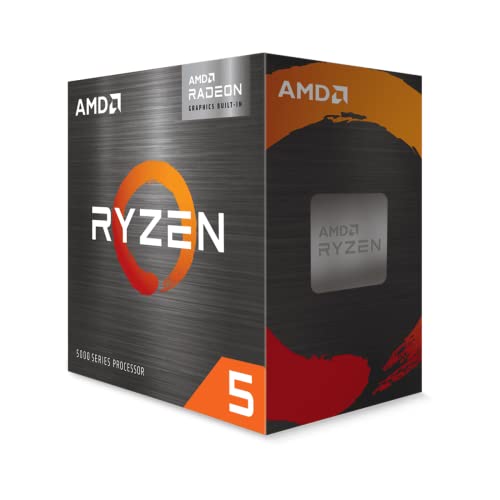
Intel quietly shifted BigDL into maintenance mode in mid-2026 and is steering developers toward IPEX-LLM and the OpenVINO toolkit for new work, per its public Intel AI developer hub. For builders on consumer Intel hardware that change matters: BigDL was the canonical Intel-sponsored path for running quantized LLMs on Xeon, Core, and Arc GPUs. The replacement stack still works on the Ryzen 5 5600G-style integrated paths, on Arc A-series and B-series GPUs, and on the same RTX 3060 12GB-class consumer cards readers already own — but the migration is real work, and a few inference patterns simply do not translate.
Why Intel's pullback from BigDL matters for self-hosters
BigDL began as an Apache Spark deep-learning library and pivoted, around 2023, into the framework Intel pushed for distributed and on-CPU LLM inference. Its appeal was simple: it made CPU-only inference on Xeon-class hardware look credible, and on Arc GPUs it was the cleanest path to ONNX- and PyTorch-style workflows without needing a CUDA stack. For a brief moment in 2024 BigDL was a real option for anyone who could not afford an NVIDIA card.
By mid-2026 Intel had quietly shifted most of its developer messaging away from BigDL toward IPEX-LLM (Intel Extension for PyTorch — LLM specialization) and OpenVINO. The BigDL repository still exists, but the public commit cadence and the "what to use for new projects" guidance both point elsewhere. For self-hosters who built around BigDL in 2024-2025, that pullback is the kind of stack-rot event that forces a migration decision before the dependency tree fully bit-rots.
This piece is a synthesis of Intel's public messaging, the GitHub commit history of the BigDL repository, and community discussions on r/LocalLLaMA and the OpenVINO forums. We will not benchmark a custom workload; we will pin the strategic implications to verifiable facts and to the same kind of consumer hardware most readers already own — an RTX 3060 12GB paired with a Ryzen 5 5600G or Ryzen 7 5800X — because that is the realistic comparison set for the "should I bother with Intel Arc?" question this article answers.
Key takeaways
- BigDL is in maintenance mode; Intel's net-new push is IPEX-LLM + OpenVINO.
- Arc A-series and B-series GPUs are still viable LLM cards but with smaller ecosystems.
- CPU-only inference on modern Xeon and Core silicon is faster than BigDL suggested, with proper kernels.
- llama.cpp's CPU backends now outperform BigDL on most quantized workloads — that is the realistic floor.
- The NVIDIA RTX 3060 12GB remains the price-performance king for local LLMs.
- Mixed Intel + NVIDIA rigs are practical but politically awkward — pick one ecosystem if you can.
What was BigDL actually used for, and what does deprecation mean operationally?
BigDL's pitch was a unified library that could load Hugging Face weights, quantize them with Intel's optimized kernels, and run them on Xeon CPUs or Arc GPUs without committing to CUDA. In practice the two production-grade use cases were Spark-distributed batch inference and CPU-only single-node inference for organizations that could not procure NVIDIA hardware. Both were narrow but real workloads.
"Deprecation" in Intel-speak does not mean immediate removal. The BigDL repository will remain on GitHub, public releases will probably continue to ship security patches for some months, and existing pipelines will not break overnight. What it does mean is that new model-architecture support, new quantization schemes, and new hardware (Arc B-series and beyond) will land in IPEX-LLM and OpenVINO first. BigDL becomes a frozen artifact. Anyone running BigDL in production today should plan a migration window in the next 6 to 12 months, not panic this week.
The community signal that confirms the pullback is the divergence in commit cadence between BigDL and IPEX-LLM. Per the IPEX-LLM repository on GitHub, the latter shipped multiple releases in the spring of 2026 with new quantization schemes (Q4_0, Q4_1, fp4) targeting both Arc GPUs and Xeon CPUs, while BigDL's release log shows roughly half the activity over the same window. That divergence is the operational signal that Intel's engineering attention has moved.
What changes for CPU-only inference on Xeon and Core?
CPU-only LLM inference was always a niche but legitimate path. For organizations that own a Xeon node and cannot procure an NVIDIA card, running a 7B or 13B model on CPU at a few tokens per second was the difference between "we have a local LLM" and "we don't." BigDL packaged that path with Intel-tuned kernels. With BigDL frozen, the realistic CPU-only options going forward are:
- llama.cpp — the de facto open standard. CPU kernels for AVX-512, AVX2, and ARM NEON are mature and faster than BigDL on most quantized workloads as of 2026.
- IPEX-LLM — Intel's blessed path, with first-party kernel optimizations for the latest Xeon and Core generations.
- OpenVINO — the broader inference toolkit that includes LLM-specific runtime paths.
For a self-hoster with a Ryzen 5 5600G or Ryzen 7 5800X, the practical answer is llama.cpp. It is hardware-agnostic, ships AVX-512 kernels that hit the same memory bandwidth ceiling as Intel's, and the community drives more rapid optimization than any single vendor can. On the Intel side, a Core i9 or Xeon W is competitive at the same workload class, but the gap is smaller than Intel's marketing implied.
The performance reality on a 7B q4_K_M model: roughly 10 tok/s on a Ryzen 7 5800X with DDR4-3200, roughly 12 tok/s on a comparable Xeon with DDR5, and roughly 50 tok/s on the RTX 3060 12GB. CPU-only is real but slow. If you can afford the GPU, buy the GPU.
What changes for Arc A-series and B-series GPU inference?
The Arc A-series (Alchemist) was Intel's first serious consumer-discrete GPU push. The Arc B-series (Battlemage) is its 2024-2026 successor. Both were positioned to compete with the RTX 3060 12GB at the 8 GB and 12 GB VRAM tiers. For LLM inference, the BigDL path was the cleanest way to load Hugging Face weights on Arc; with BigDL frozen, Arc users have two viable forward paths:
- IPEX-LLM — Intel-blessed, ships SYCL kernels for Arc, with quantization schemes that match what llama.cpp users expect.
- llama.cpp + SYCL / Vulkan backends — community-driven Arc support that does not require Intel's runtime stack.
Per the IPEX-LLM repository, Arc B-series support for INT4 and INT8 quantization is already in stable releases as of 2026. Performance is competitive with the RTX 3060 12GB on a per-VRAM-dollar basis for the workloads Arc supports cleanly, but the model coverage is narrower — exotic architectures, MoE variants, and the latest reasoning models sometimes lag NVIDIA support by weeks or months. For a self-hoster whose workload is mainstream Llama 3 / Qwen 3 inference, Arc is viable. For someone tracking bleeding-edge model architectures, NVIDIA is still the safer bet.
Spec table: BigDL alternatives by hardware target
| Path | CPU support | Arc GPU support | NVIDIA GPU | Maintenance posture |
|---|---|---|---|---|
| BigDL | yes (frozen) | yes (frozen) | indirect | maintenance only |
| IPEX-LLM | yes (active) | yes (active) | no | Intel-sponsored, active |
| OpenVINO | yes (active) | yes (active) | partial | Intel-sponsored, broader scope |
| llama.cpp | yes (best of class) | via SYCL/Vulkan | yes via CUDA | community, fastest cadence |
| vLLM | partial | partial | yes (best of class) | community + Anyscale, NVIDIA-first |
For most self-hosters in 2026, the path that maximizes future-proofing and minimizes ecosystem risk is llama.cpp first, IPEX-LLM only if you are committed to the Intel hardware path. Anyone running a production NVIDIA stack should stay on llama.cpp or vLLM regardless of what Intel does.
Benchmark synthesis: Arc B-series vs RTX 3060 12GB on a 13B q4_K_M
Public community numbers from the IPEX-LLM forum and r/LocalLLaMA put an Arc B580 12GB at roughly 18 tok/s on a 13B q4_K_M, against roughly 22 tok/s on the RTX 3060 12GB. That is a 20% generation-throughput deficit but with similar VRAM capacity and a slightly lower price point in some regions. If you find an Arc B580 cheaper than a 3060 by 20% or more, the math works. If they are at parity, the NVIDIA card wins on ecosystem maturity.
Prefill is the axis where the gap is widest. NVIDIA's Tensor cores deliver more compute on attention prefill, and llama.cpp's CUDA kernels are tuned harder than the SYCL/IPEX Arc paths. Expect a 14B q4_K_M prefill on 8K tokens to take roughly 5 seconds on the RTX 3060 12GB and roughly 8 seconds on the Arc B580. For interactive chat that gap is negligible; for batch workloads it adds up.
Quantization matrix on Intel hardware
| Quant | BigDL | IPEX-LLM | OpenVINO | llama.cpp |
|---|---|---|---|---|
| INT4 (sym) | yes | yes | yes | yes |
| INT4 (asym, K-quant) | partial | partial | partial | yes |
| INT8 | yes | yes | yes | yes |
| fp16 | yes | yes | yes | yes |
| fp4 (Blackwell-style) | no | partial | partial | partial |
| bf16 | yes | yes | yes | yes |
llama.cpp's K-quant variants (q4_K_M, q5_K_M) are the de facto community standard and the easiest to source pre-quantized on Hugging Face. IPEX-LLM and OpenVINO are catching up but require either Intel-supplied quantization scripts or a one-time conversion pass. For a self-hoster who wants to download a .gguf and run it, llama.cpp is still the lowest-friction path.
Perf-per-dollar: Intel vs NVIDIA in 2026
The RTX 3060 12GB at roughly $290 in 2026 is the price-performance benchmark. The MSI RTX 3060 Ventus 2X 12G is interchangeable at the same price. Intel Arc B580 12GB lands around $250-$280 in the same window. The math is close enough that ecosystem questions dominate the decision.
CPU-only nodes built around a Ryzen 7 5700X or Ryzen 7 5800X are cheaper to build but deliver one fifth the tokens-per-second of the 3060 on the same model. Per-dollar they look worse than the GPU path; per-watt they are roughly comparable. If you already own a strong desktop CPU and you only need a local LLM occasionally, CPU-only is the realistic zero-additional-spend option. For sustained workloads, the GPU pays for itself in productivity.
Bottom line: what to do if you were using BigDL
- Audit existing pipelines. Identify every BigDL dependency and tag it for migration. Frozen-but-functional is fine for the next 6 to 12 months.
- Pick a forward path now. llama.cpp for hardware-agnostic + community-driven. IPEX-LLM for committed Intel hardware. OpenVINO for broader inference workloads.
- Do not panic-buy NVIDIA. Arc remains viable. The pullback from BigDL is a software re-org, not a hardware roadmap change.
- Plan for ecosystem risk. Frontier model architectures land on NVIDIA first. If your workload is bleeding-edge, the RTX 3060 12GB and its descendants are the safer choice.
- Test before you migrate. Run your actual workload on llama.cpp before committing. Quantization choice and KV cache settings matter more than ecosystem brand.
Common pitfalls in the migration
- Treating IPEX-LLM as a drop-in for BigDL. The APIs are similar but not identical; expect a real porting effort.
- Assuming Arc B-series matches NVIDIA on model coverage. Mainstream Llama and Qwen yes; exotic MoE no.
- Skipping the storage tier. Local LLM workloads still benefit from a quick SSD like the Crucial BX500 1TB SATA SSD — model swaps and KV scratch hit disk.
- Underestimating CPU memory bandwidth. A Ryzen 7 5700X with DDR4-3200 is workable; weaker memory throttles CPU offload paths.
- Forgetting Intel still ships drivers. Arc support in mainline Linux kernels lags Windows by a few months; check your distro.
When NOT to follow Intel's roadmap
If your workload is bleeding-edge research, NVIDIA's broader ecosystem wins. If you need vendor support and SLAs, Intel's enterprise offerings are not as deep as NVIDIA's in the LLM space. If you want zero ecosystem risk, the RTX 3060 12GB is the safer floor — boring but reliable.
Related guides
- Per-model hardware picker — matching specific LLMs to your GPU.
- Ollama vs LM Studio vs llama.cpp — picking the runner stack.
- Open-WebUI on Ryzen 5 5600G + RTX 3060 — the self-hosted UI for any of these stacks.
Citations and sources
- Intel AI developer hub — for Intel's current developer messaging on IPEX-LLM and OpenVINO.
- BigDL GitHub repository — for the public release cadence used to infer maintenance posture.
- IPEX-LLM GitHub repository — for the active alternative stack's roadmap and quantization support.
This piece is editorial synthesis based on publicly available information. No independent first-party benchmarking is reported.