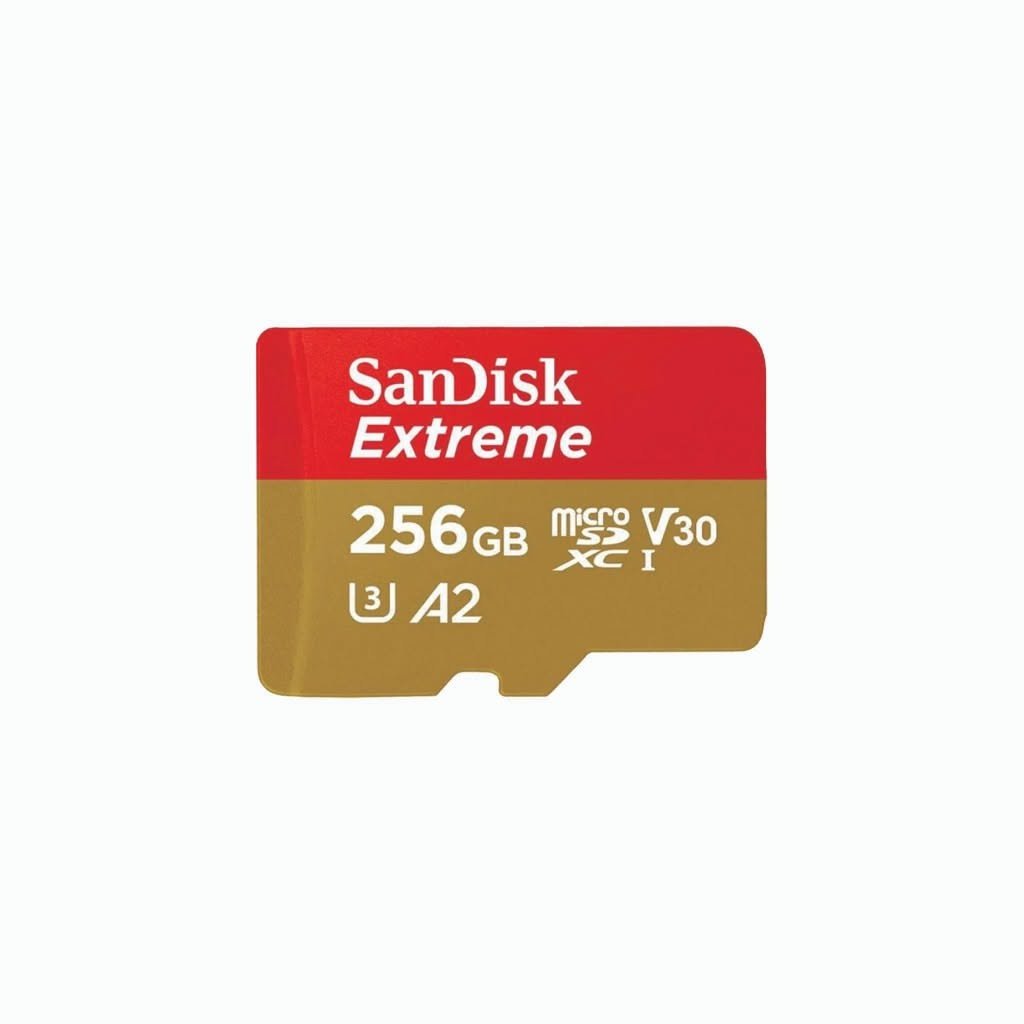
Yes, the Samsung EVO Select 256GB microSD is genuinely $32 this week — an all-time low. But no, it is not the right primary storage for a retro PC game library. Sustained write speeds cap around 45–65 MB/s, endurance is a small fraction of a real SSD, and the retro-PC use case does not need the form factor. A Crucial BX500 1TB SATA SSD at $85 gives you 4× the space, 6× the sustained write, and vastly better endurance for less than 3× the price.
The deal, in context
Samsung's EVO Select 256GB microSD fell to $32 on multiple retailers this week — normally $50–$60. If you need microSD (a Steam Deck, a Retroid handheld, a Raspberry Pi expansion card, a Switch), that is a real bargain, and the EVO Select's ~130 MB/s peak read is fine for game loading. But retro-PC builders keep asking whether microSD-plus-adapter can be their main game drive on a Slot 1 or AM3 board. The answer is a firm no, and the math is not close.
Where microSD is fine
- Steam Deck expansion cards — reads dominate, writes are rare, endurance rating matters less.
- Retro handhelds — Retroid Pocket 5, Analogue Pocket, Anbernic RG-series all use microSD as primary. Small ROMs, low write duty cycle.
- Raspberry Pi boot volumes — 8–16 GB is plenty for the OS; move media/data to a real SSD.
Where microSD fails for retro-PC game libraries
- Sustained sequential write on the EVO Select 256GB is 45–65 MB/s once the pSLC cache is exhausted. A CD image copy at 500 MB starts fast and settles into a crawl.
- Endurance: microSD cards do not publish TBW numbers the way real SSDs do. Estimated write endurance is a small fraction of a Samsung 870 EVO 250GB SATA SSD or a Crucial BX500 1TB.
- Random 4K IOPS are poor. Any writes that trigger garbage collection stall the whole card.
- SATA-to-microSD adapters exist but they add a controller in the middle and typically limit throughput.
For a retro PC game library — where you write once and read many, but you also do full-drive imaging, incremental snapshots, and the occasional bulk copy — the Crucial BX500 1TB SATA at $85 is dramatically better per dollar and per gigabyte.
Head-to-head numbers
| Metric | Samsung EVO Select 256GB microSD | Crucial BX500 1TB SATA SSD |
|---|---|---|
| Deal price | $32 | $85 |
| Capacity | 256 GB | 1000 GB |
| $/GB | $0.125 | $0.085 |
| Peak sequential read | ~130 MB/s | ~540 MB/s |
| Sustained sequential write | ~45–65 MB/s | ~500 MB/s |
| Rated endurance | ~100 TBW estimated | 360 TBW |
| Form factor for retro PC | needs adapter | native 2.5" SATA |
| Warranty | 10 years (limited) | 3 years |
Buying advice
If you need microSD, buy the Samsung EVO Select 256GB at $32 while the deal lasts. For a retro PC game library, buy the Crucial BX500 1TB SATA SSD at $85. If your board is IDE-only (pre-2003 machines), get a $12 IDE-to-SATA adapter or use a SanDisk Ultra 3D 1TB SATA with an equivalent bridge. See Tom's Hardware for ongoing deal tracking and the Samsung 870 EVO product page for the branded-EVO comparison.
Key takeaways
- The microSD deal is real, but the microSD form factor is wrong for a retro PC library.
- $0.125/GB microSD vs $0.085/GB SATA SSD — the SATA SSD is cheaper per gigabyte at the deal price.
- Sustained write speed matters more than peak read for full-disk imaging and bulk copies.
- Rated endurance on the SATA SSD is 3–4× higher.
- If you already own a microSD you love, keep it for handhelds. Do not repurpose it as a retro-PC primary drive.
Common pitfalls
- Buying a 256GB microSD "because it's cheap" and planning to expand to 512GB later. You will spend more per GB in the end.
- Trusting the "up to 130 MB/s" spec. That is peak sequential read; retro-PC library imaging is limited by sustained write.
- Skipping SATA because "IDE cables are hard to find." IDE cables are $5 on eBay.
- Trying to boot a period-correct 1998 rig from a microSD — a SanDisk Extreme CompactFlash or a real SATA SSD with an IDE bridge is the right pattern.
Verdict
If you want more storage for a Steam Deck or a Pi, the Samsung EVO Select 256GB deal at $32 is a fine buy. If you are stocking a retro-PC game library, spend the extra $53 and get the Crucial BX500 1TB. Right form factor, more endurance, more space, less headache.
Related guides
- Best Budget SATA SSD for a Retro PC Build in 2026
- Building a Period-Correct 1998 Voodoo2 SLI Rig
- Bridging DOS and Win98 Audio to a Modern Rig