Short answer: Creative's Sound Blaster line dominated PC audio from 1989 to roughly 2007. It started by making PC audio possible at all, peaked in the EAX-and-AWE64 era of the mid-1990s, then eclipsed slowly as Windows Vista's audio rewrite killed hardware-accelerated 3D audio and integrated motherboard codecs got "good enough." Creative is still in business in 2026, but now focuses on external USB DACs like the Sound BlasterX G6 rather than internal cards.
This piece is editorial synthesis of Wikipedia's Sound Blaster article, Creative's corporate history, and the Wikipedia entry on Environmental Audio Extensions. No first-party measurements are reported.
Key takeaways
- The 1989 Sound Blaster 1.0 made PC audio universal — game developers had a single target.
- The Sound Blaster 16 (1992) added 16-bit CD-quality audio and locked in the brand for the entire 1990s.
- The AWE32 (1994) and AWE64 (1996) added EMU8000 wavetable synthesis, transforming MIDI game music.
- EAX in the late 1990s did hardware-accelerated 3D audio reverbs and occlusions.
- Windows Vista in 2007 killed DirectSound3D hardware acceleration; integrated codecs took over the mainstream.
- Creative pivoted to USB DACs and gaming headsets; the Sound BlasterX G6 is a current example.
The PC audio landscape before 1989
The IBM PC and its clones shipped from 1981 with one audio output: the PC speaker. A single square-wave oscillator driven by an 8253 timer. You could make beeps. With clever programming, you could make slightly-less-painful beeps. Some games (Sierra adventures, early Apogee) wrote impressive PC-speaker music drivers, but the underlying hardware was a one-channel buzzer.
Add-on audio existed but was expensive. The AdLib card (1987) added Yamaha FM synthesis — the same chip family used in 1980s arcade hardware — for $245. It was a meaningful upgrade for game music but didn't do digital audio (sampled sound). Roland's MT-32 (1987) offered superb MIDI synthesis for $550 but was even more niche.
Into that landscape walked Creative Technology Ltd., a small Singapore-based company. The original 1989 Sound Blaster combined the AdLib's FM synthesis with PCM digital audio playback on a single ISA card for $239. That bundling — music plus digital sound plus AdLib compatibility — changed PC audio overnight.
1989–1992: The original Sound Blaster lineage
The Sound Blaster 1.0 (1989) had:
- Yamaha YM3812 (OPL2) FM synthesis — same as AdLib
- 8-bit, 22 kHz mono digital audio
- A game/MIDI port (DB-15) on the back
- Optional CMS chip support (Creative's earlier sound product)
Game developers wrote one audio driver against the Sound Blaster API and got both music and SFX. AdLib lost market share quickly because Creative's card did everything AdLib did plus digital sound.
Sound Blaster 2.0 (1991) added auto-init DMA and bumped sample rates. The Sound Blaster Pro (1992) went stereo with 22 kHz 8-bit per channel and dual OPL2 chips for stereo FM synthesis. By the time the Sound Blaster Pro shipped, "Sound Blaster compatible" was the universal compatibility floor for DOS games.
1992–1996: The Sound Blaster 16 and AWE generation
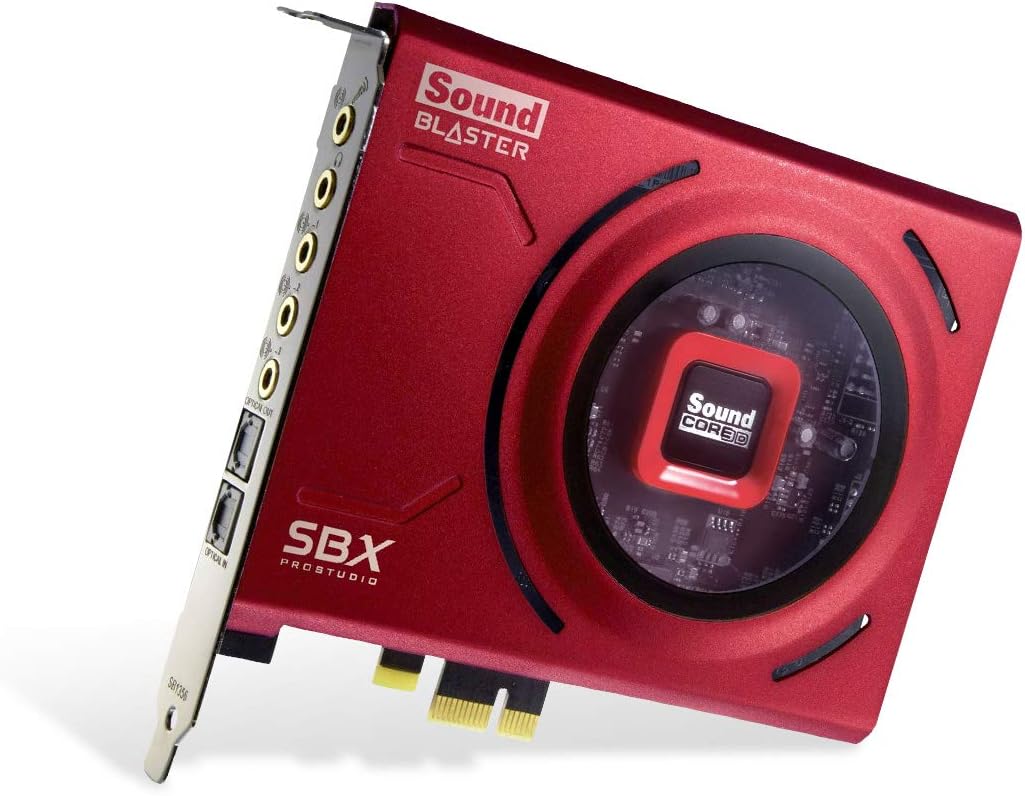
The Sound Blaster 16 (1992) hit the price-performance sweet spot that dominated the entire mid-1990s: 16-bit CD-quality audio (44.1 kHz stereo), OPL3 FM synthesis, IDE CD-ROM interface, and a wavetable header for adding sample-based MIDI. It sold tens of millions of units and effectively was PC audio from 1992 through 1997.
The Sound Blaster AWE32 (1994) added the EMU8000 wavetable synthesizer to the SB16 baseline. Sample-based MIDI was a dramatic step up from FM synthesis — you suddenly heard recorded acoustic instruments instead of bell-and-square-wave approximations. Games that supported AWE32 General MIDI (Doom II's CD version, MechWarrior 2) sounded categorically different from their FM-synthesis counterparts.
The AWE64 (1996) refined the AWE32: lower-profile board, optional WaveSynth software synthesis, and improved sample memory architecture. By the AWE64 era Creative had effectively monopolized retail PC audio.
1997–2003: Live!, Audigy, and the EAX wars
The Sound Blaster Live! (1998) moved Creative onto PCI and brought a new audio DSP — the EMU10K1 — capable of hardware-accelerated effects. The Live! also debuted Environmental Audio Extensions (EAX), Creative's hardware-accelerated 3D audio API layered atop Microsoft DirectSound3D.
EAX did reverbs, occlusions, and environmental effects in the sound card's DSP rather than on the CPU. In games that supported it — Half-Life, Unreal Tournament, Thief, Deus Ex — you got noticeably better positional audio with realistic environmental acoustics: outdoor reverbs, muffled-through-walls voices, distance-attenuated ambient sounds. It was a meaningful gameplay-impacting feature.
The Audigy line (2001-2003) refined the Live! formula with the EMU10K2 DSP, 24-bit audio paths, and EAX 3.0/4.0 features. Audigy 2 (2002) added DVD-Audio and 6.1 surround. The audio-card wars peaked with EAX 5.0 ADVANCED HD on the X-Fi (2005) — perceptually the high water mark of dedicated PC audio.
2007: Vista kills hardware-accelerated 3D audio
Windows Vista's new audio stack (WaveRT) replaced the kernel-mode mixer that DirectSound3D had been built on. Hardware-accelerated DirectSound3D — the layer EAX rode on — was gone. EAX effects could only be reintroduced through user-mode wrappers (OpenAL with creative's ALchemy software, etc.) which worked but weren't transparent.
That broke the commercial proposition for discrete PC sound cards in mainstream gaming. If the OS wasn't going to expose hardware acceleration, why pay for a $150 dedicated DSP? Game developers stopped writing EAX paths because they couldn't rely on hardware to run them. Within a few years, "Sound Blaster Live!" stopped being a meaningful feature differentiator for new games.
2007–present: Integrated codecs win the mainstream
Realtek and other Taiwanese codec vendors had been shipping the audio chips on motherboards since the late 1990s. By the late 2000s, those integrated codecs delivered:
- 7.1 surround output
- 24-bit / 96 kHz playback
- Acceptable signal-to-noise ratio for typical gaming use
- S/PDIF passthrough for receiver-driven setups
- Standardized drivers in Windows
The audible difference between a quality discrete sound card and a good integrated codec in a normal gaming chassis is small for most users. CPUs were also now fast enough to do audio mixing in software without measurable performance impact. The market for discrete sound cards collapsed in the mainstream, surviving only in pro-audio (DAW interfaces) and high-end audiophile niches.
What Creative does now: external DACs and gaming headsets
Creative didn't disappear. They pivoted away from internal PCI cards and into external USB DACs aimed at content creators, console gamers, and people who specifically want a step up from their motherboard codec without opening their case. The Sound BlasterX G6 is a current example: external USB DAC with optical input, 32-bit/384 kHz playback, headphone amp, dedicated mic input, and built-in EQ profiles for gaming.
The G6's audience is:
- Streamers who want clean mic input + headphone monitoring
- Console gamers (PS5/Xbox) who can't add internal PC audio
- People with high-impedance headphones that need actual amplification
- Audiophiles who want a meaningfully better-than-motherboard DAC stage
That's a real market, even if it's much smaller than 1990s retail PC audio. Creative ships products into it.
Retro builds: which Sound Blaster for which era?
If you're building a period-accurate retro PC in 2026, the right Sound Blaster depends on the era you're targeting:
| Era | Recommended card | Game era covered |
|---|---|---|
| 286 / 386 (1989-1991) | Sound Blaster 1.0 / 2.0 | Sierra adventures, early Apogee |
| 486 (1992-1995) | Sound Blaster 16 | DOOM, Wing Commander III, X-Wing |
| Pentium / Pentium MMX (1995-1998) | AWE32 / AWE64 | Quake, MechWarrior 2, Tomb Raider |
| Pentium II/III (1998-2001) | Sound Blaster Live! | Half-Life, Unreal, Thief |
| Pentium 4 / Athlon (2001-2005) | Audigy 2 / X-Fi | Doom 3, FEAR, Half-Life 2 |
Vintage Sound Blasters surface routinely on eBay. AWE32 boards in working condition with original RAM expansion routinely fetch $100-250 in 2026. Sound Blaster Live! and Audigy 2 boards are cheaper ($20-60) because PCI was supplanted by integrated audio later in their lifecycle. ISA cards (SB16 and older) command a small premium because the connector type is rare in modern enthusiast hardware.
If you're physically building a retro PC, you'll also want practical accessories for migrating old drives and content:
- SATA/IDE to USB adapter (Vantec CB-ISATAU2) for reading IDE hard drives off a vintage PC into a modern host.
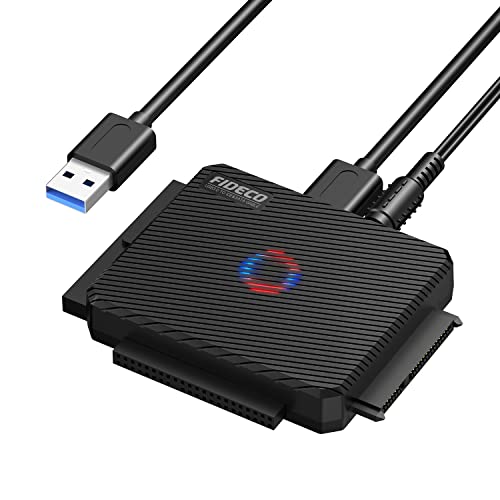
- FIDECO SATA/IDE to USB 3.0 adapter for the same job at higher transfer speed.
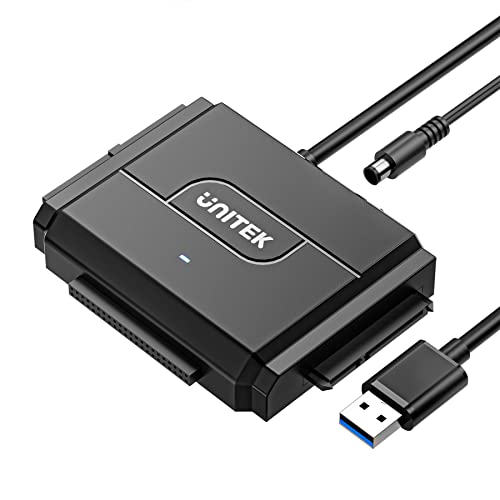
- Unitek SATA/IDE to USB 3.0 adapter as an alternative with a clean cable management story.
- Sound BlasterX G6 external DAC if you want modern Creative branding in the build without sourcing a vintage card.
Common pitfalls in vintage Sound Blaster work
- Capacitor failures. AWE32 and Live!-era cards routinely have electrolytic capacitors that have dried out or leaked. Recap before assuming a card is dead.
- ISA conflicts. Original Sound Blasters required manual IRQ and DMA channel selection via jumpers. Document the BIOS/board settings before you swap a card.
- Driver hunting. Vintage Creative drivers are floating around on archive sites but aren't always signed and won't install on modern Windows. For retro builds, the period-correct OS is the answer.
- Counterfeit cards. Some "AWE32" listings on eBay are SB16 with the RAM slot ripped off. Verify the EMU8000 chip is present.
- Game compatibility table. Not every DOS game supported every Sound Blaster. Reference DOS game compatibility databases before assuming a card will produce music in a specific title.
Bottom line
The Sound Blaster line was the single most important consumer PC audio product family ever shipped. From 1989 to roughly 2007, "Sound Blaster compatible" was synonymous with PC audio. Vista's audio rewrite and integrated codecs ended its mainstream dominance, but Creative still ships modern external DACs like the Sound BlasterX G6, and vintage cards remain core inventory for retro PC builders.
Related guides
Citations and sources
- Wikipedia — Sound Blaster
- Creative Labs corporate site
- Wikipedia — Environmental Audio Extensions (EAX)
This piece is editorial synthesis based on publicly available information. No independent first-party benchmarking is reported.