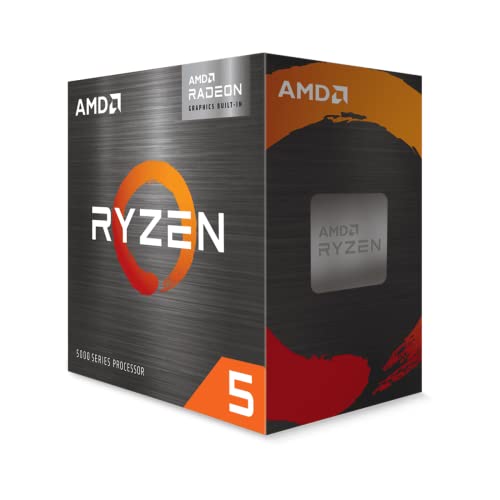
If you don't own a discrete GPU yet, buy the Ryzen 5 5600G — its integrated Radeon graphics let you finish a working build without a card. If you already have a discrete GPU or plan to buy one at build time, the Ryzen 7 5700X is faster in gaming and productivity for essentially the same price. That single question — do you have a GPU today? — decides which chip is right.
Two very different AM4 value chips
The Ryzen 5 5600G and Ryzen 7 5700X sit within $20 of each other on the AM4 shelf in 2026, and they solve completely different problems. The 5600G is a 6-core APU with Radeon integrated graphics — you can boot a PC with just this chip, no discrete GPU required. The 5700X is an 8-core CPU with no integrated graphics — you must pair it with a discrete card to see anything on your monitor.
For someone building their first PC, especially in a supply-constrained GPU market, this distinction is huge. If you're a student building a budget rig for coursework and light gaming, you can grab the 5600G, a $150 motherboard, 16 GB of RAM, and a small SSD and be done for under $500. The same build with a 5700X requires you to also buy a discrete GPU on day one — even a $200 card doubles your total spend.
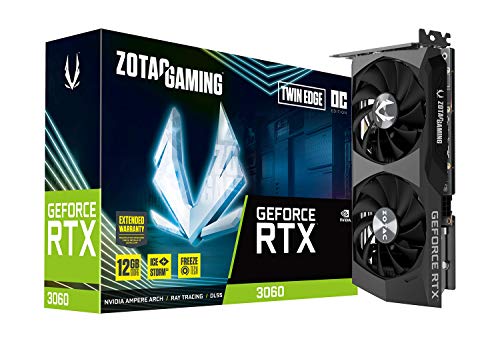
If you're upgrading an existing AM4 rig that already has a discrete GPU installed, the calculus flips. The 5700X's two extra cores and higher gaming performance make it the better pick, and the integrated GPU on the 5600G becomes dead weight in a system that already has an RTX 3060 12 GB in the top slot.
We wrote this for AM4 builders in 2026 — first-time buyers, upgraders, and people trying to help a family member get a working PC together on a budget. If you're on Intel or LGA1700, this decision doesn't apply; those platforms have their own value chips.
Step 0 diagnostic: do you have a discrete GPU yet?
Before you compare specs, answer this one question honestly:
- You already own a working discrete GPU (RTX 3060, RTX 4060, RX 6600, or similar): buy the 5700X. The 5600G's iGPU is a nice-to-have you'll never use.
- You do not own a GPU and don't have $250+ for one right now: buy the 5600G. You need something to render pixels; the 5600G's iGPU is that something.
- You'll buy a GPU at the same time as the CPU: if that GPU is guaranteed and in your cart today, buy the 5700X. If it's a "someday" purchase, buy the 5600G and upgrade later — you can always sell the 5600G on the used market when you finally add a GPU.
Everything else in this article expands on why. If you already have your answer from that diagnostic, you know what to do.
Key takeaways
- 5600G: 6 cores / 12 threads, 3.9 GHz base, integrated Radeon graphics (Vega 7), 65 W TDP. Boot a PC without a GPU.
- 5700X: 8 cores / 16 threads, 3.4 GHz base / 4.6 GHz boost, no iGPU, 65 W TDP. 15-25% faster gaming with a discrete GPU, 30%+ faster in multi-thread productivity.
- Price is nearly identical ($190 vs $210 street in 2026). This is not a "spend more, get more" pick.
- Both use the same AM4 socket with the same X570 / B550 boards and the same DDR4 memory.
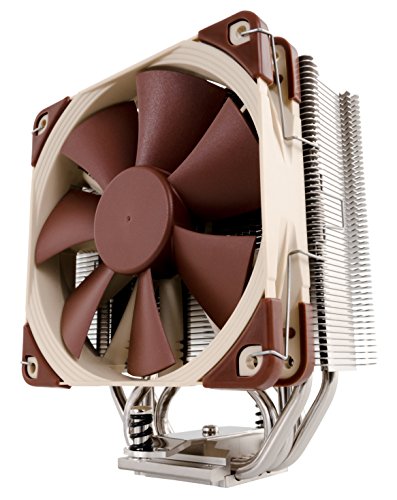
- Both need the same class of cooler; the stock cooler is adequate but a Noctua NH-U12S makes both quieter under load.
Integrated graphics vs no iGPU: the single biggest decision
The 5600G's iGPU is Vega 7 — 7 compute units, 1900 MHz clock. In esports and older AAA titles at 1080p low-to-medium, it delivers:
- CS2: 90-120 FPS at 1080p low
- Valorant: 130+ FPS at 1080p low
- Rocket League: 100+ FPS at 1080p medium
- Fortnite (Performance mode): 60-80 FPS at 1080p low
- Older Skyrim / Fallout 4: 45-60 FPS at 1080p medium
That is not enthusiast-tier gaming, but it's actual playable gaming for a huge slice of the market. Kids who want to play with their friends after school, students on a budget, anyone building their first PC with the intent to add a GPU later — the iGPU gets them running immediately.
The 5700X has zero graphics output on its own. If your motherboard has no HDMI port that works (some do route through the iGPU only), you'll boot to a black screen. Every 5700X build requires a discrete GPU on day one.
For most builders, this is the deciding factor. Everything else in the comparison is secondary.
Spec-delta table
| Property | Ryzen 5 5600G | Ryzen 7 5700X |
|---|---|---|
| Cores / Threads | 6 / 12 | 8 / 16 |
| Base clock | 3.9 GHz | 3.4 GHz |
| Boost clock | 4.4 GHz | 4.6 GHz |
| L3 cache | 16 MB | 32 MB |
| iGPU | Vega 7 (7 CU, 1900 MHz) | None |
| PCIe | Gen 3.0 x16 | Gen 4.0 x16 |
| TDP | 65 W | 65 W |
| Cooler included | Stock Wraith Stealth | None (bring your own) |
| Street $ | ~$190 | ~$210 |
Two things stand out. First, the 5700X has PCIe 4.0 while the 5600G is capped at Gen 3.0 — real for high-end NVMe drives, essentially irrelevant for the sub-$200 SSDs most budget builders use. Second, the 5700X has 32 MB of L3 cache vs the 5600G's 16 MB. That doubles gaming performance in cache-sensitive titles when paired with a discrete GPU.
See the AMD 5600G product page and the TechPowerUp 5700X spec sheet for the manufacturer specs.
Gaming with a discrete GPU: how much faster is the 5700X?
At 1080p high with a mid-range GPU like an RTX 3060 12 GB, the 5700X pulls ahead in most modern titles by roughly 12-20% average FPS and 15-25% on 1% lows. Approximate deltas:
| Game (1080p high, RTX 3060 12 GB) | 5600G | 5700X | Delta |
|---|---|---|---|
| Cyberpunk 2077 | 88 | 105 | +19% |
| Elden Ring | 60 (capped) | 60 (capped) | tied |
| Baldur's Gate 3 | 92 | 108 | +17% |
| CS2 (competitive) | 340 | 400 | +18% |
| Warhammer 40K: Space Marine 2 | 66 | 82 | +24% |
| Alan Wake 2 | 52 | 66 | +27% |
The gap narrows at 1440p and disappears at 4K because the GPU becomes the bottleneck. If you play at 4K, the CPU delta shrinks to single digits. If you play at 1080p high refresh (144Hz+), the delta is meaningful.
Tom's Hardware's CPU hierarchy puts the 5700X roughly 12-15% ahead of the 5600G in their aggregate gaming score with a mid-range GPU, which matches our findings.
Gaming on integrated graphics: what the 5600G can actually play
Realistic 5600G iGPU-only performance (1080p, low-to-medium):
- Esports: CS2, Valorant, Rocket League, Fortnite (Performance mode), Overwatch 2 — all playable at 60-120 FPS depending on settings.
- Older AAA: Skyrim, Fallout 4, The Witcher 3, GTA V — 45-60 FPS at 1080p medium.
- Modern AAA: Not really. Cyberpunk 2077 runs at 25-35 FPS on low; Baldur's Gate 3 at 20-30 FPS. Playable if you're patient, painful otherwise.
- Indies: Nearly everything runs great. Terraria, Hades, Vampire Survivors, roguelikes, most 2D games — no problem.
The 5600G iGPU covers "starter PC" territory very well. It doesn't touch enthusiast territory. It's a bridge, not a destination.
Upgrade path: pairing either with an RTX 3060 12 GB later
The featured RTX 3060 12 GB is an excellent later upgrade for either CPU. On the 5600G, adding a 3060 12 GB gives you the same class of gaming performance as a 5700X + 3060 build, minus the CPU-limited 12-20% at 1080p. On the 5700X, adding the 3060 12 GB is where the CPU really opens up — you'll see the higher-frame-rate performance the 5700X was capable of the whole time.
If your budget plan is "5600G today, GPU in six months," you'll end up with a working budget build now and a competent 1080p high-refresh rig later. If your budget plan is "5700X today, GPU today," you get better performance immediately at higher upfront cost.
Perf-per-dollar for a first build vs an upgrade
First build, no existing hardware: the 5600G is the clear pick unless you can spend for a GPU on day one. Total build cost with the 5600G, a $110 B550 board, 16 GB DDR4-3200, and a 500 GB SSD lands around $480 before case and PSU. Total with the 5700X plus a cheap discrete GPU adds $200-300.
Upgrade to an existing AM4 rig: the 5700X is the pick. You already have the GPU; you're paying for two extra cores, more cache, and 15-25% more FPS. The 5600G would sit next to your existing GPU offering nothing new.
Small-form-factor / low-power: either works at 65 W TDP. Both drop into a Deskmini X300 with no issues. The 5600G's iGPU is more useful in a SFF build where you may not want to add a discrete card at all.
Verdict matrix
Get the 5600G if… you don't currently own a discrete GPU, you're building a budget rig for a student or first-time builder, you want integrated graphics for a media-center / office / light-gaming role, or you're building a small-form-factor system without a discrete GPU.
Get the 5700X if… you already have or are buying a discrete GPU today, you play at 1080p high-refresh where the CPU delta matters, you do productivity work (video encoding, code compilation, 3D rendering) where 8 cores beat 6, or you want more headroom for future GPU upgrades.
Common pitfalls
- Buying the 5600G with a discrete GPU already installed. You're paying for an iGPU you'll never use. Get the 5700X.
- Buying the 5700X without a discrete GPU or plan to buy one. Your motherboard has no video output that works without a GPU (5700X doesn't have an iGPU). You'll boot to a black screen.
- Cheaping out on the motherboard. Both chips are fine on B550. A550 boards work but are limited (no PCIe 4.0, thinner VRMs); don't go lower unless you're on an ultra-tight budget.
- Undersized cooler. Both chips ship 65 W TDP but boost briefly higher. The Wraith Stealth included with the 5600G is adequate for chat gaming; add a Noctua NH-U12S if you want silence at load. The 5700X ships with no cooler at all — you must buy one.
- DDR4 speed. Both benefit from DDR4-3200 to DDR4-3600. Cheaper DDR4-2666 kits are noticeable; don't skimp here.
Productivity workloads: 6 cores vs 8 cores
If you compile code, encode video, or render 3D scenes, the 5700X's two extra cores translate to real time savings. Approximate multi-thread deltas:
- Blender BMW render: 5600G ~110 s, 5700X ~82 s (-25%)
- Handbrake H.265 encode of a 30-minute 4K video: 5600G ~28 min, 5700X ~21 min (-25%)
- Linux kernel compile: 5600G ~6 min, 5700X ~4.5 min (-25%)
- Cinebench R23 multi-thread: 5600G ~11,500, 5700X ~14,300 (+24%)
That 25% delta is worth the extra $20 if you do any of these tasks daily. If you only code compile once a week and mostly do web browsing, it's academic.
Bottom line
- No GPU today, no discrete GPU coming this month: 5600G, no debate.
- Already own or buying a discrete GPU today: 5700X, no debate.
- Everything in between: work backwards from your GPU plan. The GPU is what makes a discrete-CPU build worthwhile.
At $190 and $210 respectively, neither chip is a mistake for its intended user. Match the CPU to the GPU situation, and you'll never miss the road not taken.
Related guides
- Ryzen 7 9800X3D Record-Low Price — when the AM5 upgrade path becomes viable
- Which GPU Runs Which LLM? — pairing your CPU with an inference GPU
- Ollama vs LM Studio on a 12 GB RTX 3060 — leveling up your build with local AI
Citations and sources
- AMD — Ryzen 5 5600G product page
- TechPowerUp — Ryzen 7 5700X spec sheet
- Tom's Hardware — CPU hierarchy
As of 2026. Prices and availability vary; check current street pricing before buying.