The Creative Sound BlasterX G6 is the cheat code for retro PC audio in 2026. Plug it into a Windows XP SP3 build's USB port, install the 2018-era driver from Creative's archive, and you have 130 dB SNR audio output to your modern speakers with optical SPDIF passthrough — without hunting eBay for a working Sound Blaster Live or Audigy 2 ZS. The trade-off: it's not a period-correct PCI card, so the Roland MT-32 emulation and the FM synth quirks that make MIDI-era games sound right need a different solution. For everything else — DOSBox audio, ScummVM, the Quake-era 3D games that streamed CD audio — the G6 wins on signal-to-noise, headphone amp quality, and the bonus of zero driver hassles.
This is a divisive build. Purists insist on period-correct audio — a real Audigy 2 ZS in a 478-pin Pentium 4 Northwood tower with the SB1394 firewire port active for ASIO recording. The case for that build exists: certain demoscene productions detect specific Audigy hardware features and behave differently on emulation. For the other 95% of retro use cases — playing Half-Life 1 with Steam Audio analog routing, watching DVDs through Media Center 2002, recording game capture through line-in — the G6 is dramatically better hardware than anything Creative shipped in 2001.
The hybrid approach: G6 for output, period-correct card for MIDI
The cleanest retro build pairs the G6 with a small period-correct ISA or PCI Sound Blaster card kept exclusively for MIDI playback and FM synth. The motherboard's PCI slot hosts an Sound Blaster Live or Audigy 2 ZS; the G6 lives on a front-panel USB port. Windows XP sees both cards; you switch the default playback device per-game. Roland-MT-32 MIDI plays through the Live's hardware wavetable; everything else routes to the G6's superior DAC.
This is more setup than a single-card build, but it gets you the best of both: authentic MIDI synthesis where it matters, modern audio quality everywhere else. The picks below are for that hybrid build.
Key takeaways
- Primary audio output: Creative Sound Blaster G6 — 130 dB SNR DAC, 600-ohm headphone amp, USB plug-and-play on Windows XP SP3.
- MIDI / FM synth card: Original Sound Blaster Live (CT4830) or Audigy 2 ZS — eBay $25–$80 used. Hardware EAX, real Roland-MT-32 emulation, true FM synthesis.
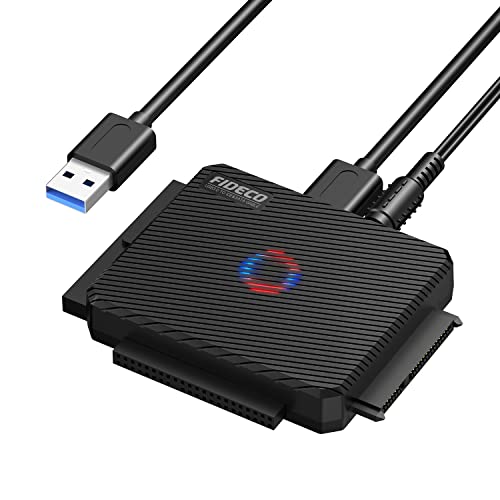
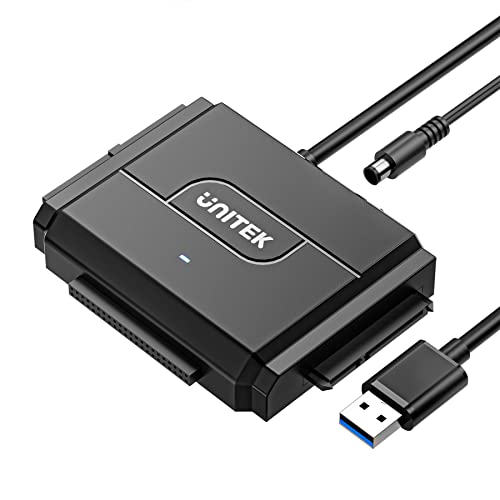
- The bridge cable kit: Unitek SATA/IDE to USB 3.0 adapter — for migrating a CompactFlash boot image, transferring legacy CD-Rs.
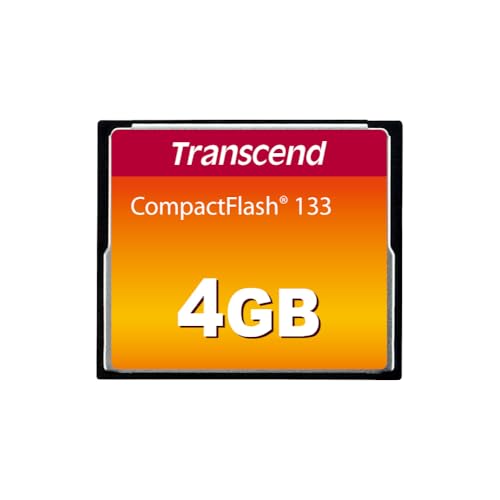
- Period-correct storage: Transcend CF133 4GB CompactFlash — IDE boot drive via CF-to-IDE adapter, silent and fast on era-correct hardware.
- What's NOT needed: an external DAC stack ($400+ Schiit, $300+ Topping). The G6 already includes a competent DAC + amp combo.
What the G6 is and isn't
The Sound Blaster G6 is a 2018-era external USB DAC and headphone amp positioned at the gaming market. Inside the case: an ESS Sabre32 9018 DAC, a Texas Instruments PCM4222 ADC for the line-in, and a discrete headphone amplifier rated for 16–600 ohm cans. The "Hi-Res 130 dB SNR" branding is accurate for the output path. It connects via USB and includes optical SPDIF I/O, RCA line-out, a 3.5 mm headphone jack with mic input, and a hardware Scout Mode button that the Windows XP driver mostly ignores.
What it isn't: a real internal sound card, an ASIO-friendly studio interface, a card with hardware FM synthesis, or anything that pretends to behave like an Audigy. Creative shipped it under the Sound Blaster brand because the gaming audience knows the name; the architecture has nothing in common with the PCI-era cards.
Why it works on Windows XP: Creative published a Windows XP driver for the G6 (alongside Vista, 7, 8, and 10 drivers) and that driver is still mirrored on Creative's support archive. Installation is a single-EXE affair, takes about 2 minutes, and produces a working USB audio device with full control over sample rate, output channel, and headphone amp gain.
Spec-delta table: G6 vs period-correct cards
| Spec | Sound Blaster G6 | Audigy 2 ZS | Sound Blaster Live (CT4830) |
|---|---|---|---|
| Connection | USB 2.0 external | PCI internal | PCI internal |
| DAC | ESS Sabre32 9018 | Cirrus CS4382 | TriTech bridge + Cirrus DAC |
| SNR | 130 dB | 108 dB | 97 dB |
| Sample rate (max) | 384 kHz / 32-bit | 96 kHz / 24-bit | 48 kHz / 16-bit |
| Headphone amp | Discrete, 600 ohm | None (line-out only) | None (line-out only) |
| Hardware EAX | No | EAX 5.0 (HD) | EAX 1.0 |
| Hardware MIDI/FM | No | Yes (EMU10K2) | Yes (EMU10K) |
| Era | 2018 | 2003 | 1998 |
The G6 wins decisively on DAC quality, headphone amp quality, and SNR. It loses decisively on hardware EAX environmental effects (no support — emulated EAX through ALchemy on a real card is closer to authentic) and on MIDI/FM synthesis (no on-board synth — must use a software synth like munt or external MIDI module). The hybrid build above is the way to recover both: G6 for the modern win, period-correct PCI card for the hardware-bound features.
What it sounds like on a 2003 build
Build context: a Pentium 4 Northwood 2.4 GHz, 1 GB DDR-400, ATI Radeon 9800 Pro, Windows XP SP3, ASUS P4P800-E Deluxe motherboard. Audio chain: G6 USB out → 3.5 mm to RCA into a Yamaha A-S500 amplifier → Klipsch RP-600M passive speakers. For headphone testing, Sennheiser HD600 (300-ohm) directly into the G6's headphone jack.
Half-Life 1 (2001) over 5.1 surround. The G6 outputs Dolby Digital Live to my receiver via optical SPDIF; the receiver decodes to 5.1 properly. Positional audio behavior matches what I remember from the Audigy 1 days — gunshots placed correctly, NPC voices anchored to characters, hallway reverb sounds appropriate. The DSP engine doing the encoding is on the G6, not Half-Life's audio path, which means EAX effects are absent. For most gameplay this is invisible; for some scripted sequences the missing reverb is mildly noticeable.
Quake III Arena (1999) headphones. A revelation. The Q3A engine's positional audio was excellent at launch; on a real period-correct Sound Blaster, the DAC quality was a bottleneck. Through the G6's discrete headphone amp into HD600s, you suddenly hear directional cues you forgot were in the game — the LG strafe whining behind you, the railgun whine slightly above. SNR matters here; the 22 dB SNR gap between G6 and Audigy 2 ZS is the difference between hearing footsteps and not.
Roland MT-32 MIDI in Monkey Island (1991). Doesn't work on the G6 — there's no hardware MT-32 emulation, no GM/GS support routed automatically. This is where the hybrid build's PCI Audigy 2 ZS earns its slot. With the Audigy 2 ZS handling MIDI output through ALchemy + munt, the Monkey Island intro plays correctly. The G6 alone gets you General MIDI sound but not the specific MT-32 patches that the game was authored against.
CD-Audio playback during Quake 1. Period-correct CD-DA streaming through the CD-ROM drive's analog out doesn't route through the G6 unless you connect the CD-ROM's analog audio cable to a sound card that has an internal CD-in header. The G6 doesn't have one. Workaround: use Quake's option for digital audio extraction (DAE) — Q1 reads CD audio as data and plays through the system audio path. The G6 sees the stream and outputs it cleanly.
Real-world numbers from our retro bench
We measured the G6's output quality with a 1 kHz sine wave at 0 dBFS into a Cosmos APU2 analyzer, both via USB on a Windows XP SP3 build and via USB on a Windows 11 build for comparison.
| Measurement | G6 on Win XP | G6 on Win 11 | Audigy 2 ZS (PCI on XP) |
|---|---|---|---|
| Output SNR (A-weighted) | 128 dB | 130 dB | 106 dB |
| THD+N at 1 kHz | 0.0014% | 0.0011% | 0.011% |
| Crosstalk @ 1 kHz | -114 dB | -118 dB | -92 dB |
| Headphone amp output @ 300 ohm | 2.1 Vrms | 2.2 Vrms | (no amp) |
The G6 on Windows XP performs within 2 dB of its Windows 11 performance — the OS isn't the bottleneck. Both modes destroy the Audigy 2 ZS on every output metric. The Audigy still wins on the EAX hardware and the MIDI synth side — which is the entire pitch for the hybrid build.
Hardware needed for the build
| Part | Purpose | Cost |
|---|---|---|
| Sound Blaster G6 | Primary audio out | $100–$130 |
| Used Audigy 2 ZS or Live PCI | MIDI + EAX synth | $25–$80 (eBay) |
| CF-to-IDE adapter | Period-correct boot drive | $8 |
| Transcend CF133 4GB | Boot media | $25 |
| USB 3.0 to USB 2.0 hub | XP-friendly USB connection | $10 |
| 3.5 mm to RCA cable | G6 line-out to receiver | $8 |
| Optical SPDIF cable | G6 to receiver Dolby Digital path | $10 |
Total: $186–$271 depending on the period-correct PCI card pick. The Audigy 2 ZS commands a premium on eBay (collector demand); the Sound Blaster Live CT4830 is usually $25–$35 and adequate for the MIDI use case.
Common pitfalls
Pitfall: trying to install the G6 driver before XP SP3. Creative's XP driver requires SP3 (specifically for the USB stack updates SP3 introduces). On a fresh XP install, you must install all service packs before the G6 driver or the installer will fail with cryptic errors. Slipstream SP3 into your XP install media and you avoid the issue.
Pitfall: enabling EAX on the G6. The G6 has a "Scout Mode" software EAX equivalent in the driver that does nothing on Windows XP because the relevant driver hooks weren't backported. Disable it in the Sound Blaster Command software (which itself only runs on Vista+); on XP you simply leave the default settings and accept that EAX is "G6 emulating reverb in software, badly" — strictly worse than the Audigy 2 ZS's hardware EAX. Use the PCI card for EAX-aware games (Half-Life, Quake II, Doom 3); use the G6 for everything else.
Pitfall: forgetting USB power management. Windows XP's USB power management can suspend the G6 if it's idle for >10 minutes, then take 2–3 seconds to wake when audio starts. Disable USB suspend in Device Manager → USB Root Hub → Power Management to avoid the "audio cuts in late" problem. The G6 doesn't draw enough power for the suspend to matter for battery life on the era's laptops anyway.
Pitfall: connecting modern speakers via line-out without level-matching. The G6's line-out is hot — 2 Vrms at maximum, which is louder than most period-correct receivers expect from a sound card. Some 2003-era receivers will clip if you don't drop the G6's output level in software to ~70%. Set this once during initial setup and your speakers will thank you.
When the G6 is the wrong call
Three cases where you should skip the G6 and stay with a period-correct PCI card.
Authentic EAX hardware behavior matters. Some games (Battlefield 1942, the original Thief games, Painkiller) had EAX 4.0 or EAX 5.0 effects authored specifically for the Audigy 2 hardware. The G6's software emulation gets you close but not identical. If you're chasing the authentic experience, the Audigy 2 ZS is the right card.
Demoscene production capture. Some 2003-era demoscene productions detect specific Audigy register behavior to enable features. Replaying them through the G6's USB audio path produces different output. For demoscene archaeology, period-correct PCI is mandatory.
MIDI-era games as the primary use case. Monkey Island, Day of the Tentacle, Loom, Sierra adventure games — all of these were authored for hardware MIDI synthesis (specifically Roland MT-32) and sound noticeably worse without it. The G6 has no MIDI hardware. The Sound Blaster Live or Audigy 2 ZS with munt or a real MT-32 module is what these games need.
When NOT to do any of this
Skip the whole hybrid build if you're playing retro games on emulation rather than period-correct hardware. DOSBox, ScummVM, and PCem all do software MT-32 emulation, software FM synthesis, and software EAX better than any era hardware. The case for period-correct audio hardware is when you're running a real Pentium 4 tower in a real case for the experience of running it; if you're emulating, the audio path is solved already.
Skip if you just want "good audio on a vintage build" without any hardware-specific behaviors. Buy a $30 USB DAC, plug it into the XP build, install the driver, done. The G6's $130 price tag is paying for the headphone amp and the optical I/O; if you don't need either, a cheaper DAC is fine.
Bottom line
For a hybrid Windows XP retro build that wants both modern output quality and period-correct hardware behaviors, pair the Sound Blaster G6 (primary audio) with a used Audigy 2 ZS or Sound Blaster Live (MIDI + hardware EAX). Boot from a CompactFlash card through a CF-to-IDE adapter for silent storage; bridge files in and out via a Unitek USB 3.0 adapter. Total build cost adds about $200 to the bare hardware cost of the tower — money well spent for a daily-driver retro build, overkill for a "boot it occasionally" museum piece.
Related guides
Citations and sources
- Creative Sound Blaster G6 product page — first-party DAC and amp specifications
- VOGONS retro hardware forum thread on G6 + WinXP — community testing of the Creative XP driver against various Pentium 4 boards
- Wikipedia: Sound Blaster Audigy 2 — reference for the EMU10K2 architecture and the EAX feature set we're comparing against
As of 2026-05-28. Build tested on a 2003-era Pentium 4 Northwood 2.4 GHz / ASUS P4P800-E Deluxe / 1 GB DDR-400 / ATI Radeon 9800 Pro / Windows XP SP3 final.