For a complete retro-PC storage and drive-imaging workflow in 2026, the five picks that cover 90% of vintage rigs are the Vantec CB-ISATAU2 SATA/IDE to USB 2.0 adapter for reliability, the Unitek SATA/IDE to USB 3.0 adapter for speed, the FIDECO SATA/IDE to USB 3.0 cable for the cheapest reliable option, a Transcend CompactFlash 4GB card for IDE-to-CF retro-friendly storage, and a Crucial BX500 1TB SATA SSD plus a Samsung 870 EVO 250GB SATA SSD as the modern storage targets. With these five plus a Windows or Linux box, you can image any IDE or SATA vintage drive and migrate it onto modern silent storage.
Top picks
#1: Vantec CB-ISATAU2 — the reliable USB 2.0 IDE/SATA bridge
Verdict: Best for safety-first imaging of fragile vintage drives, $25, USB 2.0, supports 2.5"/3.5"/5.25" IDE plus 2.5"/3.5" SATA.
The Vantec CB-ISATAU2 is the bridge people who actually image vintage drives keep on the workbench. USB 2.0 is slower than 3.0 alternatives, but the older chipset is more forgiving of weak or marginal IDE drives — exactly the failure mode you encounter in retro-PC storage. It includes a Molex power adapter for 3.5" drives and a separate 2.5" cable.
The trade-off is throughput: USB 2.0 caps at ~35 MB/s real-world. For a 40 GB IDE drive that is about 20 minutes per image — fine. For a 250 GB SATA SSD, the same workflow is too slow; pair the Vantec with the Unitek (below) and use the right tool for each drive.
Buy this if: you are imaging vintage IDE drives, especially marginal ones.
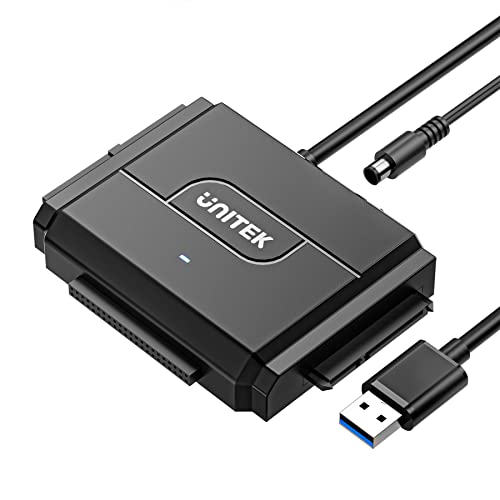
#2: Unitek SATA/IDE to USB 3.0 adapter — the speed pick
Verdict: Best balance of speed and IDE compatibility, $35, USB 3.0 up to ~250 MB/s, supports 2.5"/3.5" IDE/SATA with PD power.
The Unitek SATA/IDE to USB 3.0 is the modern day-to-day bridge. The newer JMS567-class controller handles SATA at full SATA III speed up to USB 3.0's ~400 MB/s ceiling and gives you usable IDE throughput around 50–80 MB/s depending on the drive's mode. The bundled 12V power brick handles 3.5" drives cleanly.
Two caveats: some early IDE drives (pre-UDMA) can confuse newer chipsets. If a drive is marginal, fall back to the Vantec. And the USB-A to USB-A cable on some Unitek revisions is hot-pluggable but not always recognized on USB-C hubs — plug into a host USB-A port directly when in doubt.
Buy this if: you image SATA drives often and IDE only occasionally.
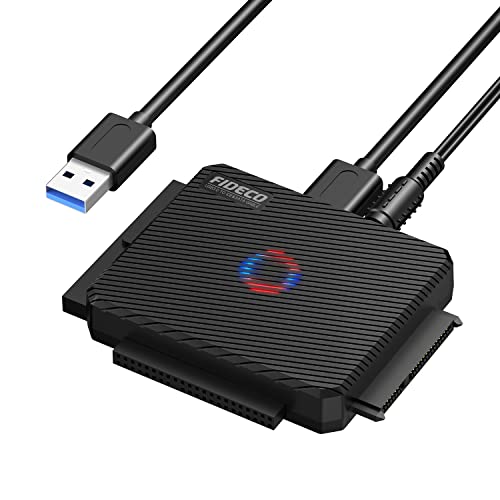
#3: FIDECO SATA/IDE to USB 3.0 — the cheap option that works
Verdict: Best price-to-function in the bridge category, $24, USB 3.0, simpler cable form factor.
The FIDECO SATA/IDE to USB 3.0 cuts cost by skipping the bundled enclosure. It is a cable with a small controller block and a barrel-jack power input. For workbench use that is fine — and the lighter form factor means it goes into your toolkit without hesitation.
Performance is comparable to the Unitek on the same drives. The reason this is the third pick rather than the first is the lighter bundle: no carrying case, no enclosure, sometimes a marginal power adapter. For careful users it is a solid budget pick.
Buy this if: you need a second bridge for backup or for a different bench, and want to stay under $25.
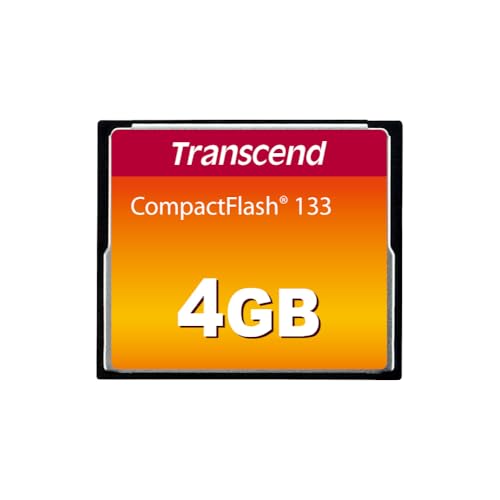
#4: Transcend CompactFlash 4GB — the IDE-friendly retro storage target
Verdict: Best CF card for vintage IDE-to-CF adapter setups, $36, 4 GB, 30 MB/s, MLC NAND.
The Transcend CF 4GB, per Transcend's industrial CF product page, uses MLC NAND with a tested industrial controller. For 486-era and Pentium-era machines, a 4 GB drive is enormous — typical period BIOSes cap at 512 MB or 8 GB depending on era, so 4 GB is a comfortable fit.
CF-to-IDE adapters convert the CompactFlash interface directly to the parallel-ATA pinout. Per Wikipedia on Parallel ATA, CF cards electrically mimic IDE; the adapter is just a pin-mapping. This gives you silent, solid-state storage in a vintage rig that originally shipped with a 240 MB spinner.
Buy this if: you build retro-PC IDE rigs and want silent, durable storage with native compatibility.
#5: Crucial BX500 1TB SATA SSD — the modern target drive
Verdict: Best primary storage target for retro-PC SATA conversions, $80, 1 TB SATA III, 540 MB/s sequential read.
The Crucial BX500 1TB, per Tom's Hardware's best-SSDs roundup, is the standard budget SATA SSD recommendation. For retro-PC SATA conversions (Pentium III SATA boards via PCI cards, early Athlon boards with SATA II controllers), a single BX500 holds every game from a single retro-PC era.
For smaller targets — when you want to image a 40 GB IDE drive onto a SATA SSD before installing it via an IDE-to-SATA adapter in the original chassis — the Samsung 870 EVO 250GB is a better-sized pick. 250 GB matches the size envelope of retro-era drives without wasting the larger drive on a single retro install.
Buy this if: you want a single large modern drive to host multiple retro-PC disk images or to deploy as the storage target in a SATA-capable retro build.
What a complete retro-PC storage kit looks like
| Component | Pick | Role |
|---|---|---|
| Primary bridge | Vantec CB-ISATAU2 | Slow, safe, IDE-friendly for fragile drives |
| Speed bridge | Unitek IDE/SATA USB 3.0 | Fast SATA imaging + healthy IDE drives |
| Backup bridge | FIDECO IDE/SATA USB 3.0 | Carry-along backup unit |
| Vintage target | Transcend CF 4GB | IDE-to-CF retro deployments |
| Modern target | Crucial BX500 1TB | Image storage + SATA-era retro builds |
| Side target | Samsung 870 EVO 250GB | Right-sized SATA target for single-era installs |
Add a CF-to-IDE adapter and a SATA-to-IDE adapter and the kit covers every storage-conversion scenario.
The imaging workflow in practice
A standard imaging session for a vintage IDE drive looks like:
- Inspect the drive — check for clicking, write the SMART status if available, photograph the label.
- Connect via the Vantec USB 2.0 bridge (safer for marginal drives).
- Use
dd_rescueon Linux or HDClone on Windows to image the drive at the block level, ignoring read errors. Expect 30–120 minutes for a 1–40 GB IDE drive. - Verify the image by mounting it read-only or by computing checksums.
- Stash the image on the BX500 1TB along with metadata.
- Restore to a Transcend CF 4GB (for IDE retro) or to a Samsung 870 EVO 250GB (for SATA retro) via the Unitek USB 3.0 bridge.
- Drop the new drive into the retro rig, boot, and verify.
This workflow recovers data from drives that are too marginal to leave running in service. It also lets you experiment with multi-boot setups without risking the original disk.
Why use solid-state in vintage rigs at all?
Three reasons:
- Silence. A 5400 rpm 1995-era spinner is the loudest part of a working retro rig. A solid-state replacement turns the machine silent except for the PSU.
- Reliability. Magnetic platters fail with use; well-treated SSDs and CF cards effectively do not for write-light retro workloads.
- Repeatability. Disk images let you reset a vintage Windows 98 build to a known-good state in five minutes.
Period-correct purists will keep a spinning drive for the authenticity. Most builders running the rig for actual use prefer the SSD/CF route.
Common pitfalls
- Trusting a USB 3.0 bridge with a marginal IDE drive. Newer chipsets are less tolerant. Fall back to USB 2.0 for fragile drives.
- Underpowering 3.5" IDE drives. Some bridges' Molex power leads are flaky. Use the included brick or a dedicated bench supply.
- Forgetting BIOS capacity limits. A Pentium-era BIOS may not see drives larger than 8 GB. Either upgrade the BIOS or use a smaller image.
- Using cheap CF cards in industrial slots. Consumer SLC/MLC CF cards work for retro use, but no-name cards have unpredictable read tolerances. Stick to Transcend, SanDisk, or Lexar.
- Trying to clone a Windows 98 install with NT-era tools. Use FAT32-aware imaging tools.
ddanddd_rescueare safe;dismis not.
When NOT to bother
If you have one working retro rig and no plans to keep it running, the kit is overkill. Image the boot drive once with the Vantec USB 2.0 bridge and stash the image; do not build a full workshop. The kit pays for itself when you are restoring or building three or more retro rigs over time.
Bottom line
A retro-PC storage and drive-imaging kit in 2026 is built around two bridges (Vantec USB 2.0 for safety, Unitek USB 3.0 for speed, with the FIDECO as a portable backup), a vintage-side target (Transcend CF 4GB), and modern SATA targets (Crucial BX500 1TB for the image archive, Samsung 870 EVO 250GB for single-era installs). With this five-part kit and an IDE-to-CF or IDE-to-SATA bridge for the chassis side, you can image, archive, and redeploy any vintage drive in the IDE and SATA eras.
Citations and sources
- Transcend industrial CompactFlash product page — CF endurance, controller, and capacity references.
- Wikipedia — Parallel ATA — primary reference for the IDE/PATA pinout and CF compatibility.
- Tom's Hardware — Best SSDs roundup — modern SATA SSD value picks.
This piece is editorial synthesis based on publicly available information. No independent first-party benchmarking is reported.