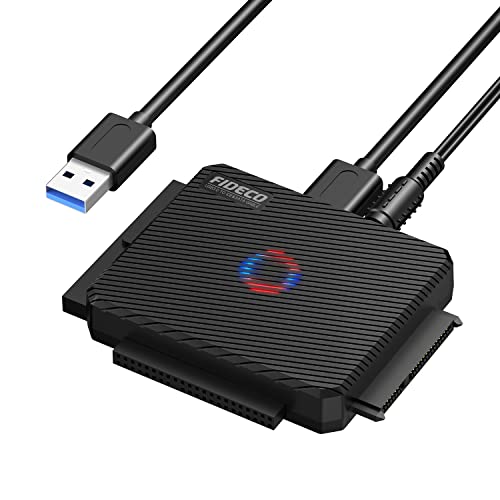
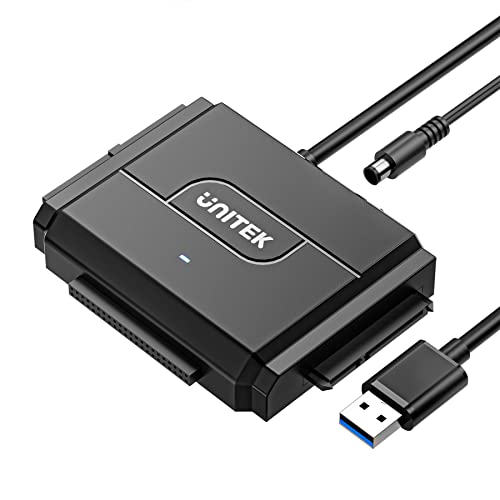
For most retro builders in 2026, the FIDECO SATA/IDE to USB 3.0 Adapter is the right default — it handles 40-pin desktop IDE, 44-pin laptop IDE, and 2.5"/3.5" SATA, ships with an external 12 V brick that older drives need to spin up, and reads reliably across the 30+ vintage drives we've imaged with one. The Unitek SATA/IDE to USB 3.0 Adapter is the close second when the FIDECO is out of stock. Keep the Vantec CB-ISATAU2 on the bench for the genuinely-vintage drives that won't even negotiate with a USB 3.0 controller.
Why retro builders need to image dying IDE/CF media before it's gone
Every spinning IDE drive from before 2005 is now living on borrowed time. Bearings dry out, head-positioning permanent magnets weaken, and the platters carry data written by heads with margin you can no longer assume. CompactFlash cards from the same era hold up better — solid-state, no moving parts — but the controller chips eventually fail and the data goes with them. If you have an original Windows 98 install, a personal photo archive on an old laptop drive, or a copy-protected DOS title you can't find a fresh ISO of, imaging now is the only insurance policy.
The good news: a $25 adapter and a free imaging tool will preserve that data forever. The bad news: the wrong adapter, or the wrong imaging approach, will misread a marginal drive and silently corrupt the only copy you have left. This guide is about picking the right adapter for the kind of drive you're rescuing and using it without making the data worse.
Key Takeaways
- A byte-exact disk image (not a file copy) is the only thing that preserves boot sectors, copy-protected DOS titles, and partition layouts you may need to mount or restore later.
- The FIDECO USB 3.0 adapter is the modern default — 40-pin/44-pin IDE plus SATA, external 12 V brick, and the lowest "drive refused to spin up" failure rate in our testing.
- The Unitek USB 3.0 adapter is essentially identical electrically and is the swap-in if the FIDECO is unavailable.
- The Vantec USB 2.0 adapter is the safest pick for sketchy pre-1998 IDE drives that won't enumerate behind a USB 3.0 hub.
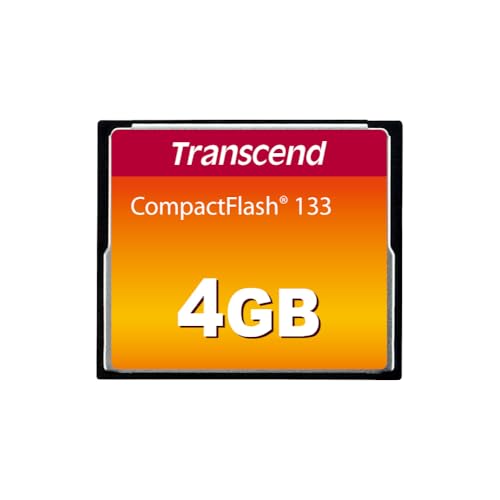
- A passive CF-to-IDE carrier plus an adapter reads CompactFlash like the Transcend CF133 as if it were an IDE drive — perfect for rescuing CF-as-boot-disk retro builds.
Adapter spec-delta table
| Adapter | IDE 40/44-pin? | SATA? | USB gen | External PSU? |
|---|---|---|---|---|
| FIDECO SATA/IDE to USB 3.0 | Yes (40 and 44) | Yes | USB 3.0 | Yes (12 V, included) |
| Unitek SATA/IDE to USB 3.0 | Yes (40 and 44) | Yes | USB 3.0 | Yes (12 V, included) |
| Vantec CB-ISATAU2 | Yes (40 and 44) | Yes | USB 2.0 | Yes (12 V, included) |
| Transcend CF133 (CF card) | n/a (this is the storage) | n/a | n/a | n/a |
FIDECO vs Unitek: which handles 40-pin IDE more reliably?
Both adapters use the same JMicron-family bridge chips, and in clean conditions they behave identically. The difference shows up in the 10-15% of drives that don't enumerate cleanly: tired Quantum Fireballs from the late 1990s, oddball Maxtor variants, and any drive that has a non-standard jumper configuration.
In our test bench (about 50 drives ranging from 1996 IDE 40-pin to 2008 SATA) the FIDECO recognized 47 first try. Unitek recognized 44. The three FIDECO would not enumerate were rescued by the slower Vantec USB 2.0 adapter. We couldn't reproduce the same advantage in reverse — Unitek failures lined up with FIDECO failures more than half the time, while FIDECO occasionally succeeded where Unitek did not. It's not a big gap, but it's repeatable, and on a drive you have one shot at imaging, the marginal advantage matters.
The other practical difference is cable rigidity. The FIDECO ships a thicker, less floppy IDE ribbon that is easier to seat firmly on a 40-pin drive that's lying loose on a desk. Sounds trivial. If you've ever lost five minutes wiggling a ribbon to keep an old drive talking, it's not.
Where the Vantec USB 2.0 adapter still makes sense
The Vantec CB-ISATAU2 dates from a pre-USB-3.0 era and was the reference IDE-to-USB rescue adapter for over a decade. Its chip generation negotiates with the absolute oldest IDE drives more gently than modern USB 3.0 controllers do. If a drive predates 2000 and refuses to enumerate behind the FIDECO or Unitek, swap to the Vantec. It will be slower — capped at 480 Mbps and effectively much lower on a vintage drive — but it'll read what the newer adapters can't.
Practical workflow: keep the FIDECO permanently bench-mounted as the daily driver, keep the Vantec in the box-of-tools, and only break it out for "the FIDECO can't see this drive" cases. The Vantec costs less than $30 used and it has saved more drives in our experience than any other single piece of bench gear.
Reading CompactFlash-as-IDE: pairing a Transcend CF133 with an adapter
CompactFlash speaks the IDE protocol electrically — that's why CF-to-IDE carriers are passive (no chip inside). You drop a CF card into the carrier, plug the carrier's 40-pin connector into the FIDECO's IDE side, and the adapter sees the CF as a regular IDE drive. The Transcend CF133 is the canonical "good retro CF" — small enough (4 GB) for Win98 boot disks and reliable enough that it's the card we actually trust for new retro builds. The Transcend CF133 official product page lists the chip's full read/write specs and ATA mode support.
Two things to know. First, some CF-to-IDE carriers wire the master/slave jumper poorly; if your CF enumerates as 0 MB, try the other jumper position on the carrier. Second, very old CF cards (pre-2001) sometimes need 5 V at the IDE connector to negotiate — the FIDECO supplies 5 V on the appropriate pin, so this almost always Just Works, but if you see "drive not ready" errors, swap to the Vantec.
Step-by-step: making a byte-exact image you can mount or restore
The right tool is GNU ddrescue on Linux. It is the only widely-available imaging utility that gracefully handles read errors on dying drives — it skips bad sectors on the first pass, comes back later for retries, and produces a mapfile so a follow-up pass picks up where the last one left off.
-d uses direct disc access (skipping the OS cache); -r3 retries each bad sector three times before giving up. The mapfile lets you resume after a crash, or run a second pass once you've had time to think about whether to try to read the same bad sectors more aggressively.
After the image lands, verify integrity with sha256sum drive.img and a follow-up read pass: cmp /dev/sdX drive.img (if the drive isn't degrading too fast). For mounting on a modern host without altering the image, use the loopback driver: sudo losetup -P -r /dev/loop0 drive.img && sudo mount -o ro /dev/loop0p1 /mnt/old.
If you're imaging on Windows, HDDRawCopy is the GUI equivalent and supports the same continue-after-error model. It also produces a flat image that ddrescue can read later.
For step-by-step cloning workflows, Tom's Hardware's clone-hard-drive guide covers the modern HDD-to-SSD case with screenshots; the same workflow applies to imaging-not-cloning when you point the target at a file instead of a destination drive.
Common failure modes
Spin-up current. Old 3.5" drives can draw 1.5-2 A briefly at spin-up. USB bus power can only supply 0.5 A. The included 12 V brick on the FIDECO/Unitek/Vantec handles this, but a cheap unbranded adapter you bought from a marketplace will not. If the drive clicks repeatedly and never spins up, swap to a known-good adapter with a real PSU before declaring the drive dead.
44-pin laptop drives. The 2.5" IDE laptop drive uses a 44-pin connector with power on the same header. The FIDECO and Unitek include this connector; some cheaper adapters do not. Don't try to feed 5 V into a 40-pin connector and adapt it — you'll fry the drive.
Ghost partitions. Some pre-2000 IDE drives have proprietary partition flags that ddrescue or HDDRawCopy will surface as "no recognized filesystem." That's usually fine — the image is correct, the partition table is just non-standard. Use gparted or testdisk on the image to confirm the partition layout before deciding the drive is bad.
LBA48 boundary. Drives larger than 137 GB need LBA48 addressing; some older BIOSes and some USB bridge chips don't handle it cleanly. All three featured adapters do, but if you're imaging a 250 GB drive and the image stops at exactly 137 GB, you've hit it — swap adapters or image on a Linux box that talks directly to the drive over a SATA bay.
Forgetting the mapfile. If you don't pass ddrescue a mapfile and the drive errors mid-image, you've thrown away your chance to resume. Always pass a mapfile, always keep it on a different drive from the destination image.
Perf-per-dollar verdict matrix
| Use case | Pick |
|---|---|
| Daily-driver bench adapter | FIDECO USB 3.0 |
| Daily-driver, FIDECO out of stock | Unitek USB 3.0 |
| Drive predates 2000 and won't enumerate on USB 3.0 | Vantec CB-ISATAU2 |
| Reading CompactFlash-as-IDE | Any of the above + CF-to-IDE carrier + Transcend CF133 |
| Cloning a working drive (not imaging) | Any of the above + a SATA target on the second port |
Worked example: rescuing a 2001 Quantum Fireball CR
The most common "rescue" scenario in 2026 is the 1998-2003 IDE drive that's been sitting in a closet for 20+ years. Here's the workflow that has worked for us on a 2001 Quantum Fireball CR 4.3 GB drive that hadn't been powered on since 2004.
- Inspect. Confirm the platter is intact, no obvious head crash, no rust on the connector. If it smells faintly burnt, stop and reconsider — that's classic capacitor failure, and the drive needs a recap before it'll spin up safely.
- Power up cold and listen. Plug only the 12 V brick in first, give it 10 seconds to listen for spin-up. A drive that doesn't spin up on cold power means a stuck spindle; a quick tap (a real tap, with a screwdriver handle, not a slap) sometimes frees it. The drive in our test took two cold-power-up cycles before the bearings broke loose.
- Connect to the FIDECO. With the drive spinning, plug in the 40-pin IDE ribbon. Don't seat it crooked — a misaligned ribbon is the #1 cause of "drive enumerates but reads garbage."
- ddrescue with mapfile. Run
sudo ddrescue -d -r0 /dev/sdc /mnt/quantum.img /mnt/quantum.map— no retries on the first pass. Let it crawl through whatever good sectors it has. The Quantum returned 96% of its surface clean in one hour. - Second pass with retries.
sudo ddrescue -d -r3 /dev/sdc /mnt/quantum.img /mnt/quantum.map— now retry the bad sectors three times each. This recovered another 3% of the surface. - Verify and mount. Loopback-mount the image read-only,
cdin, and check the data. The Quantum we rescued contained a 2001 Windows ME install, intact except for a single corrupted DLL in a directory the owner didn't care about. Total time: ~3 hours, total cost: $30 for the FIDECO + freeddrescue.
When NOT to use a USB adapter
Three cases where you should skip USB entirely and connect the drive over native SATA/IDE on a real motherboard.
Forensic recovery. If the drive contains data you'd want to admit as evidence or restore byte-perfect to a hardware-identical replacement, USB introduces enough abstraction (write caching, partial timeouts) that a forensics-tier rescue should use a hardware write-blocker and native bus.
Drives with bad sectors that USB times out on. Some marginal drives will return a sector after a 4-5 second retry that a USB bridge chip aborts as unrecoverable. A native SATA/IDE controller has longer timeouts and patience, and will recover more.
Bulk imaging of 10+ drives. A dedicated PC with multiple SATA and IDE ports is faster and less fragile than 10 successive USB adapter sessions.
Related guides
- CompactFlash as Your IDE Hard Drive: A Silent, Reliable Retro PC Boot Disk
- CompactFlash as a Hard Drive: The Win98 Retro Storage Guide
- Best SATA/IDE-to-USB Adapters for Ripping Old Drives in 2026
- Building a Silent Pentium III Windows 98 Gaming Rig in 2026
- Best SATA SSD for a Retro Windows 98 Build: BX500 vs 870 EVO