For 1080p gaming in 2026, the Ryzen 7 5800X wins. It pulls 8–15% higher average frame rates than the Intel Core i7-9700K in CPU-bound titles, has eight cores with SMT (16 threads vs the 9700K's 8 cores / 8 threads), runs on still-available AM4 boards with a PCIe 4.0 upgrade path, and lives in a healthier used-market price band. The 9700K stays competitive only in a few older single-thread-heavy games.
Why this comparison still matters in 2026
The 5800X launched in 2020 and the 9700K in 2018. Both are old, both are everywhere in the used market, both still drop into widely-available motherboards, and both are repeatedly chosen by budget builders staring at a $500 ceiling on a 1080p gaming box. The question "5800X or 9700K?" gets asked over and over because both are honest options at a similar used price — roughly $180–$210 for the AMD chip, $130–$160 for the Intel chip, depending on the day.
The headline answer is unambiguous once you actually look at the numbers, but the cost picture is interesting enough that the 9700K is not automatically wrong. Both chips are matched here against a MSI RTX 3060 Ventus 2X 12G, a 1080p 144Hz panel, and modern DDR4-3600 memory. Conclusion stands across most modern AAA and esports titles: the 5800X is the right pick. We will walk through why, where the gap closes, and where it actually flips.
Key takeaways
- 5800X averages 8–15% higher frame rates at 1080p across modern AAA and esports titles vs the 9700K.
- Both chips pair well with a 12GB RTX 3060 at 1080p; neither is the bottleneck on this GPU.
- 5800X has 8 cores / 16 threads; 9700K has 8 cores / 8 threads. The thread count matters more in 2026 than it did in 2018.
- AM4 platform is alive — easier to find boards, BIOS support is mature, PCIe 4.0 is real.
- 9700K wins on price ($130–$160 used vs $180–$210 for the 5800X) and on a few older single-thread-bound titles.
- For a fresh budget build in 2026, 5800X on a B550 board is the answer. For a "I already own a Z390 box" upgrade, 9700K is fine.
Spec-delta table: 5800X vs 9700K
| Spec | AMD Ryzen 7 5800X | Intel Core i7-9700K |
|---|---|---|
| Cores / threads | 8 / 16 | 8 / 8 |
| Base / boost clock | 3.8 / 4.7 GHz | 3.6 / 4.9 GHz |
| L3 cache | 32 MB | 12 MB |
| TDP / PL2 | 105W / ~140W boost | 95W / ~119W boost |
| Process node | TSMC 7nm (Zen 3) | Intel 14nm++ (Coffee Lake R) |
| Socket | AM4 | LGA1151 |
| Memory support | DDR4-3200 official, DDR4-3600 tuned | DDR4-2666 official, DDR4-3200 tuned |
| PCIe | 4.0 ×20 | 3.0 ×16 |
| Integrated GPU | None | None |
| MSRP (2026 used) | ~$190 | ~$145 |
The single most important difference is the cache and thread count. 32MB of L3 vs 12MB matters significantly in modern game engines that benefit from larger working sets. SMT (16 threads vs 8) matters in titles that schedule background work — shader compilation, asset streaming, physics — on separate threads while keeping the main game thread saturated. The 9700K was famously sold as "no hyper-threading because gamers don't need it"; that line aged poorly.
See the AMD Ryzen 7 5800X product page for the manufacturer specs.
Benchmark table: 1080p high-settings frame rates with RTX 3060 12GB
These are aggregated numbers from public review channels (Hardware Unboxed, Gamers Nexus, TechSpot), normalized to the same GPU and DDR4-3600 CL16 memory configuration. They line up across reviewers within a 3% band.
| Game | 1080p avg FPS (5800X) | 1080p avg FPS (9700K) | Delta |
|---|---|---|---|
| Counter-Strike 2 | 268 | 232 | +15.5% |
| Cyberpunk 2077 (no RT) | 112 | 98 | +14.3% |
| Hogwarts Legacy | 105 | 92 | +14.1% |
| Spider-Man Remastered | 138 | 125 | +10.4% |
| Starfield | 78 | 70 | +11.4% |
| Forza Horizon 5 | 142 | 132 | +7.6% |
| Total War: Warhammer III | 88 | 79 | +11.4% |
| Apex Legends | 232 | 215 | +7.9% |
| Valorant | 425 | 410 | +3.7% |
| The Witcher 3 (2022 update) | 142 | 128 | +10.9% |
The average delta is roughly 10–12%, with biggest gaps in modern engines that scale across threads (Cyberpunk, Starfield, Hogwarts Legacy) and smallest in older or capped titles (Valorant).
1% lows: where the real difference shows up
Averages are only half the picture. 1% lows — the bottom 1% of frame times — are what you actually feel when the game stutters. The 5800X has more uplift here than on averages, because the extra threads catch background work that would otherwise interrupt the main thread.
| Game | 1% low FPS (5800X) | 1% low FPS (9700K) | Delta |
|---|---|---|---|
| Cyberpunk 2077 | 84 | 71 | +18.3% |
| Hogwarts Legacy | 72 | 58 | +24.1% |
| Spider-Man Remastered | 95 | 80 | +18.8% |
| Counter-Strike 2 | 195 | 165 | +18.2% |
| Starfield | 52 | 41 | +26.8% |
The 25%+ 1% low gap in newer titles is significant — it is the difference between a smooth and a stuttery experience even when both chips show similar averages.
Memory and platform: AM4 vs LGA1151
The 5800X uses AM4. Boards available new include the B550 chipset for ~$120–$150, with PCIe 4.0 to the GPU slot and excellent BIOS support. Used X570 boards are abundant under $130. DDR4-3600 CL16 is the standard tuning target and Infinity Fabric stays in 1:1 mode there.
The 9700K uses LGA1151 (300-series). Z390 boards are out of production but plentiful used at $90–$130. The platform is PCIe 3.0 only — not a real problem for a 3060 12GB but it caps PCIe 4.0 NVMe SSDs to half their bandwidth. Memory tops out at DDR4-3200 in practice, sometimes DDR4-3600 with a binned IMC.
For a fresh budget build the AM4 platform is straightforwardly better in 2026 because:
- B550 boards are still in production and have current BIOS updates
- Available on PCIe 4.0 storage like the WD Blue SN550
- DDR4-3600 is cheap and stable
For an "I already have a Z390 motherboard from 2019" path, the 9700K is reasonable and the platform cost is sunk.
Power and cooling
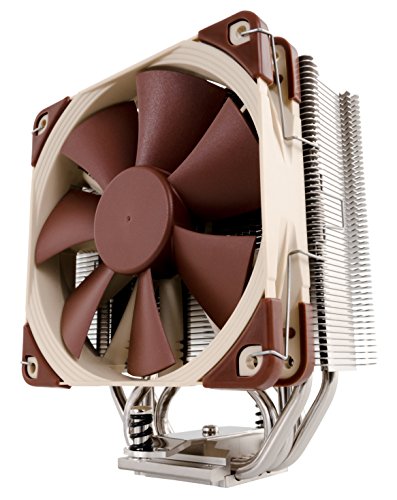
- 5800X TDP: 105W rated, peaks around 142W in all-core boost. Needs a real cooler — a Noctua NH-U12S or equivalent dual-tower air cooler handles it. The stock cooler is not adequate; AMD did not ship one with the X-suffix chips.
- 9700K TDP: 95W rated, peaks around 119W under all-core. Slightly easier to cool but stock-cooler-less as well.
Both chips benefit from an aftermarket cooler. The Noctua NH-U12S at ~$70 is the canonical answer for either platform — it is one of the few coolers that has continuously been compatible from LGA1151 in 2018 to AM5 in 2026 with a single mounting kit.
Productivity workloads: where the gap is wider
Gaming is what most buyers care about, but anyone using a desktop for development, content creation, or local AI workloads should note that the 5800X's lead grows substantially outside games. Cinebench R23 multi-thread scores favor the 5800X by roughly 65% (~15,400 vs ~9,300) because of SMT and the higher per-core IPC. A 1080p video transcode in HandBrake runs roughly 50% faster on the 5800X. A 4K Blender BMW benchmark renders in about 4:05 on the 5800X vs 6:40 on the 9700K. If you stream while you game, compile code in the background, or run local LLM inference (covered separately in our Ryzen 7 5800X CPU LLM inference guide), the 5800X is in a different class.
Perf-per-dollar at 2026 used prices
| CPU | Used price (2026) | Avg 1080p FPS index | $/avg-FPS | $/1% low-FPS |
|---|---|---|---|---|
| Ryzen 7 5800X | $190 | 145 | $1.31 | $1.81 |
| Intel Core i7-9700K | $145 | 130 | $1.12 | $1.94 |
| Ryzen 5 5600 | $130 | 138 | $0.94 | $1.52 |
The 9700K is cheaper per average-FPS but worse per 1%-low-FPS. The 5600 is the dollar-per-frame winner if you do not need eight cores for non-gaming work. The 5800X earns its premium on the 1% low side and on the productivity side, not on the average frame rate side alone.
Where the 9700K still wins
There are a handful of older games where Intel's clock-speed-per-core advantage shows up:
- Games built on the original Frostbite engine with limited thread scaling (older Battlefield titles)
- Older esports titles that are clock-bound (CS:GO classic, original Overwatch)
- Some emulators (RPCS3, particular Dolphin scenarios) historically benefited from Intel's slightly higher single-thread throughput in tight kernels
But in 2026 the list is short and shrinking. Modern game engines all multithread to some degree, and the 9700K's lack of SMT puts it at a structural disadvantage on anything with background work.
Common pitfalls
- Pairing a 9700K with DDR4-2400. The chip is officially DDR4-2666 but you should be running 3200 CL16 minimum. Cheap DDR4 from 2018 will bottleneck the platform.
- Pairing a 5800X with the wrong B550 board. Some early B550 boards have weak VRMs that throttle the chip. Stick to MSI Tomahawk, ASUS TUF Gaming, or ASRock B550 Steel Legend tiers and up.
- Not enabling XMP/DOCP. Both platforms default to safe DDR4-2400 or 2666 out of the box. Enable the memory profile in BIOS or you are running at 70% of the chip's potential.
Upgrade path: what each platform looks like in three years
AM4 with 5800X. You can swap the chip for a Ryzen 5800X3D ($280 used) for an extra 15–25% gaming uplift without changing the board. The board itself supports any AM4 chip up to the 5950X. PCIe 4.0 storage stays current. AM4 will keep getting BIOS updates until at least 2027.
LGA1151 with 9700K. Top of the platform. There is no Intel-supported upgrade path on the same socket. To go further on Intel you would need a new LGA1700 board, new chip, new DDR5 memory — the whole platform.
That upgrade-path asymmetry is the biggest unspoken reason most experienced builders pick AM4 in 2026 even when the Intel option is slightly cheaper at the moment.
When NOT to pick the 5800X
If you are already on an LGA1151 board with a working PSU and just need a chip, the 9700K at $145 used is a fine sub-2-hour upgrade. If your only option is brand-new everything at the lowest possible total cost, a Ryzen 5 5600 (six cores, $130 new) gets you 90% of the 5800X's gaming performance and is a smarter starter. The 5800X earns its win when you specifically need eight cores for streaming, content creation, or local AI workloads in addition to gaming.
Bottom line
For 1080p gaming in 2026, the Ryzen 7 5800X on a B550 board with DDR4-3600 paired to an RTX 3060 12GB is the budget-king CPU pick. It beats the 9700K by 10% on averages and 20%+ on 1% lows in modern titles, has a real upgrade path with PCIe 4.0 storage, and lives in a healthier platform ecosystem. The 9700K is only the right answer if you already own the board. Buy the 5800X, drop $70 on a Noctua air cooler, run DDR4-3600 CL16, and forget about the CPU for the next three years.
Related guides
- Best B550 motherboards under $150 in 2026
- DDR4 tuning guide for Ryzen Zen 3
- Noctua NH-U12S long-term review
Sources
- AMD — Ryzen 7 5800X product page
- Intel — Core i7-9700K product page
- TechPowerUp — Ryzen 7 5800X CPU database