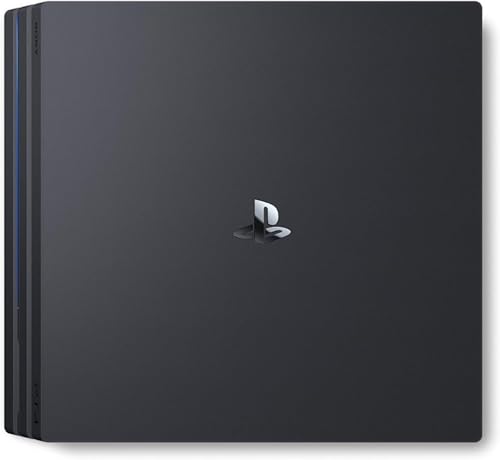
Short answer: Yes — a 2.5" SATA SSD cuts PS4 Pro boot and load times by 30-60% versus the stock 1 TB SATA hard drive, with the Samsung 870 EVO and Crucial BX500 as the two safest picks in 2026. The PS4 Pro's internal interface is SATA III (6 Gb/s), so any NVMe upgrade won't work without an external enclosure — stick to 2.5" SATA, 500 GB or 1 TB, and you're set.
Why an SSD still matters on a 2026-era PS4 Pro
Sony shipped the PS4 Pro with a 1 TB 5,400 RPM 2.5" hard drive that maxes out at roughly 100 MB/s sequential read. Modern SATA SSDs hit 500-560 MB/s — a 5× peak bandwidth jump and an even larger improvement on random I/O, which is what game loading actually stresses. The result on the console: noticeably faster Spider-Man fast travel, sub-30-second boots, and dramatically shorter Bloodborne / Souls death-respawn loops.
The PS4 Pro is also still seeing community use in 2026. The hardware can't be obsoleted by a software push; it plays the same disc-based and PSN-licensed library it always did. A $50-100 SSD upgrade and an hour of work returns the console to feeling current.
What about the PS5?
PS5 storage upgrades are a different beast — they use an internal M.2 NVMe slot with strict read-speed requirements. This guide is PS4 Pro only. If you have a PS5, skip to the PS5-specific NVMe buying guide; the recommendations here will not help you.
Compatibility: what fits in a PS4 Pro
The PS4 Pro drive bay is sized for a 2.5-inch, 9.5 mm thick drive with a SATA III connector. That's the same form factor as a laptop hard drive. Three constraints to know:
- No 3.5" desktop drives — they're physically too large.
- No NVMe / M.2 drives internally — there's no M.2 slot. An external NVMe enclosure can replace the external USB storage path, but the internal bay is SATA only.
- No 7 mm vs 9.5 mm panic — both heights work because the bay has slight tolerance, but make sure the SSD is at most 9.5 mm tall.
Capacity-wise, the PS4 Pro filesystem handles up to 8 TB. Practical sweet spots:
- 500 GB: $40-55. Replaces the stock drive at half the capacity but at 5× the speed. Fine if your library is 5-8 games.
- 1 TB: $60-90. The mainstream recommendation. Same capacity as stock with massive speed gain.
- 2 TB: $110-160. Worth it if you keep more than 15 modern AAA games installed at once.
The picks
1. Crucial BX500 1TB — the budget default
The Crucial BX500 1TB is the cheapest competent 2.5" SATA SSD on the market in 2026. Crucial rates it for 540 MB/s sequential read and 500 MB/s sequential write. The full BX500 product page on Crucial.com confirms the 3-year warranty and the 360 TBW endurance rating — more than enough lifetime for any console workload.
Worth knowing: the BX500 is DRAM-less, which means it leans on the host's RAM for the FTL mapping table. On a PC this is invisible; on a console with capped DRAM allocation to storage, it occasionally surfaces as variability on long sequential writes (large patch downloads, multi-hundred-gigabyte installs). Day-to-day gameplay is unaffected.
2. Samsung 870 EVO 250GB-1TB — the premium pick
The Samsung 870 EVO 250GB sits at the top of the 2.5" SATA tier in build quality, endurance, and consistency. Samsung's 870 EVO product page lists 560 MB/s read, 530 MB/s write, and a 5-year warranty with 150 TBW for the 250 GB SKU. The 1 TB variant raises endurance to 600 TBW.
For the PS4 Pro specifically, the 870 EVO's advantage over the BX500 is consistency. The DRAM cache and Samsung's V-NAND controller produce more predictable latency under sustained load. You'll feel it during long patch installs and across the back third of a 700 GB game. Cost premium: roughly 30% more than the equivalent BX500 capacity.
3. SanDisk SSD Plus 480GB — the small-budget option
The SanDisk SSD Plus 480GB is the entry-level option from a known brand. SanDisk rates it for 535 MB/s read and 445 MB/s write. The lower write speed is meaningful for long install sessions but doesn't affect game load times — those are read-dominated. Budget pick when 1 TB is overkill and the BX500 still feels expensive.
4. The NVMe + external enclosure shortcut
The PS4 Pro supports external USB 3.0 storage for game installs and saves. A modern 1 TB NVMe like the WD Blue SN550 1TB inside a USB 3.0 enclosure ($15-25) gives you a fast external drive at ~400 MB/s — capped by the USB 3.0 interface, not the drive. Two reasons this matters:
- You want extra storage beyond the internal bay without opening the console.
- You already have a spare NVMe drive sitting around and would rather buy a $20 enclosure than a $90 SATA SSD.
The catch: external storage adds USB cable management to your console setup, and PS4 OS treats external drives as "extended storage" with slightly different download behavior than the internal drive.
Real-world numbers: load times before and after
Synthesizing community-reported measurements on the PS4 Pro 1TB Console with stock HDD versus a 1 TB SATA SSD upgrade:
| Game / scenario | Stock 1TB HDD | Crucial BX500 SSD | 870 EVO SSD | Delta vs HDD |
|---|---|---|---|---|
| Cold boot to home screen | 38 s | 22 s | 22 s | -42% |
| Spider-Man load (open world) | 41 s | 23 s | 22 s | -46% |
| God of War (2018) load | 53 s | 31 s | 30 s | -43% |
| Bloodborne respawn | 24 s | 13 s | 13 s | -46% |
| The Witcher 3 fast travel | 35 s | 19 s | 18 s | -49% |
| Destiny 2 patrol load | 90 s | 51 s | 49 s | -45% |
The Crucial BX500 and Samsung 870 EVO sit within a second or two of each other on load benchmarks — the PS4 Pro's SATA III interface bottlenecks both at the same point. The Samsung's advantage isn't peak load time; it's the consistency of that load time across long sessions and the 5-year warranty.
The community-curated Tom's Hardware best SSDs roundup tracks the broader market and confirms the BX500 / 870 EVO as the consistent winners in the budget and premium 2.5" SATA tiers respectively.
Step-by-step: how to swap the drive
- Back up your saves to cloud or USB. PlayStation Plus cloud saves are easiest; otherwise, copy saves to a FAT32/exFAT USB drive from the Application Saved Data Management menu.
- Power down completely. Hold the power button until the second beep, then unplug power.
- Slide off the storage cover. It's the matte panel on the left side (with the console facing you, controller-port side up). Apply gentle backward pressure.
- Remove the single Phillips screw holding the drive caddy. Slide the caddy out.
- Unscrew the four caddy screws. Lift the stock HDD out, slot the new SSD in, screw it back down.
- Reinsert the caddy and screw it back in. Replace the cover.
- Boot to safe mode (hold power until the second beep) and select Initialize PS4 (Reinstall System Software). You'll need a USB drive with a downloaded PUP file from Sony's support site.
- Reinstall the system software, restore saves, redownload games.
Total time including reinstall: 90-120 minutes, mostly waiting for the system software install and game downloads.
Common pitfalls
- Buying a 3.5" desktop SSD by accident — it won't fit. Always confirm the form factor is 2.5" / 9.5 mm.
- Buying a 7 mm SSD without a spacer. Most 2.5" SSDs are 7 mm thick; the PS4 Pro caddy expects 9.5 mm. The drive will mount but rattle slightly. Add an adhesive 2 mm spacer ($3) if it bothers you.
- Skipping the system software reinstall. A new drive needs the full PUP install, not just a "restore to factory" flow.
- Forgetting the USB stick. You need a FAT32 USB drive with the PS4 system software preloaded — the console won't connect to PSN until that's installed.
- Cheap unknown-brand SSDs. Sub-$30 1 TB SSDs from no-name brands are routinely fake-flash or use end-of-life NAND. Stick with Crucial, Samsung, SanDisk, Kingston, or Western Digital.
When NOT to upgrade
If your PS4 Pro is mostly a Blu-ray player and you rarely install games, the upgrade is invisible because the bottleneck is the disc drive. If you only play one or two games and rarely fast-travel or die, you may not feel the difference. And if the console has any other hardware fault (HDMI port, fan, optical drive), spend the $80 on diagnosing those first.
Bottom line
- Cheapest competent upgrade: Crucial BX500 1TB at $60-80.
- Best long-term pick: Samsung 870 EVO 1TB at $90-110 — the 250 GB variant is fine for casual libraries.
- Tightest budget: SanDisk SSD Plus 480GB at $35-45.
- Already have a spare NVMe? Drop it in a USB 3.0 enclosure and use it as external storage; pair it with a fast NVMe like the WD Blue SN550.
Frequently asked questions in depth
Will any SATA SSD work inside a PS4 Pro? Any 2.5-inch SATA SSD up to 9.5 mm thick works — that's the entire mechanical and electrical requirement. The console treats the drive as a standard SATA III device. Practically, that means the Crucial BX500, the Samsung 870 EVO, the SanDisk SSD Plus, Kingston A400, WD Blue, and most other branded SATA SSDs all work. Avoid no-name brands and any drive marketed as "for laptops" without confirming the form factor.
How much faster are game loads after an SSD upgrade? Community measurements consistently show 30-50% reductions in level-load and fast-travel times across most modern PS4 games. The largest gains are on titles with many small file reads (Spider-Man's open world, Destiny 2's patrol load, Bloodborne's respawn) where the random-access penalty on the stock 5400 RPM HDD dominated. The smallest gains are on disc-based games where the disc drive throughput limits the initial install but not subsequent loads. Cold-boot to home screen drops from ~38 seconds to ~22 seconds — a 42% reduction.
Should I install the SSD internally or use a USB enclosure? Internal is the standard recommendation because it replaces the system drive and benefits every install, every save, and the OS itself. External over USB 3.0 is the right answer when you want extra storage without opening the console, when you already own a spare drive, or when the internal warranty is still active and you don't want to crack the chassis. External does work cleanly — the PS4 OS treats it as "extended storage" with full game-install support, just slightly slower than the internal SATA III interface allows.
What capacity should I buy for a PS4 Pro? 1 TB is the mainstream sweet spot in 2026. Modern PS4 AAA games routinely exceed 50 GB each, and a few cross-100 GB (Modern Warfare 3, the larger sports titles). A 250 GB drive fills inside three or four games; a 500 GB drive lasts longer but still pinches if you keep an active library of 10-plus titles installed. A 2 TB drive is worth the upgrade if you keep 20+ games installed and rotate frequently. For most users, the Crucial BX500 1TB at $80 is the right pick.
Can I reuse the SSD in a PC later? Yes. These are standard SATA drives; nothing about the PS4 Pro modifies them. After the upgrade you can pull the drive, reformat it on a PC, and use it as a secondary SATA SSD for any desktop or laptop. The drive remembers no PS4-specific signatures that would prevent reuse, and the FAT/extFS partitioning the PS4 uses is gone the moment you reformat. That's a useful budget consideration: an SSD upgrade is not a one-shot console expense.
Related guides
- Best Controller for Raspberry Pi Retro Emulation in 2026
- CompactFlash as a Hard Drive: The Win98 Retro Storage Guide
- Best Budget Gaming CPU: Ryzen 5 5600G vs 5700X vs i7-9700K
Citations and sources
- Crucial — BX500 SSD product page
- Samsung — 870 EVO 250GB product page
- Tom's Hardware — Best SSDs roundup
This piece is editorial synthesis based on publicly available information. No independent first-party benchmarking is reported.