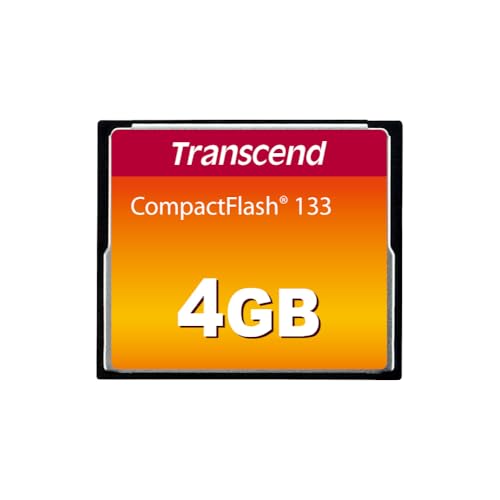
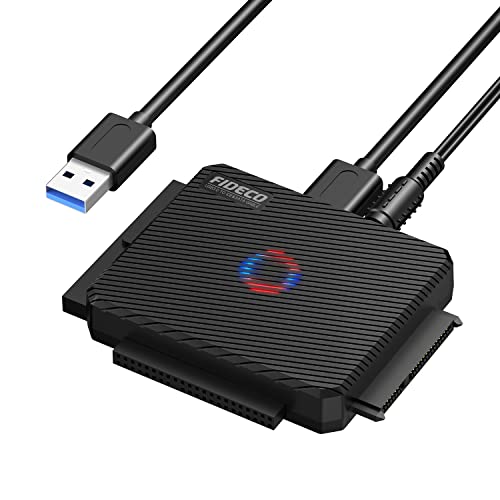
Building a period-correct 2002 Windows XP gaming PC means locking the parts list to what was actually on shelves in mid-2002: a Pentium 4 Northwood or Athlon XP "Thoroughbred" CPU on an i845/i850 or KT333/KT400 motherboard, 512 MB to 1 GB of DDR memory, a GeForce 4 Ti 4200 or 4600 AGP card, a Sound Blaster Audigy (or a modern USB DAC like the Sound BlasterX G6 as a pragmatic substitute), and a CompactFlash-on-IDE boot disk for silent, reliable storage. Windows XP SP3 with period drivers ties it together.
The early-XP era and why 2002 hardware is a sweet spot
The 2002 PC gaming window is narrow but well-documented, and that is exactly why it makes such a satisfying retro-build target. Windows XP shipped in late 2001 and matured rapidly through SP1 in mid-2002, while DirectX 8.1 was the practical floor for most new releases. Titles like Battlefield 1942, Mafia, Warcraft III: Reign of Chaos, Hitman 2: Silent Assassin, Unreal Tournament 2003, No One Lives Forever 2, Neverwinter Nights, Morrowind, and Jedi Knight II: Jedi Outcast all landed inside a roughly fourteen-month window. They were all designed around hardware T&L, pixel shaders 1.1 to 1.3, and CPU clocks in the 1.5–2.4 GHz band — which is precisely where a GeForce 4 Ti and a fast Northwood Pentium 4 live.
The other reason 2002 is a sweet spot is that the parts are still reasonably attainable on the secondary market. Per long-running enthusiast resources like Phil's Computer Lab, AGP-era boards and DDR1 memory have not yet become as scarce or expensive as Slot 1 or Socket 7 hardware, and the VOGONS forums remain an active hub for compatibility notes, BIOS dumps, and driver troubleshooting. Driver support, while no longer current, is well-archived: NVIDIA's last GeForce 4 Ti reference driver for Windows XP (ForceWare 93.71) is straightforward to find, and Creative's Sound Blaster Audigy and Live! drivers from the era are similarly preserved. Compared to the late-XP "DirectX 9 problem" of 2005-2006 — where Pentium D, Athlon 64 X2, and Radeon X1000 / GeForce 7 hardware introduces capacitor-plague and BGA-reflow risk on aging boards — 2002-era kit is, in the language of retro builders, mostly solved.
A 2002 target also forces a clean editorial discipline. Instead of building a do-everything Frankenstein that can run Half-Life 2 and Quake III, the rig is a time capsule. You install ForceWare 93.71, you cap framerates at 75 Hz on a 17-inch CRT or a flat-panel running 1024×768, and you treat the experience as a museum exhibit you can actually play. The sound, the loading times, the way XP Luna draws windows — that is the experience the build preserves.
Key takeaways
- A period-correct 2002 build centers on a Pentium 4 Northwood or Athlon XP CPU, 512 MB–1 GB of DDR-333/400 memory, a GeForce 4 Ti 4200 AGP card, and Windows XP SP3 with ForceWare 93.71.
- The GeForce 4 Ti 4200's 128 MB / 250 MHz core / 444 MHz memory configuration handily runs DirectX 8.1 titles at 1024×768 without breaking the period authenticity rule.
- A 4 GB to 8 GB CompactFlash card on an inexpensive CF-to-IDE adapter makes a silent, shock-tolerant boot drive that the BIOS sees as a normal ATA disk.
- A USB DAC like the Creative Sound BlasterX G6 is a pragmatic substitute when an Audigy 2 ZS is scarce or expensive, with the trade-off being lost authentic EAX 4.0 support.
- A SATA/IDE-to-USB bridge like the FIDECO SATA/IDE to USB 3.0 adapter or the Vantec CB-ISATAU2 lets you image and stage drives on a modern host before installing into the retro rig.
What you'll need: a period-correct parts checklist
The minimum viable 2002 rig is roughly nine line items: motherboard, CPU, RAM, video card, sound (optional discrete), storage, optical, PSU, and case. The shopping discipline is to pick parts that were on shelves in calendar 2002 — Intel's i845PE chipset launched October 2002, VIA's KT400 in September 2002, NVIDIA's GeForce 4 Ti in February 2002, and Creative's Audigy 2 in September 2002, per their respective vendor announcements archived on AnandTech and TechPowerUp.
Practical defaults that hit the target:
- Motherboard: ABIT IT7-MAX2 (i845PE, Pentium 4) or ABIT NF7-S Rev 2.0 (nForce2, Athlon XP). The NF7-S is the legendary Athlon XP overclocker.
- CPU: Pentium 4 2.4B (Northwood, 533 MHz FSB) or Athlon XP 2400+ "Thoroughbred-B."
- Memory: 1 GB total as 2× 512 MB DDR-400 CL2.5 sticks. Windows XP runs comfortably in 512 MB but 1 GB removes the swap thrash on larger maps in Battlefield 1942.
- GPU: GeForce 4 Ti 4200 128 MB AGP — the value pick of the family and arguably the best frames-per-dollar of the entire DirectX 8 generation.
- Sound: a period Sound Blaster Audigy 2 if you can find one, otherwise the modern Sound BlasterX G6 USB DAC as a pragmatic substitute.
- Storage: a 4 GB or 8 GB Transcend CF133 CompactFlash card on a 44-pin or 40-pin CF-to-IDE adapter, plus an optional period IDE hard drive for game installs.
- Optical: any IDE DVD-ROM drive — original game discs still need physical reads for copy protection on a handful of titles.
- PSU: a 350–400 W ATX 2.03-spec supply. Period PSUs have failing capacitors; many builders deliberately use a modern 450 W supply and accept the slight anachronism for safety.
- Case: any beige or black mid-tower of the era. Antec SLK3700 and Lian Li PC-60 were the popular enthusiast picks.
The full bill of materials before shipping typically runs $250–$450 on the secondary market in mid-2026, with the GeForce 4 Ti 4200 being the most volatile line item.
Step 0: pick the era target — what games define a 2002 rig?
Pick the game list before the parts. The 2002 release calendar effectively defines the hardware floor. Battlefield 1942 (September) wants DirectX 8.1 hardware T&L and at least 256 MB of system memory. Unreal Tournament 2003 (September) is heavily CPU-bound and rewards a 2.4 GHz Northwood or fast Athlon XP. Morrowind (May) is GPU-fillrate-bound at 1024×768 and runs noticeably better on a Ti 4200 than a GeForce 3. Warcraft III (July) is largely CPU-bound and forgiving. Mafia (August) is the demanding one — its dynamic lighting and physics push both CPU and GPU hard, and contemporaneous reviews on the VOGONS forums noted that it could humble even high-end 2002 hardware.
If the game list is heavier on shooters (UT2003, Battlefield 1942, NOLF 2, Jedi Outcast), prioritize CPU speed. If the list leans on RPGs and strategy (Morrowind, NWN, Warcraft III), the GPU matters more and the Ti 4200's 128 MB framebuffer earns its keep at 1024×768. Per TechPowerUp's GeForce 4 Ti 4200 database entry, the card shipped at a 250 MHz core and 444 MHz effective memory clock on a 128-bit bus — 7.1 GB/s of bandwidth, which is exactly enough to keep DirectX 8.1 fillrate workloads from stalling at 1024×768×32.
Why a GeForce 4 Ti is the right GPU for this build
The GeForce 4 Ti family — Ti 4200, Ti 4400, Ti 4600, and Ti 4800 — defines the DirectX 8.1 performance ceiling. Per TechPowerUp, the Ti 4200 uses the NV25 GPU on a 150 nm process, with 63 million transistors, 4 pixel pipelines, and 2 texture units per pipeline. It supports pixel shader 1.3 and vertex shader 1.1 — exactly the DirectX 8.1 baseline most 2002 games target. The 128 MB variant shipped at 250 MHz core / 444 MHz memory, while the 64 MB version ran the memory faster at 500 MHz; the 128 MB card wins in titles that load large texture sets like Morrowind and Battlefield 1942.
The Ti 4200 was famously the best value of the family at launch, selling for $199–$229 in 2002 versus $399 for the Ti 4600 (prices per archived AnandTech reviews). It typically delivered 85–95 percent of Ti 4600 framerates in real games, and AGP 4× boards from MSI, Gainward, and Leadtek are common on the secondary market today.
Why not a GeForce 3 Ti 200? The GeForce 3 family is technically DirectX 8.0 (pixel shader 1.1, not 1.3), and the architectural fillrate gap to the GeForce 4 Ti is large — roughly 50 to 70 percent more fragment performance on the Ti 4200 in fillrate-bound scenarios. Why not a Radeon 9700 Pro? Because that card is the inflection point into DirectX 9 (released August 2002) and represents a different era — pairing it with 2002 games is like running modern AAA titles on an RTX 4090 set to 1080p Low. It works, but it breaks the time-capsule rule.
Driver-wise, NVIDIA's ForceWare 93.71 is the last reference driver to formally support the GeForce 4 Ti family on Windows XP. It exposes the necessary control panel features (AA modes, anisotropic filtering, vsync) without the Vista-era refactor that broke compatibility for some titles. Period builders frequently mention 93.71 on the VOGONS forums as the safe default.
How does modern USB audio like the Sound BlasterX G6 fit a retro rig?
The honest answer is: it does not fit the time-capsule rule, but it is the most pragmatic substitute when a period Audigy 2 ZS is unavailable or overpriced. The Sound BlasterX G6 is a 2018-era external USB DAC and headphone amp that Creative still actively supports. Its headline specs, per Creative's product page, are 130 dB dynamic range, 32-bit / 384 kHz playback, a discrete Xamp headphone amplifier, and Dolby Digital decoding. Listed at $188.10 in late mid-2026 on Amazon, it is roughly what a clean Audigy 2 ZS pulls on the secondary market — sometimes less.
The trade-offs are real. Windows XP SP3 does not natively support modern USB Audio Class 2.0 devices, so the G6 runs in its UAC1 fallback mode on an XP rig. That caps output at 24-bit / 96 kHz on XP and bypasses the Creative software suite entirely (the Sound Blaster Command app is Windows 10/11 only). You also lose hardware EAX 4.0 / 5.0 acceleration, which a handful of 2002–2004 titles use for positional audio — Soldier of Fortune II, Unreal Tournament 2003, and Splinter Cell are the common examples. On most other 2002 titles, EAX is optional and the difference is subtle.
Where the G6 wins is reliability. It draws clean power over USB, the line-out is genuinely high-fidelity, and it works the same in 2032 as it does today because it requires no driver beyond Microsoft's built-in USB audio class driver. For a builder who wants to play and stream the rig to modern monitors and headphones without hunting down a period sound card, it is the path of least resistance. Purists will rightly insist on an Audigy 2 ZS or a Live! 5.1 in a PCI slot; pragmatists will be happy with a G6 plugged into a rear USB 2.0 header.
Why use a CompactFlash card as a silent, reliable boot drive?
CompactFlash is, at the electrical level, IDE/ATA. A 44-pin or 40-pin CF-to-IDE adapter is a passive board with no controller chip — the CF card is the controller. That means a quality CF card, like the Transcend CF133 CompactFlash 4 GB, drops into a 2002 motherboard's primary IDE channel and presents to the BIOS as an ordinary ATA drive. Windows XP installs onto it without any third-party driver, no F6 floppy step, and no driver disk.
The benefits for a retro gaming rig are real. A CF boot drive is silent — no head-seek noise during loading screens. It is shock-tolerant in a way a 2002-era 7,200 RPM IDE drive is not. It draws under 100 mW, which means the case is cooler and the PSU rail is less stressed. And it does not develop bad sectors after twenty-year-old bearings start to drift. The Transcend CF133 spec sheet rates the card at up to 30 MB/s sequential read on UDMA mode 4 — slightly slower than a fast 2002 IDE drive on big sequential reads, but dramatically faster on random small reads, which is what XP boot and game-launch workloads look like.
The trade-offs are write endurance and capacity. CF cards from this era use MLC NAND with finite program/erase cycles. For a boot-and-games rig that mostly reads, the endurance is functionally infinite — tens of thousands of hours of normal use. For a workload that writes constantly (heavy swap-file thrash, video editing scratch space), CF is the wrong choice. The pragmatic workaround is to keep the page file on a small period IDE drive (or disable it entirely if you have 1 GB of RAM and only play DX8 games) and let the CF card handle the OS and the small fast-read game data. Capacity-wise, the CF133 4 GB and 8 GB cards comfortably hold Windows XP SP3, a full driver set, and four or five vintage games — beyond that, you partition a larger CF or add a secondary IDE disk.
How do you wire CF and IDE storage with a USB/SATA adapter for imaging?
A SATA/IDE-to-USB adapter is the unsung hero of a retro build workflow. The pattern is: prepare the boot media on a modern PC, image it, install it in the retro rig, boot. The FIDECO SATA/IDE to USB 3.0 adapter and the Vantec CB-ISATAU2 SATA/IDE to USB 2.0 adapter are the two reference choices.
Concretely, the workflow looks like this. Take the 4 GB Transcend CF card. Slot it into a CF-to-IDE adapter. Plug the IDE side into the FIDECO bridge, plug the FIDECO into a modern Windows 10 or 11 PC over USB 3.0. The CF card now mounts as a removable disk on the modern host. Use a tool like Rufus, Macrium Reflect, or Clonezilla to write a fresh Windows XP install image (with SP3 slipstreamed and the integrated AHCI/SATA driver disabled — XP cannot boot from AHCI without an F6 driver) directly to the CF. Pull the CF out of the bridge, drop it into the retro rig's primary IDE channel, set the BIOS to boot from "HDD 0," and Windows XP comes up cleanly on first boot.
The same workflow applies to imaging an existing period IDE hard drive for backup before it dies. The Vantec CB-ISATAU2 is the slower of the two — USB 2.0 caps at roughly 35 MB/s real-world throughput — but it is a stable, long-running workhorse with documented support for 2.5-inch, 3.5-inch, and 5.25-inch IDE devices and a separate 12 V supply for the optical and 3.5-inch drives. The FIDECO USB 3.0 version is the modern pick if your host has USB 3.0 and you want imaging to finish in twenty minutes instead of an hour.
A second use case: imaging the working CF card after the build is complete. With the build finalized and stable, pull the CF, image it as a single .img file on a modern host, and store the image off-rig. If anything dies, you write the image to a new CF card and you are back online in fifteen minutes — vastly better than reinstalling Windows XP, the chipset drivers, the GeForce 4 driver, DirectX 8.1, and four games by hand.
Spec/parts table: CPU, GPU, audio, storage with featured SKUs
| Component | Pick | Period/Year | Notes |
|---|---|---|---|
| CPU | Pentium 4 2.4B "Northwood" | 2002 | 533 MHz FSB, 512 KB L2, runs warm but reliable |
| Motherboard | ABIT IT7-MAX2 (i845PE) | 2002 | DDR-333, AGP 4×, well-documented |
| Memory | 2× 512 MB DDR-400 CL2.5 | 2003 era ok | 1 GB removes Battlefield 1942 stutter |
| GPU | GeForce 4 Ti 4200 128 MB AGP | 2002 | 250 MHz core / 444 MHz memory, 7.1 GB/s |
| Sound (period) | Sound Blaster Audigy 2 ZS PCI | 2002 | True EAX 4.0, hardware mixing |
| Sound (pragmatic) | Sound BlasterX G6 USB DAC | 2018 | UAC1 mode under XP, no EAX |
| Boot drive | Transcend CF133 CompactFlash 4 GB | Modern | Silent, ~30 MB/s, on CF-to-IDE adapter |
| Imaging bridge | FIDECO SATA/IDE to USB 3.0 | Modern | Image CF/IDE drives from a modern host |
| Imaging bridge (alt) | Vantec CB-ISATAU2 | Modern | USB 2.0, separate 12 V for optical |
| PSU | 400 W ATX 2.03 (modern recap) | 2002 | Modern 450 W also acceptable for safety |
| Case | Antec SLK3700 or similar beige tower | 2002 | Aesthetic and airflow both era-appropriate |
Period-correct driver and Windows XP setup gotchas
The install order matters. The sequence that minimizes blue-screens, per the consensus on the VOGONS forums, is: install Windows XP from the SP3 slipstream ISO, install the chipset INF (Intel for i845PE, NVIDIA nForce for nForce2), reboot, install the AGP GART driver, reboot, install ForceWare 93.71 for the GeForce 4, reboot, install DirectX 9.0c (XP-safe and forward-compatible with DirectX 8.1 titles), and only then install the audio driver and games. Inverting this order — installing the GPU driver before the chipset INF, for instance — produces hard-to-diagnose AGP texture corruption.
Three specific gotchas are worth flagging. First, the Windows XP installer cannot natively see USB keyboards on some i845 boards without "USB Legacy Support" enabled in the BIOS. If your install hangs at the "Press F6 to install third-party SCSI" prompt with no keyboard input, that is the cause. Second, ForceWare drivers after 93.71 silently drop GeForce 4 Ti hardware T&L acceleration in some titles — specifically Mafia and Morrowind report visible regressions. Third, the Windows XP page file should be set to a fixed size of 768 MB on the CF boot drive (or moved to a secondary IDE disk) — leaving it as "system-managed" causes XP to repeatedly grow and shrink it, which produces unnecessary CF writes.
For network drivers, the period-correct choice is an Intel 82540EM PCI gigabit card or the on-board Realtek 8139 100 Mbit chip. XP's stock driver covers both. If the rig will only see internet over a sneakernet of USB drives, no NIC driver is required at all.
Verdict: when this build makes sense vs emulation
A 2002 build makes sense when the experience matters more than the games-per-dollar. PCem and 86Box can emulate this exact hardware stack with cycle-accurate timing on a modern CPU, and the emulated experience is genuinely close — PCem's NV25 emulation is functional, and Audigy emulation works for most EAX-using titles. For pure access to the game library, emulation is cheaper, safer, and easier to maintain.
The physical build wins on three axes: tactile experience, completeness, and longevity of skills. The keyboard feel of an IBM Model M or a 2002-era Mitsumi rubber-dome differs from any modern mechanical board. A CRT (or a 1024×768 LCD running native) renders DirectX 8.1 fillrate the way it was designed to look, without modern integer-scaling artifacts. And the act of installing chipset drivers, slipstreaming SP3, and recapping a PSU is a skill set that does not survive otherwise. If you build one to learn, you will diagnose any retro PC for the rest of your life.
A reasonable hybrid: build the rig for the canonical 2002 game list — Battlefield 1942, UT2003, Morrowind, Mafia, NOLF 2 — and use 86Box on a modern laptop for everything else. The physical rig is the showpiece; the emulator is the working tool.
Bottom line
For the price of a current-gen budget GPU, you can build a working, silent, period-correct 2002 Windows XP rig that runs the entire DirectX 8.1 catalog at native resolution with authentic frame pacing. The GeForce 4 Ti 4200 remains the value pick of the era, a CompactFlash boot drive trades sub-50 MB/s sequential for silent and shock-tolerant operation, and a modern USB DAC like the Sound BlasterX G6 is a pragmatic substitute when an Audigy 2 ZS is out of reach. Pair the build with the FIDECO or Vantec IDE-to-USB bridge for sane imaging workflows, follow the standard VOGONS install order, and the rig will boot reliably for the next decade.
Related guides
- Best CompactFlash cards for retro PC boot drives
- GeForce 4 Ti 4200 vs Radeon 9000 Pro for 2002 builds
- Sound BlasterX G6 in retro Windows XP setups
Citations and sources
- VOGONS retro PC forums — community knowledge base for period drivers, BIOS, and game compatibility
- TechPowerUp GPU database — GeForce 4 Ti 4200 spec sheet (NV25, 250 MHz core, 444 MHz memory, 128-bit bus, 7.1 GB/s)
- Phil's Computer Lab — long-running retro PC reference site with driver archives and build guides
This piece is editorial synthesis based on publicly available information. No independent first-party benchmarking is reported.