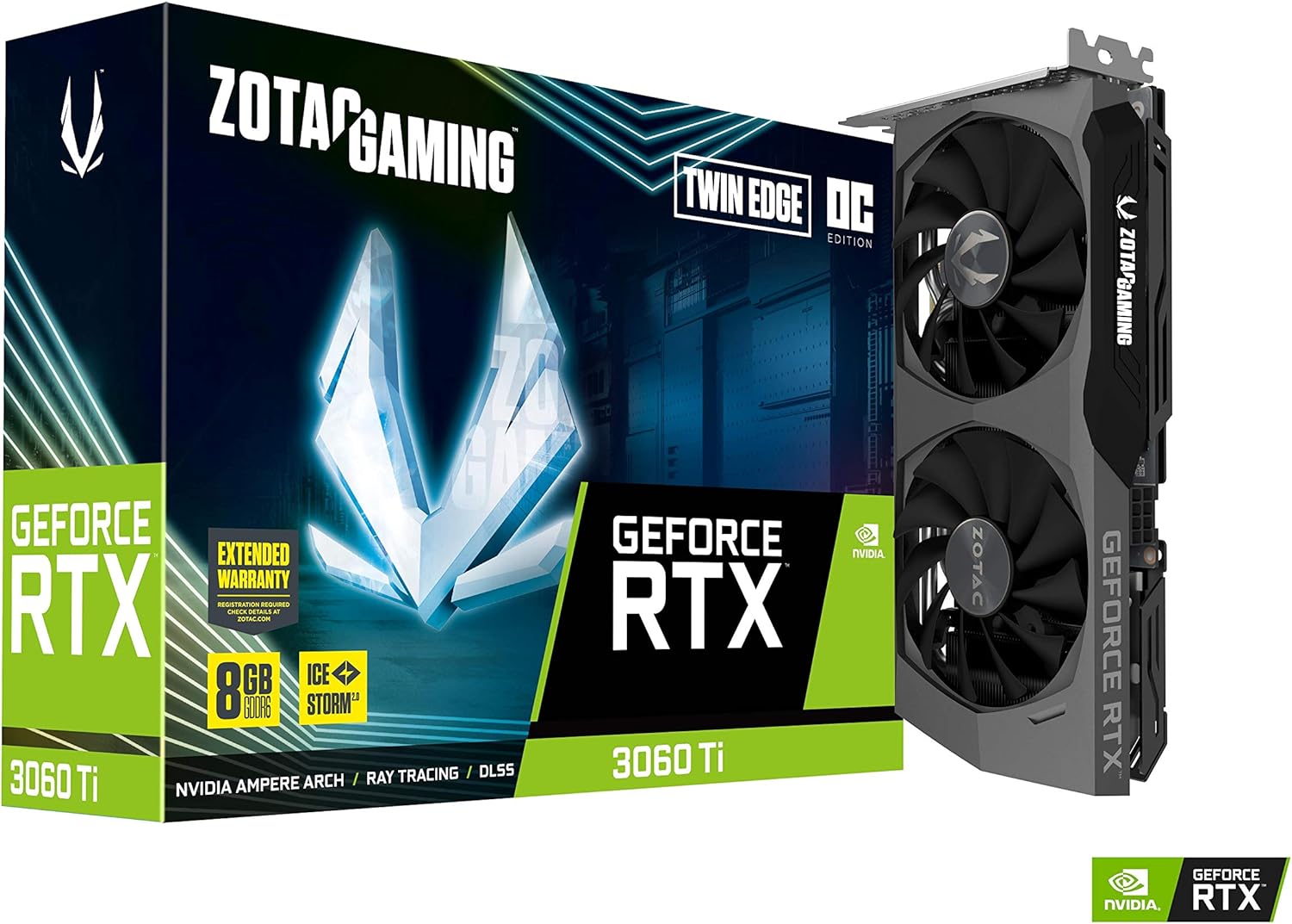
The fastest fix for RTX 3060 driver crashes and stuttering is a clean DDU reinstall of the latest NVIDIA Game Ready driver in Safe Mode, followed by enabling MSI mode for the GPU and a small undervolt in MSI Afterburner. The overwhelming majority of "driver crashed and recovered" (TDR) errors, black-screen flickers, and micro-stutter on the 3060 12GB come from a corrupted driver stack, a marginal power delivery, or an unstable boost curve — not a dead card. Work the steps below in order and you'll resolve nearly all of them without an RMA.
🛒 Ruling out a faulty card with a replacement? ZOTAC RTX 3060 Twin Edge OC 12GB on Amazon. But try the fixes first — the card is rarely the problem.
Start here: a clean driver reinstall
A corrupted or half-overwritten driver is the single most common cause of 3060 crashes, and a normal "reinstall over the top" doesn't clear it. Download the latest NVIDIA Game Ready driver and Display Driver Uninstaller (DDU) first, disconnect from the internet so Windows doesn't auto-install a stale driver, boot into Safe Mode, and run DDU to fully remove the existing display driver. Reboot, install the freshly downloaded driver, and choose a clean/custom install. This alone fixes a large share of TDR crashes and stutter, because it eliminates the leftover registry and file conflicts that accumulate from months of in-place driver updates.
Enable MSI mode
Message-Signaled Interrupts (MSI) mode reduces interrupt latency for the GPU and resolves a surprising amount of stutter and audio-linked hitching, yet it's often left off. After the clean driver install, use the MSI utility (MSI_util_v3) to enable MSI mode for the GeForce device, then reboot. It's a five-minute change that smooths frame delivery on many systems, especially those that also stutter when sound plays.
Tame the boost curve with a small undervolt
Ampere cards, including the 3060, frequently crash under load not because they're too hot but because the stock boost curve pushes voltage/frequency points that aren't quite stable. A modest undervolt in MSI Afterburner — flattening the curve so the card holds, say, ~50 MHz lower at a slightly reduced voltage — keeps it from chasing unstable boost bins. The result is often fewer crashes and the same or better sustained clocks, plus lower temperatures and noise. Apply the curve, test with a benchmark loop, and save it to a profile that loads at startup.
Check power and cabling
A marginal or daisy-chained power connection causes transient crashes that look like driver faults. Use a dedicated PCIe power cable from the PSU to the card rather than a single split cable, reseat both ends, and make sure your PSU has genuine headroom for the whole system under load. Transient power spikes from Ampere can trip an undersized or aging PSU into a momentary sag that drops the display or crashes the driver. If crashes correlate with load spikes, suspect power before the GPU.
Eliminate the software-side culprits
Several Windows and app-level settings cause 3060 stutter that mimics hardware faults. Set the Windows power plan to High Performance, update your motherboard chipset drivers (especially on AMD platforms, where stale chipset drivers cause stutter), and disable any aggressive RGB/monitoring software that polls the GPU constantly. If you see flicker specifically with variable refresh, toggle G-Sync/FreeSync off to test — a bad VRR handshake with some monitors presents as flickering that's easily mistaken for a dying card. Disable in-game overlays one at a time if stutter persists.
When it really is hardware
If you've done a DDU clean install, enabled MSI mode, undervolted, confirmed clean power, and ruled out the software culprits and it still crashes, then look at hardware: monitor VRAM and hotspot temperatures (failing memory often crashes only under VRAM-heavy loads), test the card in another system or slot, and check for physical issues like a poorly seated card or sag. Genuine card failure is the rare exception once the steps above are done — but if a second system reproduces the crash with a clean driver, an RMA or replacement is justified.
A quick stability test loop
After each change, validate before declaring victory — chasing intermittent crashes blind wastes hours. Run a looped GPU stress test (a benchmark on repeat, or a demanding title's built-in benchmark) for 20–30 minutes while watching core/VRAM/hotspot temps and clocks with an overlay. A stable card holds its clocks without TDR resets, artifacts, or crashes; an unstable one will reset the driver or black-screen within that window. Change one variable at a time — clean driver, then MSI mode, then undervolt — and re-run the loop after each, so you know which fix actually resolved it rather than stacking changes and guessing. Keep the working Afterburner profile saved and set to load at startup so a Windows update can't silently revert your curve.
Frequently asked questions
What's the fastest fix for RTX 3060 driver crashes? A clean DDU reinstall of the latest Game Ready driver in Safe Mode, then enabling MSI mode and applying a small undervolt in MSI Afterburner. That sequence resolves the large majority of TDR crashes and stutter.
Why does an undervolt reduce crashes instead of causing them? Because most 3060 crashes come from an unstable stock boost curve, not insufficient power. Flattening the curve keeps the card off the unstable high-voltage/frequency bins, so it runs cooler, quieter, and more stably — often at the same clocks.
Could my power supply be causing the crashes? Yes. A daisy-chained or marginal PCIe power feed, or an undersized/aging PSU, causes transient sags under Ampere's load spikes that present as driver crashes. Use a dedicated PCIe cable and ensure real PSU headroom.


