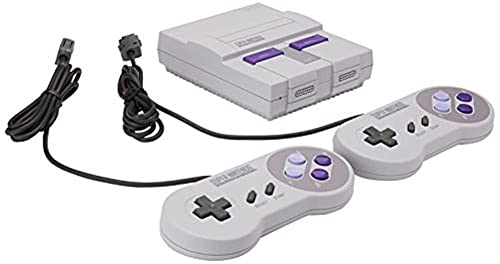
If you want a curated library of platformers and JRPGs with pitch-perfect Nintendo pads, buy the SNES Classic — Super Metroid, A Link to the Past, Chrono Trigger, and Super Mario World are unbeatable at the price. If you want fast-twitch action, arcade ports, and Sega's mascot-defining catalog with six-button controllers, buy the Sega Genesis Mini — Streets of Rage 2, Contra: Hard Corps, Gunstar Heroes, and Sonic the Hedgehog 2 justify it on their own. Both plug into any modern HDMI TV, ship with authentic pads, and stay under $80 on the secondary market.
What a plug-and-play mini console is really for
A mini console is not the same purchase as a retro handheld or a Raspberry Pi emulator. It is a closed, curated appliance: pick it up, plug in HDMI + USB power, and you are playing a specific set of games in five minutes. There is no BIOS to source, no ROM to hunt, no software update to install, no controller pairing to configure. That reduction in fuss is the entire product. It is also why the built-in library matters more than any other spec: you cannot add games (short of a firmware mod), so the ~20-40 titles Nintendo or Sega curated are the whole experience.
The SNES Classic and Sega Genesis Mini launched around the same time and became direct competitors in the same nostalgia purchase — the person buying either is usually deciding between them, not shopping both. Both are ~$60-$80 on the secondary market in 2026, both fit in a coat pocket, both use USB power over micro-USB, both output over HDMI, and both ship with two wired reproduction controllers. The specs are close enough that the actual decision is: whose 90s do you want to revisit?
Nintendo's 90s were mid-generation RPGs (Chrono Trigger, Final Fantasy VI, Earthbound), Rare's platformers (Donkey Kong Country, Yoshi's Island), and the shepherd of the console-JRPG genre. Sega's 90s were arcade ports (Golden Axe, Streets of Rage 2, Gunstar Heroes), fast-twitch platformers built around a blue hedgehog, and a scrappier catalog with more room for oddball action titles. The libraries are not directly comparable — they are stylistically different. This whole comparison collapses to library taste plus one big controller preference (four-face-button pad vs six-face-button pad).
If neither library is enough for you, or the missing games matter more than the ones included, skip both and buy a Raspberry Pi 4 Model B 8GB with RetroPie. Same 16-bit era, bring-your-own controllers, and unlimited library flexibility — at the cost of setup complexity you were trying to avoid in the first place.
Key takeaways
- Both consoles are HDMI plug-and-play, ship with two wired reproduction controllers, and cost roughly the same in 2026.
- The SNES Classic leans RPG + platformer, with Chrono Trigger and Super Metroid as the standouts.
- The Genesis Mini leans arcade + action, with Streets of Rage 2 and Gunstar Heroes as the standouts.
- Sega's six-button pad is objectively better for beat-em-ups and fighters; Nintendo's four-face-button pad is better for platformers and RPGs.
- Neither supports adding games legitimately. If library gaps matter, buy a Pi 4 build or a modded handheld.
- Availability fluctuates. Buy at MSRP-ish prices, walk away above $100.
How do the built-in game libraries compare in quality and genre?
The libraries are the whole story of these boxes, so it is worth being specific.
The SNES Classic ships with 21 games: Super Mario World, Super Mario Kart, Super Mario World 2: Yoshi's Island, The Legend of Zelda: A Link to the Past, Super Metroid, Super Punch-Out!!, EarthBound, F-Zero, Kirby's Dream Course, Kirby Super Star, Star Fox, Star Fox 2 (never officially released before), Donkey Kong Country, Contra III: The Alien Wars, Final Fantasy III (VI in Japan), Mega Man X, Secret of Mana, Street Fighter II Turbo, Super Castlevania IV, Super Ghouls 'n Ghosts, and Super Mario RPG. That is a top-shelf list — the two RPGs alone (Chrono Trigger, EarthBound, Secret of Mana, Super Mario RPG, Final Fantasy III) are 100+ hours of content, and Super Metroid + A Link to the Past are genre-defining works whose modern descendants (Hollow Knight, Tunic) still cite them directly.
The Genesis Mini ships with 42 games — twice as many titles, but at a different flavor. Highlights include Sonic the Hedgehog, Sonic the Hedgehog 2, Sonic Spinball, Ecco the Dolphin, Castlevania: Bloodlines, Contra: Hard Corps, Gunstar Heroes, Street Fighter II: Special Champion Edition, Streets of Rage 2, Golden Axe, Comix Zone, Beyond Oasis, Shining Force, Phantasy Star IV, Vectorman, Kid Chameleon, Landstalker, ToeJam & Earl, Alisia Dragoon, Altered Beast, Space Harrier II, Alex Kidd in the Enchanted Castle, Earthworm Jim, Mega Man: The Wily Wars, Monster World IV, Road Rash II, Dr. Robotnik's Mean Bean Machine, Ristar, Shinobi III, Strider, and Tetris (yes, the never-officially-released Genesis Tetris). Streets of Rage 2 is still the peer of every belt-scrolling beat-em-up made since; Gunstar Heroes is arguably the best 16-bit run-and-gun. The RPG side (Phantasy Star IV, Shining Force, Landstalker) is smaller but genuinely strong.
Two rough rules of thumb, since the libraries do not overlap:
- If your top three memories are Zelda, Mario, and JRPGs, buy SNES. The catalog is smaller but the game-per-hour value is enormous.
- If your top three memories are Sonic, arcade ports, and side-scrolling action, buy Genesis Mini. More total games, generally more replayable action.
There is no way to guess without knowing the buyer's 90s. Look at the full title lists side by side and count the games you would actually play.
Which has the better controllers and emulation accuracy?
Both consoles ship with two wired reproduction controllers of the original hardware. The reproductions are strong: Nintendo's SNES pad has the correct four-face-button diamond layout and the shoulder buttons feel right, and Sega's six-button pad matches the late-cycle Genesis Model 2 controller. Cable length is short on both — expect 5 feet, which sits you fairly close to the TV.
For the games they ship with, Sega's six-button pad has a real advantage. Streets of Rage 2, Golden Axe, Comix Zone, Street Fighter II SCE, and every fighter benefit from having six face buttons under your thumb without shoulder-button rebinds. The SNES pad is objectively less comfortable for those games, and if you tried to emulate the Genesis library on a SNES pad you would fight the input every session.
For the SNES library, four buttons + two shoulders is the correct input. Super Metroid, F-Zero, and A Link to the Past use the shoulders naturally, and the diamond face-button layout matches every platformer designed for the pad. Playing SNES games on a Genesis six-button pad would work but feel wrong.
Emulation accuracy is basically not-a-story: Nintendo M2 emulates SNES cleanly, and Sega's M2 build for the Genesis Mini is widely regarded as one of the best Genesis emulators ever shipped commercially. Both consoles run their games at correct pitch, correct color, and correct framerate to HDMI 720p output. Neither has audible input lag over regular HDMI — both are competitive with a modded original console over a Framemeister.
Multiple controller availability is worse on both. Extra pads are OEM-only and often stockout on Amazon and eBay. If you plan to host multiplayer, buy the second pad with the console rather than assuming you can find one later.
Which holds its value and availability better in 2026?
Both consoles were discontinued years ago and now live in secondary-market territory. Genesis Mini units are more consistently available (Sega manufactured a larger run and stocked replacements longer) and typically list for $50-$70 in good condition. The SNES Classic is scarcer — Nintendo cut production shorter — and lists for $60-$90 in good condition. Boxed, unopened examples of either can hit $150+, though at those prices you are paying a collectible premium, not a play premium.
Availability trend: Genesis Minis tend to stay in stock at reasonable prices; SNES Classics move faster and prices creep higher whenever a nostalgia bump hits the culture. If you want to play, buy when you see one at a fair price rather than waiting.
Fake units exist on eBay for both. Buy from sellers with high volume + return policies, and avoid listings that look like a warehouse dump with no packaging photos. The PlayStation 4 Pro is a useful comparison here — the PS4 Pro secondary market is calmer because the hardware is more common, but for retro mini consoles scarcity is real and it does creep prices up.
How do the HDMI output and display options differ?
Both consoles output over HDMI at 720p60. Both include display filters:
- Genesis Mini: three filter options — Original (native pixels stretched to 4:3), CRT (scanline emulation approximating a period television), and Pixel Perfect. The CRT filter is one of the best consumer scanline implementations shipped.
- SNES Classic: three filter options — 4:3 (correct aspect ratio), CRT Filter (scanlines), and Pixel Perfect. The CRT filter is good but slightly heavier-handed than Sega's.
Neither is truly "4K." The source games are 240p-256p, and both consoles upscale to 720p. If your TV does OK 720p scaling, the picture is clean and tear-free. If your TV struggles with 720p over HDMI, an inexpensive HDMI-to-HDMI scaler like an OSSC-clone can help.
Both consoles have no wireless — controllers are wired only. Neither has an internet connection, save cloud sync, or any account system to worry about.
5-column spec-delta table: library size, controllers, ports, output, price
| Feature | SNES Classic | Sega Genesis Mini |
|---|---|---|
| Library size | 21 games | 42 games |
| Standout titles | Chrono Trigger, Super Metroid, Zelda: LTTP | Streets of Rage 2, Gunstar Heroes, Sonic 2 |
| Controller | 4 face buttons + 2 shoulders (SNES pad reproduction) | 6 face buttons (Genesis Model 2 pad reproduction) |
| Multiplayer ports | 2 built-in | 2 built-in |
| Video output | HDMI 720p60 | HDMI 720p60 |
| Display filters | 4:3, CRT, Pixel Perfect | Original, CRT, Pixel Perfect |
| Power | Micro-USB 5V/1A | Micro-USB 5V/1A |
| Price (2026 typical) | $60-$90 | $50-$70 |
| Cost per included game | ~$3-$4 | ~$1-$2 |
Library highlight table: standout titles per system
| Category | SNES Classic | Sega Genesis Mini |
|---|---|---|
| Signature platformer | Super Mario World, Super Metroid | Sonic the Hedgehog 2, Vectorman |
| Signature RPG | Chrono Trigger, EarthBound, Final Fantasy III | Phantasy Star IV, Shining Force, Landstalker |
| Signature action | Contra III, Super Ghouls 'n Ghosts | Streets of Rage 2, Gunstar Heroes, Contra: Hard Corps |
| Signature arcade | Street Fighter II Turbo | Street Fighter II SCE, Golden Axe, Strider |
| Signature puzzle | Super Puyo Puyo (not included) | Dr. Robotnik's Mean Bean Machine, Tetris |
| Signature racer | Super Mario Kart, F-Zero | Road Rash II |
| Curveball inclusion | Star Fox 2 (never before released) | Tetris (never before released on Genesis) |
Value math: cost per included game
At current secondary-market pricing (~$75 SNES Classic, ~$60 Genesis Mini):
- SNES Classic: $75 / 21 games = $3.57 per game. Weighted by the RPGs alone, the effective cost per hour is negligible — Chrono Trigger + Final Fantasy III + EarthBound is 200+ hours of content.
- Genesis Mini: $60 / 42 games = $1.43 per game. More total titles at half the per-game cost, but the depth-per-game is lower — most Genesis titles are 2-8 hour experiences vs the SNES RPG marathons.
The Genesis Mini is the better raw-dollar deal. The SNES Classic is the better hour-of-play deal if you play the RPGs. That is the whole value analysis — it depends on what you play.
Verdict matrix
Get the SNES Classic if:
- Your top-three 90s memories are Zelda, Mario, and JRPGs.
- You want 100+ hour RPG experiences over shorter arcade-style titles.
- You are okay with a smaller library of higher-density games.
- Star Fox 2 as a "never officially released before" pull is compelling.
- Four face buttons + shoulders match how you remember your childhood console.
Get the Sega Genesis Mini if:
- Your top-three 90s memories are Sonic, arcade ports, and side-scrolling action.
- You want more total games and more variety.
- Six-face-button pad matches how you remember your childhood console.
- Streets of Rage 2 + Gunstar Heroes + Golden Axe are non-negotiable.
- You care more about total library breadth than deep RPG hours.
Get neither and buy a Raspberry Pi build if:
- You want the ability to add games (legally, from your own collection).
- No single library — SNES or Genesis — has enough of what you specifically want.
- You already own retro pads and just need a box to run cores.
- You are willing to spend a couple hours on setup for infinite flexibility.
Recommended pick paragraph
If I could only own one mini console in 2026, I would take the SNES Classic. Chrono Trigger, EarthBound, A Link to the Past, and Super Metroid are the kind of games you finish and think about years later, and the SNES pad is still the best-feeling 16-bit controller ever shipped. But I would understand — and often recommend — the Genesis Mini for anyone whose 90s pointed at arcades, Sonic, and Streets of Rage. It is more games for less money and the six-button pad is genuinely better for the library it ships with.
Related guides
- Broader plug-and-play field: Best Plug-and-Play Retro Console in 2026: 5 Picks for Instant Nostalgia — cross-brand comparison.
- Beyond mini consoles: Best Retro Console Reissues to Buy in 2026 — SNES/Genesis + PC Engine Mini + others.
- Controller upgrade path: Best Controllers for Retro Gaming and Emulation in 2026 — modern pads that work on both.
Citations and sources
- Nintendo Super NES Classic official page — Nintendo, official specifications and library for the SNES Classic Edition.
- Sega Genesis Mini official page — Sega, official specifications and library for the Genesis Mini.
- Tom's Hardware — Best Retro Consoles — Tom's Hardware, cross-brand retro-console reviews and buying guidance.