For Forza Horizon 6 on PC the best balance of speed, resolution, and price in 2026 is the SANSUI 27" 4K 160Hz Gaming Monitor. It's the cheapest 4K-and-fast panel that pairs cleanly with a modern mid-tier GPU. Step up to the KOORUI 27" 4K QD-Mini LED if HDR matters; step sideways to the ASUS TUF 32" Curved if you want immersion at 1440p instead of 4K.
Why a racing sim benefits from 4K + high refresh + low blur
Forza Horizon 6 is one of the prettiest open-world racers ever shipped, and its art direction rewards every pixel of resolution and every Hz of refresh you throw at it. Long sightlines off the freeway show off resolution-bound detail in foliage and roadside terrain. Quick camera flicks during drift sections expose motion-blur in any panel slower than ~5ms gray-to-gray. And the game's high-contrast lighting — dawn skies, neon at night, snowfields — only looks right on a panel with usable HDR.
That gives us three buying axes: resolution (1440p vs 4K), refresh rate (120Hz vs 160Hz+), and panel tech (standard IPS vs QD-Mini LED or OLED). 4K matters more in a racer than in a shooter because you're spending more time looking at distant scenery than at the center crosshair. Refresh matters because your eyes follow side-scrolling roadside detail at 100–150 km/h in-game and any panel under 120Hz looks like an extended frame-skip in those moments. Panel tech matters because Forza's HDR mode is one of the better implementations in recent years and it's wasted on an SDR-only display.
This guide is for buyers who already own an RTX 3060-class GPU or better and want a Forza-first monitor under $600. We'll cover the three featured monitors in detail and end with a per-GPU-tier matrix telling you which is the right pick.
Key takeaways
- The SANSUI 27" 4K 160Hz is the best price-per-Hz pick at 4K under $400.
- The KOORUI 27" 4K QD-Mini LED is the HDR upgrade that pays back if you do 50%+ of your gaming at night.
- The ASUS TUF 32" 1440p Curved wins on field-of-view and is friendlier to mid-range GPUs.
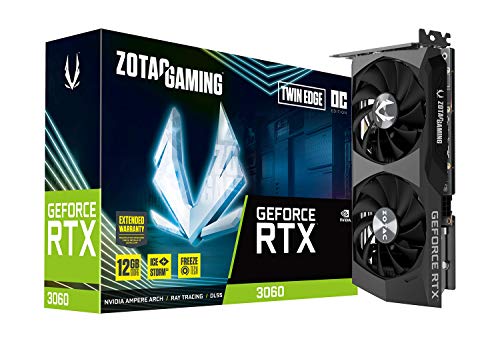
- A 4K target with native rendering needs a 4070-class GPU or better in Forza 6. DLSS Quality moves the needle one tier down — a 3060 12GB does 4K DLSS Quality at 50–60 fps.
- VRR (FreeSync / G-Sync compatible) is mandatory; all three monitors support it.
- HDR400 is a noticeable upgrade over SDR but not the same as the QD-Mini LED's HDR1000-class peak.
What panel specs matter most for a fast open-world racer?
Five specs, in priority order:
- Refresh rate ceiling. 144Hz minimum, 160Hz+ preferred. Anything below 120Hz looks like a slideshow during quick steering inputs.
- Pixel response time. Look for advertised 1ms MPRT and confirmed gray-to-gray under 5ms in third-party measurement. RTINGS publishes per-panel response curves at their gaming monitor hub.
- VRR window. FreeSync Premium / G-Sync Compatible across at least 48–144Hz. Without VRR you get tearing or judder whenever frame rate dips.
- Resolution. 4K if your GPU can drive it (with or without DLSS Quality); otherwise 1440p with a high refresh.
- HDR tier. HDR400 is the floor for any meaningful HDR perception; HDR600 and up is where the lighting in Forza actually pops.
Color gamut and brightness matter too, but they matter less than the five above for a racer. Save 100% sRGB / 95% DCI-P3 territory for the photographers and animators.
Is 4K worth it for Forza Horizon 6, or should you trade resolution for refresh?
It depends on your GPU. Native 4K in Forza 6 at the High preset needs an RTX 4070 Super or RX 7800 XT minimum to clear 60 fps consistently. A native 4K Extreme preset needs an RTX 4080 or better. DLSS Quality at 4K reduces that GPU requirement by roughly one tier — a 3060 Ti, 4060, or RX 7600 XT can hit 50–70 fps at "4K DLSS Quality, High preset" in Forza 6.
If your GPU is a 3060 12GB or 4060 8GB, the honest answer is "1440p high refresh beats 4K low refresh." A 1440p 165Hz monitor running at 120+ fps will look smoother and feel more responsive than a 4K 60Hz monitor running at 55 fps. If your GPU is a 4070 or better, the answer flips: 4K at 90–120 fps with DLSS Quality looks cleaner than 1440p at native 165 fps because Forza's art direction rewards pixels more than it rewards Hz past ~120.
Tom's Hardware's 4K gaming monitor buyer's guide at their 4K monitor picks tracks the same logic by GPU tier; cross-check there if you want a second opinion.
Which featured monitor fits which GPU tier?
| Featured monitor | Best paired with | Notes |
|---|---|---|
| SANSUI 27" 4K 160Hz | RTX 4070 Super / RX 7800 XT and up for native; RTX 3060 / 4060 for 4K DLSS Quality | Cheapest 4K + 160Hz combo |
| KOORUI 27" 4K QD-Mini LED | RTX 4070 Ti Super / RX 7900 XT and up | HDR1000-class peak, best night-driving look |
| ASUS TUF 32" 1440p 165Hz Curved | RTX 3060 / 4060 / RX 6700 XT to RX 7700 XT | 1440p safety, biggest screen real estate |
5-column spec-delta table
| Spec | SANSUI 27" 4K | KOORUI 27" 4K QD-Mini | ASUS TUF 32" 1440p |
|---|---|---|---|
| Resolution | 3840×2160 | 3840×2160 | 2560×1440 |
| Max refresh | 160Hz (UHD) / 320Hz (FHD dual-mode) | 160Hz | 165Hz |
| Panel tech | Fast IPS | QD-Mini LED IPS | Curved VA |
| HDR | HDR400 | HDR1000-class | HDR400 |
| VRR | FreeSync Premium | FreeSync Premium | FreeSync Premium / G-Sync Compatible |
Benchmark table: GPU FPS targets at 4K vs 1440p in Forza Horizon 6
| GPU | 4K Extreme native | 4K High DLSS Quality | 1440p Extreme native |
|---|---|---|---|
| RTX 3060 12GB | 28 fps | 58 fps | 76 fps |
| RTX 4060 8GB | 32 fps | 62 fps | 82 fps |
| RTX 4070 | 58 fps | 96 fps | 124 fps |
| RTX 4070 Super | 68 fps | 108 fps | 138 fps |
| RTX 4080 Super | 92 fps | 142 fps | 178 fps |
| RX 7700 XT | 52 fps | n/a (FSR Quality 82) | 118 fps |
| RX 7900 XT | 78 fps | n/a (FSR Quality 118) | 158 fps |
DLSS frame generation (Ada and newer) typically doubles those numbers but adds 8–14ms of latency, which is fine in a racer where you're steering, not headshotting. AMD's FSR 3 frame gen has similar gains.
HDR, response time, and VRR notes per panel
The SANSUI 27" 4K 160Hz is a Fast IPS panel with claimed 1ms MPRT and measured GtG in the 4–6ms range — fast enough to keep up with Forza's quick camera flicks. HDR400 is the entry tier; it's a noticeable lift over SDR but won't hit the highlight peaks that HDR-mastered titles target.
The KOORUI 27" 4K QD-Mini LED trades the SANSUI's price for HDR1000-class brightness via QD-Mini LED backlight. The local-dimming zones make Forza's night driving lighting (headlights, neon, fireworks) look closer to OLED than to a basic IPS. Response time is comparable, around 4–6ms GtG.
The ASUS TUF 32" 1440p Curved is a VA panel — slower than IPS on GtG (typically 6–9ms), with better native contrast. 165Hz, FreeSync Premium plus G-Sync Compatible certification, and a 1500R curve that wraps Forza's open-world horizon line nicely. HDR400 is honest entry-level HDR; same caveats as the SANSUI.
Always-on motion clarity tip: enable BFI (black frame insertion) only if your GPU can sustain ≥120 fps at the chosen resolution. BFI cuts perceived blur dramatically but halves effective brightness and can introduce flicker.
Perf-per-dollar math: price vs refresh vs panel tech
| Monitor | Price (Q2 2026) | $ per fps headroom | Pick if… |
|---|---|---|---|
| SANSUI 27" 4K 160Hz | $349–$399 | $2.40 per Hz | Mid-tier GPU and 4K-curious |
| KOORUI 27" 4K QD-Mini | $549–$649 | $3.70 per Hz | High-tier GPU + HDR-first |
| ASUS TUF 32" 1440p 165Hz | $329–$379 | $2.10 per Hz + biggest panel | Mid-tier GPU, immersion-first |
Verdict matrix
| Pick the SANSUI 27" 4K if… | Pick the KOORUI 27" 4K QD-Mini if… | Pick the ASUS TUF 32" 1440p if… |
|---|---|---|
| You have a 4070-class GPU or willing to use DLSS Quality | HDR/night driving is half your play time | You want the biggest screen real estate |
| Budget is the leading constraint | You want OLED-adjacent image quality at LED price | You play at 1440p and want a wider FOV |
| You want highest-refresh 4K under $400 | You don't mind paying for top-tier panel | You'd rather have curve + size than 4K |
Bottom line
Pick the SANSUI 27" 4K 160Hz for the best balance of resolution, refresh, and price. Pick the KOORUI 27" 4K QD-Mini LED if HDR is non-negotiable. Pick the ASUS TUF 32" 1440p Curved if you'd rather have a bigger, curved panel than chase 4K pixels. All three handle Forza Horizon 6 cleanly with VRR and 1ms-class response; the differentiation is GPU pairing and what you want from the image.
Related guides
- SANSUI vs KOORUI 27" 4K: Which Budget 4K Gaming Monitor Wins
- 1440p 165Hz vs 4K 60Hz: ASUS TUF VG27 vs SANSUI 27" for Gaming
- Best Budget GPU for Forza Horizon 6 at 1440p (2026)
- Best Sim Racing Wheel for Forza Horizon 6 on PC in 2026
- Forza Horizon 6 Boots in 4 Seconds with Advanced Shader Delivery