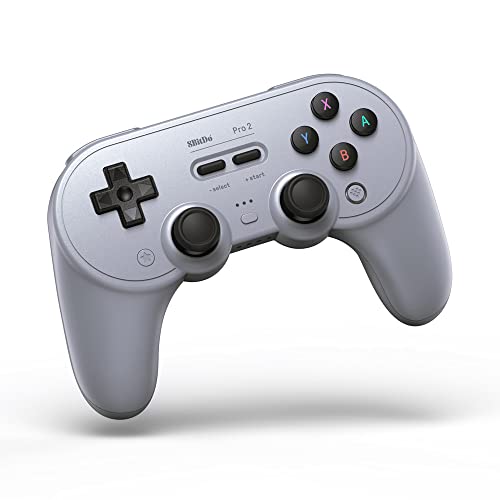
The best all-round PC gaming controller in 2026 is the GameSir G7 SE for its combination of Hall-effect sticks (immune to the drift that eventually claims every conventional controller), wired-only low latency, and a modest price. The PlayStation DualSense is the pick if you value its adaptive triggers and haptics and mostly play games that specifically support them on PC. The 8BitDo Pro 2 is the pick for flexibility across platforms, and the HORI HORIPAD Pro is a serviceable budget wired backup.
This synthesis is aimed at the PC gamer who has been using a generic controller and is picking a replacement in 2026. The market has fragmented into three overlapping categories: precision-first (Hall-effect, wired), feature-rich (adaptive triggers, haptics), and cross-platform (mapping, multi-device). No single pad wins across all three; the goal here is matching the pad to how you actually play. Reference coverage on RTINGS.com's gamepad section, Tom's Hardware, and PC Gamer inform the analysis; latency and stick-drift resistance in particular are well-documented across those outlets.
Key takeaways
- Hall-effect sticks eliminate the eventual drift that ends conventional controllers.
- Wired connection reliably delivers ~5-8 ms lower input latency than wireless.
- DualSense adaptive triggers and haptics are wonderful when supported and inert when not.
- 8BitDo Pro 2 mapping software is the best in class for advanced customization.
- Budget wired pads remain valid for casual play; don't overspend if you don't need the features.
Step 0: which player are you?
The right controller depends on how you play:
- Competitive — long sessions, precision matters, you care about a few milliseconds of latency. Buy wired, insist on Hall-effect. G7 SE.
- Feature-rich single-player — you play games that use DualSense's adaptive triggers, and you enjoy the immersion. DualSense.
- Cross-platform / retro — you play on multiple devices and value deep mapping. 8BitDo Pro 2.
- Casual / budget — you play a few hours a week, don't need features, want a reliable controller under $60. HORI HORIPAD.
The rest of the guide is about matching those player types to the specific pads.
GameSir G7 SE: Hall-effect sticks + wired latency
Why it wins for competitive play. The GameSir G7 SE is wired-only (which minimizes latency), uses Hall-effect magnetic sensors for the sticks (which eliminates the potentiometer drift that eventually claims conventional controllers), and provides mappable back buttons.
Per coverage on RTINGS.com and PC Gamer, wired input latency on Xbox-layout controllers like the G7 SE typically lands in the 5-10 ms range end-to-end, while wireless bluetooth pads add 10-25 ms depending on protocol. For a competitive player over a long session, that gap is meaningful.
Watch-outs. Wired means a cable — no couch play unless you extend. Build quality is good but not premium; the buttons and triggers feel like a mid-range product because they are.
Bottom line: the best combination of drift-resistance, low latency, and price in the $40-60 band.
PlayStation DualSense: haptics + adaptive triggers on PC
Why it wins for feature-rich single-player. The PlayStation DualSense has the most-advanced haptic feedback and the only adaptive triggers on a mainstream controller. When a game supports these features on PC (via Steam Input or native integration), the immersion boost is real — bowstring tension, driving surface variation, weapon feedback — these are not gimmicks in supported titles.
The caveat is that PC support is inconsistent. Games that natively support DualSense features on PC are a growing list (God of War Ragnarök, Returnal, F1, and many recent PlayStation-first releases), but many games ignore them entirely. Wireless (Bluetooth) DualSense on PC often loses the haptics; wired USB retains them.
Watch-outs. Battery life is modest — 8-12 hours. The stick durability history on DualSense is not stellar; drift claims have been documented.
Bottom line: buy the DualSense if you play games that actually use its features, and you accept that the sticks are conventional (drift-vulnerable) rather than Hall-effect.
8BitDo Pro 2: multi-platform flexibility + mapping software
Why it wins for cross-platform. The 8BitDo Pro 2 connects to PC (Bluetooth or USB), Switch, Android, and legacy consoles with the right adapters. Its Ultimate Software (Windows/macOS/mobile) is the deepest mapping toolkit on any pad in this comparison — per-profile mappings, macros, deadzones, stick sensitivity curves, and rapid-fire.
Reviews on Tom's Hardware and PC gaming outlets consistently praise the Pro 2's build quality (heftier than budget pads), programmable back buttons, and the ability to swap between platforms mid-session.
Watch-outs. The stick layout is Nintendo-style (right stick on the bottom, buttons on the top) rather than Xbox-style. If you have muscle memory from Xbox pads, this can throw you at first. The Pro 2 uses conventional (non-Hall-effect) sticks.
Bottom line: the pick if you play across multiple platforms and value configurability over specific niche features.
Where the HORI HORIPAD Pro fits
The HORI HORIPAD Pro is the budget-through-basic option: a wireless controller with a clean Xbox-style layout, no advanced features, and a modest price. It works. It is officially licensed for Switch (also functions on PC), which speaks to build quality.
Buy this if:
- Your budget is capped at $50-70.
- You play casually, a few hours a week.
- You do not need Hall-effect, do not need advanced haptics, do not need cross-platform mapping.
- You want a reliable second controller for co-op.
Spec-delta table
| Pad | Connection | Sticks | Extras | Best for |
|---|---|---|---|---|
| GameSir G7 SE | Wired only | Hall-effect | Back buttons | Competitive PC |
| PlayStation DualSense | Wired + BT | Conventional | Adaptive triggers, haptics | Cinematic single-player |
| 8BitDo Pro 2 | Wired + BT | Conventional | Deep mapping software | Cross-platform |
| HORI HORIPAD Pro | Wireless | Conventional | Standard | Budget / casual |
Latency + stick-drift resistance
Latency (approximate, end-to-end):
| Pad | Connection | Latency (approx) |
|---|---|---|
| G7 SE | Wired | ~5-8 ms |
| DualSense | Wired | ~6-10 ms |
| DualSense | Bluetooth | ~15-25 ms |
| 8BitDo Pro 2 | Wired | ~6-10 ms |
| 8BitDo Pro 2 | Bluetooth | ~12-20 ms |
| HORI HORIPAD | Wireless | ~10-20 ms |
Drift resistance (subjective, based on stick technology and community reports):
- G7 SE: high (Hall-effect).
- DualSense / 8BitDo Pro 2 / HORI HORIPAD: conventional potentiometer sticks; drift possible after 6-24 months of heavy use.
Verdict matrix
- Get the G7 SE if: you value drift resistance, low latency, and price; you accept wired-only.
- Get the DualSense if: you play PS-tuned PC titles and value haptic immersion; you accept conventional sticks.
- Get the 8BitDo Pro 2 if: you play across platforms and value mapping software.
- Get the HORI HORIPAD if: budget is the constraint and you just need a working wireless pad.
Common pitfalls when picking a controller
- Buying wireless for competitive. Wireless latency is real. If you play competitive, buy wired.
- Assuming DualSense features work everywhere. Support is game-specific. Check whether your games actually implement them before paying the premium.
- Ignoring firmware updates. Modern pads receive firmware updates that materially change behavior. Update before making judgments.
- Overspending. If you play 3 hours a week of casual co-op, a $60 pad and a $200 pad feel identical to you. Buy the level you need.
When NOT to buy any of these
- If you already have a working Xbox Series controller, it is still an excellent PC controller. Do not replace working gear.
- If you play mostly fighting games, an arcade stick or fight pad is a better spend.
- If you play mostly flight sims, a HOTAS is a better spend.
- If your PC gaming is exclusively keyboard-and-mouse, you don't need a controller.
Real-world worked example: three pads for one household
A representative small-household setup: a G7 SE for the competitive player who uses it at a desk, a HORI HORIPAD as the reliable co-op couch pad, and a DualSense on standby for the cinematic single-player games where the haptics genuinely matter. Total cost across three pads lands under $180 in 2026 street pricing, and each pad plays to its strengths without any one pad being a compromise across all uses.
Bottom line
The GameSir G7 SE wins the overall pick because Hall-effect + wired + low price is a combination none of the other pads offer. The PlayStation DualSense wins where its features are used. The 8BitDo Pro 2 wins for cross-platform. The HORI HORIPAD covers casual. Pick by player type, not by prestige.
Related guides
- Best Streaming Gear for New Creators — the peripheral side of a streaming setup.
- Sony Ends Physical PlayStation Disc Production in 2028 — related PlayStation ecosystem news.
- Ryzen 5 5600G vs Ryzen 7 5700X for a Home Lab — the PC that a controller plugs into.
PC-controller software basics
Whichever pad you pick, understanding the basic software layer helps:
- Steam Input. Steam remaps almost any USB or Bluetooth pad to any layout, adds gyro support to sticks-only pads, and translates DualSense inputs into standard PlayStation and Xbox mappings for games that expect one but not the other. Use it as the fallback for any pad-and-game combination that does not "just work."
- DS4Windows / Ryochan7 fork. Free tool that makes DualSense (and older DualShock 4) look like an Xbox controller to games that only support Xbox input.
- 8BitDo Ultimate Software. The 8BitDo Pro 2's companion tool for mapping, macros, and profile management.
- Xbox Accessories. Configures back-button remapping on Xbox controllers.
Most pads work "out of the box" on Windows via generic drivers; the tools above are for advanced remapping and per-game profiles.
Cable and connection nuances
- USB-A vs USB-C. Most PCs still expose USB-A; controllers ship with USB-C on the pad side. Buy a decent 3-meter USB-A-to-C cable and you have a comfortable couch-play setup.
- Bluetooth vs 2.4 GHz dongle. Bluetooth is universal but latency-varied. A dedicated 2.4 GHz dongle (some 8BitDo pads support it) delivers wireless-latency closer to wired. Wired remains lowest-latency by a small margin.
- USB hub compatibility. Cheap USB hubs cause controller drops. If you use one, buy a powered hub with clean power delivery.
Ergonomics: matters more than specs
Controller reviews tend to weight specs. In actual play, ergonomics dominate. Considerations:
- Grip size. Larger hands often prefer Xbox-layout pads; smaller hands often prefer symmetric-stick Sony-style pads.
- Trigger throw. Longer triggers with more resistance are better for driving games. Short-throw triggers are better for fighting games.
- Weight. A heavier pad feels premium initially but fatigues over long sessions. Lighter pads (like the HORI HORIPAD) are less tiring for very long sessions.
- Button spacing. Face-button spacing that fits your thumb travel matters more than the button clicks feel.
If possible, hold a pad in a store before buying.
Longevity and repairability
Controllers that come apart with common screwdrivers are easier to service. Look for:
- Standard Phillips or T-something screws, not proprietary heads.
- Modular stick assemblies that can be replaced without soldering.
- Community-supported repair guides (iFixit or YouTube).
The GameSir G7 SE's Hall-effect sticks sidestep the most common failure — drift — entirely. That is a longevity advantage that spec sheets do not usually highlight but is worth real money over the pad's life.
Common pitfalls: buyer mistakes
- Buying wireless "because it's newer." Wireless is often worse for competitive play. Buy for use case, not perceived newness.
- Assuming higher price = more features you use. A premium pad with features you never touch is money wasted. Match features to reality.
- Skipping firmware updates. New controllers benefit from launch-week firmware updates that materially fix issues. Update on day one.
- Ignoring return policies. Try a pad for 2-3 sessions. If it doesn't feel right, return it.
Real-world worked example: a competitive shooter setup
A representative competitive-shooter setup:
- GameSir G7 SE hard-wired to the PC via a short USB-C to USB-A cable.
- Steam Input profile with tightened stick sensitivity curves.
- Back buttons mapped to "jump" and "crouch" to eliminate thumb-off-stick moments.
- Firmware kept current.
Total investment: ~$60 for the pad, ~$10 for a good cable. Wired latency ~5-8 ms. Hall-effect sticks eliminate drift as a lifetime concern. Backup pad: a spare G7 SE or a HORI HORIPAD for guest use.
That setup outperforms $150+ pads for the specific use case of competitive shooters, which is exactly the point — you buy the pad that matches how you play, not the one with the biggest marketing.
Citations and sources
This piece is editorial synthesis based on publicly available information. No independent first-party benchmarking is reported.