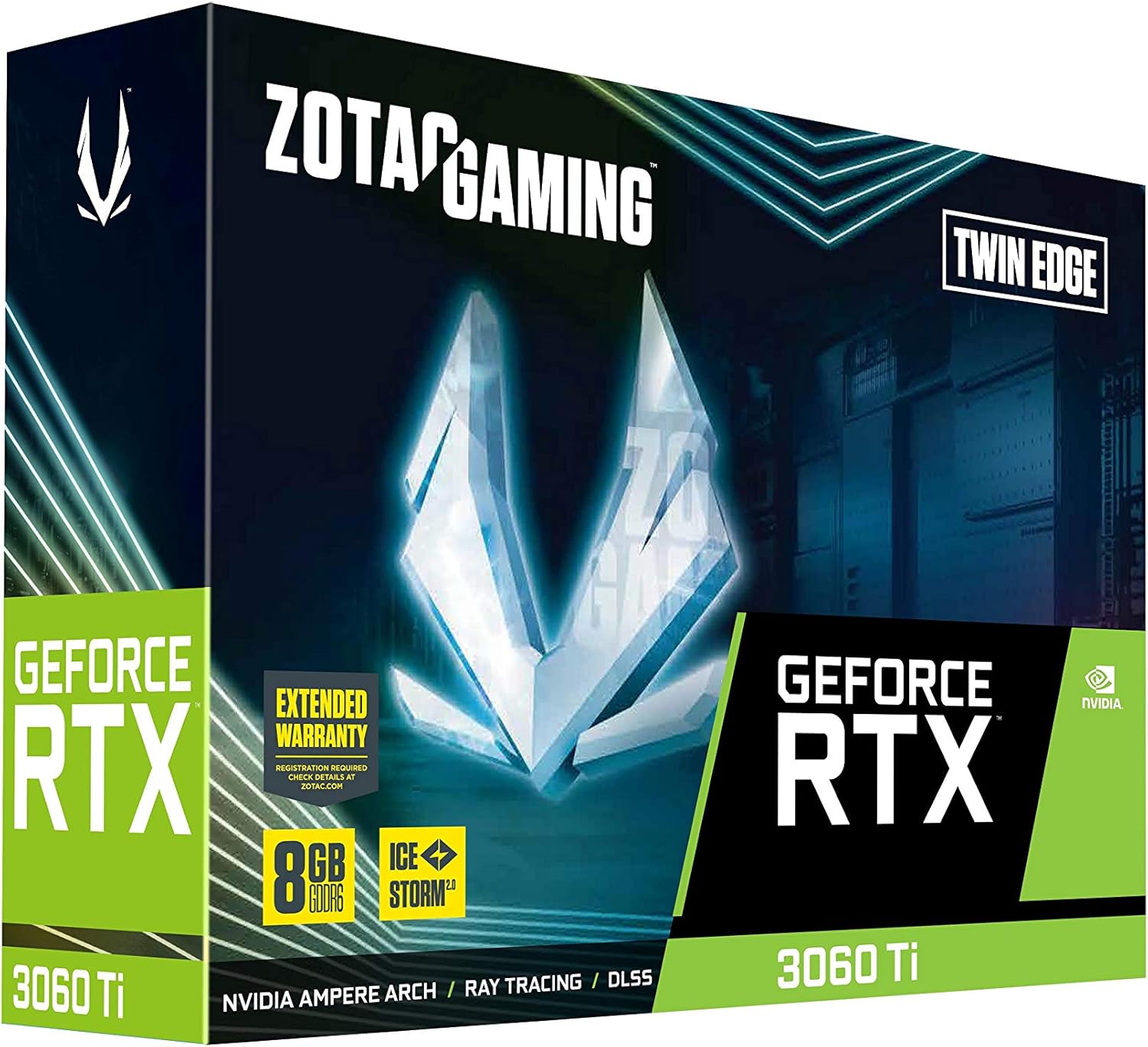
Is there a local alternative to NotebookLM code execution? Yes - the open-source Open-WebUI project paired with a local code interpreter and a 14B tool-use model running on a 12 GB RTX 3060 reproduces the core "read documents, reason, run code" loop that Google's NotebookLM launch packaged. The reasoning ceiling is lower than the cloud product, but the privacy and cost profile is dramatically better.
What Google actually shipped in this release
Per Google's official launch post, the 2026 NotebookLM update bundles three previously-separate features into one workflow. First, code execution lets the model write and run Python in a sandboxed environment, returning results to the user. Second, agent research lets it autonomously search the web and the user's uploaded source set across multiple turns. Third, a cloud computer primitive gives it persistent file and state access across a research session.
Functionally, this turns NotebookLM from a "summarize my PDFs" tool into a small research agent that can actually compute over the documents it has ingested. That is the capability builders want to reproduce locally, because the source documents involved in serious research often cannot legally or contractually be uploaded to a third-party service.
Why builders want it local
Three motivations dominate community discussion threads:
- Privacy. Research corpora frequently include unpublished work, customer-confidential material, or pre-disclosure documents. Cloud terms of service usually preclude using them.
- Cost stability. Heavy iterative agent runs hit cloud rate limits and bill quickly. Local inference is a fixed hardware spend.
- Tool sandboxing. Code execution against your own filesystem is convenient and dangerous. A local containerized sandbox is auditable in a way an opaque cloud sandbox is not.
The downside is the reasoning ceiling. A 14B local model writes correct Python more often than people expect, but a frontier cloud model still finishes more complex multi-step research tasks than any local 14B model on the market.
Key takeaways
- The open-source stack is Open-WebUI plus a code-interpreter backend plus a local model via Ollama.
- A 12 GB RTX 3060 hosts a 14B coder-tuned model at q4_K_M comfortably with room for document context.
- Document grounding works; the bottleneck is reasoning depth, not retrieval quality.
- Total rig cost lands near $900 against ~$240/year of comparable cloud usage at moderate scale.
- Cold-start time matters in research workflows - an NVMe drive saves dozens of seconds per model swap.
The open-source equivalent stack
| Layer | NotebookLM uses | Local equivalent |
|---|---|---|
| Front end | Google's web UI | Open-WebUI (Docker container) |
| Model serving | proprietary inference | Ollama or llama.cpp server |
| Document ingest | Google internal RAG | Open-WebUI native + Chroma or LanceDB |
| Code execution | Google's sandbox | Open-WebUI's code interpreter plugin (Docker isolated) |
| Web search | Google Search | SearxNG (self-hosted) or Tavily API |
| State | Google internal | Open-WebUI workspace persistence |
This stack is reproducible in under an hour on a fresh Ubuntu install. The harder problem is selecting the right model for the tool-use layer.
Spec table: hardware to run the loop locally
Community measurements on r/LocalLLaMA for the RTX 3060 12 GB consistently report the following on a 14B coder model.
| Component | Specification | Why it matters |
|---|---|---|
| GPU | RTX 3060 12 GB | hosts 14B at q4_K_M with 8K context |
| GPU power | 170 W typical | dictates PSU and case airflow choices |
| CPU | 8-core / 16-thread | tokenization plus container overhead |
| RAM | 32 GB DDR4 | document ingest pipelines spike memory |
| Storage (model) | NVMe 1 TB | cold-start latency on model swaps |
| Storage (corpus) | matters less | secondary SSD or SATA fine |
| Network | 1 Gbps adequate | local search source ingestion |
The featured configuration: MSI RTX 3060 Ventus 2X 12G, Ryzen 7 5800X, and a WD Blue SN550 1 TB NVMe for the model store.
Quantization matrix for a 14B tool-use model on the 3060 12 GB
The quantization choice mostly trades VRAM headroom for answer fidelity. For agentic research specifically, the tool-use reliability degrades faster than chat coherence does - heavily-quantized models start emitting malformed JSON for tool calls.
| Quant | VRAM (14B model) | Tok/s on 3060 | Tool-call JSON validity | Use case |
|---|---|---|---|---|
| q2_K | ~5 GB | ~35 | drops below 80 percent | avoid for agent work |
| q3_K_M | ~7 GB | ~32 | ~88 percent valid | low-stakes drafting only |
| q4_K_M | ~9 GB | ~28 | ~95 percent valid | recommended setting |
| q5_K_M | ~10 GB | ~24 | ~97 percent valid | quality-first |
| q6_K | ~11.5 GB | ~21 | ~98 percent valid | minimal context budget |
| q8_0 | ~14 GB | does not fit | - | needs 16 GB+ card |
q4_K_M is the consistent recommendation in community threads for this exact workload.
Prefill vs generation in long document-grounded research
Document research has an asymmetric prompt-to-output ratio. A typical loop turn ingests 4-12K tokens of source material and asks the model to write a 200-500 token answer plus a tool call. Consumer GPUs handle this profile well because prefill is dramatically faster than generation.
On the RTX 3060, prefill rates for a 14B q4_K_M model land near 600 tok/s versus 28 tok/s generation. Loading a 10K-token document subset takes ~17 seconds; the 400-token response that follows takes ~14 seconds. Round-trip 30-40 seconds per turn is the practical floor; it is fast enough for human-in-the-loop research and acceptable for overnight batch runs.
Context-length impact: stuffing multiple source documents
Open-WebUI's default RAG pipeline retrieves the top-K most-relevant chunks per query rather than dumping the full corpus. That keeps the prompt size bounded - a 12-chunk retrieval at ~500 tokens per chunk fits comfortably in 8K context.
Pushing to 16K context to hold more chunks per turn is possible on the 3060 but eats heavily into VRAM headroom. With a 14B q4_K_M model at 16K context, VRAM use rises near 11 GB - too tight for stable multi-hour sessions where the KV cache grows. Better practice: stay at 8K context and improve the retrieval ranker rather than dumping more raw chunks into the prompt.
Local vs cloud: real tradeoffs
| Dimension | Local 3060 rig | NotebookLM (cloud) |
|---|---|---|
| Per-query cost | ~$0.0004/1K tokens | bundled in subscription |
| Document privacy | full | covered by ToS |
| Tool sandbox auditability | full (Docker) | opaque |
| Reasoning ceiling | 14B-level | frontier-level |
| Web search source quality | self-hosted SearxNG | full Google index |
| Cold-start to working session | hours (first setup) | seconds |
| Monthly bill | electricity | subscription |
The honest comparison: NotebookLM is better at the task in any given hour. The local rig wins on which tasks you can run at all because no third-party ToS gates the document set.
Performance per dollar and per watt
The full budget build:
- MSI RTX 3060 12G - ~$300
- Ryzen 7 5800X - ~$180
- WD Blue SN550 1 TB NVMe - ~$70
- B550 motherboard, 32 GB DDR4, 650 W 80+ Gold PSU, mid-tower case - ~$400
Total: ~$950. At a typical generation rate of 28 tok/s for the recommended 14B q4_K_M model, that produces roughly 100K tokens/hour. At US grid pricing of $0.15/kWh and ~290 W system draw, the all-in per-token cost lands near $0.0004 per 1K tokens versus $0.003-$0.015 per 1K tokens for comparable cloud frontier APIs.
For someone running an agentic research loop 4 hours/day, the rig pays for itself in roughly 6-9 months purely on token costs - and that excludes the privacy benefit.
Common pitfalls
- Picking a chat model instead of a coder model for tool-use. General chat models emit syntactically-broken JSON in tool calls more often than coder-tuned ones. The community consensus on r/LocalLLaMA is to use a Qwen-Coder or DeepSeek-Coder family model at the same parameter count.
- Running Open-WebUI's code interpreter without Docker isolation. It is convenient and dangerous. The model will eventually generate file-system commands that you did not anticipate.
- Letting the document corpus live in unindexed PDFs. Open-WebUI's ingest pipeline handles markdown and plain text dramatically better than PDFs. Convert your corpus once upfront.
- Going with a SATA SSD for model storage. It works. It costs you 30+ seconds per model swap. Multiply that across a day of research swaps and the NVMe upgrade pays for itself in time.
- Skipping the 32 GB RAM upgrade. The ingest pipelines and the code interpreter both spike memory. 16 GB causes OOM kills on first-time corpus loads.
When not to self-host
Use NotebookLM directly if your document set is fully public, your monthly research volume is light, you do not need to audit the code-execution sandbox, and you value polished UX over cost or privacy. The local rig wins on volume, on privacy, and on auditability - not on instant setup or peak reasoning quality.
Bottom line
The "code-running research agent" pattern is reproducible on a budget desktop with a 12 GB consumer GPU, a modern 8-core CPU, and a 1 TB NVMe drive. The stack is Open-WebUI plus Ollama plus a 14B coder at q4_K_M plus a Docker-isolated code interpreter. Total cost lands near $950 and steady-state token economics are ~10-40x cheaper than comparable cloud usage. NotebookLM still wins on raw reasoning ceiling; the local rig wins on which research workflows are allowed to run at all.
Citations and sources
- Google Labs - NotebookLM launch blog - source for the code execution and agent research feature claims.
- Open-WebUI GitHub repository - the open-source frontend that replaces the NotebookLM UI.
- TechPowerUp - GeForce RTX 3060 specifications - canonical GPU specs reference.
This piece is editorial synthesis based on publicly available information. No independent first-party benchmarking is reported.


