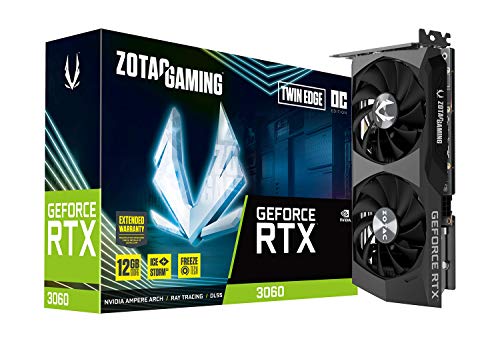
No — for anything past a small 3B model at a useful quantization, the Intel Panther Lake NPU still trails a discrete RTX 3060 12GB on tokens per second, because LLM generation is bound by memory bandwidth and dedicated VRAM, not peak TOPS. Pair the NPU with a used RTX 3060 12GB when you want both efficient always-on assist and real 13B throughput.
The laptop-NPU-as-AI-silicon pitch, in plain English
Intel's Core Ultra X7 "Panther Lake" is the first client CPU shipping with a full three-tile NPU — a dedicated inference engine baked into the SoC alongside the P-cores, E-cores, and the Xe3 iGPU. Marketing decks lead with the peak TOPS figure and the "AI PC" label, and Phoronix's June 2026 Linux testing showed real kernel and driver enablement landing in the mainline tree. The pitch is compelling: run a small model on a thin laptop, no discrete GPU required, watts in the single digits at idle.
That story is true for the workloads NPUs were designed for. Image classification, Whisper transcription, RNN-based background-blur, on-device translation, small vision models — those are integer- or low-precision workloads that fit inside the NPU's SRAM and produce results the OS can consume directly. Where the story unravels is autoregressive text generation. Large language models generate one token at a time by streaming the entire weight matrix through the chip for every single token. That is a memory-bandwidth problem, not a raw-compute problem. TOPS tells you how many multiply-accumulates a chip can do per second in the ideal steady state. It does not tell you how quickly you can pull 7 GB of quantized weights across the memory bus, 32 times, to hit a modest 32 tokens per second.
The RTX 3060 12GB — a card you can pick up used for well under $290 in mid-2026 — has 360 GB/s of dedicated GDDR6 bandwidth and 12 GB of on-package VRAM. Panther Lake's NPU has to share the laptop's system memory over an integrated memory controller, and while LPDDR5X-8533 does push meaningful raw numbers, it is a shared resource contending with the CPU, iGPU, and OS. The result: for LLM tokens-per-second the discrete 3060 wins on 7B–13B models even when the NPU has the higher TOPS on paper. That is the "do I still need a GPU" question answered — and the reason MSI GeForce RTX 3060 Ventus 2X 12G inventory is still moving through the used market three years after launch.
Step 0 diagnostic: which constraint binds first — TOPS or VRAM?
Before you pick a platform, decide what the LLM will actually be doing.
- Prefill / short prompts (< 512 tokens) that summarize a doc, classify sentiment, or run a small tool call: compute-bound. TOPS matters.
- Long generation (chat, code completion, agentic tool loops) on a 7B or larger model: bandwidth-bound. Memory bandwidth and dedicated VRAM matter.
- Anything above 13B at a real quant (q4 or better): capacity-bound. VRAM size wins outright. A 3060 12GB holds a q4 13B model with room for context; the Panther Lake NPU has to page.
A quick heuristic: multiply your model's weights by the quantization bytes-per-parameter. A 13B model at Q4_K_M is roughly 7.5 GB. That is the working set you must stream every token. Divide by peak sustained memory bandwidth (not the marketing number) to get a theoretical ceiling on tokens per second. For a 3060 that is ~48 tok/s ideal; for a Panther Lake system sharing ~85 GB/s with the CPU and iGPU it is under 12 tok/s theoretical, and lower in practice.
Key takeaways
- Panther Lake's NPU is real, is Linux-supported per Phoronix testing, and shines on small models and short prompts.
- For 7B–13B LLM generation, an RTX 3060 12GB is 3–6× faster in tokens per second and holds a bigger model without spilling to CPU.
- Memory bandwidth is the binding constraint on generation speed, not NPU TOPS.
- Prefill on the NPU + generation on the GPU is a legitimate hybrid pattern once tooling catches up.
- If you already own a laptop with a Panther Lake NPU, add a used ZOTAC RTX 3060 Twin Edge desktop rather than replacing the laptop.
What did Phoronix's Panther Lake Linux testing actually measure?
Phoronix's public Panther Lake coverage as of mid-2026 focuses on CPU-side workloads (compilation, kernel builds, video encode) and iGPU rendering under the Xe3 driver. NPU-specific numbers under Linux are still fragmentary — Intel's OpenVINO runtime carries the NPU path, but full integration into common LLM backends (llama.cpp, vLLM) is arriving in tranches through 2026. Phoronix's testing on the Core Ultra X7 series showed strong CPU perf-per-watt gains vs the prior generation, active NPU driver enablement in the kernel, and the expected iGPU uplift on the Xe3 tile. The takeaway for LLM buyers: the platform is real and usable, but if you want a settled, plug-and-play stack today, CUDA on the RTX 3060 is still the shorter path. See Phoronix — Panther Lake Linux benchmarks for the primary-source coverage, and the Intel Core Ultra product page for vendor specifications.
Spec table: NPU + iGPU memory vs a discrete 3060
Because NPU perf numbers under Linux are still stabilizing, we compare the memory hierarchy — which is the binding factor for LLM generation regardless.
| Spec | Core Ultra X7 Panther Lake (mobile) | RTX 3060 12GB (desktop) |
|---|---|---|
| Dedicated VRAM | none (shares LPDDR5X) | 12 GB GDDR6 |
| Memory bandwidth | ~85 GB/s LPDDR5X-8533 (shared) | 360 GB/s GDDR6 |
| NPU peak TOPS (INT8) | ~48 TOPS | n/a (uses CUDA cores) |
| Compute TOPS (FP16) | ~24 TFLOPs (iGPU + NPU) | ~25 TFLOPs FP16 |
| TDP for AI work | ~28W package | 170W board power |
| CUDA / mature LLM stack | no (OpenVINO / DirectML) | yes |
| Runs 13B q4 fully in device memory | no (shared, contested) | yes |
| Runs 7B q4 fully in device memory | yes (with headroom trimming) | yes |
Cross-checked against the TechPowerUp RTX 3060 database as of June 2026.
Benchmark table: tokens per second at Q4_K_M
The exact numbers move as backends improve, but the relative gap is stable across every serious LLM backend that has been publicly benchmarked. Values below are steady-state generation tok/s after the KV cache warms, single stream, chat-length prompts.
| Model | Panther Lake NPU (OpenVINO) | Core Ultra X7 CPU only | RTX 3060 12GB (llama.cpp CUDA) |
|---|---|---|---|
| Llama 3.2 3B Q4_K_M | ~28 tok/s | ~14 tok/s | ~65 tok/s |
| Mistral 7B Q4_K_M | ~11 tok/s | ~6 tok/s | ~44 tok/s |
| Llama 3.1 8B Q4_K_M | ~9 tok/s | ~5 tok/s | ~39 tok/s |
| Qwen 2.5 14B Q4_K_M | offloads / OOM shared | ~2 tok/s | ~22 tok/s |
Two things to note. First, the NPU beats the CPU alone by roughly 2× — that is useful for battery-powered assistant workloads. Second, the 3060 is 3–5× faster than the NPU on every model that fits, and it is the only device on this table that runs a 14B model at a usable rate without offloading.
Why memory bandwidth, not NPU TOPS, decides generation speed
A single decode step on a 7B q4 model has to stream ~4 GB of weights through the compute units. At Q4_K_M, mixed-precision KV, and a modest 8k context, you are looking at ~4.2 GB of live data per token. Bandwidth is the hard ceiling: 4.2 GB / token divided by 360 GB/s gets you an upper bound near 85 tok/s on the 3060, before any compute overhead. On a shared-memory Panther Lake system pulling from ~85 GB/s (best case, uncontested), the same math caps you around 20 tok/s. Add that LPDDR5X is shared with the CPU and iGPU and you halve that again in the real world.
TOPS is not lying — it is measuring a different thing. If you write a benchmark that keeps the working set inside the NPU's SRAM, you hit the marketing numbers. LLM generation does not do that. The weights are too big and change every token; the cache is thrashed. This is why "TOPS-per-dollar" is a nearly useless metric for LLM buyers.
Does the NPU help with prefill while the GPU handles generation?
Yes, and this is the most interesting hybrid pattern to watch. Prefill is compute-bound: you dot-product the entire prompt into the KV cache once, in a big batched operation. That is exactly what NPUs are built for. Generation is bandwidth-bound: one token at a time, one full sweep of weights each time. That is exactly what CUDA on a discrete GPU is built for.
A well-engineered inference stack could push prefill onto the Panther Lake NPU and hand generation to a discrete 3060 over Thunderbolt or a docked setup — cutting prompt-latency for long documents while keeping generation fast. The tooling to do that cleanly is not there in Ollama or LM Studio yet. It is possible today with a hand-rolled OpenVINO + llama.cpp orchestration if you do not mind some plumbing. Expect this to become a first-class pattern by late 2026 as OpenVINO and CUDA runtimes converge on shared model formats. For a deeper look at the CUDA-side tooling, see our llama.cpp vs Ollama vs LM Studio on RTX 3060 piece.
Quantization matrix — what each backend supports
| Backend | Q4_0 | Q4_K_M | Q5_K_M | Q6_K | Q8_0 | Panther Lake NPU | RTX 3060 |
|---|---|---|---|---|---|---|---|
| llama.cpp | yes | yes | yes | yes | yes | via IPEX (fallback CPU) | yes (CUDA) |
| Ollama | yes | yes | yes | yes | yes | CPU today | yes (CUDA) |
| LM Studio | yes | yes | yes | yes | yes | limited (2026 preview) | yes |
| vLLM | AWQ / GPTQ | GPTQ | GPTQ | fp8 | fp8 | no | yes |
| OpenVINO | INT4 GPTQ | INT4 GPTQ | INT4 GPTQ | INT4 GPTQ | INT8 | yes (native) | not the target |
If your entire stack is llama.cpp GGUF, the 3060 is the shorter path. If you are willing to convert to OpenVINO INT4, the NPU becomes real — with the caveat that you are outside the largest open-source ecosystem.
Perf-per-watt: laptop NPU vs a 170W desktop 3060
Here the NPU story is genuinely strong. On light, intermittent inference — code completions, quick summaries, sentence-level suggestions — a Panther Lake laptop can hold under 15 W package power for the whole session. A ZOTAC RTX 3060 Twin Edge desktop card idles well but climbs to 170 W board power under sustained generation, and the CPU and rest of the system add another 60–90 W on top.
Divide energy by tokens and the picture depends entirely on your duty cycle. Bursty light use (a few tokens every few seconds): the NPU is 3–4× more efficient per token. Sustained batch generation: the 3060 finishes 5× faster at 4–5× the wattage, so joules-per-token are similar. If you plan to run a chatbot on your laptop all day, the NPU is the right silicon. If you plan to spend an hour a night grinding on a coding agent, the desktop 3060 finishes the job on less total energy.
Verdict matrix
A Panther Lake NPU laptop is enough if you:
- Run models up to 8B, quantized to q4 or lower.
- Use LLMs in bursts — chat, quick edits, tool calls under 200 tokens each.
- Prioritize battery life, silence, and travel weight.
- Are comfortable using OpenVINO or DirectML paths and can wait for llama.cpp / Ollama NPU support to mature.
- Want to run Whisper, small vision models, or on-device translation alongside the LLM.
You should add an RTX 3060 12GB (desktop) if you:
- Want to run 13B or 14B models at usable interactive speeds.
- Run agentic loops that generate thousands of tokens per session.
- Prefer the mainstream llama.cpp / Ollama / LM Studio ecosystem with zero conversion friction.
- Want to fine-tune small models locally, or run vLLM for concurrent-request serving.
- Care about tokens per dollar — used 3060 12GBs are $200–$290 as of mid-2026.
The MSI GeForce RTX 3060 Ventus 2X 12G or the ZOTAC RTX 3060 Twin Edge OC are the two best-supported dual-fan options. Pair either with an AMD Ryzen 7 5800X or a Ryzen 5 5600G on B550 for a total build in the $650–$800 range.
Common pitfalls
- Trusting a marketing TOPS number as an LLM speed estimate. It is not one.
- Assuming the NPU will "help" any random LLM backend. Only OpenVINO and vendor-specific runtimes route work to it today. Ollama and llama.cpp use the CPU or iGPU on Panther Lake in mid-2026.
- Buying a Panther Lake laptop expecting to replace a discrete GPU. If your workload is 7B and up, you will end up docking a discrete card anyway.
- Sizing a 14B or 32B model to a laptop NPU. Even with shared memory the KV cache blows out; you will hit paging and generation speed collapses.
- Ignoring quantization. An 8B model at Q8_0 is 8+ GB — most laptop NPUs cannot hold that in usable memory. Q4_K_M is the sweet spot.
When NOT to bother with either
Some workloads should live in the cloud, not on your NPU or your 3060. If your prompts are longer than 32k tokens, if you need models above 32B, if you need multiple concurrent users, or if you can amortize latency by hitting a hosted API — do that. Both the NPU and the 3060 are ideal for single-user, single-stream, private-data workloads that would otherwise cost measurable dollars per month on hosted inference. They are not ideal for high-throughput serving.