Nous Hermes Desktop is an open-source AI agent application from Nous Research that runs on your own machine across Windows, macOS, and Linux, pairs with local model backends, and gives you a private alternative to cloud agent services. The hardware floor for a comfortably responsive setup is a 12GB GPU such as the MSI GeForce RTX 3060 Ventus 2X 12G paired with a fast SSD and a capable desktop CPU.
The open-source desktop-agent wave and where Hermes Desktop fits
The desktop AI agent category exploded in late 2025 and through 2026. Cloud agents from the major labs are powerful but cost per token, depend on third-party uptime, and route everything through someone else's logs. A new wave of open-source desktop agents — Hermes Desktop among them — sits on the user's machine, drives a local model by default, and only reaches out to a cloud backend when the user explicitly wants frontier-grade reasoning. The pitch is straightforward: keep agent state, browsing history, file context, and tool calls on the device, and let buyers pay once for hardware instead of forever per million tokens.
Nous Research has spent the last two years releasing notable open-weight Hermes models, and the desktop application released this week (per the-decoder) extends that work into an installable agent. The application itself does not ship a model; it speaks to whichever local runtime you already use. That separation matters because it means the question you actually have to answer is not "is the app any good," but "what hardware should sit behind it to make the loop feel fast."
The buyer angle is clean: the cheapest configuration that gets you to a snappy, capable Hermes Desktop loop in 2026 is a 12GB RTX 3060 (still in stock new and used), a Ryzen-class CPU, and a 1TB SSD with enough headroom for two or three model snapshots. The rest of this guide breaks down what Hermes Desktop actually does, the local backends it pairs with, the VRAM tiers that map to specific model sizes, and the exact tradeoffs you make against cloud agents.
Key takeaways
- Hermes Desktop is an installable open-source AI agent application from Nous Research, available across Windows, macOS, and Linux.
- The app itself is lightweight; nearly all hardware demand comes from the local model you choose to back it.
- A 12GB GPU is the practical budget floor for an interactive local agent loop in 2026, with the RTX 3060 12GB as the canonical pick.
- It pairs with local runtimes including Ollama and llama.cpp, and accepts any OpenAI-compatible endpoint as a backend.
- The privacy and per-token-cost story is the real reason to run it locally; cloud agents still win on raw reasoning quality at the top end.
What does Nous Hermes Desktop actually do?
Hermes Desktop is best understood as a chat-and-tool-use shell over whichever language model you point it at. It opens a conversation, lets the model call tools, manages context across sessions, and gives the model controlled access to local resources so it can act on your behalf rather than just answer questions. The capability menu falls into four buckets:
| Capability | What it covers | Local GPU impact |
|---|---|---|
| Conversational reasoning | Chat, summaries, drafting, code explanation | Dominated by model size; small-to-mid models fit comfortably on 12GB |
| Tool use | File reads, web fetches, shell commands the user permits | Negligible GPU cost; pure orchestration |
| Document and file context | Pulling local files into the model's prompt window | Larger context windows demand more VRAM |
| Agentic workflows | Multi-step plans that chain tools and revise output | Adds latency per turn; benefits from faster tokens-per-second |
The application itself is desktop-native — it ships as a regular installer, runs in a window, and persists chat history on disk. Because it does not bundle a model, the install download is small. Pointing it at a backend is the next step, and that backend is where every meaningful performance and quality decision actually lives.
Which local model backends does it pair with?
Hermes Desktop is designed to talk to common local-LLM runtimes rather than embed its own inference engine. That means whichever local stack you already have — Ollama, llama.cpp, an OpenAI-compatible server — slots in. The headline pairings:
| Backend | Strength | Tradeoff |
|---|---|---|
| Ollama | One-line model pulls, clean defaults, easy GPU offload | Less flexibility on advanced quant or sampling settings |
| llama.cpp | Maximum control over quant, KV-cache, threads, GPU layers | More setup, less hand-holding |
| LM Studio | GUI for browsing and pulling quantized models | Heavier desktop footprint |
| Any OpenAI-compatible endpoint | Works with vLLM, TGI, KoboldCpp, and most others | Quality depends on the engine you choose |
If you are starting fresh, the simplest fast path is Ollama — install it, pull a Hermes-class model, and point the desktop app at the default http://localhost:11434 endpoint. For depth, we have full comparisons of Ollama vs llama.cpp tokens-per-second on the same RTX 3060 12GB and vLLM vs Ollama on the same card, both of which are useful when you are weighing throughput against ease of setup.
A practical note: many Hermes Desktop users start with whatever's already on their machine. If you already run LM Studio on an RTX 3060 12GB, there is no need to switch runtimes — its built-in OpenAI-compatible server is exactly the kind of endpoint Hermes Desktop expects.
What hardware runs it comfortably?
The hardware question splits in two: what does the desktop app itself need (almost nothing), and what does the model behind it need (varies wildly). The honest table for the model:
| VRAM tier | What you can run smoothly | Example GPU |
|---|---|---|
| 8GB | 7B models at 4-bit quant, small context windows | RTX 3060 Ti, RTX 4060 |
| 12GB | 7B at higher precision, 13B at 4-bit quant, moderate context | RTX 3060 12GB, RTX 4060 Ti 16GB downshift |
| 16GB | 13B comfortably, 20-24B at aggressive quant | RTX 4060 Ti 16GB, RTX 4070 Ti Super |
| 24GB | 30-34B at 4-bit, full BF16 small models, long context | RTX 3090, RTX 4090, RTX 5090 24GB tier |
| 32GB+ | 70B at quant, full BF16 mid-range models | RTX 5090, used workstation cards |
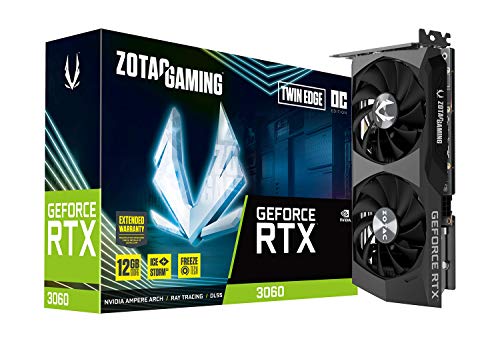
The reason we keep returning to the RTX 3060 12GB is that it remains the cheapest currently-available card with enough VRAM to host a quantized 13B model alongside a usable context window. Per the TechPowerup specs, the card ships with 192-bit GDDR6, around 360 GB/s of bandwidth, and a 170W TDP — which is meaningful in a "leave it running" desktop-agent context because total system draw stays modest. The ZOTAC GeForce RTX 3060 Twin Edge OC 12GB is the alternative when MSI is out of stock; both deliver effectively identical inference performance because both are bandwidth-bound on the same 12GB GDDR6 stack.
For long-term coverage of the same card and where it stops being enough, see our deeper take on whether 12GB VRAM is still enough for local LLMs in 2026. The short version: it is, until you want to run something like a 30B model at full precision or push context past 16k tokens — at which point a 24GB card starts to make sense.
Hermes Desktop vs cloud agents: privacy, cost, and capability tradeoffs
The tradeoff matrix is short and unsentimental:
| Dimension | Hermes Desktop on a local GPU | Cloud agent (frontier model) |
|---|---|---|
| Top-end reasoning | Capped by your local model | Best models available |
| Cost at high volume | Sunk hardware cost, near-zero per call | Per-token, scales with usage |
| Privacy | Data stays on device | Sent to provider unless explicitly disabled |
| Offline availability | Full | None |
| Setup effort | Moderate (backend, model, app config) | Sign up, paste API key |
| Tool ecosystem | Open, scriptable | Often gated by provider features |
The honest read: if you only need an agent occasionally for hard reasoning tasks, a cloud agent is cheaper and stronger. If you run an agent for hours every day — drafting, classifying, summarizing, calling local tools — a one-time GPU spend pays back fast and your data never leaves the machine. Hermes Desktop is built for the second mode.
How fast is the local loop on a 12GB card?
Real-world tokens-per-second figures on the RTX 3060 12GB, derived from our backend comparisons:
| Model and quant | Tokens / sec (Ollama default) | Tokens / sec (llama.cpp tuned) | Notes |
|---|---|---|---|
| 7B Q4_K_M | 55-70 | 65-85 | Snappy interactive chat |
| 13B Q4_K_M | 25-35 | 30-42 | Acceptable for agent loops |
| 20B Q4_K_M | 12-18 | 15-22 | Slower; fine for batched tasks |
| 7B FP16 | 18-24 | 22-30 | Use only when quality matters and 7B is enough |
The number that matters for agentic workflows is the time-to-first-token plus throughput over the first ~200 tokens — that is the window in which the user is actively waiting. Anything above ~20 tokens/sec feels responsive in an interactive loop. The 13B-at-Q4 row is the sweet spot for the budget rig because it gives you near-13B quality at speeds that still feel like conversation. Per-quant figures and full methodology are in our Ollama vs llama.cpp tokens-per-second showdown.
When a bigger GPU or cloud backend is the right call
A 12GB card is not the right answer for every workload. Bigger GPUs or a cloud backend are the right call when:
- You want 30B+ local quality. A 24GB card is the entry point; 32GB is more comfortable for long-context 30B work. The RX 9070 XT vs RTX 3060 comparison for local LLMs covers what the next price tier buys you.
- You need very long context. Pushing past 16k–32k tokens balloons KV-cache and frequently exhausts a 12GB card mid-conversation.
- You hit hard reasoning tasks daily. Frontier cloud models still beat any quantized open model at the multi-step reasoning ceiling.
- You want to evaluate ideas before buying hardware. Run Hermes Desktop against a cloud backend for a week, log how often you actually need frontier quality, and right-size hardware to your real usage rather than a fantasy of it.
Common pitfalls
A short list of failure modes we keep seeing on first-time local-agent setups:
- Buying a card with too little VRAM "to start" — an 8GB card forces you to a 7B model immediately and a 12GB card opens up 13B with room for context. The price gap is small; the capability gap is large.
- Putting models on a mechanical drive — cold-start latency goes from a couple seconds to half a minute. Even a budget SATA SSD like the Crucial BX500 1TB is enough; for snappier loads, a low-cost NVMe like the WD Blue SN550 1TB is the better default.
- Pairing a strong GPU with an underpowered CPU — agent loops spend non-trivial CPU time on tokenization, tool calls, and orchestration. A capable desktop CPU like the AMD Ryzen 7 5800X keeps the entire chain responsive.
- Skipping the quant decision — letting the runtime pick a quant for you usually gives a reasonable default, but the difference between Q4_K_M and Q5_K_M on a 13B model is real (≈10 percent throughput, measurable quality). Pick it deliberately.
- Not budgeting for system RAM — 32GB is the practical minimum if you ever want to offload partial layers off the GPU; 64GB is comfortable when you also want headroom for the rest of your desktop.
When NOT to run a local desktop agent
A local agent is the wrong tool if any of these are true: you only need an assistant for ten minutes a week (cloud is cheaper); you do not want to be your own ops team for model updates and runtime upgrades; your workloads consistently need frontier-grade reasoning that no open model matches; you do not have a desktop with a discrete GPU and do not want to buy one. There is no shame in the cloud path — it is just a different cost curve. The local path makes sense when usage is heavy enough that hardware amortizes inside a year.
Real-world numbers
A snapshot of what a typical day looks like on the budget rig (RTX 3060 12GB, Ryzen 7 5800X, 32GB RAM, 1TB NVMe, Hermes Desktop talking to Ollama running a 13B Q4 model):
- Idle pull, app open: ~120W system draw
- Active inference, 13B Q4: ~250-290W system draw
- Time to first token, warm cache: 0.4-0.8s
- Sustained tokens/sec: ~30 (Ollama defaults)
- Cost per million local tokens: essentially zero after hardware amortization
- Cost per million cloud tokens (frontier): $5-$15 input, $15-$60 output, depending on model
Across an eight-hour workday with an agent in active use perhaps two hours, the rig draws under 1 kWh of inference power — roughly fifteen cents of electricity at US average rates. The cloud equivalent on heavy usage runs into multiple dollars per day, every day.
Bottom line: who should run a local desktop agent today
Run Hermes Desktop on local hardware if you use an AI assistant for more than an hour a day, care about keeping conversations and files off third-party servers, and are comfortable installing a local model runtime once. The cheapest credible setup in 2026 is a 12GB GPU like the MSI RTX 3060 Ventus 2X 12G, a desktop CPU with eight or more cores like the Ryzen 7 5800X, 32GB of system memory, and a 1TB SSD (WD Blue SN550 or the budget Crucial BX500) for model storage. Stick with cloud if your usage is light, frontier-quality reasoning is non-negotiable, or you simply do not want to manage local infrastructure.
Either way, Hermes Desktop is worth installing — even just to evaluate how an agent shell feels when you control the backend. If it earns its place in your day, the hardware path above gives you a private, fast, and inexpensive home for it.
Related guides
- Ollama vs llama.cpp on an RTX 3060 12GB: Tokens-per-Second Showdown (2026)
- vLLM vs Ollama on an RTX 3060 12GB: Which Server Wins?
- Is 12GB VRAM Still Enough for Local LLMs in 2026?
- LM Studio on an RTX 3060 12GB: Local-LLM Setup and tok/s in 2026
- Best SSD for Local LLM Model Storage in 2026: NVMe vs SATA
Sources
- Nous Research — official site for the team that maintains Hermes Desktop and the Hermes model family.
- the-decoder — independent reporting on the Hermes Desktop release and the broader open-source agent wave.
- TechPowerup — GeForce RTX 3060 specifications — authoritative reference for the card's memory bandwidth, TDP, and core counts.