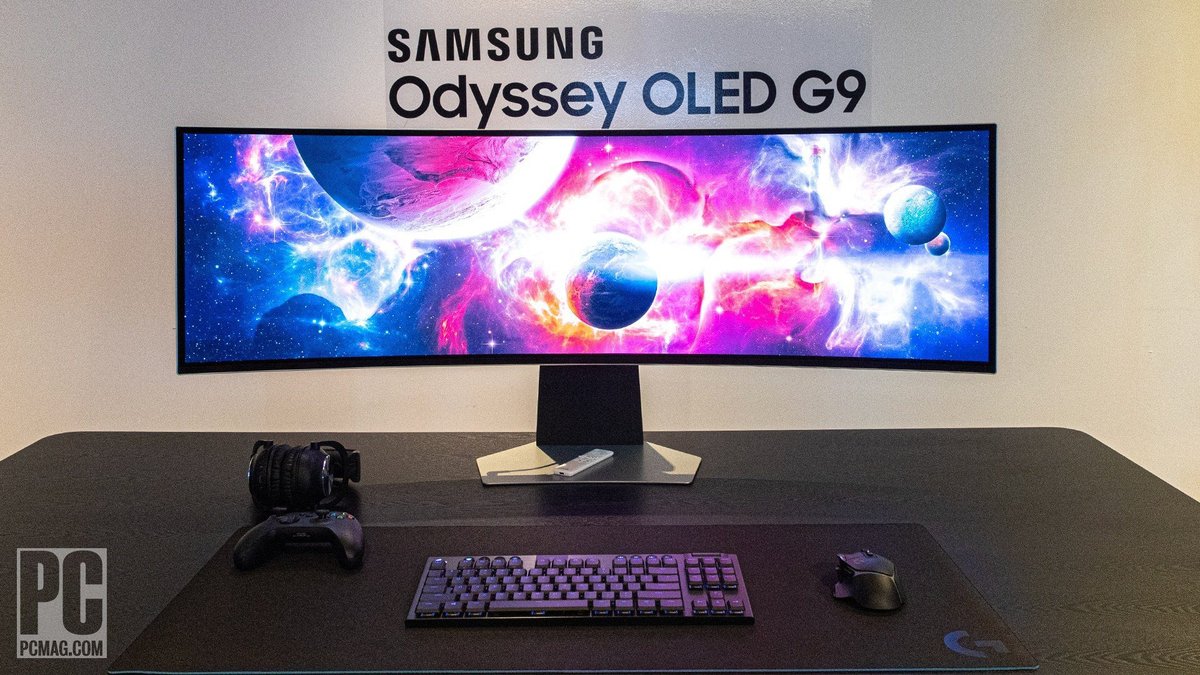
Samsung's 49-inch Odyssey OLED G9 (model G93SC) has dropped roughly $700 off its launch price as of late May 2026, putting the headline ultrawide QD-OLED inside reach of a buyer who would never have considered it a year ago. That's the news. The follow-on question — "should I actually buy it?" — is messier. For a single-monitor primary rig, the G9 at this price is finally defensible. For most buyers, a smaller 4K gaming monitor like the SANSUI 27-inch 4K Gaming Monitor or the ASUS TUF 32-inch Curved Gaming Monitor is the cheaper, more practical path to a meaningful display upgrade in 2026.
This brief lays out the deal as it stands, what's actually inside the panel, where the alternatives land, and the buyer-segments that should move on the discount versus the ones who should sit it out.
Key takeaways
- The Samsung Odyssey OLED G9 G93SC is roughly $700 off its launch list, landing it near $1,599 at major US retailers in late May 2026.
- 49-inch, 5120×1440 (DQHD), 240Hz, 0.03ms GTG, QD-OLED panel.
- The cheaper 4K path: a 27- or 32-inch IPS or QD-OLED in the $280–$500 range delivers a real upgrade for a fraction of the spend.
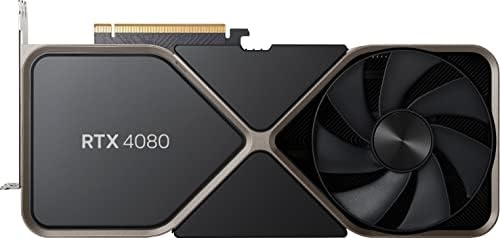
- The G9 needs an RTX 4070-class GPU minimum to drive natively at 240Hz; a 4080/5070 is the realistic floor.
- The desk-and-arm cost for a 49" curved is non-trivial — budget $80–$200 for a heavy-duty arm.
The deal as it stands
The Samsung Odyssey OLED G9 — model LS49CG932SNXZA, the G93SC revision with the QD-OLED panel — has been hovering between $2,199 and $2,499 for most of its post-launch life. The May 2026 price action has pulled it down to roughly $1,599 at the major US retailers tracked in Tom's Hardware's gaming-monitor roundup and confirmed against the Samsung product page and RTINGS.com's standing review.
That price is meaningful for two reasons. First, it's the lowest the OLED G9 has hit since launch. Second, it puts the 49" QD-OLED inside spitting distance of the much smaller 32" QD-OLED panels (which still hover near $1,200 at street), which is a different value proposition than the launch-price G9 ever was.
What's actually in the panel
The G93SC is the QD-OLED panel revision, distinct from the earlier G9 (G95NC mini-LED) and the original (G95NA VA panel). The QD-OLED panel buys per-pixel emissive control, which buys you HDR contrast that mini-LED cannot replicate at any cost. 1000-nit peak HDR brightness, ~0.03ms gray-to-gray response, 240Hz native refresh, and a 5120×1440 resolution that demands a top-shelf GPU to feed natively.
The trade-offs are well-documented: text rendering on QD-OLED is softer than IPS due to the triangular subpixel layout, the burn-in risk on a productivity monitor is real and the screensaver hygiene matters, and the 5120×1440 resolution at 49" works out to 109 PPI — fine for gaming, slightly chunky for code at normal viewing distance.
What the cheaper alternatives look like
For most buyers the G9 is too much monitor and too much GPU dependency. The 27- and 32-inch 4K market has become the better default in 2026.
| Monitor | Size | Resolution | Refresh | Panel | Street price (May 2026) |
|---|---|---|---|---|---|
| Samsung Odyssey OLED G9 G93SC | 49" | 5120×1440 | 240Hz | QD-OLED | $1,599 |
| ASUS TUF 32" Curved | 32" | 2560×1440 | 165Hz | VA | $283 |
| SANSUI 27" 4K | 27" | 3840×2160 | 160Hz | IPS | $280 |
A 27" 4K IPS at 160Hz on a real desk is, for most workloads, a meaningfully better day-to-day experience than the G9 — fewer ergonomic compromises, fewer GPU compromises, no burn-in risk, and you keep $1,300 in your pocket. The G9 is the right answer when the immersive ultrawide is the whole point of the build — flight sim, racing sim, single-player AAA at the desk, or competitive titles that natively support 5120×1440. For everyone else, the smaller 4K is the smarter buy.
We covered the broader monitor landscape in our Samsung 360Hz 4K QD-OLED vs budget 4K gaming monitors comparison and our ASUS TUF 27" 1440p vs Samsung Odyssey G5 esports article.
GPU pairing math
To drive the OLED G9 at native 5120×1440 / 240Hz in modern AAA, the GPU floor is:
| GPU class | 5120×1440 native at 240Hz | Recommended use |
|---|---|---|
| RTX 4070 / 5070 | Esports + DLSS-3 / FSR-3 in AAA | Minimum entry |
| RTX 4080 / 5080 | Native AAA medium-high | Comfortable |
| RTX 4090 / 5090 | Native AAA max settings + RT | The "as intended" pairing |
| RTX 4060 / 3060 / RX 7600 | DLSS / FSR ultra-performance only | Not recommended |
If your GPU is below an RTX 4070, the OLED G9's value collapses — you'll be dropping frames or running DLSS Ultra Performance, which softens the very image you bought the panel for. For a 27" 4K IPS at 160Hz, an RTX 3060 / 4060 is enough to enjoy the upgrade.
Common pitfalls
- Mounting a 49" curved on a stock desk arm. Most aftermarket arms cannot hold the G9 — its weight + curve + cable harness exceeds typical 1-arm specs. Budget $80–$200 for a heavy-duty arm.
- Running the G9 on a budget GPU. DLSS Ultra Performance on a 5120×1440 panel produces image quality below what a native 1440p output would give you. Buy the GPU first.
- Skipping burn-in hygiene. OLED needs screensaver + pixel-shift habits, especially for productivity workloads. Set both in the OSD.
- Buying the wrong model number. The G9 line has three distinct panels (VA G95NA, mini-LED G95NC, QD-OLED G93SC). Confirm G93SC for the QD-OLED.
- Assuming the deal lasts. Samsung's promo windows tend to close inside two weeks. If the deal is what tips the decision, decide now.
When you should pull the trigger
- You already own a 4080-class or better GPU.
- Your primary use case is single-player AAA, flight/racing sim, or 5120×1440-native esports.
- Your desk can carry a 49" curved without compromising ergonomics.
- You have a screensaver/pixel-shift routine you'll actually use.
When the cheaper 4K is the smarter buy
- Your GPU is below an RTX 4070.
- Your desk is under 60" wide.
- You do significant text/code work on the same monitor.
- You aren't willing to manage OLED burn-in hygiene.
- You'd rather put the $1,300 saved into a CPU upgrade, faster storage, or a second display.
Related guides
- Samsung 360Hz 4K QD-OLED vs budget 4K gaming monitors (2026)
- Samsung first 4K 360Hz QD-OLED panel — news (2026)
- ASUS TUF 27" 1440p vs Samsung Odyssey G5 esports monitor (2026)
- ASUS ROG Zephyrus G1 OLED RTX 5070 — $575 off news (2026)