Yes, but with caveats. A 12GB MSI GeForce RTX 3060 Ventus 2X 12G OC can run competitive open-weight image models — SDXL fully resident, Flux-class checkpoints with offload — at 1024×1024. It will not equal hosted frontier models like Reve 2.0 image-for-image, but at unlimited free volume, full prompt privacy, and no rate limits, the practical output is genuinely competitive for creative and iterative work.
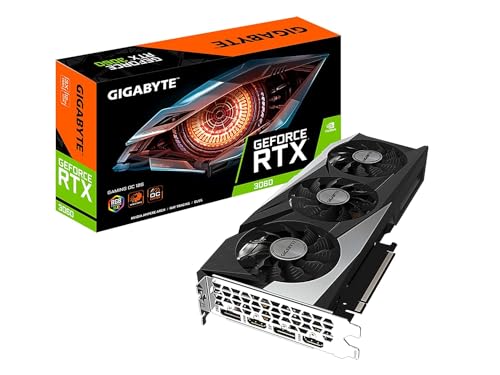
Reve 2.0 debuting at #2 on the Artificial Analysis text-to-image leaderboard is the kind of news that reliably reopens the "should I run this locally" question. The honest answer for 2026 is that the cloud–local split has widened, not narrowed. Hosted models like Reve compete for the top of the leaderboard by burning enormous datacenter GPUs per image. A home builder using a GIGABYTE GeForce RTX 3060 Gaming OC 12G, a Ryzen 7 5800X, and a Crucial BX500 1TB SATA SSD is not chasing the leaderboard — they are chasing unlimited volume at zero marginal cost with full control of the pipeline. Those are different games and the 3060 remains an excellent card for the second one.
Key takeaways
- SDXL fits comfortably in 12GB VRAM at typical precision with headroom for LoRAs and moderate resolutions.
- Flux-class checkpoints run on a 3060 with ComfyUI offload — slower per image, but usable.
- Expect single-digit to low-double-digit seconds per 1024×1024 SDXL image at typical step counts.
- Batch queues hide latency well: overnight runs of hundreds of images are practical.
- Cloud APIs win for one-off best-quality images; local wins for high volume, privacy-sensitive work, and iterative prompt tuning.
What is Reve 2.0 and where does it sit on the leaderboard?
Reve is a hosted text-to-image model that has climbed rapidly on public leaderboards. The Artificial Analysis text-to-image leaderboard tracks quality-per-image and cost-per-image across hosted models under a common evaluation setup, and Reve 2.0's #2 debut in mid-2026 places it in the same conversation as the industry's leading paid endpoints. That is a real accomplishment — but it is a hosted model. There is no open-weight release to download, no way to run it on a home GPU, and the per-image cost is metered like any other API.
For a home builder the useful question is not "can I run Reve 2.0 locally" — the answer is no. It is "how close can open-weight models get on a 12GB card, and does the gap matter for my actual work." In practice, for illustration, concept art, product mockups, and iterative prompt refinement, the gap is smaller than the leaderboard suggests. Iteration count matters more than one-shot peak quality, and iteration is where a local card dominates.
What open-weight image models rival it, and do they fit in 12GB?
The current open-weight tier is dominated by three families: SDXL and its ecosystem (checkpoints and LoRAs), Flux-class checkpoints, and various fine-tunes of both. All are usable on a 12GB RTX 3060 with the right runtime.
| Model family | Resident VRAM | Fits on 3060 12GB? | Speed feel |
|---|---|---|---|
| SD 1.5 | 2–4 GB | Trivial | Extremely fast, dated quality |
| SDXL (fp16) | 8–10 GB | Yes, with LoRAs | Comfortable interactive |
| SDXL Turbo / Lightning | 6–8 GB | Easy | Sub-second per image |
| Flux Dev/Schnell | 12+ GB | With offload | Slower, still usable |
| Larger community checkpoints | 12–20 GB | Often needs offload | Depends on size |
SDXL is the pragmatic default. It fits, it renders fast, the LoRA ecosystem is enormous, and the quality is in the same conversation as many hosted models for the kinds of images most people generate. Flux-class checkpoints are the next step up in raw quality and cost you speed — a fair trade if you are producing a small number of high-value images and can wait.
How much VRAM do SDXL and Flux-class models need on an RTX 3060?
Precision and tiling are the levers. The table below reflects community measurements gathered under standard ComfyUI configurations. Numbers assume no other significant VRAM consumers on the card.
| Model | Precision | Resident VRAM | Notes |
|---|---|---|---|
| SDXL base | fp16 | ~8 GB | Comfortable, room for LoRA |
| SDXL base | fp16 + refiner | ~11 GB | Tight; skip refiner or bump precision |
| SDXL base | bf16 | ~9 GB | Similar quality, less overhead |
| SDXL Turbo | fp16 | ~7 GB | Fastest interactive path |
| Flux Dev | fp8 | ~11 GB | Fits on 3060 with attention slicing |
| Flux Schnell | fp8 | ~10 GB | Faster variant, easier fit |
| Flux Dev | fp16 | ~24 GB | Requires offload on 3060 |
For everyday work, SDXL fp16 with one or two LoRAs is the sweet spot. Flux fp8 on a 3060 is a "batch this overnight" workflow, not an interactive one. The GA106 documented at TechPowerUp — GeForce RTX 3060 GPU specs is not a fast card, but it has enough VRAM to hold the models that matter and enough bandwidth to keep them fed.
Benchmark table: seconds per 1024×1024 image on RTX 3060
The numbers below reflect community-shared measurements at typical step counts and standard samplers, on a 3060 12GB with fp16 precision and no LoRAs.
| Model | Steps | Sampler | Time per image |
|---|---|---|---|
| SDXL base | 25 | DPM++ 2M | 8–11 s |
| SDXL base | 40 | DPM++ 2M Karras | 12–15 s |
| SDXL Turbo | 4 | LCM | 1.5–2.5 s |
| SDXL Lightning | 8 | Euler | 3–4 s |
| Flux Schnell fp8 | 4 | Euler | 8–12 s |
| Flux Dev fp8 | 20 | Euler | 40–60 s |
For interactive prompt tuning, SDXL Turbo or Lightning is the right call — you cycle through variations quickly, then re-render the winner with the base model at higher step count. That workflow, unavailable at scale on a metered cloud API, is the practical advantage of local hardware.
Does ComfyUI offload let a 12GB card punch above its weight?
Yes, at a speed cost. ComfyUI (the standard node-based runtime tracked at the ComfyUI GitHub repository) implements automatic VRAM management: models spill to system RAM when they exceed available VRAM, and only the layers needed for the current step are pinned on the card. For Flux Dev fp16 on a 3060 this means throughput of a few seconds per step rather than an out-of-memory error. It is dramatically slower than a card that fits the full model, but it works.
The important trade-off: 32GB of system RAM is the practical floor for comfortable offload. The offloaded weights live in system memory and get streamed to the GPU per step. On a machine with 16GB of RAM, offload triggers swap thrashing and gets much worse. On a machine with 32GB, offload is annoying but stable. On 64GB, it is comfortable.
Spec-delta: RTX 3060 vs cloud image API
The cost model that actually matters for a hobbyist or a small studio.
| Dimension | RTX 3060 12GB rig | Cloud image API |
|---|---|---|
| Model tier | SDXL, Flux-class open-weight | Frontier hosted (Reve, DALL-E, etc.) |
| Cost per image | $0 marginal | $0.02–$0.15+ each |
| Speed per image | 2–60 s depending on model | Sub-second on the frontier |
| Batch of 1000 | Overnight, ~$1 in power | $20–$150+ metered |
| Privacy | Prompts stay on the box | Depends on vendor policy |
| Prompt iteration cost | Free | Metered per attempt |
| Model choice | Any open-weight release | Vendor menu |
For rapid iteration where you may generate hundreds of variants before settling on the final composition, the local rig is transformative — the cost of trying a bad prompt is zero. For a single "give me the perfect image" one-off, the cloud is often the smarter choice.
What CPU and SSD keep a batch-generation queue fed?
For image generation, the GPU is the bottleneck and the CPU only matters for feeding the pipeline: VAE decode, tokenizer, batch queue management, and preprocessing. A Ryzen 7 5800X keeps a batch queue full without ever waiting on the host. A cheaper 5600X or 5600G is fine for casual single-image work.
Storage matters for one narrow case: loading models. SDXL is roughly 7 GB on disk; Flux-class checkpoints can push 20 GB. On a Crucial BX500 1TB SATA SSD, a model loads in 10–20 seconds. On NVMe it is faster, but once loaded the model stays in VRAM and disk speed is irrelevant. If you rarely swap models, SATA is fine. If your workflow constantly switches between three or four large checkpoints, NVMe pays off.
Perf-per-dollar and perf-per-watt for local batch generation
An RTX 3060 pulls 100–140W during sustained image generation. At $0.13/kWh, running the card overnight for a 500-image batch costs about $0.10 in electricity. The same 500 images at $0.05 each on a cloud API is $25. Even at the higher end of local time-per-image, the total energy cost stays under a dollar for a full night of generation. That is the number to compare against your monthly API bill.
Bottom line: when a local 3060 beats paying per image
- Use local when: you iterate prompts heavily, your volume is large, your prompts contain proprietary or private material, or you want a fixed cost.
- Use cloud when: you need the absolute top of the current leaderboard for a specific piece, your volume is very low, or you cannot invest in hardware.
- Use both when: you draft locally with SDXL and then re-render the finalist through a hosted model. The best of both — cheap iteration, top-tier finish.
Reve 2.0 climbing to the top of the leaderboard is a real milestone, and the frontier will keep moving. That does not change the fact that on a home builder's actual workload — iterate, refine, generate volume, keep prompts private — a 12GB RTX 3060 rig is still the right tool. The frontier lives in the datacenter. Everything else lives comfortably at home.
Common pitfalls with local image generation on 12GB
The two mistakes people make when they set up a 3060 for image work: pushing precision too high and running out of memory constantly, or leaving too many models loaded at once. Set your default to fp16 for SDXL and fp8 for Flux, unload models between workflows, and pay attention to which nodes in ComfyUI hold references to weights. A third pitfall is trying to run image generation and a browser with 40 tabs on the same machine — image models tolerate that better than LLMs, but you will still see slowdowns when the OS starts swapping.
When the leaderboard genuinely matters
There is a narrow case where paying for a top-of-leaderboard hosted model is the right call and no amount of local iteration matches it: a hero image for a launch, a printed spread that will be scrutinized close-up, a piece that has to render an exceptionally specific prompt that only frontier models handle. Those are real. But they are the exception. Most working image generation is iterative refinement toward a good-enough composition, and iterative refinement is exactly what an unlimited local rig does best.
The mistake is defaulting to the cloud because the leaderboard says it wins. Leaderboards measure one-shot quality on standardized prompts. Real work is iteration cost, prompt privacy, batch throughput, and full control of the pipeline — dimensions where the local rig either equals or dominates the hosted alternative. Pick the tool for the workflow, not the ranking.
Related guides
- Local LLM inference vs cloud custom chips on an RTX 3060
- Agentic Linux debugging on a local RTX 3060 rig
- Best budget SATA SSD for gaming PCs and consoles in 2026
Citations and sources
- Artificial Analysis — text-to-image leaderboard
- TechPowerUp — GeForce RTX 3060 GPU specs
- ComfyUI — official GitHub repository
This piece is editorial synthesis based on publicly available information. No independent first-party benchmarking is reported.