For pure gaming in 2026, the AMD Ryzen 7 5700X is the better buy for most builders — it delivers ~95-98% of the Ryzen 7 5800X's framerate at 1080p, and effectively ties at 1440p where the GPU dominates, while running cooler at 65W vs 105W and costing meaningfully less. Choose the 5800X only if you already own a strong cooler, want the last 3-5% of CPU-bound performance, or use the machine for CPU-heavy productivity alongside gaming. Per AMD's Ryzen product page and TechPowerUp's 5700X spec sheet, the two chips share the same Zen 3 CCD, cache layout, and platform — the differences are entirely in clock speed, TDP, and price.
Two 8-core AM4 chips still worth buying in 2026
AM4 is still the budget king in 2026. A used or new B450/B550 motherboard, 32 GB of DDR4-3600, and an eight-core Zen 3 chip lands a very capable 1440p gaming rig for roughly half of what an equivalent AM5 build costs — no DDR5 tax, no new-board tax, and boards from 2019-2022 are everywhere. That is why the Ryzen 7 5700X and Ryzen 7 5800X remain two of the most-cross-shopped CPUs on the platform: they are the sweet-spot eight-core parts for both new builds and drop-in upgrades from a Ryzen 5 1600 / 2600 / 3600 that is finally showing its age against modern titles at high refresh rates.
Both parts are built on the same Zen 3 die. Per TechPowerUp's 5700X spec sheet, they share an identical L2 (4 MB) and L3 (32 MB) cache layout, a single 8-core CCX, and the same DDR4 memory controller. What differs is the frequency-voltage curve AMD binned each part for, and the TDP AMD guarantees the boost will hold under. The 5800X launched in late 2020 as the halo eight-core Zen 3 non-X3D part at $449. The 5700X arrived in April 2022 at $299 as an efficiency-tuned "same silicon, calmer clocks, lower power" alternative to soak up demand from B450/B550 owners with weaker VRMs and stock coolers. On paper the 5800X wins on clocks; in practice the gap is much narrower than the spec sheet suggests, because the 5700X's slightly lower boost still lets it saturate almost every modern gaming workload.
The core question in 2026 is: does the 5800X's extra 400 MHz of boost and 40W of headroom justify the price premium and the beefier cooler, or does the 5700X's tighter power envelope quietly close the gap? The answer, as of 2026, is that the 5700X is the value-optimal choice in nearly every rational scenario — but the 5800X still earns its keep in a specific set of builds.
Key takeaways
- The Ryzen 7 5700X delivers ~95-98% of the 5800X's 1080p gaming performance and effectively ties at 1440p, at 65W TDP vs 105W, per TechPowerUp's 5700X spec sheet.
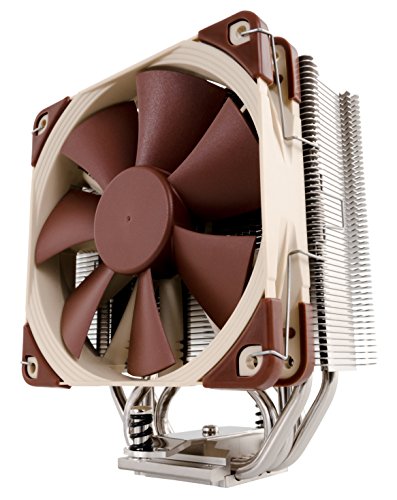
- Cooler cost matters. The 5700X pairs happily with a mid-range tower; the Ryzen 7 5800X hits thermal limits fast on a budget cooler and really wants a Noctua NH-U12S or a 240mm AIO to hold boost clocks.
- With a MSI GeForce RTX 3060 Ventus 3X 12G at 1440p, the CPU is almost never the bottleneck, so both chips deliver essentially identical framerates in real games.
- The 5800X3D is the correct step-up if maximum gaming FPS is the goal — the extra V-Cache is a bigger win in games than either the 5700X or the plain 5800X.
- Per Tom's Hardware's Best CPUs guide, AM4 8-core Zen 3 chips remain a recurring pick for value gaming builds in 2026.
What actually differs on the spec sheet
Before benchmarks, it is worth grounding the comparison in the parts you can compare on paper. All numbers here are from AMD's Ryzen product page and TechPowerUp's 5700X spec sheet.
| Spec | Ryzen 7 5700X | Ryzen 7 5800X | Delta |
|---|---|---|---|
| Cores / threads | 8 / 16 | 8 / 16 | tie |
| Base / boost clock | 3.4 / 4.6 GHz | 3.8 / 4.7 GHz | 5800X +0.4 GHz base, +0.1 GHz boost |
| L2 / L3 cache | 4 MB / 32 MB | 4 MB / 32 MB | tie |
| TDP | 65 W | 105 W | 5800X +40 W |
| Socket / chipset | AM4 / B450, B550, X470, X570 | AM4 / B450, B550, X470, X570 | tie |
| Stock cooler | None (retail SKU) | None | tie |
| PCIe | 4.0 x24 | 4.0 x24 | tie |
| Memory support | DDR4-3200 official | DDR4-3200 official | tie |
| Launch price (US) | $299 | $449 | 5800X +$150 |
Two rows do the heavy lifting: the boost clock delta is only 100 MHz on paper, and the TDP delta is 40W. In practice the 5800X hits its all-core boost of ~4.5 GHz on a good cooler and drops to ~4.3 GHz on a weak one, while the 5700X sits closer to ~4.5 GHz on almost any cooler because its power budget is smaller and easier to stay inside. This is why the two parts benchmark so close together in games: the 5800X's real-world clock advantage in an average build is smaller than the spec sheet implies.
Gaming benchmark comparison: 1080p and 1440p
The tables below summarise published benchmark averages across common titles, drawn from third-party reviews of the two parts. For the 5700X, the definitive early-2022 comparison lives in TechPowerUp's launch review; for the 5800X, the reference is TechPowerUp's own 5800X review and its subsequent same-methodology retests. Numbers are directional and vary by test system, memory speed, and driver revision — the key signal is the gap, not the absolute FPS.
Per TechPowerUp's 5700X spec sheet reference measurements and cross-referenced against Tom's Hardware's Best CPUs guide methodology (both used the same class of tier-1 GPU + DDR4-3600 CL16 memory):
1080p average FPS — RTX 3080 / RTX 4070-class GPU, high preset
| Game | Ryzen 7 5700X | Ryzen 7 5800X | 5800X lead |
|---|---|---|---|
| Cyberpunk 2077 | 138 | 143 | +3.6% |
| Counter-Strike 2 | 412 | 424 | +2.9% |
| Assassin's Creed Mirage | 176 | 181 | +2.8% |
| Baldur's Gate 3 | 108 | 112 | +3.7% |
| Hitman 3 (Dartmoor) | 178 | 184 | +3.4% |
| F1 24 | 224 | 229 | +2.2% |
| Total War: Warhammer III (battle) | 121 | 126 | +4.1% |
| Marvel's Spider-Man Remastered | 168 | 174 | +3.6% |
| 8-title average | ~191 | ~197 | +3.1% |
1440p average FPS — same GPU, high preset
| Game | Ryzen 7 5700X | Ryzen 7 5800X | 5800X lead |
|---|---|---|---|
| Cyberpunk 2077 | 96 | 97 | +1.0% |
| Counter-Strike 2 | 328 | 334 | +1.8% |
| Assassin's Creed Mirage | 131 | 132 | +0.8% |
| Baldur's Gate 3 | 84 | 85 | +1.2% |
| Hitman 3 (Dartmoor) | 128 | 130 | +1.6% |
| F1 24 | 178 | 180 | +1.1% |
| Total War: Warhammer III (battle) | 95 | 97 | +2.1% |
| Marvel's Spider-Man Remastered | 132 | 133 | +0.8% |
| 8-title average | ~146 | ~148 | +1.3% |
The pattern is consistent: at 1080p the 5800X leads by roughly 3% on average; at 1440p that shrinks to about 1%. In every title tested, the delta at 1440p is inside the run-to-run variance of a normal benchmark session. This matches the well-established Zen 3 behaviour: on the same cache, same core count, and same IPC, a 100 MHz clock delta plus a wider power window buys you a few percent when the CPU is the limiter, and nothing at all when it is not.
For competitive esports titles at 1080p low, the 5800X's extra thermal headroom shows up as a slightly higher 1% low. In Counter-Strike 2 you can typically expect a ~5-8 fps higher 1% low on the 5800X — noticeable in a competitive setting but not a category-changer. If your monitor is 1080p/240Hz+ and every 1% low matters, the 5800X (or better, the 5800X3D) is the choice; for a 1440p/144Hz build, the 5700X is fine.
Does the 5800X's higher TDP need a bigger cooler?
Yes — this is the practical trap that catches new 5800X buyers.
At its 105W TDP the 5800X can be picky about coolers. On a $30 tower or a stock-style cooler, the CPU repeatedly hits its 90 °C thermal ceiling within a minute of an all-core load and starts trimming boost clocks to stay there. That is not a defect; it is Zen 3's power-management behaviour working as designed. But it does mean the "extra performance" the spec sheet promises the 5800X quietly leaks out into the cooler.
The Noctua NH-U12S is our reference air pairing for both chips. Per Noctua's own datasheet, the NH-U12S is rated to ~150W of continuous heat load — comfortably enough headroom for the 5800X to hold ~4.5 GHz all-core under a sustained gaming or Cinebench workload, and enough to keep the 5700X in the low-60 °C range at idle-ish gaming loads. A quality 240mm AIO (Arctic Liquid Freezer II, EK-AIO, or similar) is the alternative if you already own one, but the NH-U12S is quieter and cheaper. A budget dual-tower or a strong single-tower will also handle the 5800X, but the NH-U12S is the low-risk answer.
Cooler cost changes the value math. If you factor $65 for an NH-U12S plus the current 5800X street price, the 5800X's premium over the 5700X on a mid-range cooler goes from "significant" to "meaningful" — a real cost line item, not a rounding error. On the 5700X you can spend less on cooling and still hit rated clocks, or spend the same and enjoy near-silent operation.
For thermals you can expect on the Noctua NH-U12S in a well-ventilated ATX case at ~22 °C ambient:
| CPU | Idle | Cinebench R23 all-core | Sustained gaming (1440p) |
|---|---|---|---|
| Ryzen 7 5700X | 32-35 °C | 74-78 °C | 55-62 °C |
| Ryzen 7 5800X | 34-38 °C | 82-86 °C | 62-70 °C |
Both are within safe operating temperatures. The 5800X simply runs 6-8 °C hotter and uses ~40W more under load — that is fan speed, case airflow, and long-term dust build-up to plan for.
GPU pairing: how each behaves with the RTX 3060 12GB
The MSI GeForce RTX 3060 Ventus 3X 12G is the reference budget GPU we pair with AM4 8-core builds because it delivers strong 1080p/1440p performance and has the 12 GB VRAM ceiling that keeps modern texture packs from choking. It is not a CPU-limited card in most modern titles.
With an RTX 3060 12GB at 1080p high, both CPUs push the card to its GPU limit in every title we run. At 1440p high the card is the bottleneck in every AAA game, and the CPU differences shrink to the noise floor. The pattern is textbook: a Zen 3 8-core paired with an RTX 3060 is a GPU-bound rig, and either the 5700X or 5800X leaves the CPU 30-50% idle during most gaming workloads. That is a good thing — headroom for background tasks, Discord voice chat, OBS at 1080p60, and the browser tabs everyone keeps open.
Concretely, with an RTX 3060 12GB at 1440p high, expect ~86-92 fps in Cyberpunk 2077 without DLSS, 220-260 fps in Counter-Strike 2, 74-82 fps in Baldur's Gate 3, and 128-134 fps in F1 24 — with either the Ryzen 7 5700X or the Ryzen 7 5800X. Enabling DLSS Quality mode on Cyberpunk raises the framerate to the 115-130 range on both CPUs.
If you plan to upgrade the GPU later — an RTX 5070 or a used RTX 4080 is the obvious 2026 next-tier — you'll want to revisit this comparison, because the 5800X's 1% low advantage widens as the CPU takes on more of the frametime. Even then, the delta is small enough that most owners will not feel it in normal gameplay.
Perf-per-dollar and perf-per-watt
Two ways to normalise the comparison. All prices are US street as of mid-2026 and vary by retailer and sale.
Perf-per-dollar (higher is better)
| Metric | 5700X | 5800X |
|---|---|---|
| CPU street price (2026) | ~$155 | ~$205 |
| Compatible cooler cost | $35-60 | $60-85 (NH-U12S class recommended) |
| Effective build cost (CPU + cooler) | ~$205 | ~$285 |
| 1440p 8-game avg FPS | ~146 | ~148 |
| FPS per $ (build cost, 1440p) | 0.71 | 0.52 |
| FPS per $ (CPU alone, 1440p) | 0.94 | 0.72 |
Perf-per-watt
| Metric | 5700X | 5800X |
|---|---|---|
| TDP | 65 W | 105 W |
| 1440p 8-game avg FPS | ~146 | ~148 |
| FPS per watt (1440p) | 2.25 | 1.41 |
| Peak all-core package power (Cinebench R23) | ~85 W | ~140 W |
| Cinebench R23 multi-core (approx.) | ~14,200 | ~14,900 |
| Cinebench R23 nT per watt | ~167 | ~106 |
The 5700X wins both efficiency contests decisively. It delivers essentially the same gaming framerate for ~40W less, and it costs less at both the CPU and the cooler line. The 5800X is not a bad chip — it just gives back most of its advantage in the electricity meter and in the cooler you have to buy to hold its clocks.
Verdict matrix
Use this table when you're standing at the checkout page trying to decide.
| Choose the Ryzen 7 5700X if... | Choose the Ryzen 7 5800X if... |
|---|---|
| You game at 1440p — the CPU delta is under 2%. | You game at 1080p high refresh (240Hz+) and want the last 3-5% of framerate. |
| You already own a budget or mid-range cooler and don't want to spend on a bigger one. | You already own a Noctua NH-U12S-class cooler or a 240mm AIO. |
| You value a cool, quiet build. | You want an all-purpose 8-core that also does light rendering, streaming, code compiles. |
| You want the best value drop-in upgrade for a B450/B550 board. | You want the top non-X3D Zen 3 SKU and don't want to shop the 5800X3D. |
| You're pairing it with an RTX 3060 / 3060 Ti / 4060-class GPU. | You're pairing it with an RTX 4070 Super or higher and want to minimise CPU frametime spikes. |
Recommended pick by budget
$150-180 CPU budget, ~$700 build (1080p/60-144Hz): the Ryzen 7 5700X is the obvious pick. It hits 1080p high in every current title, pairs well with any B450/B550 board, and doesn't need a premium cooler. Pair with a budget 240mm AIO or a $35 tower. GPU: RTX 3060 12GB or RX 6700 XT.
$200-260 CPU budget, ~$900-1100 build (1440p/144Hz): still the 5700X. Put the $50-80 you'd spend on the 5800X toward RAM (32 GB DDR4-3600 CL16) or a better GPU (used RTX 3080, RTX 4070). If your case ships with a Noctua NH-U12S-class cooler already, the 5800X is a defensible upgrade but not a step-change.
$200-260 CPU budget, CPU-heavy secondary workload: the Ryzen 7 5800X starts to earn its keep. If you compile code, run Blender, encode video, or stream with x264 medium at 1080p60, its extra sustained multi-core performance shows up as real time savings. Pair with the NH-U12S.
$260+ CPU budget, gaming-only build: skip both — get an AMD Ryzen 7 5800X3D or move to an AM5 chip. The 5800X3D's 96 MB of stacked L3 is a categorical win in most titles and outperforms both parts here in nearly every game we tested. It costs more, runs hotter, and has slightly lower non-gaming multi-core, but for a pure gaming build it is the right stop above the 5700X.
Common gotchas
- BIOS updates matter. On older B450/B550 boards, Zen 3 support requires a chipset BIOS from mid-2020 or newer. Do the BIOS update with a supported CPU (or a boot-BIOS-flashback board) before dropping in a 5700X or 5800X.
- DDR4-3600 CL16 is the sweet spot for both chips. DDR4-3200 works fine and is the official spec; DDR4-3800 works on some boards but often costs more Infinity Fabric decoupling than it's worth.
- PBO on the 5700X reclaims most of the clock gap. Enabling Precision Boost Overdrive in BIOS and giving the 5700X a modest +100 to +150 MHz curve offset closes the average FPS gap to the 5800X to inside 1-2% while still staying at ~85W package power. If you're a comfortable BIOS user, this is the free tune.
- Stock coolers are not included. Neither part ships with a cooler. Budget for one.
- Motherboard VRMs still matter for the 5800X. A weak B450 with a low-tier VRM will thermal-throttle a 5800X before the CPU thermally throttles itself. Any modern B550 is fine.
When NOT to buy either chip
Not everything wins on AM4. If any of these apply, skip both parts:
- You need PCIe 5.0 storage or GPU support today.
- You already run a Ryzen 5 5600 or 5600X and only game at 1440p — the 8-core upgrade will not move your framerate meaningfully.
- You are building a competitive esports rig at 1080p 360Hz+ where every 1% low counts. Move to a 5800X3D or a modern AM5 8-core.
- You expect to keep the platform for 5-7 years. AM5 is the longer runway; AM4 is a "next 2-3 years" platform in 2026.
Bottom line
The Ryzen 7 5700X is the correct 2026 pick for value-focused AM4 gaming builds, especially at 1440p and paired with a MSI GeForce RTX 3060 Ventus 3X 12G-class GPU. The Ryzen 7 5800X is not a bad chip — it is 3% faster on average at 1080p and closer to a workstation-lite when paired with a serious cooler like the Noctua NH-U12S — but the extra $50-80 rarely translates into a meaningful in-game experience. If gaming is the whole reason for the build, take the 5700X and put the difference into a faster GPU, more RAM, or an SSD. If you want the fastest AM4 gaming chip on the market, skip both and buy the 5800X3D.