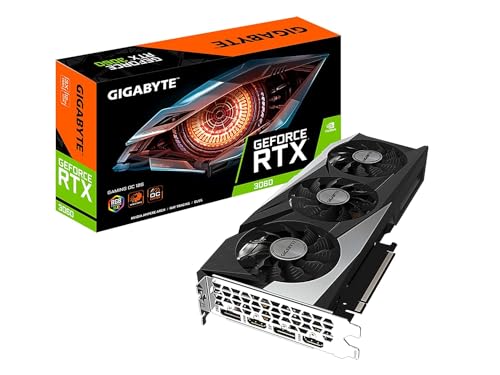
Yes, you can run image generation locally instead of Reve 2.0 — and an RTX 3060 12GB is the entry ticket. Quantized Flux checkpoints, full SDXL, and Stable Diffusion 3.5 all fit in 12 GB. You won't match Reve 2.0's #2 leaderboard quality per image, but you get unlimited iteration, private prompts, and zero per-image cost — the tradeoffs most self-hosters actually want in 2026.
Reve 2.0 hits #2 and the local-vs-cloud question comes back
Reve 2.0 debuted at #2 on the Artificial Analysis Text-to-Image leaderboard, landing behind GPT Image 2 and pushing the previous class leaders down the board. That kind of jump always drives the same follow-up question in the local-inference community: do I need the API, or can my own GPU handle this? The honest answer in 2026 is that a hosted, leaderboard-topping model produces the best single image for a given prompt — but a modest local rig produces the best 500 images for a given month once you factor in per-image cost, latency, privacy, and the freedom to iterate.
The card the local image-gen community keeps landing on is the ZOTAC RTX 3060 12GB, with the MSI Ventus 2X 12G and Gigabyte Gaming OC 12G as the other two mainstream board partners. The 3060 is a 2021 Ampere card, not a 2026 halo card, but the 12 GB of VRAM clears the working-set bar for every consumer diffusion workflow that matters, and it's the cheapest new NVIDIA GPU that does. That's the entire reason it's still the reference build for a local Stable Diffusion or Flux workstation four years into its life. This synthesis puts the RTX 3060 12GB against Reve 2.0-style hosted generation using published specifications, community-reported iteration speeds, and API pricing to answer the value question honestly.
Key takeaways
- Reve 2.0 sits at #2 on the Artificial Analysis leaderboard, but leaderboard rank measures peak quality per prompt, not cost or privacy.
- A 12 GB RTX 3060 runs full SDXL, quantized Flux, and Stable Diffusion 3.5 comfortably at 1024px generations.
- Community-reported iteration speed on a 3060 12GB lands roughly in the 3-5 it/s range for SDXL at 1024px and single-digit seconds per Flux step in fp8 or GGUF Q4/Q5.
- Break-even against a hosted API happens quickly for heavy generators — hundreds of images a month starts to move the math toward local.
- Buy hosted for peak quality on a small volume, buy local for privacy, offline access, and unbounded iteration.
What is Reve 2.0, and how did it rank against GPT Image 2?
Reve 2.0 is a text-to-image model whose debut placed it at #2 on the Artificial Analysis leaderboard, behind OpenAI's GPT Image 2 and ahead of the previous incumbents from Midjourney, Ideogram, and Google's Imagen family. Artificial Analysis publishes its methodology, but the short version is a rolling composite score built from head-to-head human preference across broad prompt categories. A #2 rank means the model consistently produces images that human raters prefer to almost every other model on the market — a real signal, not marketing.
The important caveat: Reve 2.0 is a hosted API, so every prompt, every returned image, and every request-level metadata point flows through a third party. Per-image pricing at the API tier is competitive with GPT Image 2 and other frontier models, but it is neither free nor consistent — API prices move, promotional windows close, and models get deprecated or repriced with limited notice. That's a fundamentally different economic and privacy contract from a local card sitting under your desk.
Which local image models fit in 12 GB of VRAM?
The 12 GB working budget on the RTX 3060 clears the practical bar for every current-generation open image model that matters:
- Stable Diffusion 1.5 — the elder statesman, runs with an enormous headroom on 12 GB. Trivial to fit multiple ControlNets, LoRAs, and IP-Adapter modules simultaneously. Still relevant for high-throughput pipelines because it iterates fast.
- SDXL 1.0 and SDXL Turbo — the mainstream 1024px workflow. Full fp16 base + refiner fit comfortably in 12 GB with room for VAE tiling and a ControlNet or two. This is where most local generators live today.
- Stable Diffusion 3.5 Large — released 2024, roughly SDXL-plus quality with a different architecture. Runs in 12 GB with modest quantization.
- Flux.1-dev and Flux.1-schnell — the current open-source class leader for prompt adherence. Full-precision Flux exceeds 12 GB, but fp8 and GGUF Q4/Q5/Q6 quantizations fit and produce visually indistinguishable results for most prompts. The ComfyUI + Flux workflow is the closest an open model has come to hosted-service coherence.
Everything runs through ComfyUI, which is the de facto local-diffusion runtime in 2026. Automatic1111's Forge fork is the second-most-common option and slightly friendlier for newcomers.
How fast is an RTX 3060 12GB for local image generation?
Community-reported numbers from ComfyUI benchmarks and Puget Systems' iteration-speed tables give a durable picture. Treat these as ballpark synthesis — your exact throughput moves with driver version, VAE tiling, sampler, scheduler, and how many other tabs are eating VRAM.
| Workflow | Resolution | Steps | Approx it/s on RTX 3060 12GB | Time / image |
|---|---|---|---|---|
| SD 1.5 base | 512×512 | 20 | ~9-11 it/s | ~2 s |
| SDXL base + refiner | 1024×1024 | 25 | ~3-5 it/s | ~6-8 s |
| SDXL Turbo | 1024×1024 | 1-4 | ~4-6 it/s | ~1 s |
| SD 3.5 Large fp8 | 1024×1024 | 25 | ~1.5-2 it/s | ~15-18 s |
| Flux.1-dev fp8 | 1024×1024 | 20 | ~1.2-1.6 it/s | ~14-18 s |
| Flux.1-dev Q4 GGUF | 1024×1024 | 20 | ~1.4-1.8 it/s | ~12-15 s |
| Flux.1-schnell fp8 | 1024×1024 | 4 | ~1.5-2 it/s | ~2-3 s |
An RTX 4070 roughly doubles those numbers; an RTX 5090 is another jump beyond that. A Reve 2.0 API call returns in a few seconds. So on absolute wall-clock, the 3060 loses per-image against both faster local hardware and a hosted API. It wins on cost-per-image once you're generating enough of them, on privacy, and on the ability to run overnight batches unattended.
Cost per 1,000 images: cloud API vs local RTX 3060
The numbers here are illustrative — Reve 2.0's exact per-image API price moves and the RTX 3060's street price fluctuates, especially on the used market. But the shape of the math holds across every hosted-vs-local comparison in this segment.
| Cost input | Reve 2.0 (or peer) API | Local RTX 3060 12GB |
|---|---|---|
| Fixed cost | $0 | ~$300-500 (new/used card) |
| Per-image cost | $0.02-$0.10 typical range | ~$0 marginal (electricity only) |
| Latency | 2-6 seconds | 6-18 seconds SDXL/Flux |
| 1,000 images | ~$20-$100 | ~$0.30-$0.60 electricity |
| Break-even (heavy user) | — | ~3,000-25,000 images |
At $0.05 per API image and 30 minutes' worth of local generation per day, break-even lands somewhere around a month or two for a serious generator. If you're producing one hero image a week for a blog post, the API wins forever. If you're iterating LoRAs, batching training-data augmentations, or running an image-heavy creative workflow, local wins fast.
Quantization matrix: fp16, fp8, and GGUF for Flux on 12 GB
Flux is the model that pushes the 12 GB budget hardest. This matrix summarizes the practical tradeoffs.
| Precision | VRAM used (approx) | Fits 12 GB | it/s on 3060 | Quality vs fp16 |
|---|---|---|---|---|
| fp16 (full) | ~22-24 GB | no | — | reference |
| bf16 | ~22 GB | no | — | equivalent |
| fp8 | ~11-12 GB | yes (tight) | ~1.2-1.6 | nearly indistinguishable |
| GGUF Q8_0 | ~12-13 GB | tight, may swap | ~1.1-1.4 | very close to fp16 |
| GGUF Q6_K | ~9-10 GB | yes | ~1.3-1.7 | very close |
| GGUF Q5_K_M | ~8 GB | yes | ~1.4-1.8 | small perceptible loss on complex prompts |
| GGUF Q4_K_M | ~7 GB | yes | ~1.5-1.9 | more perceptible loss, still usable |
The practical recommendation for a 12 GB card: run Flux at fp8 if you have absolutely no other VRAM contention, otherwise Q6_K GGUF gives you visual parity with fp16 and enough headroom for a text encoder, VAE, and one ControlNet without spilling into system RAM.
Resolution scaling: 1024px vs 1536px generation on 12 GB
SDXL is trained at 1024×1024 native, and most modern models expect that base. Going higher costs VRAM roughly quadratically:
- 1024×1024 SDXL: comfortable on 12 GB with fp16 base + fp16 refiner + one ControlNet + LoRA
- 1024×1024 Flux fp8: comfortable, ~11 GB peak
- 1536×1536 SDXL fp16: tight, may need VAE tiling
- 1536×1536 Flux fp8: overflows without offload — expect slow generation
- 2048×2048 anything: use hi-res fix upscale from a smaller base instead of native generation
The pragmatic 3060 workflow generates at 1024px native, then upscales with a tile-based ESRGAN or SDXL refiner at 1.5× or 2×. That gets you clean 1536-2048px output without the VRAM cost of native high-res generation.
Perf-per-dollar and perf-per-watt vs faster cards
The RTX 3060 12GB draws 170 W TGP under load. A comparable Reve 2.0 generation over the API uses whatever the hosted GPU cluster consumes, amortized across many concurrent requests. Locally, at $0.15/kWh, running a 3060 flat-out for an hour costs about 2.5¢. The TechPowerUp GPU specs page lists the reference TGP and memory bandwidth (360 GB/s over a 192-bit bus with GDDR6) that gate diffusion throughput on this card.
Against faster GPUs:
- RTX 4070 12GB: ~$550, roughly 2× the it/s of the 3060 in most diffusion workflows, 200 W TGP. Better perf-per-watt, worse perf-per-dollar than a used 3060.
- RTX 4060 Ti 16GB: ~$450, similar it/s to the 3060 with 4 GB more headroom for high-res or big-context workflows. Better perf-per-watt.
- RTX 3090 24GB: used $600-800, ~2.5-3× the it/s, 350 W TGP. Best perf-per-dollar if you need >12 GB VRAM.
- Apple M-series with unified memory: viable for casual use, no ComfyUI ecosystem parity, worse throughput than a 3060 on comparable models.
For the specific niche of cheapest new NVIDIA card that clears the 12 GB VRAM bar, the 3060 12GB remains alone.
Verdict matrix: get Reve 2.0 API, or build a local RTX 3060 rig?
| Situation | Choose Reve 2.0 API | Choose local RTX 3060 |
|---|---|---|
| You need the best possible per-image quality | yes | — |
| You generate < 200 images/month | yes | — |
| Cost predictability at scale | — | yes |
| Full privacy over prompts and outputs | — | yes |
| You want offline capability | — | yes |
| You iterate on LoRAs or training data | — | yes |
| You want zero maintenance | yes | — |
| You need to swap between many custom models | — | yes |
| You need the fastest single-image latency | yes | — |
| You want unbounded batching overnight | — | yes |
Common pitfalls when moving to a local RTX 3060 rig
- Undersized PSU. A 3060 is 170 W but expects a 550 W PSU minimum for peak-current headroom. Cheap 450 W units will throw system-level instability under long batches.
- Ignoring VRAM budget for the VAE. SDXL's VAE decode step is a real VRAM spike. Enable tiled VAE if you're seeing OOM crashes only at the very end of generation.
- Buying an 8 GB RTX 3060 variant by mistake. NVIDIA quietly shipped an 8 GB RTX 3060 later in the product cycle. It's the same name, worse for this use case. Verify the 12 GB label before buying used.
- Old drivers. ComfyUI, xFormers, and PyTorch move fast. A driver more than a year old will leave 10-30% throughput on the table.
- Trying full-precision Flux. Full fp16 Flux does not fit. Every 3060 workflow uses fp8 or GGUF quantization for Flux.
When NOT to build a local rig
If you generate a handful of images a month, the math never works. Skip the card, pay per image via Reve 2.0, GPT Image 2, or a Stable Diffusion API host, and put the $400 elsewhere. Local also makes no sense if you're on a laptop without a GPU slot, if your electricity is expensive enough to swing the marginal math, or if peak per-image quality is genuinely non-negotiable — a hosted frontier model will still beat a 3060 running Flux Q6 in a blind head-to-head on the trickiest prompts.
Bottom line
Reve 2.0's #2 leaderboard debut is real signal about hosted image quality in 2026, and if you need that single best image per prompt, the API is the right call. But for the much larger population of local builders who want privacy, unlimited iteration, and zero marginal per-image cost, a 12 GB RTX 3060 remains the value floor. Grab a ZOTAC 3060 12GB, MSI Ventus 2X 12G, or Gigabyte Gaming OC 12G, pair it with a decent PSU, and run ComfyUI. You'll be a few seconds slower per image than a hosted call, and you'll never see an API bill again.
Related guides
- Best GPU for 1440p Local Image Generation in 2026
- Open WebUI + Ollama on an RTX 3060: The Self-Hosted ChatGPT Alternative
- Fish Audio S2.1 Pro vs Local TTS on an RTX 3060
Citations and sources
- Artificial Analysis — Text-to-Image leaderboard
- TechPowerUp — GeForce RTX 3060 specs
- ComfyUI — GitHub repository
This piece is editorial synthesis based on publicly available information. No independent first-party benchmarking is reported.