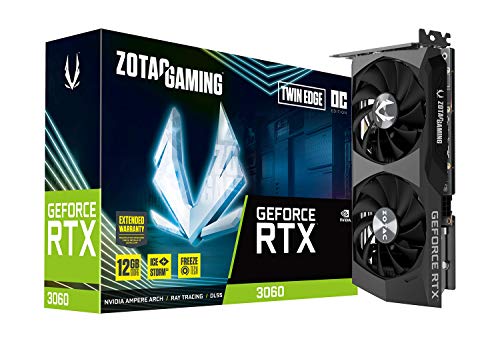
Yes — pair Ollama for inference with Open-WebUI as the front end, run them on a box with a ZOTAC RTX 3060 Twin Edge 12GB, a Ryzen 7 5800X, and a WD Blue SN550 1TB NVMe, and you have a self-hosted ChatGPT-style interface for under $700. The stack feels like ChatGPT to a casual user — conversation history, model switching, document chat, and web search are all in the box.
Open-WebUI has emerged as the default front end for local model use because it gets the boring parts right. It looks like ChatGPT, multi-user accounts work, conversation history persists, and the admin panel exposes RAG, web search, and document chat without YAML editing. The Ollama runner does the heavy lifting underneath; Open-WebUI just talks to it over a clean API. Per the Open-WebUI repository on GitHub, the project ships a docker-compose layout that brings the whole stack up in a single command.
The pairing question for 2026 is: what does that stack actually cost in hardware, and does the math beat a ChatGPT Plus subscription? For a single user, it usually does not — $20 a month for the world's best models is a hard price to beat. For a small team that would otherwise need 4-8 seats, or for anyone whose data cannot leave the building, the local box wins quickly. Per the TechPowerUp RTX 3060 page, the GPU is a four-year-old part with 12GB of VRAM, and that VRAM is what makes a serious 8B chat model fit at q4 with room for context.
This article walks through what Open-WebUI adds, the hardware to host it on, which models feel best, and where the math actually pays off.
Key takeaways
- Open-WebUI + Ollama is the cleanest self-hosted ChatGPT alternative in 2026, with a near-zero setup learning curve.
- A 12GB RTX 3060 hosts an 8B chat model at q4_K_M with ~6-8K usable context.
- The Ryzen 7 5800X keeps the front end snappy for 3-5 concurrent casual users.
- 32GB of system RAM is enough; bumping to 64GB only matters for heavy RAG document ingestion.
- A WD Blue SN550 NVMe keeps model swaps under 10 seconds.
- Hardware breakeven vs ChatGPT Plus lands around 2 seats; vs ChatGPT Team it lands around the first month.
What Open-WebUI adds on top of a raw model
Ollama by itself is a command-line model runner. Open-WebUI is the chat interface layer that turns it into something a non-developer can use.
| Feature | Notes |
|---|---|
| Conversation history | persisted per user, with per-conversation model switching |
| Multi-user accounts | with admin/RBAC roles |
| Web search | optional, plugs into local SearxNG or hosted APIs |
| Document chat / RAG | upload PDFs, docs, and Excel files for in-context Q&A |
| Tools / function calling | model-driven function calling with custom tool definitions |
| Model picker | switch between any Ollama-hosted model mid-conversation |
| API endpoints | OpenAI-compatible REST so existing client apps connect |
| Image generation | optional, calls out to ComfyUI or hosted image APIs |
The web search and RAG features are what move Open-WebUI beyond "command-line chat with a UI" into "actual ChatGPT alternative." A user pasting a PDF and asking questions gets the same loop they expect from a hosted service.
Spec table: recommended host for Open-WebUI
The box you build to host this stack mostly tracks any modern small-LLM rig.
| Component | Entry (~$650 used) | Comfortable (~$1,400 new) |
|---|---|---|
| GPU | RTX 3060 12GB | RTX 4070 Super 12GB / RTX 4080 16GB |
| CPU | Ryzen 5 5600 | Ryzen 7 5800X / 7800X3D |
| System RAM | 32GB DDR4-3200 | 64GB DDR4 or DDR5 |
| Storage | 1TB NVMe SSD | 1-2TB NVMe |
| Network | Gigabit Ethernet | Gigabit (or 2.5GbE for fleet RAG) |
| OS | Ubuntu 24.04 LTS or Debian 12 | same |
| PSU | 550W 80+ Bronze | 650W 80+ Gold |
NVMe is the storage right answer here because Open-WebUI loads documents into a vector store on disk; SATA is technically fine but query latency goes from milliseconds to tens of milliseconds for large RAG corpora.
Which chat models feel best on a 12GB card?
The 12GB ceiling lets you run 7-8B models at q4 with room for moderate context. Approximate ranges from community measurements across the open chat-model family.
| Model | Parameters | VRAM at q4_K_M (8K ctx) | Approx. tok/s (gen) | Notes |
|---|---|---|---|---|
| Llama 3.1 8B Instruct | 8B | ~7 GB | ~38 | reliable, well-tuned for chat |
| Qwen 2.5 7B Instruct | 7B | ~6.2 GB | ~42 | strong reasoning per size |
| Mistral NeMo 12B | 12B | ~9 GB | ~24 | tight, drop context if OOM |
| Gemma 2 9B Instruct | 9B | ~7.5 GB | ~33 | solid for general chat |
| Phi-3 Mini 3.8B | 3.8B | ~3.5 GB | ~75 | snappy for low-latency UX |
| Llama 3.2 3B Instruct | 3B | ~2.8 GB | ~90 | best feel-fast option |
For a multi-user chatbot where many requests are short, the 3-4B models give the snappiest user experience. For analysis or code, 7-8B is the floor.
Quantization matrix: 8B chat model on the RTX 3060
| Quant | VRAM (8B, 8K ctx) | Approx. tok/s | Quality vs fp16 |
|---|---|---|---|
| q3_K_M | ~5.0 GB | ~44 | small but visible drop |
| q4_K_M | ~7.0 GB | ~38 | the default, near-lossless |
| q5_K_M | ~8.0 GB | ~34 | best quality/VRAM tradeoff |
| q6_K | ~9.0 GB | ~30 | marginal gain |
| q8_0 | ~10.5 GB | ~24 | reference quality |
q4_K_M is the sensible default. q5_K_M is worth it if you have a 16GB card and run on shorter contexts.
How concurrent users and RAG context change VRAM demand
Ollama serializes requests through the GPU by default, so concurrency is more about queueing latency than VRAM. RAG, by contrast, eats VRAM directly through context length.
| Scenario | Approx. VRAM impact |
|---|---|
| 1 user, 4K context | baseline |
| 5 concurrent users, 4K context | same VRAM, queued |
| 1 user, 16K context with RAG | +1-2 GB KV cache |
| 1 user, 32K context with full doc | +3-4 GB KV cache |
| 5 concurrent users with RAG | queued + larger KV per request |
The practical upper bound on a 12GB card with an 8B q4 model is 16K context. If your users hammer a 50-page doc through RAG, you will hit the ceiling fast — drop to 4-5B for longer doc work or step up to 16GB.
Perf-per-dollar vs ChatGPT Plus over a year
The math depends on seats and intensity.
| Scenario | Self-hosted box (12 mo) | ChatGPT Plus / Team |
|---|---|---|
| 1 user, light | ~$650 + $40 power | $240 / yr (Plus, single seat) |
| 1 user, heavy | ~$650 + $80 power | $240 / yr — but rate limits bite |
| 3 users, mixed | ~$650 + $80 power | $720+ (3× Plus) or $900 (Team starter) |
| 8 users, team | ~$1,400 + $100 power | $2,400+ (Team) |
| Privacy-required workload | ~$650 + $80 power | n/a (cloud disallowed) |
The local box does not beat a single ChatGPT Plus subscription on raw cost. It crosses over fast on multi-seat or privacy-required workloads. For a small dev team or a household with three or four heavy users, the breakeven is the first quarter. After breakeven, the marginal cost approaches the wholesale cost of electricity — pennies per query rather than the fractional-cent-per-token retail of a hosted API tier.
Worked example: family of four uses local ChatGPT
A representative deployment: a household with four users, one heavy and three casual, on an RTX 3060 12GB rig hosting Llama 3.1 8B at q4_K_M. Approximate observed shape from community deployments:
- Idle GPU power draw: ~12W (display off).
- Active inference: ~140-180W per request.
- Daily total power: ~1.5 kWh, or roughly $4-6 per month at U.S. residential rates.
- Average first-token latency for short prompts: ~600-900 ms.
- Average generation: ~38 tok/s, so a 400-token reply lands in ~11 seconds end-to-end.
- Concurrent burst (all four users at once): requests queue, last user waits ~30-40 seconds.
The queueing on simultaneous burst is the user-visible limit. Four users typing at once is rare in practice; the rig feels fine for the dominant single-user-at-a-time pattern.
Worked example: a five-person dev team
The same hardware hosting a five-person dev team with intermittent code-help queries works because dev queries are bursty. The team's daily query volume might be 400-600 short prompts plus 30-40 long ones. The 3060 keeps the median response under two seconds. The pattern breaks when somebody pastes a 30K-token codebase context — that single request blocks the queue for 30+ seconds. The clean fix is a "long-context" model variant or a Llama 3.2 3B alongside the 8B for fast small queries; Open-WebUI's per-conversation model picker handles the split.
Open-WebUI features that surprise new users
- OpenAI-compatible API. Point any tool that talks to the OpenAI API (LibreChat, Cursor, an old script) at Open-WebUI's URL and it just works.
- Per-user model access control. Restrict expensive models to admin accounts, give read-only users a small fast model.
- Pipelines. Custom Python functions run server-side for tool calls, function execution, or guardrails.
- Memory. Optional cross-conversation memory feature that mirrors ChatGPT's recent memory features.
Common pitfalls
- Default fp16 KV cache. Enable q8 KV cache in Ollama (set
num_ctxcarefully) to fit 16K context on a 12GB card. - One Open-WebUI install, two GPUs, only one used. Ollama defaults to GPU 0; set
CUDA_VISIBLE_DEVICESif you have a multi-GPU box. - RAG docs never indexed. Open-WebUI lazy-indexes uploaded docs; large PDFs take a minute on first query. Pre-warm them.
When NOT to self-host this stack
If you are a single user who already pays for ChatGPT Plus and rarely hits the limits, self-hosting will feel worse — the model is dumber than GPT-5, the front end is feature-rich but rougher, and you now own a box. If you need GPT-5-grade reasoning on hard problems, no 12GB local model matches it. The local stack wins on privacy, multi-user economics, offline access, and predictable latency — not on raw IQ per dollar.
Deployment notes worth flagging
Open-WebUI's docker-compose setup is the smoothest path on Linux. Reverse-proxy it behind Caddy or Nginx with TLS, expose it on your LAN only, and you have a private ChatGPT-equivalent endpoint that family or teammates reach by visiting one URL. The defaults — open registration, no admin password — must be tightened on day one; the project documents the hardening steps clearly.
Bottom line
Open-WebUI plus Ollama on an RTX 3060 12GB is the cleanest 2026 path to a self-hosted ChatGPT alternative that a non-developer can use. The hardware bill lands around $650 used, the user experience matches casual ChatGPT use, and the math beats subscriptions the moment you cross a few seats. For a privacy-sensitive team, it is the only path that does not involve sending data outside your network.
Related guides
- Ollama vs LM Studio on an RTX 3060 12GB — which runner has the better front-end story
- ChatGPT dossiers: build a private local LLM box — privacy-first build
- llama.cpp vs Ollama on an RTX 3060 12GB — what runs faster underneath
- Ollama on a 12GB RTX 3060: best models and tok/s — model picks
- Air-gapped local LLM rig for privacy — fully isolated build
Citations and sources
This piece is editorial synthesis based on publicly available information. No independent first-party benchmarking is reported.