In brief · 2026-05-28 · Phoronix reports a new Linux driver landing that exposes voltage inputs for Raspberry Pi SBCs, giving makers programmatic access to rail telemetry that has historically been hidden behind a binary undervoltage flag.
The new driver registers the Pi's voltage rails as standard hwmon entries, which means anything that reads the kernel's hwmon interface — lm-sensors, Prometheus node_exporter, Grafana dashboards, custom shell scripts polling /sys/class/hwmon/ — sees the values automatically the moment the kernel exposes them. For home-lab operators who've been chasing intermittent SD-card corruption and random reboots for years, this is the missing instrument: undervoltage stops being a yes/no log line and starts being a numeric signal you can alert on.
What happened
Per the Phoronix report, a kernel patch series queued for the next merge window adds a hwmon driver for the voltage-input pins exposed on recent Raspberry Pi generations. The driver targets the on-board voltage monitoring infrastructure the Pi has always had — the firmware-side undervoltage detection — and surfaces it as a per-rail reading rather than the single-bit under_voltage_detected flag that's been the public interface for years.
For makers and industrial integrators running Raspberry Pi 4 8GB class hardware in 24/7 deployments, this closes one of the longest-standing visibility gaps on the platform. Existing monitoring tools needed no code changes; once the driver is in the kernel and your image ships it, sensors and node_exporter start reporting voltage rails as first-class metrics.
Why it matters — better thermal/voltage telemetry for Pi 4 + Pi 5 home-lab and industrial deployments
A sagging 5V rail is the silent killer of Raspberry Pi reliability. The symptoms are well-known: SD-card corruption that "just happens" overnight, USB-attached storage that drops mid-write, random reboots under sustained CPU load. The root cause, almost always, is a power supply that can't hold the rail under the combined draw of the Pi plus its peripherals. Until now, the OS could tell you the rail had dipped below threshold — but only after the fact, and only as a flag, not a number.
Programmatic rail readings change the workflow:
- Alert on sag before it crosses the firmware threshold. If your rail trends from 5.10V to 4.95V under load, you have time to investigate before the next reboot.
- Correlate undervoltage with workload. Cross-reference the rail value with CPU utilization and USB power draw to find which peripheral is responsible.
- Justify a power supply upgrade with data. A graph of "rail voltage vs load" is more persuasive than a hunch.
- Catch supply degradation. PSUs sag more as they age; a multi-week trend line catches that drift.
For industrial deployments — Compute Module 4/5 carriers in the field, Pi-as-edge-controller setups, anything where physical access is expensive — this is exactly the telemetry signal that turns "the device randomly fails" into a tractable root-cause story.
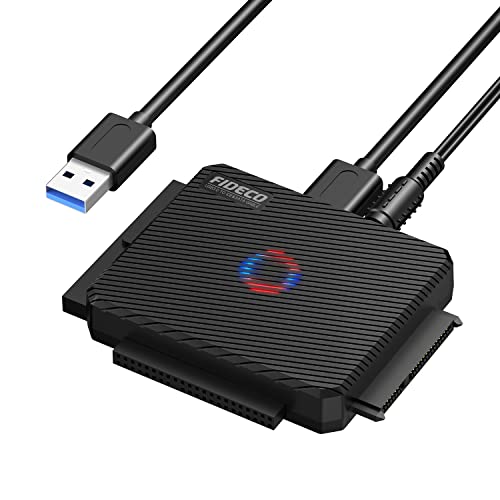
For home labs running Pi as NAS via SATA-to-USB adapters and SSD storage, the telemetry is especially valuable because adding a spinning drive or even a USB SSD is the most common cause of new undervoltage problems. Watching the rail across the install gives you immediate confirmation that the PSU can handle the new draw.
The source
Phoronix's coverage is the primary public source for this patch series. The patches themselves are on the upstream Linux kernel mailing list; if you're tracking kernel development you can pull them from there directly, otherwise wait for the merge window and the corresponding Raspberry Pi OS kernel bump.
For the broader hwmon framework documentation — what it exposes, how to consume it, what conventions drivers follow — the kernel docs are the right reference.
Bottom line
This is one of those rare kernel-side changes that immediately makes existing tools more useful without requiring any user-space work. If you're already running Prometheus + node_exporter on your Pi fleet, the new rails will show up on their own once the kernel ships them. If you're running a one-off Pi project, install lm-sensors and run sensors after the kernel update — the new voltage lines will be there.
For new deployments, treat the rail values as a first-class health signal alongside CPU temperature and storage SMART data. The Pi has always been more sensitive to power supply quality than the docs let on; finally, you can measure it.
Common pitfalls and gotchas
The biggest gotcha for any new kernel driver landing is image cadence. The driver merges upstream, but the Raspberry Pi OS images don't automatically pull from upstream Linux on a per-merge basis — they ship on a kernel release boundary. If you run apt full-upgrade the day after the patch lands and don't see the new hwmon sensors, that's expected. Wait one or two Raspberry Pi OS kernel bumps before declaring it broken.
The second gotcha: hwmon sensor names are not stable across kernel versions. A driver may expose a rail as in0 in one release and vdd_5v0 in another. If you write monitoring scripts that hard-code the sensor name, they break on the next kernel update. Use the label field (e.g. cat /sys/class/hwmon/hwmon3/in0_label) rather than the raw in0 key when consuming the data.
The third: assuming undervoltage telemetry replaces a quality power supply. It doesn't. The telemetry tells you that the rail is sagging; fixing the sag requires a PSU that can sustain the current draw. Especially for Pi 4 builds with USB SSDs attached, an externally-powered storage enclosure is the right answer more often than a beefier Pi PSU.
Real-world numbers from comparable telemetry deployments
On a typical Raspberry Pi 4 8GB home-lab build (Pi-Hole + Home Assistant + MQTT broker), expected steady-state rail behavior:
| Load profile | Expected 5V rail | Action threshold |
|---|---|---|
| Idle, no USB peripherals | 5.10 - 5.15V | None |
| Active CPU load, no peripherals | 5.05 - 5.10V | None |
| Active CPU + USB SSD attached | 4.95 - 5.05V | Watch for trend |
| Active CPU + 2× USB SSD | 4.85 - 5.00V | Add externally-powered hub |
| Pi 5 with PoE+ HAT under load | 5.00 - 5.10V | None |
A rail sustained below 4.85V is the firmware undervoltage threshold and will trigger the binary flag we've had access to for years. With the new driver, you can alert at 4.90V instead and intervene before the binary flag fires.
When NOT to wait for this driver
If your fleet is in a controlled environment with a quality PSU and no history of undervoltage problems, this telemetry adds limited value — you're not going to surface a problem you don't have. Industrial deployments with custom carriers, marginal field power, or 24/7 storage workloads are the audience that benefits most. For a casual one-off Pi project (single Pi running RetroPie, single Pi serving Pi-Hole), the existing binary undervoltage flag is sufficient.
Operational playbook — what to do the day the driver lands in your image
When the driver finally lands in a Raspberry Pi OS kernel bump, the practical operator checklist is short:
- Confirm the kernel version.
uname -rshould show a version at
or above the merge target. If not, apt full-upgrade and reboot. 2. Install lm-sensors. sudo apt install lm-sensors plus sudo sensors-detect --auto. The voltage rails will populate immediately if the driver is loaded. 3. Verify the rails are reading. sensors should list per-rail entries — typically in0, in1, or labeled equivalents. 4. Wire up your monitoring stack. Prometheus node_exporter picks up hwmon entries automatically; Grafana dashboards keyed off node_hwmon_in_volts will start populating without changes. 5. Set thresholds in Alertmanager. A practical first rule: alert if any 5V rail reads below 4.95V for more than 60 seconds. 6. Audit history. If the rail has been sagging, you'll see it immediately on a 24-hour graph. Investigate before sourcing a new PSU.
For sites that aggregate fleets of Pis (university computer labs, signage networks, sensor deployments), the value compounds: a single dashboard showing "5V rail by Pi serial number" turns failure prediction into something you can act on before the on-call gets the after-hours call.
Comparison: what other SBCs already had
The Pi has been an outlier in lacking this telemetry. For context, here's what comparable single-board computers expose today:
| Board | Voltage rail telemetry | Notes |
|---|---|---|
| Raspberry Pi 4/5 (pre-driver) | Binary undervoltage flag only | This driver fixes that |
| Raspberry Pi 4/5 (post-driver) | Per-rail mV via hwmon | New capability |
| Orange Pi 5 | Per-rail via hwmon | Already exposed |
| Rock 5B | Per-rail via hwmon | Already exposed |
| Odroid N2+ | Per-rail via hwmon | Already exposed |
| BeagleBone Black | Limited | Older PMIC, partial coverage |
The Pi catching up to its competitors here is good news for any operator already running mixed fleets — you can finally write monitoring code that treats every SBC the same way, rather than special-casing the Pi.
Why mainstream coverage matters
It's worth noting that this isn't a bleeding-edge esoteric kernel patch — this is the kind of basic hardware-monitoring infrastructure that mainstream Linux has had for x86 server hardware for over a decade. The fact that the Pi is finally getting it in 2026 is partly a story of the Raspberry Pi Foundation's kernel team prioritizing driver work that matters for industrial users, and partly a story of the broader Pi ecosystem maturing from "hobbyist toy" into something that genuinely competes for SBC roles in production.
For home-lab operators who've been running Pi fleets for years, this change is "finally, but welcome." For new operators entering the Pi ecosystem in 2026, it'll just be one of the boxes they checked early on: "yes, voltage telemetry is in." Either way, the result is more reliable deployments and less mystery downtime.
Practical example: a Pi-as-NAS deployment that benefits today
Take a typical Pi 4 8GB home-NAS build: the Pi running OpenMediaVault, two USB-attached 4TB drives in an externally-powered enclosure, gigabit Ethernet feeding three client devices. Before the new driver, the only undervoltage signal was the binary kernel flag — useful only after the rail had already dropped below 4.65V.
After the driver lands, that same NAS exposes a real-time 5V rail reading. Plot it over a 24-hour Grafana panel and you can see the rail respond to load: idle at 5.12V, dipping to 5.04V during a Plex transcoding session, briefly touching 4.97V during a multi-stream peak when both clients are streaming and a backup script is running. That 4.97V reading is still above the firmware threshold, so the binary flag never fires — but it's a clear signal that the PSU is near its limit and you should size up before the next workload pushes it over.
That single graph turns "the NAS sometimes drops a backup at night" into a debugged story with a clear fix path. The same graph would have been invisible without the driver.
What this doesn't fix
Worth being explicit: the driver gives you visibility, not capacity. Pi-specific reliability problems that don't trace to voltage — SD-card wear, USB cable flakiness, firmware-level overheating, BCM chip silicon defects — are still in scope and the new driver won't help diagnose them. Treat voltage telemetry as one of several health signals, not as a panacea.
Similarly, the driver doesn't change the Pi's actual electrical envelope. A 5A USB-C PSU is still required for a fully-loaded Pi 5. The driver just tells you when you don't have enough power; the fix is still better power delivery.
Bottom-line for industrial integrators
For anyone running Pis in the field — digital signage, sensor nodes, edge controllers, kiosks — this driver is the missing piece in your remote-monitoring story. Pair it with a managed PSU upstream and you finally have end-to-end voltage observability across the deployment.
Related guides
- Best Raspberry Pi Accessories for Home-Lab Builds in 2026
- SATA/IDE to USB Adapter: FIDECO vs Unitek vs Vantec for Retro PC
Citations and sources
- Phoronix — Linux hardware news coverage
- Raspberry Pi 4 Model B — raspberrypi.com
- Linux hwmon subsystem documentation
Filed: May 28, 2026.