In brief — 2026-07-01. Hackaday reports that a hobbyist demonstrated Linux booting on a Sega Megadrive, leaning on a helper microcontroller and heavy adaptation to bridge the gap the console's Motorola 68000 CPU cannot cross alone. The result is a preservation-and-education milestone rather than a practical retro-computing platform. Fresh, high-engagement retro-hardware beat that pairs well with the plug-and-play Sega Genesis Mini and a Raspberry Pi Zero W emulation route.
A hobbyist got Linux booting on a Sega Megadrive by pairing the console's 68000 CPU with a helper microcontroller and stripping Linux to a minimal profile that can survive on the console's RAM budget. It is a proof-of-concept, not a daily driver — you cannot browse the web on your Genesis. What the hack demonstrates is that decades-old silicon has more slack in it than people assume, and the retro-hardware hacking scene still ships genuinely surprising work.
What happened
Hackaday's coverage walks through the technical setup. The Motorola 68000 at the heart of the Sega Megadrive / Genesis runs at 7.6 MHz on the American / Japanese versions and 7.61 MHz on European ones, with 64 KB of main RAM and 64 KB of video RAM. That is emphatically not the environment where a modern Linux kernel — which assumes megabytes of RAM, an MMU, and a proper interrupt controller — will just boot.
The hobbyist's approach, per Hackaday, involves an added microcontroller acting as an I/O and memory bridge, letting the 68000 execute a heavily-adapted Linux kernel image with much of the standard driver stack stripped out. That is not "Sega Megadrive Linux" in the sense that you could put a Debian install disk in a slot; it's "a Megadrive convinced by careful supporting hardware to run a Linux kernel in a limited profile". The distinction matters, but the achievement is still impressive.
Comparable projects exist for other classic hardware — μClinux itself was purpose-built for MMU-less microcontrollers, and enthusiasts have booted Linux on 68000-family Apple Macintoshes and on the Amiga 500 with add-on accelerators. What sets the Megadrive port apart is the platform's assumed limits: a game console, not an early workstation, running a kernel it was never meant to entertain.
Why it matters
Three specific reasons this hack lands harder than most retro-hardware novelties:
Preservation research. Understanding what old silicon can actually do — beyond what the original datasheets described — is a load-bearing input to preservation work. Every documented push on old hardware feeds back into emulator accuracy, in-circuit repair, and long-tail collector behavior. Hobbyists who prove that the 68000 can host Linux in a bounded profile teach the emulation community things about interrupt timing, DMA behavior, and clock skew that were never written down cleanly the first time.
Retro-hardware scene health. Hacks like this attract new contributors to the retro-preservation ecosystem. A visible, funny result on Hackaday nudges some percentage of the readers into fpga-driven MiSTer rabbit-holes, into 68000 datasheet study, or into buying a $30 Raspberry Pi Zero W and installing RetroPie. That downstream engagement is genuinely valuable.
Reminder that "impossible" is context-dependent. Every generation of engineers has to relearn that assumptions about compute density are historically-bounded. "You can't run Linux on 64 KB of RAM" is roughly correct — until someone shows you the specific adaptations that make it work.
Is this something you can do with your own Genesis?
Realistically: no. The hack requires advanced hardware knowledge, comfortable custom-PCB skills, and access to specialized programming tools. It is not a plug-and-play mod, and attempting it on a pristine Genesis risks the console. Preservation-minded hobbyists work on already-modified or spare hardware for exactly this reason.
If you want the Genesis library the easy way, three well-supported paths exist:
Official Sega Genesis Mini. The Sega Genesis Mini is Sega's own miniaturized-and-emulated reissue, with 40+ built-in titles, proper HDMI output, and controller ports for the packed-in reproduction gamepads. This is the no-fuss path — plug it in, play. Perfect if you just want to run Sonic the Hedgehog on a modern TV without touching the retro-hardware learning curve.
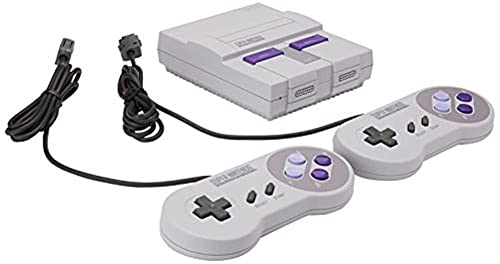
Nintendo SNES Classic as a sibling console. For SNES-era play on the same physical shelf as your Genesis Mini, the Nintendo Super NES Classic Edition is the SNES analogue — Nintendo's own miniature with 21 games, HDMI out, and packed-in controllers. Pair a Genesis Mini and an SNES Classic on the TV and you cover most of 16-bit console gaming end-to-end.
Emulation on a Raspberry Pi. For maximum flexibility — Sega Genesis plus SNES plus NES plus PlayStation 1 plus Game Boy plus more — a $30 Raspberry Pi Zero W kit running RetroPie or Batocera handles them all with configurable per-system settings and BIOS handling. It requires more setup than the plug-and-play minis, but the payoff is a single small box that plays essentially the entire pre-2000 console library.
Why people bother with hacks like this
Retro-computing hacks live at the intersection of three motivations: technical challenge (can this be done?), preservation research (what does the hardware actually do?), and community currency (bragging rights on Hackaday and r/retrocomputing). None of the three by itself explains the depth of effort that goes into projects like Linux on a Megadrive; together they explain both why the scene has stayed vibrant for decades and why the results keep surprising newcomers.
The parallel to modern homelabbing is close. People who build Kubernetes clusters out of Raspberry Pis or self-host their family photo library on a NUC are motivated by the same mix of challenge, learning, and community — just on the modern side of the timeline. The retro side is the same energy, applied to the silicon of a decade or three ago.
Does hacking a console damage it?
Advanced modifications carry real risk to vintage hardware. Anything requiring soldering, drilling for expansion connectors, or replacing capacitors — even when done well — can shorten the console's usable life. Preservation-minded hobbyists usually work on already-modified units or on cheap spares specifically bought for the purpose, keeping their pristine consoles for actual play.
If you own an original working Genesis and you value its condition, the correct move is: leave it alone, buy a Sega Genesis Mini for daily play, and pick up a cheap parts-machine unit if you want to try mods. Original hardware appreciates on the collector market, and a broken original Genesis is harder to recover than to replace with a functional one.
The source
Hackaday's "It's Linux, on a Sega Megadrive" coverage is the primary reference for this hack. Retro-hardware discussion continues on r/retrocomputing and the SegaRetro wiki for background on the hardware. Preservation work is coordinated broadly through the Video Game History Foundation.
Practical takeaway
You cannot boot Linux on your own Genesis in a weekend, and you probably don't want to. What the hack does is remind you that the retro-hardware hacking scene still ships surprising results, and that the easy paths to actually playing your Genesis library — the Sega Genesis Mini, Nintendo SNES Classic, or a Raspberry Pi Zero W RetroPie build — remain great, and remain the right recommendation for anyone who wants to play the games instead of prove a point about the hardware.
Related guides
- 8BitDo Pro 2 vs GameSir G7 SE vs DualSense: Best Controller for Emulation
- Building a 1998 Voodoo2 SLI Glide Rig in 2026: CompactFlash Boot and Quake II
Citations and sources
- Hackaday — "It's Linux, on a Sega Megadrive"
- Wikipedia — Sega Genesis / Megadrive
- Wikipedia — Genesis Mini
- Wikipedia — Super NES Classic Edition
- Raspberry Pi Foundation — Pi Zero W product page
- RetroPie
- MiSTer FPGA project
- Video Game History Foundation
This piece is editorial synthesis based on publicly available information. No independent first-party benchmarking is reported.