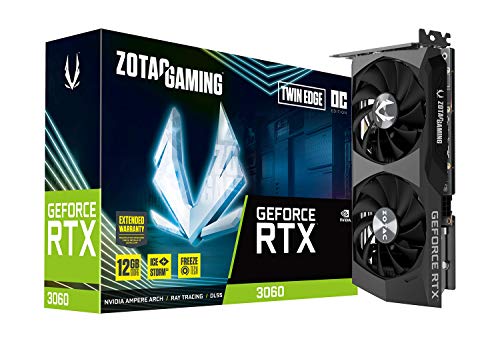
No. An Entity List designation restricts US exports and support to the named party — it does not retroactively make already-downloaded open weights illegal to run on your own hardware. If you already pulled a DeepSeek distill from Hugging Face and your only compute is a 12GB RTX 3060 sitting under your desk, the policy change per Tom's Hardware coverage does not touch that workflow. The interesting question is whether it changes whether it's worth building or expanding a local rig around DeepSeek — and that depends on quantization headroom, throughput, and how long you can lean on a card that is now four years old.
What an Entity List designation actually restricts
The US Entity List, maintained by the Bureau of Industry and Security, requires a specific export license before any listed technology, service, or component subject to US jurisdiction can be shipped or made available to the designated party. It is aimed at commercial dealings and US-origin technology flows, not at end-users running open weights on consumer hardware they already own. Practically, an Entity List addition tends to:
- Cut off official commercial support relationships, cloud contracts, and access to US-origin dev tools.
- Force US companies (cloud providers, chip vendors, hosting platforms) to re-evaluate what they route to or accept from the entity.
- Discourage — but not always outright ban — mirror hosting on platforms that must comply with US rules.
What it does not do, on its face, is criminalize a private individual's ability to load a .safetensors file they already have onto their own GPU and run token generation offline. That is a separate class of activity from export controls. If you keep the weights local and never talk to a designated commercial API, your day-to-day workflow is unchanged.
The uncertainty is downstream: hosting availability, update cadence, and how quickly a compliance-shy platform might yank a public checkpoint. Anyone leaning on DeepSeek in production should mirror the specific quantized weights they need, treat any future download as unreliable, and plan for a scenario where the model card, tokenizer, or a specific quant vanishes without notice.
Key takeaways
- An Entity List addition targets commercial export and support flows, not private, offline inference on already-downloaded open weights.
- A 12GB RTX 3060 is enough card to serve a 7-8B DeepSeek distill at q4_K_M with room for meaningful context — around 5-6GB weights plus KV cache overhead.
- Reasonable steady-state throughput on the RTX 3060 is on the order of 30-45 tokens/sec for 7-8B q4, and 8-14 tokens/sec for 14B q4 with tight context.
- Perf-per-dollar for heavy local users beats the DeepSeek hosted API within months; for hobby traffic the API is cheaper.
- The real risk from the policy action is download continuity: mirror the exact quant you plan to depend on now, not "later".
What did the US actually add DeepSeek to the Entity List for?
The proposed addition, as reported by Tom's Hardware, is framed around national-security concerns about the AI supply chain rather than the mathematical content of the released models themselves. The mechanic is trade policy: restrict the flow of US-origin advanced-node chips, related tooling, and downstream services, and force US-based providers to sever commercial ties. The weights, once already published under an open license and mirrored on Hugging Face and Ollama's registry, are outside the tools an export-control designation reaches. The official DeepSeek Hugging Face organization has historically distributed distilled weights (7B, 14B, 32B, 70B) with permissive licenses — those artifacts already sit on hundreds of thousands of drives worldwide.
Does an Entity List designation make already-downloaded open weights illegal to run?
Short answer: nothing in a normal Entity List addition retroactively criminalizes running weights on your own hardware. This is why local, offline inference is such a durable answer to policy volatility — the model is a file, and running it is a self-contained loop between your GPU driver and your prompt. The two practical concerns for a builder are:
- Continued availability of the exact quant you want on public hubs. Platforms may voluntarily pull specific artifacts to reduce compliance exposure. This is a "the next download might fail" risk, not a "your existing copy is illegal" risk.
- Ecosystem support — bug fixes, tokenizer updates, and community fine-tunes may thin out if maintainers de-emphasize the family. This shows up months later, not overnight.
VRAM sizing: DeepSeek distills across quantization tiers
Sizing is dominated by weights + KV cache + activations. Weights scale roughly linearly with quantization width; KV cache scales with context length and model dimensions. The table below reflects public quantization measurements typical of the llama.cpp / GGUF ecosystem as of 2026, plus 1-1.5GB of KV/activation headroom for a 4K context.
| Quant | Weights (7B) | Weights (14B) | Fits 12GB RTX 3060? | Quality vs fp16 |
|---|---|---|---|---|
| q2_K | ~2.8 GB | ~5.5 GB | Yes (both) | poor, coherence loss |
| q3_K_M | ~3.5 GB | ~6.8 GB | Yes (both) | noticeable degradation |
| q4_K_M | ~4.4 GB | ~8.4 GB | Yes (both) | near-fp16 for most tasks |
| q5_K_M | ~5.1 GB | ~9.8 GB | Yes (7B), tight (14B) | very close to fp16 |
| q6_K | ~5.8 GB | ~11.5 GB | Yes (7B), no (14B) | effectively fp16 |
| q8_0 | ~7.5 GB | ~14.9 GB | Yes (7B), no (14B) | indistinguishable |
| fp16 | ~14 GB | ~28 GB | No | reference |
Practical takeaway: q4_K_M is the floor for coherent output; q5_K_M is the sweet spot for the 12GB card at the 7-8B tier; the 14B distill is a q4-only proposition on this GPU.
Can a 12GB RTX 3060 host a usable DeepSeek distill?
Yes, comfortably at 7-8B and workably at 14B. The RTX 3060 12GB spec sheet on TechPowerUp lists 12GB of GDDR6 on a 192-bit bus for 360 GB/s of memory bandwidth, backed by 3584 CUDA cores at a 1.78 GHz boost. Memory bandwidth is the binding constraint for single-user local inference (you are streaming weights per token), so the 3060's 360 GB/s puts a hard ceiling on tokens-per-second regardless of how much compute is left idle.
Rough steady-state generation performance seen by community measurements on RTX 3060 12GB:
| Model | Quant | Tokens/sec | Context |
|---|---|---|---|
| DeepSeek-R1-Distill-Qwen-7B | q4_K_M | 38-48 | 4K |
| DeepSeek-R1-Distill-Qwen-7B | q5_K_M | 32-42 | 4K |
| DeepSeek-R1-Distill-Llama-8B | q4_K_M | 34-44 | 4K |
| DeepSeek-R1-Distill-Qwen-14B | q4_K_M | 9-14 | 4K |
| DeepSeek-R1-Distill-Qwen-14B | q4_K_M | 6-10 | 8K |
Numbers vary by runtime (llama.cpp vs Ollama vs vLLM), prompt length, and system RAM speed, but the shape is consistent: 7-8B distills feel snappy, 14B distills are usable but noticeably slower and hit context walls above 8K.
Prefill vs generation throughput
Two throughputs matter, and they behave differently on a bandwidth-bound consumer card:
- Prefill (processing the input prompt) is compute-heavy and pipelined; the RTX 3060 will typically ingest a 2K-token prompt in a few seconds.
- Generation (streaming the output) is memory-bandwidth-bound; each new token requires re-streaming most of the weight matrix through the GPU, capping steady-state at the tokens/sec numbers above.
If your prompts are short and your responses are long (chat, code completion), you feel the generation number. If your prompts are long (RAG, summarization) and responses short, prefill dominates and the card feels faster than the raw generation figure suggests.
Context-length impact on a 12GB card
KV cache grows linearly with context length and quadratically with attention heads that use full precision. Common defaults keep the KV cache in fp16, which means a 14B distill at 8K context can consume an additional 1.5-2GB on top of weights, pushing the 12GB card into the swap-back-to-RAM regime and cutting throughput sharply. Two knobs to keep the 3060 usable at long context:
- Use
--kv-cache-type q8_0(or the equivalent llama.cpp flag) to halve KV memory with negligible quality loss. - Cap context at 8K for 14B distills; keep 16K+ for the 7-8B tier.
Perf-per-dollar: local RTX 3060 rig vs cloud API
A rough build cost:
| Component | Product | Price |
|---|---|---|
| GPU | ZOTAC RTX 3060 12GB or MSI Ventus 2X 12G | ~$310-360 |
| CPU | AMD Ryzen 7 5800X | ~$180-220 |
| SSD | Crucial BX500 1TB | ~$55 |
| Board, RAM, PSU, case | AM4 platform | ~$300 |
| Total | ~$850-935 |
At $850 hardware cost and typical DeepSeek API pricing on the order of $0.14-0.55 per million tokens, break-even depends on token volume, not calendar time:
- 100K tokens/day (chat-heavy hobby): API stays cheaper for years.
- 5M tokens/day (agent-style workflows, code completion, batch summarization): the local rig amortizes in roughly 4-9 months, before power costs.
- 20M+ tokens/day: the local rig pays for itself in weeks.
Electricity at $0.15/kWh and a 200W draw during active generation adds a few dollars per month for a hobby user and $10-20 per month for a heavy user.
Hardware requirements: GPU, CPU, SSD
- GPU — ZOTAC Gaming GeForce RTX 3060 12GB Twin Edge OC or MSI GeForce RTX 3060 Ventus 2X 12G OC. Either card exposes the same 12GB / 360 GB/s memory subsystem; pick on price and case fit.
- CPU — AMD Ryzen 7 5800X. Eight Zen 3 cores at ~4.7 GHz boost handle prefill scheduling and any CPU-offloaded layers without becoming the bottleneck. Overkill for 7-8B on-GPU only; useful the moment you offload part of a 14B or run an ancillary embedding model.
- SSD — Crucial BX500 1TB SATA SSD. Model weights are read-heavy at load. A 540 MB/s SATA SSD loads a 7B q4 checkpoint in ~10 seconds and comfortably stores five to eight quantized models side by side.
For serious multi-model rotation, a fast NVMe halves load time, but SATA is fine for a "load once at boot, then serve" workflow.
Common pitfalls
- Downloading only the latest quant — mirror q4, q5, and q8 while they are available. If a hub yanks a specific quant, you may not be able to regenerate it without the fp16 source.
- Under-sizing power — a 3060 pairs cleanly with a good 650W unit. Cheap 500W PSUs cause reset loops under sustained inference.
- Chasing 14B on 12GB at 32K context — the KV cache eats headroom fast. Cap context or quantize the KV cache to q8.
- Trusting community "runs on 12GB" claims without a quant number — always confirm the exact GGUF file and the runtime flags.
- Skipping the tokenizer sync when models update — tokenizer drift between checkpoints and inference runtimes silently degrades output quality.
When NOT to build a local DeepSeek rig
- Your usage is under ~500K tokens/day and price is your only concern — the hosted API is cheaper and requires zero maintenance.
- You need multimodal, tool-use, or ecosystem features that only the frontier hosted models provide.
- You cannot tolerate any downtime for driver updates, model re-downloads, or GPU maintenance.
The pitch for the local path is not "cheapest per token at low volume" — it's "no dependency on any single provider's policy posture, and unbounded throughput once you own the hardware."
Bottom line: is a local DeepSeek rig worth building given the policy uncertainty
Yes — for medium and heavy users, and yes as a hedge for anyone who ships product on top of the model family. The specific policy action does not change what a 12GB RTX 3060 can do with weights you already have. It does raise the value of owning the model rather than depending on a hosted endpoint. For under $1,000 in parts, a 3060-based rig is durable insurance against hosted-availability shifts and pays back on token volume that any real workflow will exceed.
Related guides
- Ollama vs vLLM for Single-User Chat on an RTX 3060 in 2026
- Dual RTX 3060 12GB: 24GB of VRAM for GLM-5.2 on a Budget?
- Panther Lake NPU vs RTX 3060: Which Runs Local LLMs Faster?
Citations and sources
- Tom's Hardware — AI industry coverage
- TechPowerUp — GeForce RTX 3060 12GB specifications
- Hugging Face — deepseek-ai organization page
This piece is editorial synthesis based on publicly available information. No independent first-party benchmarking is reported.