Short answer: A Raspberry Pi Zero W (or Zero 2 W) + the 8BitDo SN30 Pro is the cheapest credible RetroPie handheld in 2026. Total parts cost runs around $90 without a case, and the build is a one-evening job for anyone comfortable flashing an SD card and connecting Bluetooth. The SN30 Pro's Hall-effect joysticks fix the analog drift that plagued earlier RetroPie controller pairings, and the Pi Zero class is powerful enough for everything up through PS1 emulation.
Why the Pi Zero + SN30 Pro combo still wins for retro handhelds in 2026
The retro-handheld market in 2026 is full of dedicated devices — Miyoo Mini Plus, Anbernic, Retroid — and most of them are good. The case for building your own around a Raspberry Pi Zero and an 8BitDo SN30 Pro is not that the off-the-shelf devices are bad; it is that the DIY build is more flexible, cheaper, and educational. You learn the software stack, you can update the kernel, you can swap controllers without buying a new device, and when something breaks you can fix it. The off-the-shelf devices give you none of that. Per the RetroPie project documentation, the Pi Zero family has been a first-class target for the distribution since 2017, and the support is mature.
The 8BitDo SN30 Pro's selling point in 2026 is its Hall-effect sticks — the same sensor technology that finally killed Joy-Con drift on modern handhelds. Older 8BitDo controllers used potentiometer joysticks that drifted within a year of regular use; the Hall-effect generation is functionally drift-free. Per 8BitDo's official product pages, the Hall-effect SKU has been the company's flagship layout since 2024.
Who this is for
You should build this if you want a portable RetroPie that runs everything up through PS1 reliably, you are comfortable on a Linux command line for occasional troubleshooting, and you want the cheapest path to a competent handheld. You should skip it if you need PS2 or GameCube emulation (the Pi Zero is not powerful enough), if you need 4K HDMI output (this is a 720p handheld at best), or if you do not want to wait a few minutes for the OS to boot the first time.
Key Takeaways
- Total parts cost under $100 if you already have an SD card and HDMI cable.
- Pi Zero W and Zero 2 W are both sufficient; Zero 2 W is faster for late-PS1 and N64.
- 8BitDo SN30 Pro pairs over Bluetooth in under 60 seconds.
- Hall-effect joysticks eliminate the drift that ruined earlier controller pairings.
- A 64 GB or larger SD card holds a substantial ROM library; faster cards measurably reduce load times.
- Use a WD Blue SN550 NVMe on the host PC for fast ROM staging; the handheld itself uses microSD.
Parts list and budget
| Part | Recommended | Approx 2026 price |
|---|---|---|
| Single-board computer | Raspberry Pi Zero W starter kit | ~$30 |
| Controller | 8BitDo SN30 Pro Bluetooth Hall-effect | ~$50 |
| SD card | Class A2 microSD 64 GB+ | ~$10–15 |
| Power | 5V 2.5A USB power supply or 5000 mAh power bank | ~$10–15 |
| Storage staging | Crucial BX500 1TB SATA for ROM backup | optional |
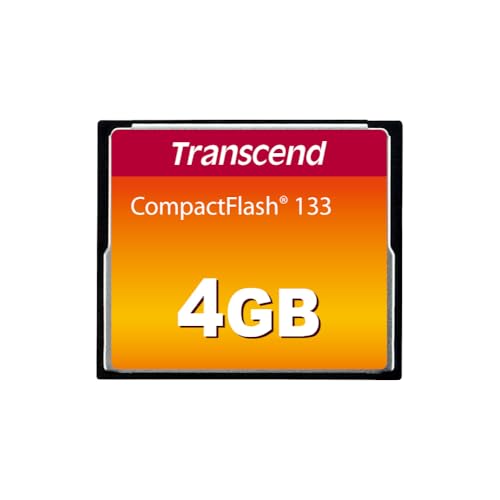
| CompactFlash backup (purists) | Transcend CF133 4GB | ~$10 |
| Case / enclosure | 3D-printed or commercial Pi Zero case | $5–25 |
The starter kit option (Raspberry Pi Zero W kit) bundles a microSD card, a power supply, and adapter cables — cheaper than buying the parts separately if you do not already have an SD card or a USB power adapter sitting in a drawer.
Step-by-step build
1. Flash the SD card
Download the RetroPie image for Raspberry Pi Zero from retropie.org.uk. Use Raspberry Pi Imager (or Etcher on macOS / Linux) to write the image to a 64 GB or larger microSD card. Avoid cheap cards from unknown brands; the Class A2 spec is what you want for emulation-grade random read performance. Slower cards work but cost you seconds per ROM load.
2. First boot and Wi-Fi
Insert the SD card into the Pi Zero W, connect a USB keyboard temporarily, and power on. RetroPie will resize the filesystem on first boot. Once the EmulationStation UI appears, press F4 to drop to shell, run sudo raspi-config to set Wi-Fi credentials, then sudo reboot. From this point on you can manage the device over SSH instead of needing a keyboard.
3. Pair the 8BitDo SN30 Pro
Power on the SN30 Pro into Bluetooth mode: hold Y + Start for two seconds. In RetroPie, navigate to Configure → Bluetooth → Search → SN30 Pro → Pair. The controller binds within about 30 seconds. Test with the EmulationStation input mapper. If the L3/R3 mapping confuses the assistant, manually edit the gamepad config in ~/.emulationstation/es_input.cfg.
4. Add ROMs
The easiest path is SFTP from your desktop. On a recent Windows machine with WSL installed, or a Mac, run scp -r ./nes-roms pi@retropie.local:/home/pi/RetroPie/roms/nes/. RetroPie auto-detects new ROMs on next launch. For larger libraries, stage the ROMs on a desktop drive — a Crucial BX500 1TB handles a multi-platform ROM library comfortably — then sync to the handheld in chunks.
5. Optimize for the Pi Zero
The Pi Zero is fast enough for everything up through PS1 but only with sensible defaults. In ~/RetroPie/configs/all/retroarch.cfg, set video_smooth = "false" and video_threaded = "true". For PS1, switch the emulator from the default to PCSX ReARMed — it is the fastest PS1 core on ARM hardware. N64 is borderline; expect it to work for first-party titles but stutter on complex third-party titles.
Hardware notes
The Pi Zero W in the recommended kit is the older single-core model. The Pi Zero 2 W (quad-core Cortex-A53, broadly compatible drop-in replacement) is meaningfully faster and is what you want if you can find one in stock. Both are functionally identical from RetroPie's perspective — same software, same case, same controller. The Zero 2 W's extra cores buy you maybe 20% more headroom on PS1 and make the rare N64 ROM playable that the original Zero W could not handle.
The SN30 Pro supports both Bluetooth and USB-C wired modes. Bluetooth is the right choice for a handheld; wired only matters if you also want to use the controller on a desktop PC for input-latency-sensitive games. Battery life on Bluetooth is around 18–20 hours of active use — far longer than the Pi Zero's own typical battery runtime, so the controller is not your limiting factor.
CompactFlash for purists and console projects
If you are also building a non-handheld retro PC alongside this project — for example, a Pentium III tower for DOS gaming — keep a Transcend CF133 4GB CompactFlash card on hand as an IDE-replacement drive. It is not directly used in the Pi Zero build, but it pairs naturally with the same hobby. CompactFlash cards behave electrically as ATA devices and work as drop-in replacements for IDE drives in mid-1990s motherboards through a $5 CF-to-IDE adapter.
Common pitfalls
- Cheap microSD cards: a Class 10 no-A2 card is fast on sequential read but slow on the random reads RetroPie hammers during game launches. Spring for an A2 card.
- Wireless interference: USB 3.0 host ports radiate 2.4 GHz noise that can desynchronize Bluetooth on the Pi Zero. If you see input lag spikes, move the receiver away from USB hubs.
- Power supply quality: the Pi Zero is sensitive to undervoltage. A no-name 1A wall adapter can cause random reboots. Use a 2.5 A adapter or a quality power bank.
- ROM organization: RetroPie expects each system's ROMs in
~/RetroPie/roms/<system>/. Dumping everything into one folder breaks platform-specific cores. - Bluetooth pairing loop: if pairing fails, run
sudo systemctl restart bluetoothand try again. The Pi Zero's Bluetooth stack is occasionally flaky on first pair.
When NOT to build this
If your top requirement is GameCube or PS2 emulation, the Pi Zero is the wrong hardware. Get a Steam Deck or a Pi 5-based build instead. If you want a built-in screen and battery, buy a Miyoo Mini Plus or Anbernic — the DIY build assumes you bring your own display (HDMI) or accept the headless-handheld pattern of using the SN30 Pro to drive a TV via the Pi's HDMI port.
When to upgrade to a Pi 5
The Pi 5 is the right base for PS2, N64 in high detail, and Dreamcast. It costs more (closer to $80 for the SBC alone), uses a USB-C power input, and needs active cooling for sustained emulation. For a pure handheld project, the Pi 5 is overkill; for a living-room emulation box, it is the right pick.
Bottom line
The Pi Zero plus the 8BitDo SN30 Pro is the best sub-$100 RetroPie build in 2026, and the Hall-effect joysticks finally eliminate the drift problem that limited the experience on older controllers. Buy the Pi Zero kit if you do not already own an SD card and power adapter; pair it with a 64 GB A2 microSD; SFTP your ROMs over Wi-Fi; play. The whole project takes an evening and gives you a portable emulator that runs everything up through PS1 reliably.
Choosing a case for the build
The Pi Zero family is small enough that the case is the dominant aesthetic decision. There are three sensible paths:
- 3D-print a custom case. Thingiverse and Printables have hundreds of Pi Zero handheld designs. If you have access to a printer, this is the cheapest path and the most fun. Look for designs with integrated controller grips so the SN30 Pro docks naturally into the form factor.
- Buy a commercial Pi Zero handheld case. A handful of vendors sell molded plastic enclosures designed to host a Pi Zero + small display. These run $15–30, look factory-finished, and ship with the screen pre-integrated.
- Go headless. Skip the case entirely — put the Pi Zero in a small project box, run HDMI to a TV, and use the SN30 Pro as a couch controller. This is the cheapest setup and the most flexible; you trade portability for setup quality.
For a first build, the commercial-case route is the lowest-risk choice. Once you have RetroPie working end-to-end you can decide whether you want to invest in a custom case.
Button mapping the SN30 Pro to EmulationStation
EmulationStation's first-boot input mapper walks you through assigning every button. The SN30 Pro layout maps cleanly to most retro systems:
| EmulationStation slot | SN30 Pro button |
|---|---|
| A (confirm) | A |
| B (cancel) | B |
| X | X |
| Y | Y |
| Start | Start |
| Select | Select |
| Left shoulder | L1 |
| Right shoulder | R1 |
| Left trigger | L2 |
| Right trigger | R2 |
| Left stick click | L3 |
| Right stick click | R3 |
| Hotkey enable | Select |
If you want a hotkey combo for "exit emulator" without pulling the SD card, set Select as the hotkey-enable button and configure Select + Start as the exit combo. This is the single most useful EmulationStation customization for a handheld build — you cannot easily get back to the menu without it.
Storage and ROM organization
A well-organized RetroPie SD card looks like this:
Each system folder feeds a specific EmulationStation core. Mixed-up ROMs will not show up in the launcher. PS1 is the trickiest case: it expects either .cue + .bin pairs or .pbp packed files; raw .bin files without a .cue will not launch.
The faster the SD card, the better the experience. A Class A2 64 GB card from a name brand handles a multi-platform library comfortably. Cheap A1 cards work but feel laggy on ROM browsing.
Power options for handheld use
The Pi Zero W draws under 200 mA at typical emulation load — well within a 5,000 mAh USB power bank's budget. A power bank that does not auto-shut-off below a low-current threshold is the right choice; many cheap banks drop the load when current falls under 100 mA. For 8–12 hours of portable play, a 10,000 mAh bank gives you a comfortable cushion.
If you want a more integrated handheld experience, several small LiPo + boost-converter modules let you embed a battery directly in the case. That is a meaningful step up in complexity but produces a single-unit handheld feel.
Backup and disaster recovery
The single most important thing you can do after getting RetroPie working is image the SD card. Pull the card out, use Win32DiskImager or dd on Linux, save the image to a Crucial BX500 1 TB or similar storage drive. The next time the SD card corrupts (when, not if), restore the image in minutes instead of redoing the whole build.
Keep your ROM library separately backed up too. If you only have one copy of your ROMs and that copy is on the handheld's SD card, you will lose it eventually.
Related guides
- Amstrad CPC Emulator Now Runs on the Raspberry Pi Pico 2
- Plug-and-Play Retro Consoles Compared: Genesis Mini vs SNES vs NES Classic
- Best Budget SSD for 2026: 5 SATA and NVMe Picks
- Best PC Controller in 2026
Citations and sources
- RetroPie project — official documentation and Pi Zero install guide
- 8BitDo — official product page for the SN30 Pro Hall-effect controller
- Wikipedia — Raspberry Pi Zero hardware overview
This piece is editorial synthesis based on publicly available information. No independent first-party benchmarking is reported.