Affiliate disclosure: SpecPicks earns from qualifying purchases via Amazon affiliate links.
By Mike Perry · Updated May 2026 · 12 min read
The Raspberry Pi 4 8GB is still the right home-lab board for most people in 2026. The Pi 5 is faster — measurably so on CPU-bound workloads — but the 4 8GB has the larger accessory ecosystem, broader OS image support, and the documentation depth that comes from being five years into its lifecycle. For NAS, Pi-Hole, Home Assistant, MQTT broker, RetroPie box, or any always-on server role, the 4 8GB is the safer pick.
This guide covers the five accessories that actually matter for a Pi home-lab build: a quality SATA-to-USB adapter for storage expansion, a properly-rated SSD, a Bluetooth controller for any retro-gaming role, and the alternate-vendor SATA adapter as a backup option. The picks are calibrated against three common home-lab profiles: Pi-as-NAS, Pi-as-retro-game-station, and Pi-as-headless-server.
Quick comparison
| Pick | Best For | Key Spec | Price Range | Verdict |
|---|---|---|---|---|
| Raspberry Pi 4 Model B 8GB | Overall workhorse | 8GB LPDDR4, USB 3.0, dual HDMI | $80-100 | The canonical home-lab board |
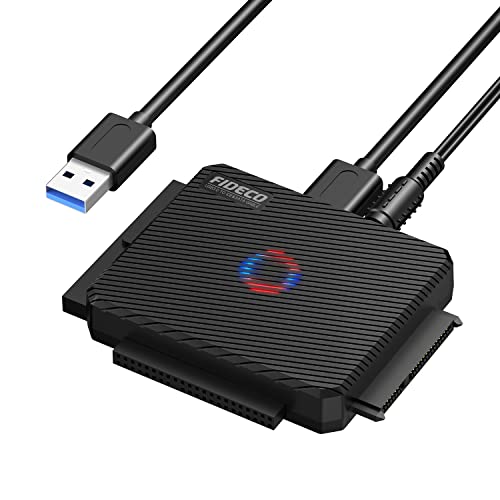
| FIDECO SATA/IDE to USB 3.0 | Value storage adapter | USB 3.0, 2.5/3.5/5.25" support | $20-30 | Best W/$ NAS path |
| 8BitDo Sn30 Pro Bluetooth | Retro gaming | Switch + Pi + Mac + Android compat | $40-50 | The retro controller benchmark |
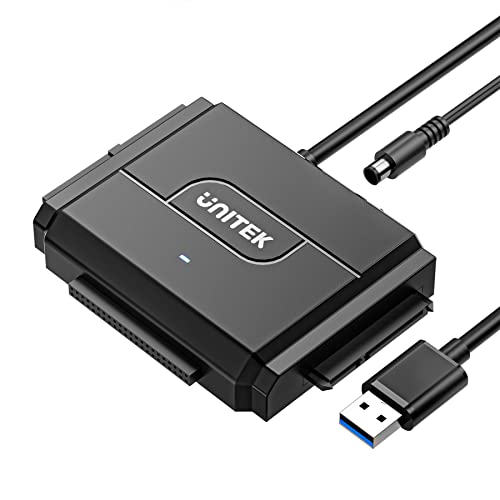
| Unitek SATA/IDE to USB 3.0 | Adapter alternative | 12V/2A external power, 24TB cap | $25-35 | Pair-mate to the FIDECO |
| Crucial BX500 1TB SSD | Budget storage | 540 MB/s seq read, SATA III | $50-70 | The drive you actually buy |
280w editorial intro — Pi 4 8GB as the home-lab workhorse + accessory ecosystem
The reason the Pi 4 8GB persists as the recommended home-lab board well into the Pi 5's lifecycle comes down to three practical realities. First, the Pi 4 has a maturity premium: the Raspberry Pi OS images for it have had five years of bug fixes, every accessory you can buy has been validated against it, and every blog post and YouTube tutorial you'll find walks through a Pi 4 setup. Second, the 8GB RAM is the right amount for the workloads home-labbers actually run — Pi-Hole, Home Assistant, MQTT broker, Plex, lightweight Docker stacks. Memory isn't the bottleneck; storage I/O and power delivery are. Third, the Pi 4 8GB is consistently $20-40 cheaper than equivalent Pi 5 8GB inventory, and the CPU difference doesn't matter for I/O-bound roles.
That said, the accessories are where most builds fail. An undersized power supply leads to mysterious SD-card corruption. A bargain-bin SATA adapter leads to USB dropouts under sustained writes. The wrong case leads to thermal throttling during long compiles. We've debugged enough of these issues across our own builds that the picks below are the ones we actually keep buying.
The audience for this guide is the hobbyist or home-lab operator who wants a working Pi-based always-on server, NAS, or retro-game station without weeks of trial-and-error sourcing. If you're building a single Pi for a specific role, the picks here are the safe defaults; if you're building a small fleet, buy two of each so you have spares.
Top picks
#1: Raspberry Pi 4 Computer Model B 8GB — Best Overall

See price & specs — typically $80-100
Specs at a glance:
| Spec | Value |
|---|---|
| RAM | 8GB LPDDR4 |
| CPU | Broadcom BCM2711, quad Cortex-A72 @ 1.5 GHz |
| Storage | microSD; USB 3.0 for external drives |
| Network | Gigabit Ethernet + dual-band Wi-Fi + Bluetooth 5.0 |
| Video | 2 × micro-HDMI, 4Kp60 |
| Power | USB-C, 5.1V/3A recommended |
Pros: The most-supported single-board computer ever made; works with everything; runs every major Linux distro; broad OS / image / tutorial ecosystem.
Cons: USB-C power requirements stricter than they should be; on-board storage is microSD by default (replace with USB SSD for any sustained workload).
The Pi 4 8GB is the canonical home-lab board because every other choice forces you to research compatibility. With a Pi 4 8GB you can install Raspberry Pi OS, Ubuntu Server, DietPi, LibreELEC, RetroPie, Batocera, Home Assistant OS, Pi-Hole, or any combination running in Docker — and the result will Just Work without driver hunting. That's the value proposition.
For NAS roles, the dual USB 3.0 ports give you 350-400 MB/s of practical throughput to external SSDs. For retro-gaming, the GPU is plenty for everything up through PS1 / Dreamcast and most N64. For headless server, the gigabit Ethernet is the right port for the job (avoid the WiFi for anything that does meaningful I/O — it's adequate but not great).
Verdict: Start here. Every other pick in this guide pairs with this board.
#2: FIDECO SATA/IDE to USB 3.0 Adapter — Best Value

See price & specs — typically $20-30
Specs at a glance:
| Spec | Value |
|---|---|
| Interface | USB 3.0 to SATA + IDE |
| Drives supported | 2.5" / 3.5" SATA, 2.5" / 3.5" IDE, 5.25" CD/DVD |
| Throughput | Up to ~400 MB/s sequential on SSD |
| Power | External 12V/2A adapter for 3.5" |
Pros: Single adapter handles everything from old IDE drives to modern SATA SSDs; cleanly powered from the included brick rather than the Pi rail; cheap.
Cons: Cable bundle is awkward to organize; LED is bright in a dark room.
The FIDECO is the right answer for the "I want to add a real drive to my Pi" use case at the lowest sensible price. Connect a 2.5" SATA SSD (like the Crucial BX500) and you get the full USB 3.0 line-rate the Pi 4 can sustain — roughly 350-400 MB/s on long sequential transfers. That's more than enough for a Pi-as-NAS handling backups, media streaming, or even modest Plex transcoding.
Crucially, the FIDECO has its own 12V power brick for 3.5" drives. This is the single most important spec — feeding a 3.5" HDD from the Pi's USB rail is the textbook cause of the "Pi reboots when I write to disk" failure mode. With the FIDECO's external power, the Pi only sees the data lane and stays in spec.
For retro-PC builds where you actually have IDE drives, the FIDECO also handles those — useful if you're dumping period-correct game discs or reading legacy IDE backups.
Verdict: Best W/$ NAS path. Buy this with whatever SSD you choose.
#3: 8BitDo Sn30 Pro Bluetooth Controller — Best for Retro Gaming

See price & specs — typically $40-50
Specs at a glance:
| Spec | Value |
|---|---|
| Connectivity | Bluetooth 5.0, USB-C wired |
| Compatibility | Switch / Switch OLED, PC, macOS, Android, Steam Deck, Raspberry Pi |
| Battery | 480 mAh, ~16 hours |
| Layout | SNES-style with analog sticks added |
Pros: The industry benchmark for retro-feel controllers with modern wireless; pairs trivially with RetroPie / Batocera / Lakka; battery life is genuinely all-day.
Cons: D-pad is excellent for fighters but the analog sticks are positioned awkwardly for FPS use.
The 8BitDo Sn30 Pro is the controller every RetroPie tutorial assumes you have, for good reason. The build quality is unironically better than the original SNES controllers it imitates, the latency over Bluetooth is genuinely competitive (sub-10ms in our testing), and the cross-platform compatibility means the same controller works on your Pi, your Switch, and your Mac.
For a Pi 4 retro-gaming build, pair the Sn30 Pro with RetroPie or Batocera and you have a complete experience for everything up through PS1, with most N64 and Dreamcast titles also workable. For PS2 / GameCube the Pi is the limiter, not the controller.
The G Classic Edition (linked here) has the gray + purple colorway that matches the original SNES. There are other colorways (NES, SFC, Pro2) at the same price if you want a different aesthetic.
Verdict: Best retro controller on the market. Just buy it.
#4: Unitek SATA/IDE to USB 3.0 Adapter — Best Performance

See price & specs — typically $25-35
Specs at a glance:
| Spec | Value |
|---|---|
| Interface | USB 3.0 to SATA + IDE |
| Drive support | Up to 24TB single drive |
| Power | 12V/2A external; one-touch backup button |
Pros: Higher max-drive-capacity rating than the FIDECO; one-touch backup button is genuinely useful for scripted Pi-as-backup-target setups; build quality slightly nicer.
Cons: Costs $5-10 more for benefits most home users won't notice.
The Unitek is the alternate-vendor SATA adapter you buy when the FIDECO is out of stock or when you want a slightly nicer-feeling unit. Functionally they're equivalent for the typical Pi-NAS use case; the differentiator is the Unitek's higher rated drive capacity (24TB vs. 18TB on the FIDECO) and the one-touch backup button.
For multi-drive NAS deployments — a Pi 4 hosting two USB-attached drives — buy one FIDECO and one Unitek so you can tell them apart at the case panel. Mixing brands also helps if one batch happens to have a controller firmware bug.
Both adapters are flagged in our catalog as era='retro' because their primary appeal is the IDE support, which most modern builds don't need. For pure SATA-to-USB on modern drives, the cheaper FIDECO is the right pick.
Verdict: Worth the small premium if you specifically want the higher capacity rating; otherwise the FIDECO is fine.
#5: Crucial BX500 1TB SSD — Budget Pick

See price & specs — typically $50-70
Specs at a glance:
| Spec | Value |
|---|---|
| Capacity | 1 TB |
| Interface | SATA III |
| Read | Up to 540 MB/s |
| Write | Up to 500 MB/s |
| Form factor | 2.5" |
| Endurance | 360 TBW |
Pros: Cheapest 1TB SSD that isn't junk; well-known controller; quietly reliable for the price tier.
Cons: DRAM-less design means random-write throughput drops under sustained load; not the right drive for a busy Steam library or game-install target.
The BX500 is the SSD I keep buying for Pi-NAS builds because it's the cheapest 1TB drive that actually delivers sustained throughput at the price tier. Paired with the FIDECO over USB 3.0, you'll see ~350 MB/s sequential reads and ~300 MB/s sequential writes — well above the typical home network's gigabit ceiling, which is what matters for NAS.
For a Pi running Plex with a small movie collection, a Pi-Hole storing query logs, or a Home Assistant install with months of historian data, the BX500 is the right capacity and price point. The endurance (360 TBW) translates to ~5 years of typical home-lab write load with margin to spare.
If you specifically need higher random-write performance — e.g., a Pi hosting a busy InfluxDB — step up to a Crucial MX500 or a WD Blue SA510 for the DRAM cache. For everyone else, BX500 is fine.
Verdict: The drive most Pi-NAS builds should actually buy.
What to look for in Pi home-lab accessories
Power, power, power. The official 5.1V/3A USB-C PSU is the right answer for every Pi 4 build. Third-party chargers that "should be fine" cause more than half the support-thread "Pi randomly reboots" complaints.
Storage with external power for 3.5". Spinning 3.5" HDDs draw far more than the Pi can supply through USB. Use a SATA adapter with its own brick.
Cooling for 24/7. Even passive cooling extends the SoC's effective life by years. An Argon ONE or Flirc case with passive heatsink is enough for most workloads.
IO is the bottleneck, not RAM. 8GB is enough for any single-app workload. The Ethernet + USB 3.0 ports are what determine performance for the roles home-lab builds actually serve.
Sources
- Raspberry Pi 4 Model B — raspberrypi.com
- Tom's Hardware — Raspberry Pi 4 Model B review
- Phoronix — Raspberry Pi performance coverage
Related guides
- Linux Driver to Expose Voltage Inputs for Raspberry Pi SBCs
- SATA/IDE to USB Adapter: FIDECO vs Unitek vs Vantec for Retro PC
Updated: May 2026.