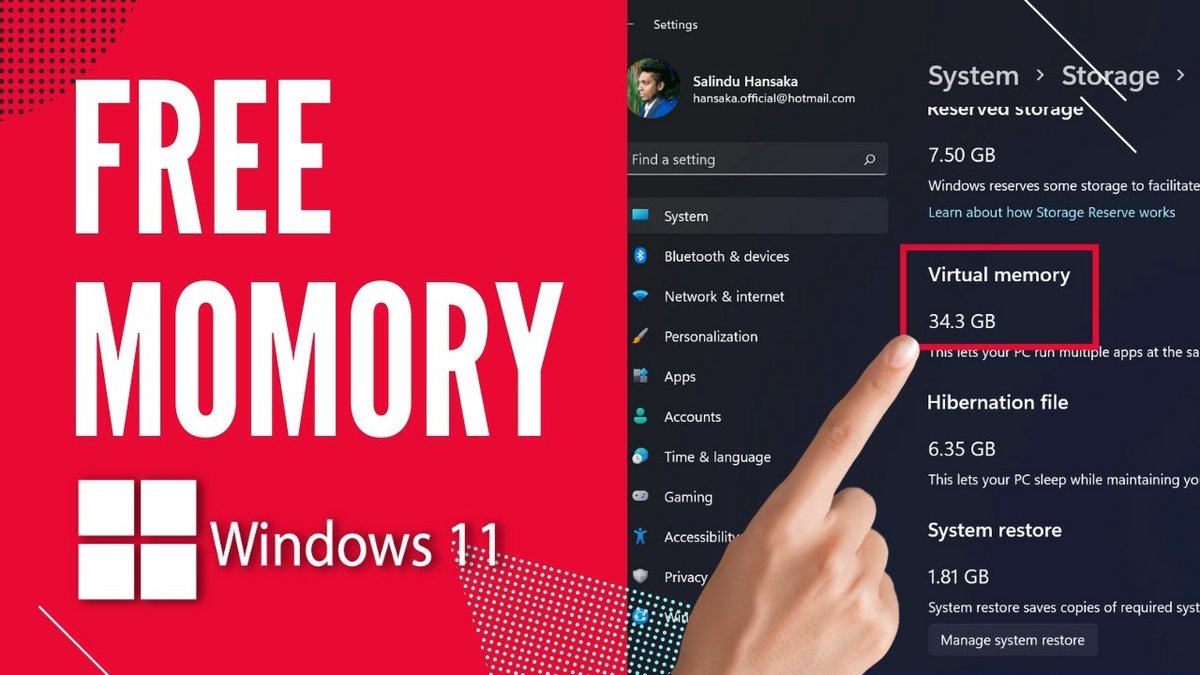
Microsoft's 2026 Windows 11 system guidance now lists 32 GB as the recommended baseline for current and upcoming AAA games — not the mandatory minimum, but the configuration the platform expects. Per Microsoft's Windows 11 system requirements page and follow-up reporting from outlets including Tom's Hardware and PC Gamer, 16 GB still boots Windows 11 and runs most current games, but the cushion is gone — newer titles, background services, and the increasingly RAM-hungry shader compilation pass all push a 16 GB rig into swap during real workloads.
Why Microsoft is signaling 32 GB now
The trigger is shader compilation. AAA games shipped through 2025 routinely pre-compile shader caches at first launch, and the working sets for those compilations have grown well past anything Microsoft was sizing for in 2021 when Windows 11 launched. Couple that with browser tabs, a Discord call, OBS recording, and a chat assistant in the background — the typical 2026 gaming session — and 16 GB falls below the "no swap, no stuttering" line.
This is not a fresh insight from Microsoft. PC builders have been recommending 32 GB as the comfortable baseline since 2022. What changed is that Microsoft is now saying it out loud in the platform's own guidance, which matters because OEMs price systems against that line. Expect prebuilt gaming desktops and laptops to standardize on 32 GB within two product cycles.
Key takeaways
- 16 GB is still the floor, but 32 GB is the new comfortable baseline.
- Shader compilation is the workload that broke 16 GB, not the games themselves at steady state.
- DDR4 at 3200 MT/s is the budget answer; DDR5 at 6000 MT/s is the modern answer.
- A Ryzen 7 5800X-class CPU pairs cleanly with 32 GB DDR4 as the cheapest competent 2026 baseline.
- NVMe storage matters as much as RAM — page-file swap on a SATA SSD ruins the experience even with 32 GB.
What "baseline" means in 2026
Microsoft's published numbers and the practical buying guidance differ. The system requirements page still lists 4 GB as the absolute minimum for Windows 11 itself; that has not changed. The 2026 update is in the supplemental gaming guidance and in the spec sheets shipping with Xbox Game Pass for PC titles. The pattern: minimum 16 GB to run, recommended 32 GB for current and upcoming AAA releases. Per game-side reporting at PC Gamer, several 2025 and 2026 releases now list 32 GB in their official "recommended" spec line.
The reason this becomes the system baseline rather than per-game guidance is that a system can run many games. If even one in your library expects 32 GB recommended, you would build the system around that ceiling rather than swap RAM kits per title.
Why 16 GB stopped feeling comfortable
Three forces converged:
- Shader compile working sets exploded. Modern shader caches build at first launch and during driver updates, and the compile process can spike memory use 4-8 GB on its own for an AAA title.
- The browser is the new baseline app. Chrome, Edge, and Firefox routinely use 2-6 GB across a normal session; some users sit at 10+ GB just in browser tabs.
- Local AI assistants moved into RAM. A small chat model loaded for an assistant or game-mod tooling can occupy 4-12 GB. The "always-on assistant" pattern is now common enough that platform vendors are sizing for it.
Add the OS, the game, a voice chat client, and a recorder, and 16 GB sits at 90%+ utilization during a normal session. The OS swaps to keep things stable, and the swap is the felt stutter.
Spec table: what to actually buy
| RAM tier | Speed | Use case | Notes |
|---|---|---|---|
| 16 GB DDR4 | 3200 MT/s | budget builds, older titles | Microsoft's floor, not the comfortable line |
| 32 GB DDR4 | 3200 MT/s | new 2026 baseline for AM4 platforms | pairs with Ryzen 7 5800X |
| 32 GB DDR5 | 6000 MT/s | new 2026 baseline for AM5/LGA1851 | the configuration most prebuilts will standardize on |
| 64 GB DDR4/DDR5 | varies | creator + streamer + emulator | overkill for pure gaming, useful when juggling local AI |
For a fresh build in 2026, the question is platform — AM4 with DDR4 stays the cheapest competent path, AM5 with DDR5 is the better long-term play. The RAM amount is the same either way: 32 GB.
Storage matters as much as RAM
A common mistake is to ship a 32 GB build with a SATA SSD. Windows 11 swaps aggressively when it gets the chance, and even with 32 GB installed, a long session with many background apps will swap to disk. On a Samsung 870 EVO SATA SSD at 540 MB/s sequential and ~95K IOPS, the swap path is fast enough not to cause hitches in most games. On a NVMe like the WD Blue SN550 1TB at 2400 MB/s sequential and 410K+ random IOPS, swap is invisible.
The buying rule: pair 32 GB of RAM with at least one NVMe drive for the OS, page file, and shader cache. Spinning disks for OS storage are a non-starter in 2026; SATA SSDs are acceptable for game library overflow but not for the OS.
What this changes for upgrade buyers
If you are sitting on a 16 GB build today, the upgrade math is straightforward:
- AM4 with two 8 GB sticks: swap to a 2×16 GB 3200 MT/s kit. ~$50-70 used or ~$80-100 new. Biggest single quality-of-life upgrade you can make.
- AM4 with two 8 GB sticks and four DIMM slots: add a second 2×8 GB kit if speeds match. Cheaper but a mixed-kit lottery; pure 2×16 GB is safer.
- AM5 or LGA1700 with 16 GB DDR5: swap to 2×16 GB DDR5 6000 MT/s. Used DDR5 kits are now reasonable; pair with EXPO/XMP and call it done.
- Old DDR3 platform: the upgrade target is the platform, not the RAM. Microsoft's new baseline is one of the cleaner signals that a 2014-era rig is past its life.
CPU pairings that make sense at 32 GB
You do not need a flagship CPU to use 32 GB well. Reasonable 2026 pairings:
- Budget AM4 build: AMD Ryzen 7 5800X plus 32 GB DDR4 3200. The cheapest competent 32 GB gaming build you can put together, and it stays useful for 2-3 years.
- AM5 build: Ryzen 7 7700X or 7800X3D plus 32 GB DDR5 6000. The 7800X3D in particular is the platform's gaming sweet spot.
- Intel build: Core i5-14600K or i7-14700K plus 32 GB DDR5 6000.
Memory speed matters more on AMD than Intel — the AM5 7800X3D in particular shows clear per-frame uplift between 5200 MT/s and 6000 MT/s. Do not buy slower DDR5 to save $15.
Common pitfalls when upgrading to 32 GB
- Mixing kits. Two 16 GB DIMMs from one kit will run at the kit's rated XMP/EXPO speed. Four DIMMs from two different kits often refuse to boot at the same speeds. Buy as one kit.
- Forgetting to enable XMP/EXPO. New RAM defaults to JEDEC speeds at first boot. Enable the rated profile in BIOS or you are running at a fraction of the speed you paid for.
- Single-channel installs. Putting one 32 GB DIMM in a single slot saves no money and halves your bandwidth. Always run dual-channel (one DIMM per channel, populated correctly per the motherboard manual).
- Pairing 32 GB with a SATA-only system. RAM upgrades help; without an NVMe for OS and page file, you are still leaving a lot of performance on the table.
- Ignoring the chipset's max speed. Some older AM4 boards top out at 3200 MT/s for two sticks and lower with four. Check the QVL.
When 16 GB is still enough
Three cases where 16 GB still works fine in 2026:
- Older games only. If your library is pre-2022, 16 GB is comfortable.
- Office and web with light gaming. A 1080p casual gamer who closes background apps before launching a game can run 16 GB for years.
- Linux gaming desktops. Linux's memory management is lighter, and 16 GB feels closer to 24 GB-equivalent on Windows.
If none of those describe your usage, plan the upgrade in your next two-month window.
Reader scenarios: who needs to upgrade right now
Three buyer profiles where the 32 GB upgrade is the immediate next move:
- The 16 GB AAA gamer with a recent CPU upgrade. You upgraded to a Ryzen 7000 or Intel 14th-gen build but kept the 16 GB you brought along. The CPU is underutilized; the RAM is the bottleneck during shader compilation.
- The streamer. OBS plus the browser plus the game plus voice chat plus Discord. 16 GB has not been comfortable for streamers since 2022. 32 GB is the floor.
- The local-AI dabbler. You run a local chat model, even occasionally. 16 GB cannot host both the OS, a browser, a game, and a 4-7 GB model.
Two buyer profiles where the upgrade can wait:
- The casual 1080p gamer with a settled library. Older titles still run fine on 16 GB.
- The fresh-build buyer 12 months out. Don't upgrade an old platform's RAM right before you replace the whole rig.
Future-proofing: is 64 GB worth considering?
64 GB is the right answer for content creators, video editors, anyone running a local language model alongside other workloads, and emulator buyers who push high-resolution upscaling. It is overkill for pure gaming and overpriced for the marginal benefit.
The exception is buyers who plan to use the system for 5+ years. DDR5 prices keep falling but RAM upgrades become harder when motherboards age into incompatibility with later-revision kits. Buying 64 GB up-front locks in a level of headroom you won't have to revisit.
Bottom line
Microsoft's 32 GB signal is the formal acknowledgment of what builders have been recommending for two years. A modern Windows 11 gaming rig with browser, voice chat, recording software, and a 2025-or-newer AAA game should be built around 32 GB. Pair it with NVMe storage, a Ryzen 7 5800X class CPU on AM4 or a 7800X3D on AM5, and you have a build that stays comfortable through the rest of the Windows 11 lifecycle.
OEM and prebuilt impact
The OEM side of the market reads Microsoft's signals carefully. Expect:
- Mid-2026 prebuilt refreshes to land on 32 GB DDR5 as the standard configuration for anything labeled "gaming."
- Laptops to lag — the soldered-RAM trend means 16 GB laptops will continue to ship at the bottom of the market, but 32 GB will become the baseline above $1,000.
- Console PCs (Steam Deck successors, ROG Ally refreshes) to standardize on at least 32 GB unified memory, mirroring the same pressure.
- Office desktops to stay on 16 GB for the next two years; the gaming guidance is gaming-specific.
If you're buying a prebuilt in 2026, refuse anything with 16 GB unless the price is so low you plan to upgrade RAM immediately. The labor cost on a RAM upgrade is zero; the prebuilt's margin on that RAM is high.
What happens to existing 16 GB libraries
A common worry: "does my older library start needing 32 GB now?" Mostly no. Games from before 2024 generally run fine on 16 GB. The pressure is concentrated on:
- 2025 and 2026 AAA releases.
- Heavily modded versions of older games (Skyrim with 300 mods, Bannerlord with overhauls).
- Games with active live-service streaming where pre-loaded content and background updates compete for RAM.
If your library is mostly settled and you do not chase the newest releases, 16 GB still works. Plan the upgrade as part of your next platform refresh, not as an emergency.
Related guides
- Best Budget CPU for Gaming + Productivity in 2026: The Honest Buying Guide
- Crucial BX500 vs Samsung 870 EVO: Best Budget 1TB SATA SSD for Gaming in 2026
Citations and sources
- Microsoft — Windows 11 system specifications
- Tom's Hardware — coverage of Windows 11 gaming RAM guidance
- PC Gamer — gaming hardware coverage
This piece is editorial synthesis based on publicly available information. No independent first-party benchmarking is reported.


