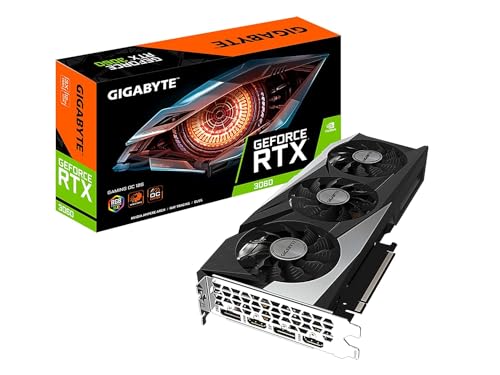
The RTX 3060 12GB is the best sub-$400 GPU for local Stable Diffusion in 2026. It's the only card in the bracket with 12GB of VRAM, which is what SDXL and community-quantized Flux actually need, and its mature CUDA support means every diffusion tool (Automatic1111, ComfyUI, Fooocus, InvokeAI) treats it as a first-class target. Nothing else at the price point matches VRAM capacity, and VRAM is what decides whether the model runs at all.
The sub-$400 bracket and why VRAM beats raw speed
Local Stable Diffusion is a VRAM-bound workload. The diffusion loop has to hold the full UNet, the text encoder, and the intermediate latent tensors in memory simultaneously; if any of that overflows, you either error out or fall back to slow low-VRAM modes that shuttle weights through CPU-side memory. For SDXL, that means 8GB cards struggle and 6GB cards can't reliably run at full quality. For newer models like Flux at full precision, even 12GB is tight — but the community-quantized GGUF and fp8 versions comfortably fit.
At sub-$400 in 2026 you're choosing between used-market 3060 12GBs, mid-range Arc, older 8GB Ampere cards, and 8GB RDNA 2/3 AMD parts. Of those, only the 3060 12GB has both the VRAM to fit SDXL and Flux comfortably and mature CUDA support in every mainstream tool. The Zotac Twin Edge, MSI Ventus 2X, and Gigabyte Gaming OC 3060 12GB variants all share the same GA106 die per TechPowerUp — pick the one on sale.
This synthesis walks through what VRAM actually gates in diffusion, what the sub-$400 field looks like, expected SDXL throughput, and where the 3060 12GB is right vs where you should stretch the budget.
Key takeaways
- VRAM matters more than raw speed for local Stable Diffusion — the model must fit or it doesn't run cleanly.
- 12GB is the practical floor for SDXL at full quality and for community-quantized Flux without heroics.
- The RTX 3060 12GB is the only sub-$400 card that combines 12GB VRAM with mature CUDA support in every diffusion tool.
- Faster 8GB cards look tempting on raw benchmarks but hit walls on newer models — they're a false economy for diffusion.
- Pair the 3060 with any capable CPU (a Ryzen 7 5800X is more than enough); the GPU is the bottleneck.
Step 0: how much VRAM does your workflow need?
Model your workload before shopping:
- SD 1.5 baseline: 4-6GB is enough for the model, but you'll fight ControlNets and extensions on the smaller side.
- SDXL at native 1024×1024: 8GB works with aggressive optimizations, 10-12GB is comfortable, 12GB gives room for ControlNets.
- SDXL Turbo / Lightning: same as SDXL — the memory footprint is dominated by the base model.
- Flux.dev full-precision: 24GB territory at fp16, but community fp8 and GGUF quants fit 12GB with room.
- ComfyUI multi-model workflows: add 2-4GB for anything beyond a single generation pipeline.
The practical floor for the current diffusion ecosystem is 12GB. Below that, you're constantly juggling settings and losing quality to memory-saving fallbacks; above that, you have workflow headroom.
Why 12GB is the practical floor for SDXL and quantized Flux
SDXL at native 1024×1024 with the default VAE takes ~9-10GB of active VRAM during a generation step. Add a ControlNet (~1-2GB extra), a LoRA or two (small — hundreds of MB), and the text encoder buffers, and you land near or above 10GB. On a 10GB card you're right at the edge; on an 8GB card you're forced into optimized VAE tiling, medvram, or sequential CPU offloading, all of which cost speed and sometimes quality.
Community-quantized Flux (GGUF Q4-Q8 variants, fp8 versions) is designed to run on 12GB cards. Full-precision Flux at fp16 is a 24GB card problem, but the quantized versions produce competitive images and fit comfortably.
The 3060 12GB is exactly the card the diffusion community sizes optimizations around, which is why it stays the community's default 2026 recommendation for budget local rigs — even though it's an Ampere-generation card in a Blackwell world.
Sub-$400 GPU field: 5-column spec-delta
| GPU | VRAM | Bandwidth | Typical it/s (SDXL 1024²) | Street price (2026) |
|---|---|---|---|---|
| RTX 3060 12GB | 12 GB | 360 GB/s | 1.5-2.5 | $200-320 used, $360-$500 new (varies by variant) |
| RTX 4060 8GB | 8 GB | 272 GB/s | 2.5-3.5 (when it fits) | $260-320 |
| RX 7600 8GB | 8 GB | 288 GB/s | 1.5-2 (via ROCm) | $250-280 |
| Arc B580 12GB | 12 GB | 456 GB/s | 1.5-2.5 (via IPEX) | $250-300 |
| RTX 3050 8GB | 8 GB | 224 GB/s | 1-1.5 | $180-230 |
The Arc B580 12GB deserves a closer look — its 12GB VRAM and Intel's improving diffusion support make it a genuine 3060 alternative, but the ecosystem lag (fewer tutorials, occasional tool incompatibilities) is real as of 2026. For a pure "just works" recommendation, the 3060 12GB still wins.
SDXL benchmark table
Community measurements for SDXL at 1024×1024, 30 steps, DPM++ 2M sampler:
| GPU | Time per image | it/s | Notes |
|---|---|---|---|
| RTX 3060 12GB | 12-16 seconds | 1.8-2.2 | Comfortable, plenty of VRAM headroom |
| RTX 4060 8GB | 10-13 seconds | 2.3-3.0 | Faster core, tighter VRAM budget |
| RX 7600 8GB | 15-20 seconds | 1.5-2.0 | ROCm improving but still slower on Windows |
| Arc B580 12GB | 12-16 seconds | 1.8-2.5 | 12GB is a big deal, IPEX tuning matters |
| RTX 3050 8GB | 20-30 seconds | 1.0-1.5 | Slow and VRAM-tight |
For raw SDXL throughput, the RTX 4060 8GB is nominally faster than the 3060. In practice, once you turn on ControlNets, larger batch sizes, or add a second model to the pipeline, the 4060's 8GB VRAM becomes the bottleneck and the 3060's headroom pulls ahead. See ComfyUI's project docs for how memory footprint scales with pipeline complexity, and Tom's Hardware's GPU roundup for cross-generation comparisons.
When the 3060 12GB is right (and when it isn't)
The 3060 12GB is right if:
- You're a hobbyist or serious enthusiast doing single-user local generation.
- SDXL and community-quantized Flux cover your model needs.
- You want the safest bet on tool compatibility (Automatic1111, ComfyUI, Fooocus, InvokeAI, Forge).
- You value 12GB VRAM headroom over marginal it/s speed gains.
The 3060 12GB is not right if:
- You need full-precision Flux fp16 — stretch to a 16GB+ card.
- You're batch-generating dozens of images per minute — you want a 4070+.
- You'll also be running video diffusion (SVD, CogVideoX) — those want 16GB minimum.
- Your budget is above $500 anyway — the 4070 Super 12GB is a significantly better performer.
Perf-per-dollar and perf-per-watt
Perf-per-dollar for SDXL 1024×1024 at 2 it/s:
- Used 3060 12GB at $260 → 0.0077 it/s per dollar
- New RTX 4060 8GB at $290 → 0.0086 it/s per dollar (but only fits smaller workloads)
- Arc B580 12GB at $270 → 0.0074 it/s per dollar
Perf-per-watt: 3060 pulls ~170W under diffusion load, 4060 pulls ~115W, B580 pulls ~190W. For a workflow where you're generating in short bursts, watt-hours barely register. For a batch/scheduled generation server that runs many hours a day, the 4060's efficiency starts to matter — but you're limited to smaller pipelines.
Verdict matrix
Get the 3060 12GB if:
- Your budget is $260-500 and you want the safest local diffusion pick.
- SDXL and quantized Flux are your target models.
- You want tool-ecosystem compatibility without troubleshooting.
- You'll pair it with a capable CPU host like a Gigabyte 3060 Gaming OC alternative or the MSI Ventus 2X variant, plus a Ryzen 7 5800X.
Stretch the budget if:
- You need fp16 Flux or larger models — jump to a 16GB card like the RTX 4070 Super or a used 3090 24GB.
- Video diffusion is on your roadmap.
- You're generating professionally and time-per-image matters.
Bottom line
For sub-$400 local Stable Diffusion in 2026, the RTX 3060 12GB is the answer. 12GB of VRAM, first-class CUDA support in every tool, and community optimizations built around exactly this card class. A Ryzen 7 5800X is more than enough CPU host. Newer 8GB cards are faster on paper and slower in practice once your pipeline gets interesting.
Common pitfalls when picking a sub-$400 diffusion GPU
- Buying an 8GB card because SDXL "kind of runs on it." SDXL runs on 8GB with medvram and tiling — and every ControlNet, LoRA, or higher-res generation is a fresh fight. 12GB removes the fight.
- Assuming AMD ROCm works on Windows the same as Linux. ROCm on Windows for diffusion has improved but still lags CUDA on tool support. If you're on Windows, prefer NVIDIA for the smoothest ride.
- Buying a used card without checking mining history. Cheap used 3060s abound, but some spent years mining at 100% load. Prefer sellers with clear history; check idle temps and fan health on arrival.
- Ignoring case airflow. A 3060 12GB at 170W wants case airflow — a cramped SFF build gets thermal-throttled and slower than a well-ventilated ATX.
- Under-spec'ing the PSU. A 3060 wants 550W+ headroom; a 3060 Ti or 4060 wants 600W+. Cheap 400W units bottom-out under load and cause instability that looks like a diffusion tool bug.
Worked example: SDXL + ControlNet workflow on a 3060 12GB
Concrete workflow for a common enthusiast use case:
- Load SDXL base + refiner in ComfyUI (~10GB VRAM at fp16, ~7GB at fp8).
- Add a ControlNet — depth or canny — adds ~1-2GB VRAM.
- Add one LoRA for style adaptation — negligible extra VRAM.
- Generate at 1024×1024, 30 steps: ~14-18 seconds per image on the 3060 12GB.
- Batch 4 images: ~55-70 seconds total, sub-15s per image amortized.
Peak VRAM during this workflow: ~10.5-11GB. On an 8GB card, this workflow either fails outright or falls back to slow low-VRAM modes; on the 3060 12GB, it runs cleanly.
Community-quantized Flux (GGUF Q4) drops in place of SDXL for a modern-model workflow at similar VRAM footprint. That flexibility — running both SDXL and Flux without VRAM stress — is what makes the 3060 12GB still the sub-$400 winner two generations after its release.
Setup checklist before your first SDXL generation
Concrete steps to get from a fresh 3060 12GB install to a working SDXL pipeline:
- Install current NVIDIA drivers (CUDA 12.x compatible).
- Install Python 3.10 or 3.11 and create a virtual environment for your diffusion tool.
- Install ComfyUI, Automatic1111, or Fooocus per the tool's install guide.
- Download an SDXL base + refiner checkpoint from Hugging Face (~13GB total).
- Configure your tool to point at the checkpoint directory.
- Generate a test image at 1024×1024, 30 steps, DPM++ 2M — expect ~12-16 seconds on the 3060 12GB.
- Add a ControlNet, a LoRA, or a batch operation to see how VRAM usage climbs.
That's a working, extensible local diffusion setup in under an afternoon. From here, community-quantized Flux, LCM/Turbo checkpoints, and video diffusion experiments open up.
Related guides
- ComfyUI on an RTX 3060 12GB: Stable Diffusion Throughput in 2026
- Which LLMs Fit a 12GB RTX 3060? Per-Model VRAM Cheat Sheet (2026)
- Is the RTX 3060 12GB Still Worth It for Gaming in 2026?
- Ryzen 7 5800X vs Ryzen 5 5600G for a Budget Local-AI Workstation
Citations and sources
- TechPowerUp — GeForce RTX 3060 spec sheet
- ComfyUI on GitHub — diffusion pipeline documentation
- Tom's Hardware — best GPUs roundup and cross-generation benchmarks
This piece is editorial synthesis based on publicly available information. No independent first-party benchmarking is reported.