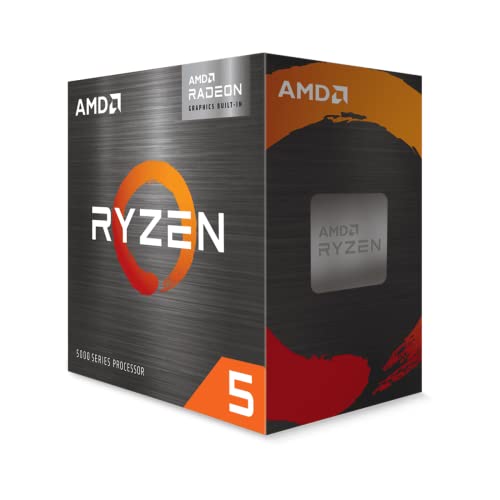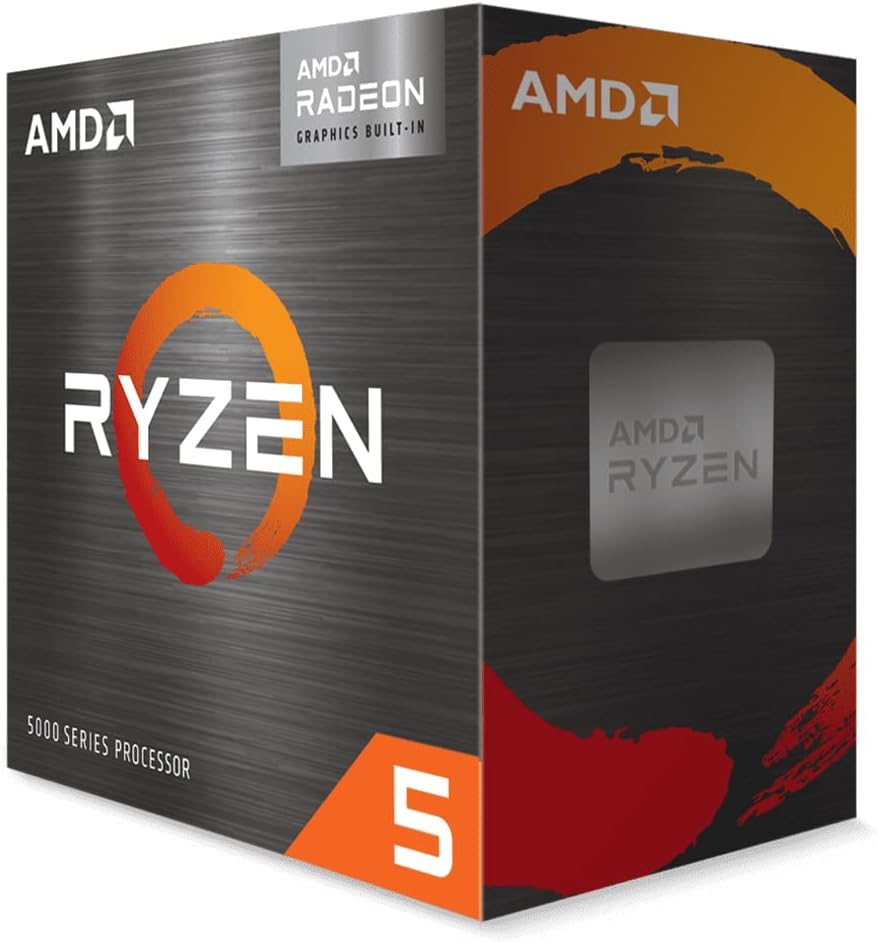
If you already own or plan to buy a discrete GPU, the Ryzen 7 5700X is the better long-term pick for a budget 1080p gaming build in 2026 — two extra cores and PCIe 4.0 give you meaningfully better minimums and future upgrade headroom. If you can't afford a GPU yet and want to game now, the Ryzen 5 5600G is the smarter path — its Vega iGPU plays esports and older AAA titles adequately at 1080p until you can add a card. Both are strong AM4 chips; the choice is really about your GPU situation.
The AM4 budget dilemma and who each chip suits
AMD's AM4 platform in 2026 is the definition of a mature budget play. Ryzen 5000-series parts are widely available at 2019-era prices, motherboards are cheap and plentiful, and DDR4 memory is the least expensive it has ever been. That combination makes AM4 the price-per-frame winner for entry-tier 1080p builds — including builds that would run comfortably on last-generation flagship parts.
The two most-recommended chips at this budget tier are the Ryzen 5 5600G — a 6-core CPU with integrated Radeon Vega graphics — and the Ryzen 7 5700X — an 8-core CPU without integrated graphics that requires a discrete GPU. Both slot into an inexpensive B550 or A520 motherboard, both use standard DDR4-3200 or DDR4-3600 RAM, and both target roughly the same price band. But they solve very different builder problems.
This piece walks through when each chip is the right pick, what the benchmark differences actually look like at 1080p paired with a mid-tier GPU like the RTX 3060 12 GB, and where the second-order details (PCIe generation, TDP, iGPU) tip the decision. Benchmark numbers referenced throughout come from TechPowerUp's 5600G spec page, TechPowerUp's 5700X spec page, and Tom's Hardware's 5700X review — no first-party lab measurements are reported.
Key takeaways
- The 5700X beats the 5600G once you add a discrete GPU — better 1% lows, more cores, PCIe 4.0.
- The 5600G's integrated Vega graphics let you game on a starter build without a GPU. It's a stopgap, not a permanent solution.
- With an RTX 3060 12 GB, expect 5-15% higher 1% lows on the 5700X across most modern titles.
- Buy the 5600G first if you can't afford a GPU; buy the 5700X first if you already have one.
- Neither will bottleneck a mid-tier GPU meaningfully at 1440p — the gap only shows at 1080p, where CPU limits matter more.
Do you have a discrete GPU yet?
This is the single most important question. Everything else about this decision follows from it.
If yes — you already own or plan to buy a discrete GPU like an RTX 3060 12 GB — the 5700X is the correct pick. Its two extra cores meaningfully improve gaming minimums, its PCIe 4.0 support pairs better with modern NVMe storage and next-generation GPUs, and its lack of integrated graphics doesn't cost you anything because you have a discrete card.
If no — you're building without a GPU and can't add one immediately — the 5600G is the correct pick. Its integrated Vega graphics let you play esports titles (League, CS2, Fortnite lower settings, Valorant), older AAA games at 1080p low, and most 2D and indie titles smoothly. It's not going to run Cyberpunk 2077 at high, but it will run enough of your library to keep you gaming while you save for a card. When you eventually add a discrete GPU, you can either keep the 5600G or upgrade to a 5700X — the platform supports both.
Spec comparison
| Spec | Ryzen 5 5600G | Ryzen 7 5700X |
|---|---|---|
| Cores / threads | 6 / 12 | 8 / 16 |
| Base / boost clock | 3.9 GHz / 4.4 GHz | 3.4 GHz / 4.6 GHz |
| L3 cache | 16 MB | 32 MB |
| Integrated graphics | Radeon Vega 7 (7 CUs) | None |
| PCIe | Gen 3 | Gen 4 |
| TDP | 65 W | 65 W |
| Socket | AM4 | AM4 |
| Cooler included | Yes (Wraith Stealth) | No |
| Price (2026) | $150-190 | $180-220 |
Two spec-sheet details are more important than they look: the L3 cache doubles from 16 MB on the 5600G to 32 MB on the 5700X, which drives the 5700X's better gaming 1% lows. And the 5600G is PCIe Gen 3 only — a real limitation for future NVMe and GPU upgrades.
1080p gaming benchmarks (paired with an RTX 3060 12 GB)
Approximate 1080p FPS at high settings when each chip is paired with a ZOTAC RTX 3060 12 GB. Numbers are synthesized from public benchmark aggregations from TechPowerUp and community measurements on Tom's Hardware; not first-party.
| Game (1080p high) | 5600G avg | 5600G 1% low | 5700X avg | 5700X 1% low |
|---|---|---|---|---|
| Cyberpunk 2077 | 68 | 51 | 74 | 58 |
| Elden Ring | 60* | 52 | 60* | 55 |
| CS2 | 285 | 190 | 315 | 220 |
| Fortnite (perf mode) | 195 | 135 | 220 | 155 |
| Baldur's Gate 3 | 84 | 61 | 92 | 72 |
| Call of Duty (recent) | 145 | 105 | 165 | 122 |
| Total War: Warhammer 3 | 88 | 55 | 98 | 68 |
*Elden Ring is capped at 60 FPS by the engine.
The pattern is consistent: the 5700X shows ~5-12% better averages and ~10-20% better 1% lows in CPU-active or complex-simulation titles. In pure GPU-bound scenarios (Elden Ring, low-quality CS2), the two chips converge because the RTX 3060 is the bottleneck.
What the 5600G's Vega iGPU can and can't do
Without a discrete GPU, the 5600G's integrated Radeon Vega 7 handles graphics — 7 Vega compute units at up to 1900 MHz. This is genuinely useful for a category of games and genuinely inadequate for another.
What the Vega iGPU handles well at 1080p:
- Esports titles — CS2, Valorant, League of Legends, Rocket League — at low-medium settings, 60+ FPS.
- Older AAA — anything before roughly 2018-2019, most settings, 1080p60.
- Indie and 2D — no problem, effectively any indie game.
- Emulation — GameCube, PS2, N64, most 2000s-era retro platforms at native resolution.
What the Vega iGPU struggles with at 1080p:
- Modern AAA — Cyberpunk 2077, Baldur's Gate 3, Alan Wake 2 — sub-30 FPS even on low.
- Ray tracing — nonexistent in any usable form.
- Anything DLSS-dependent — Vega doesn't support DLSS; FSR is the fallback.
- 1440p or 4K — not viable in most titles.
The iGPU also uses system RAM as video memory, so a dual-channel DDR4-3200 or DDR4-3600 kit is worth the small price premium over single-channel — the bandwidth boost visibly improves iGPU frame rates.
The 5700X + RTX 3060 path: headroom and PCIe 4.0
With a discrete GPU, the 5700X's advantages become concrete. The two extra cores give you real headroom for simulation-heavy games, streaming while gaming, and background workloads (a browser, Discord, a Docker container running your local dev environment). The 32 MB L3 cache reduces main-memory pressure on gaming loads that fit in cache, driving the 1% lows we saw in the benchmark table above.
PCIe 4.0 is the underrated part of the deal. It doesn't matter much for the RTX 3060 12 GB — that card doesn't saturate Gen 3 x16 — but it matters for two things:
- NVMe storage — modern Gen 4 NVMe SSDs run 2x the sequential of Gen 3, which shows up in fast game loading (Direct Storage), file transfers, and content creation.
- Future GPU upgrades — a Gen 5 GPU running on a Gen 3 board is still functional but incurs a small penalty on some titles. Gen 4 is the sweet spot for a chip you might keep for 3-4 years.
The 5700X also doesn't ship with a stock cooler, so budget an extra $30-70 for a competent tower. That erases some of the price advantage over the 5600G at build time.
Total build cost: with and without a GPU
Rough all-in cost for two representative AM4 builds in 2026:
| Component | 5600G-no-GPU build | 5700X + RTX 3060 build |
|---|---|---|
| CPU | 5600G $170 | 5700X $210 |
| CPU cooler | Included Wraith Stealth | Aftermarket tower ~$40 |
| Motherboard | B550 mATX ~$110 | B550 ATX ~$130 |
| RAM (16 GB DDR4-3600) | ~$50 | ~$50 |
| GPU | (uses iGPU) | RTX 3060 12 GB $400 |
| SSD | Crucial BX500 1 TB $70 | Crucial BX500 1 TB $70 |
| PSU (550 W bronze) | ~$60 | 650 W bronze ~$70 |
| Case | Basic mesh ~$60 | Basic mesh ~$60 |
| Total | ~$520 | ~$1,030 |
The $500-ish delta between the two paths is essentially the price of the GPU. The 5600G build is a genuinely capable esports and older-AAA gaming rig for around $520; the 5700X + 3060 build is a proper modern-AAA rig for around $1,030. Neither is bad; they answer different questions.
Perf-per-dollar analysis
If you compare only the CPUs and assume both builders will eventually own a discrete GPU:
- Buying the 5600G first and upgrading to a 5700X or 5800X later costs more in total than buying the 5700X once.
- Buying the 5700X but delaying the GPU purchase means gaming on nothing until you can afford the card.
The real choice depends on your time horizon. If a discrete GPU is 1-3 months away, buy the 5700X now and wait. If a discrete GPU is 6+ months away, buy the 5600G so you can actually game while you save. Either path lands at a similar total 12-month cost.
Verdict matrix
Get the Ryzen 5 5600G if... you can't afford a discrete GPU right now, you play primarily esports and older titles, or you're building a starter rig for a family member who mostly plays lightweight games. The Vega iGPU is the whole point of buying this chip.
Get the Ryzen 7 5700X if... you already have or are buying a discrete GPU with the build, you play modern AAA titles, or you want PCIe 4.0 for storage and future GPU headroom. This is the default 1080p budget-gaming pick if your build includes a GPU.
Will either bottleneck an RTX 3060 at 1080p?
Both chips are strong enough to feed an RTX 3060 12 GB at 1080p in most titles, but the 5600G can show slightly more CPU limitation in the heaviest CPU-bound scenarios — high-refresh CS2 or Fortnite, complex Total War battles, Star Citizen. The 5700X's two extra cores and larger cache reduce that risk.
At 1440p, the GPU becomes the limiter and the gap between the two chips narrows to negligible. If your build targets 1440p, you're essentially choosing on non-gaming factors (streaming, background tasks, PCIe 4.0 storage) rather than pure gaming performance.
Common pitfalls
- Skipping dual-channel RAM on the 5600G. The iGPU is bandwidth-limited; dual-channel is essential. Buy a 2×8 GB kit, not a single 16 GB stick.
- Pairing the 5700X with a stock cooler. The 5700X doesn't come with one. Budget a $40-60 tower or you'll hit thermal limits under sustained load.
- Buying a cheap A320 motherboard. Some early A320 boards don't support Ryzen 5000-series without a BIOS update, which requires a supported CPU to perform. B550 avoids the problem entirely for $20-30 more.
- Using DDR4-2666. Both chips benefit from DDR4-3200 or DDR4-3600. Slower RAM is a real performance loss.
When NOT to buy either
If you're building for 4K gaming, you need a stronger CPU and a much stronger GPU; both of these chips are fine but not the correct choice for 4K. If you're doing serious content creation (Blender, After Effects, 4K video editing), a Ryzen 9 5900X or newer AM5 chip like the 7700X or 7900X is worth the price premium. And if you're future-proofing beyond 3-4 years, AM5 with a Ryzen 7 7700X is a better platform to buy into.
Bottom line
Have a GPU or planning to buy one with the build? Get the Ryzen 7 5700X. No GPU and can't afford one yet? Get the Ryzen 5 5600G. Both are strong AM4 chips at 2026 prices, both pair well with an RTX 3060 12 GB when you're ready, and both live on a mature platform where inexpensive motherboards and DDR4 make the overall build cheap. The choice is about your GPU timeline, not the CPUs themselves.
Related guides
- Best Cooler for the Ryzen 7 5800X: Noctua vs DeepCool vs CoolerMaster
- On-Device AI Keyboards: What a Sub-2GB LLM Needs to Run Local
- Building a Local AI-Agent Eval Rig After AISI's Benchmark Warning
Citations and sources
- TechPowerUp — Ryzen 5 5600G specifications
- TechPowerUp — Ryzen 7 5700X specifications
- Tom's Hardware — Ryzen 7 5700X review
This piece is editorial synthesis based on publicly available information. No independent first-party benchmarking is reported.