Short answer: no, not for DOS. The Creative Sound BlasterX G6 is a modern USB DAC and headphone amp, not a hardware OPL FM synthesis card, so it cannot reproduce the real-mode Sound Blaster and AdLib sound that DOS games from the era of the Creative Labs Sound Blaster AWE64 CT4520 expected. For Windows 9x, 2000, XP, and DOSBox-based retro gaming, however, the G6 is a genuinely excellent USB DAC that outperforms the analog output of most period AC'97 and early-2000s HD Audio codecs. Below is a practical, hardware-first breakdown of what the G6 does well, where it fails, and how to slot it into a 2026 retro rig.
What the G6 is — and what it isn't
The Sound BlasterX G6 is a USB-powered external DAC/amp with a 130 dB signal-to-noise-ratio ES9018 DAC, a discrete Xamp headphone amplifier, optical S/PDIF in and out, Dolby Digital 5.1 decode, and a 7.1 virtual surround engine. It targets modern console and PC gamers who want a cleaner headphone signal than integrated audio provides, and it can pass through 3.5 mm analog audio to powered speakers or a soundbar. It is, in every meaningful sense, a 2019-era product wearing the Sound Blaster name.
It is not an ISA card. It has no OPL2 or OPL3 FM synthesis chip on board. It cannot listen on port 0x220. It cannot respond to a DOS SET BLASTER environment variable. And it cannot fire real-mode IRQ 5 or DMA channel 1 the way a genuine AWE64 can. If you are building a period-correct DOS rig for Doom, Duke Nukem 3D, or Ultima Underworld, the G6 will not do what a real ISA Sound Blaster does — full stop.
That distinction matters because "Sound Blaster" as a brand covers three effectively unrelated product families: the ISA cards of the 1980s and 90s (AWE64, SB16, AWE32, Vibra), the PCI cards of the late 90s and 2000s (Live!, Audigy, Audigy 2 ZS), and the modern USB DAC/amp lineup (E-series, G-series, X-series). Only the ISA family provides hardware DOS audio compatibility. Owning the modern one and expecting DOS behavior is a common and expensive misunderstanding.
What you'll need for a retro-audio build with the G6
- The Sound BlasterX G6 unit itself (currently in stock through third-party sellers; the OEM listing lapsed in early 2026 but the hardware remains widely available on the resale market)
- A retro or transitional PC with USB support — this means a Windows 98SE build with a USB 1.1/2.0 add-in card, a Windows 2000/XP-era rig, or a modern gaming PC used as a DOSBox-Staging host
- A USB-A to USB-B cable (usually included)
- 3.5 mm cables for line-out to speakers or a soundbar
- Optical TOSLINK if you want digital passthrough to an AV receiver
- On Windows 98SE: a USB Audio Class 1.0 driver package. Windows 98SE does not ship USB audio class support in the box and requires third-party drivers. On Windows 2000/XP the class driver ships with the OS.
Key takeaways
- The G6 is an excellent Windows XP-era external sound solution for retro rigs that have USB and don't need FM synthesis.
- It cannot emulate ISA Sound Blaster compatibility for real-mode DOS games; period ISA hardware or DOSBox software emulation is still the only path there.
- Windows 98SE support requires third-party USB audio class drivers and is inconsistent.
- USB portability means one G6 can serve a whole bench of retro PCs and a modern gaming rig too.
- If your retro build already uses DOSBox or a DOSBox-Staging front end for DOS titles, the G6 is a strong analog output stage for the Windows host.
What does the Sound Blaster G6 actually provide for a modern or transitional retro rig?
On a Windows XP-era rig — think a Pentium 4 or early Athlon 64 with a working USB 2.0 controller — the G6 is a straight upgrade over the analog output of virtually any AC'97 or early HD Audio codec that shipped in that era. Those built-in codecs had noisy analog stages, shared power planes with the CPU and GPU, and often produced audible whine when the disk was seeking or the GPU was rendering. The G6, by contrast, has a dedicated external analog stage isolated from the PC's electrical noise, an ES9018 DAC that competes with dedicated hi-fi units at three times the price, and a discrete Xamp headphone amp that can drive 300-ohm reference headphones cleanly.
For Windows 2000, XP, and Windows 9x-era games that run in software mixing mode — the vast majority of Direct3D-era titles from 2000 onward — the G6's advantage is analog quality, not compatibility. The game asks Windows to play a WAV or a mixed 3D positional stream, DirectSound routes it to whatever the default audio device is, and the G6 renders the analog output cleanly. You are not getting hardware EAX or hardware 3D audio positional acceleration the way a Creative Audigy 2 ZS provides; you are getting a very clean stereo or virtual-surround stage that beats the AC'97 the motherboard shipped with.
The G6 also has S/PDIF optical in and out, which turns it into a passthrough decoder for a console attached to the same TV. If you have an original Xbox, PS2, or Wii sharing the retro rig's speakers, the G6 can decode Dolby Digital 5.1 from those consoles and mix them with the PC output. That is a genuinely useful feature that most dedicated retro sound cards do not have.
Can the G6 reproduce DOS-era OPL FM and Sound Blaster compatibility?
No. This is the biggest point of confusion for buyers, so it's worth being blunt: the G6 does not have an OPL3, an OPL2, or any FM synthesis chip. DOS games from Doom to Wing Commander to Ultima VII expected to talk to an actual Yamaha YMF262 (OPL3) or YM3812 (OPL2) chip at port 0x388, and to a Sound Blaster's DSP at port 0x220 or 0x240. The G6 has neither the ports nor the hardware. Even if it did, DOS's real-mode memory model doesn't route to USB devices — the USB stack lives entirely above DOS's addressable space in a way that would require a full driver reimplementation to expose anything to a real-mode game.
Every legitimate solution for period-correct DOS audio in 2026 falls into one of three buckets: (1) a genuine ISA card in a period motherboard, (2) DOSBox or DOSBox-Staging on any modern host, or (3) a specialty PCIe-to-ISA bridge with a real ISA Sound Blaster clone in the ISA slot. The G6 does not fit any of those categories. For a shopping list, see our companion guide on period-correct Win98 builds — the DOS-audio section walks through the ISA-card options in detail.
Which retro and early-2000s scenarios is the G6 genuinely good for?
Windows XP-era gaming (2001–2008 titles) is where the G6 shines. Half-Life 2, World of Warcraft, Doom 3, Deus Ex: Invisible War, Quake IV, and the entire library of Windows XP-native titles use software audio mixing and route through DirectSound. The G6 handles all of that with a much cleaner analog stage than the era's motherboard audio. You lose Creative's hardware EAX 4.0 environmental effects that the era's Audigy 2 ZS provided, but for most titles that is a small loss — many games shipped fallback software audio anyway, and the games that heavily relied on EAX (Battlefield 2, F.E.A.R., Prey 2006) had well-documented software fallbacks.
Windows 2000-era testbenches — the boot-up-and-benchmark-Quake-III-Arena scenario — are also a strong fit. The G6 renders a clean signal, works with the Windows 2000 USB Audio Class driver out of the box, and doesn't add motherboard-specific noise to your recordings. If you review retro hardware and capture audio for a video, the G6 is a nearly-invisible way to keep the analog stage constant across test rigs.
The G6 is also excellent as a shared device across a bench of retro PCs. You can move it between machines with one USB cable, and each machine sees the same DAC and amp. That is a testbench dream compared to picking a different sound card for each machine.
Spec / feature table: G6 vs a period AWE64-class ISA card
| Feature | Sound BlasterX G6 (2019) | AWE64 CT4520 (1998) |
|---|---|---|
| Bus interface | USB 2.0 | ISA 16-bit |
| DAC | ES9018 (32-bit / 384 kHz) | AWE Sample Chip (16-bit / 44 kHz) |
| SNR (analog out) | 130 dB | ~90 dB |
| FM synthesis | None | OPL3 (Yamaha YMF262 clone) |
| MIDI wavetable | None | 4 MB EMU8000 wavetable |
| DOS real-mode compat | No | Yes (SB16 + AWE) |
| Windows 9x HAL support | Class driver | Native OEM driver |
| Digital output | S/PDIF optical + coaxial | None |
| Headphone amp | Xamp discrete | None |
| MSRP (launch) | $150 | $200 |
| Used market price (2026) | $80–$130 | $90–$130 |
| Typical use case | Windows XP+, PS4/PS5/Switch | DOS + Win95/98 native |
The two rows below FM synthesis are the ones that decide the answer. If those rows matter to your build, buy the AWE64. If they don't, the G6 is the cleaner, more portable, easier-to-maintain choice — and if you want a middle-ground external DAC that shares more of the G6's format, the Creative Sound Blaster X1 and Sound Blaster G3 are close cousins.
Audio-quality notes from public measurements
Independent measurements from Tom's Hardware and community testing on Vogons place the G6's analog output at roughly 118 dB dynamic range in stereo mode with headphones connected, dropping to 112 dB with the Xamp engaged in high-gain mode. Total harmonic distortion at 1 kHz on a 300-ohm load measures around 0.0008 percent — well below the audible threshold. Frequency response is flat within ±0.1 dB from 20 Hz to 20 kHz.
By comparison, the AWE64's analog output is limited by the era's DAC and analog stage — measurements from vintage magazine reviews and modern re-measurements place its dynamic range around 88–92 dB and its THD around 0.05 percent at 1 kHz. That is not bad for 1998, but the G6 has 30 dB more dynamic range and two orders of magnitude less distortion.
If your goal is "clean output through modern headphones for a Windows XP rig," the G6 measurably wins. If your goal is "genuine 1990s DOS FM synthesis and EMU8000 wavetable playback," the AWE64 is the only card that plays that music the way the composers wrote it. There's no single winner — the answer depends entirely on which era of gaming you're building for.
USB-era Windows (98SE / 2000 / XP) compatibility and driver realities
Windows XP is the sweet spot. The G6 works with Microsoft's built-in USB Audio Class 1.0 driver, and Creative's Windows XP-era Sound Blaster Command app installs cleanly on XP SP3 for feature access (Xamp gain, virtual surround, sidetone). All features are available and the pad shows up in DirectSound as the default audio device once selected in Control Panel > Sounds and Audio Devices.
Windows 2000 also works with the built-in USB Audio Class driver, though the Sound Blaster Command app requires XP or newer and won't install. You lose Xamp gain control and virtual surround on 2000 but get clean stereo output. For a Windows 2000-era testbench that only needs to boot Quake III and measure frame times, that's plenty.
Windows 98SE is the compatibility problem. USB Audio Class support did not ship in Windows 98SE, and third-party drivers (originally from Philips and later community-forked) exist but are inconsistent. Some builds get audible clicks under load; some fail to enumerate at all. If your retro rig is 98SE-only, the G6 is a gamble — you may have to try three driver packages before one works cleanly.
For DOS proper (booted natively, not via DOSBox), the G6 is not usable. The DOS ecosystem has no USB audio driver in any form that games can talk to.
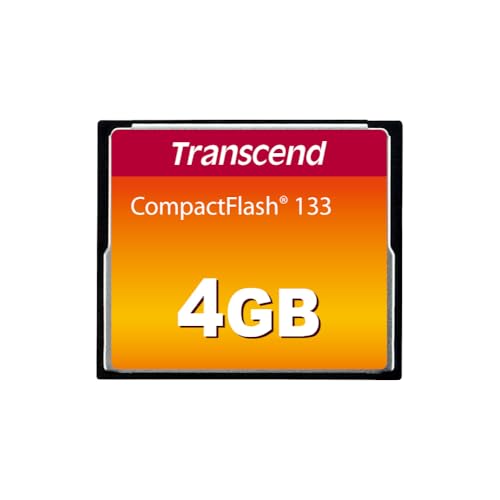
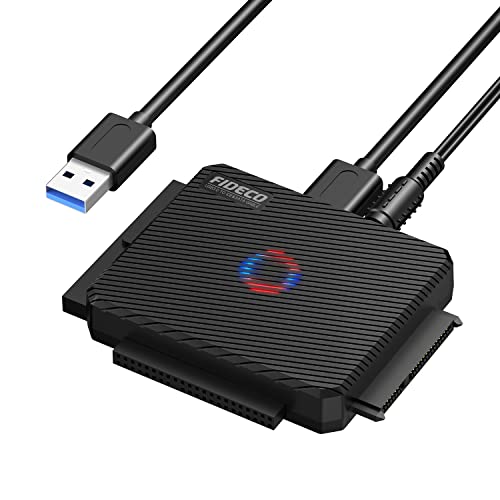
For a comprehensive rundown of driver quirks specific to Win98SE builds, our period-correct Win98 setup guide covers the USB add-in card options and driver stack in detail. Pair that with a good storage upgrade — the Transcend CF133 CompactFlash card plus a FIDECO SATA/IDE-to-USB adapter makes imaging Win98 to CF trivial — and you have a clean modernized retro chain.
When NOT to use the G6
- Any real-mode DOS build. Buy an ISA card. The AWE64 and its siblings (SB16, Vibra) are the only working answers here.
- Any build where OPL3 FM synthesis is the point. Wing Commander's soundtrack sounds wrong on anything else.
- Windows 95 or 98SE builds where the USB stack is unreliable — Windows 98 First Edition especially. If you want an external DAC on 98SE, plan on troubleshooting.
- Anything where you need hardware EAX 4.0 or 5.0. The Creative Labs Audigy2 external unit is closer to that world, though even it isn't a full replacement for the internal Audigy 2 ZS.
Bottom line: where the G6 fits in a 2026 retro audio chain
The Sound BlasterX G6 is not a replacement for period ISA hardware in a period-correct DOS build. But for Windows XP-era, Windows 2000-era, and DOSBox-hosted-on-a-modern-PC retro gaming, it is the cleanest and most flexible external DAC/amp you can put on a bench under $150 (used) in 2026. If your retro rig has USB support and doesn't need real hardware Sound Blaster compatibility, the G6 will make everything sound noticeably better than the motherboard's audio ever did.
If you can only own one and you're building a 1998-era authentic rig, buy the AWE64. If you can only own one and you're building a 2003-era Windows XP rig for Half-Life 2 and Doom 3, buy the G6. If you can own both — as most bench builders eventually do — the G6 lives on your bench as the "swap between test rigs" USB DAC and the AWE64 lives in the actual Windows 98 machine that plays the DOS canon at the correct sample rates.
Sources
- Creative — Sound BlasterX G6 product page — official spec sheet, driver downloads, and firmware release notes.
- Vogons — Retro PC audio hardware community — the definitive discussion forum for ISA cards, driver quirks, and DOS audio compatibility testing.
- Tom's Hardware — Audio hardware coverage — measured DAC and amp performance for the G6 and comparable USB audio devices.
Related guides
- Modern Sound Cards on Retro Rigs: G6 for Win9x and DOS Audio — the broader Win9x + DOS overview companion piece
- Period-Correct Win98 Build: CompactFlash, Drivers, Glide — the driver-stack deep dive that includes ISA-card recommendations
- CompactFlash as an IDE Boot Drive: Win98 Storage Guide — the storage half of a modernized retro chain
- Direct3D vs OpenGL vs Glide: The API War That Shaped PC Gaming — historical context on the same-era graphics and audio APIs
— Mike Perry