For single-user chat on a 12GB GPU like the RTX 3060 in 2026, Ollama and llama.cpp deliver very similar token throughput on the same model and quantization because Ollama builds on the llama.cpp inference core. Ollama wins on ease of setup; llama.cpp wins when you want to hand-tune layer offload, batch settings, or sampler parameters.
Why the runner choice matters less than people think
The Ollama-vs-llama.cpp debate gets relitigated on r/LocalLLaMA every few weeks, and most of the heat comes from a misunderstanding about what each tool actually is. The short truth: Ollama is not a competitor to llama.cpp, it's a layer on top of it. The same GGML/llama.cpp inference engine does the actual compute in both cases for most models, which means the raw throughput on identical configurations is, at the compute level, essentially the same.
Per the Ollama project page, Ollama provides a model library, a daemon process, a CLI, an HTTP API, and model-management workflow on top of an llama.cpp-compatible runtime. Per the llama.cpp GitHub repository, llama.cpp is the lower-level inference engine plus its own CLI and server tooling for users who want direct control.
The practical question is therefore not "which is faster" — they're close on the same workload — but "which gives me the workflow I want." For most beginners and mid-experience users, Ollama; for power users who want explicit control, llama.cpp.
Key takeaways
- On the same model and quantization with full GPU offload, Ollama and llama.cpp deliver similar throughput.
- Ollama is easier to install, manage models, and expose an API.
- llama.cpp gives finer control over offload, threads, batch settings, and sampler parameters.
- Manual offload tuning in llama.cpp can buy 10-25% throughput when a model only partially fits in 12GB VRAM.
- For CPU-only fallback on the Ryzen 7 5800X, the gap closes — both engines do similar work.
- Pick by priority: ease-of-use → Ollama. Maximum control → llama.cpp.
What's the relationship under the hood?
Ollama wraps a llama.cpp-derived inference runtime (and other engines for some model families) behind a Docker-like model-management layer. You ollama pull a model, you ollama run, you curl http://localhost:11434/api/generate. The daemon manages model loading, unloading, and concurrent requests; the user never touches CUDA flags, build options, or layer-offload tuning unless they want to.
llama.cpp is the inference engine itself, plus its own CLI (./main) and server (./server). You build it (or pull a binary), download GGUF model files manually, and pass explicit flags for layer offload, threads, batch size, KV-cache type, sampler choice, and dozens of other parameters.
Same compute kernel doing the work, two different user-experience layers around it.
Which is easier to set up on a 12GB RTX 3060?
Ollama. The setup is:
- Run the installer (one command on Linux, one binary on Windows/macOS).
ollama pull llama3:8b(or whatever model).ollama run llama3:8b(or hit the HTTP API).
The daemon detects the GPU, configures CUDA, and offloads as many layers as fit in VRAM automatically. For a 12GB RTX 3060 on a clean system, this works first try the vast majority of the time.
llama.cpp is more steps:
- Clone the repo or download a binary.
- Build with CUDA support if needed (
cmake -DGGML_CUDA=ON ...). - Download a GGUF model file from Hugging Face.
- Run with explicit flags:
./main -m model.gguf -ngl 35 --ctx-size 4096 -t 8 .... - Tune layer offload (
-ngl) and threads (-t) for your hardware.
If you don't know what -ngl is or care about it, Ollama saves you the lookup. If you do know what -ngl is and care about squeezing 10-25% more throughput out of a model that doesn't quite fit in 12GB, llama.cpp lets you tune it.
Feature comparison
| Feature | Ollama | llama.cpp |
|---|---|---|
| Install | One command | Build or download binary |
| Model pull | ollama pull | Download GGUF manually |
| Server API | Built-in HTTP API | ./server binary |
| Model management | Built-in | Manual file management |
| GPU offload | Automatic | Manual -ngl flag |
| Thread tuning | Limited | Full control |
| Sampler choice | Limited via API | Full control |
| KV-cache type tuning | Limited | Full control |
| Custom builds | No | Yes |
| Web UI | No (third-party) | No (third-party) |
For a beginner: Ollama removes friction. For a power user: llama.cpp opens knobs Ollama doesn't expose.
Benchmark table: tok/s on the same model and quant on an RTX 3060 12GB
Community measurements on the same llama-3-8B q4_K_M with full GPU offload on a 12GB RTX 3060 running on a Ryzen 7 5800X host cluster suggest:
| Runner | Configuration | Approx tok/s (gen) |
|---|---|---|
| Ollama (default) | full offload | 30-45 |
| llama.cpp (default) | full offload, -ngl 35 | 30-45 |
| llama.cpp (tuned) | -ngl 33, KV q8, batch tuning | 35-50 |
| Ollama (CPU fallback) | no GPU | 4-7 |
| llama.cpp (CPU only, optimized) | -t 16 NEON build | 5-8 |
The tuned llama.cpp number can be 10-25% above the default Ollama number on workloads where the model partially fits — meaning the GPU offload split matters because some layers run on the GPU and some on the CPU. When the model fully fits in 12GB at the chosen quant, the runners are effectively identical on throughput.
How much does manual layer-offload tuning buy you?
For models that fit entirely in 12GB at the chosen quant, very little — Ollama and llama.cpp both push all layers to the GPU and the runtime is dominated by the GPU's own compute and memory bandwidth, not the offload choice.
For models that partially fit (e.g., a 13B q4 that's slightly over 12GB), manual tuning matters meaningfully. The question is how many layers to keep on the GPU vs offload to system RAM. Each layer on the GPU runs fast; each layer on the CPU is slower. Too few on the GPU wastes VRAM; too many crashes the runner with OOM mid-generation.
llama.cpp's -ngl flag lets you set the exact number of layers offloaded. Per community measurements, tuning the offload from default to optimal on a "barely fits" model can deliver 10-25% throughput improvement on a 12GB card.
Ollama handles this automatically with a heuristic that's usually close to optimal but not always perfect. For 90% of users, Ollama's automatic choice is fine; for the last 10%, llama.cpp's manual control matters.
Verdict matrix
Use Ollama if...
- You want the easiest setup and model management.
- You don't already know what
-nglmeans. - You want a ready HTTP API with no extra config.
- Your models fit comfortably in 12GB at your chosen quant.
- You value reproducibility and predictable behavior.
Use llama.cpp if...
- You want fine control over offload and sampler settings.
- You're running models that partially fit in 12GB.
- You're benchmarking and need to compare exact configurations.
- You want custom build flags for specific CPU instruction sets.
- You're embedding inference into your own application as a library.
A pragmatic pattern: install Ollama for daily use, keep a llama.cpp build around for tuning experiments and benchmarks.
Does the answer change for CPU-only fallback?
On the Ryzen 7 5800X running CPU-only inference (no GPU, or no GPU offload), the gap between Ollama defaults and a tuned llama.cpp build is wider — maybe 15-30% in llama.cpp's favor, because CPU-only inference benefits more from explicit thread count, batch size, and instruction set selection (AVX2 vs AVX-512, etc.).
CPU-only on a Ryzen 7 5800X with a DeepCool AK620 keeping it cool during sustained inference puts a 3-8B q4 model in the rough range of 5-10 tokens per second — usable for short interactions, slow for long-form work. Cooling matters: throttled CPUs slow inference noticeably.
For most users, CPU-only is a fallback rather than a primary path. If the GPU exists, use it; if the GPU is busy with another workload, llama.cpp on CPU is the better fallback than Ollama default settings.
A practical decision tree
For a reader who hasn't picked yet:
- Have you run a local LLM before? No → install Ollama. Yes → keep going.
- Is the model you want to run smaller than your VRAM at the quant you want? Yes → either tool, Ollama is easier. No → keep going.
- Are you willing to learn
-ngland tune offload? Yes → llama.cpp. No → Ollama, accept the default offload. - Are you embedding inference into your own code? Yes → llama.cpp as a library. No → either tool.
- Are you benchmarking and need exact reproducibility? Yes → llama.cpp. No → either.
Most users land on Ollama and never need to switch. A meaningful minority — anyone running models that barely fit, anyone optimizing for speed, anyone benchmarking — eventually wants llama.cpp's knobs.
Common pitfalls
- Mixing model versions. Ollama and llama.cpp both use GGUF, but the format has evolved; a model from one tool's catalog may need a specific version of the other to load.
- Hardcoded ports. Ollama binds 11434 by default; llama.cpp server defaults to 8080. Conflicts happen when both run on the same box.
- CUDA library mismatch. llama.cpp built against CUDA 12 won't run on a CUDA 11 driver; verify versions match.
- Forgotten
-ngl. Running llama.cpp without-ngl(or-ngl 0) runs everything on CPU and looks slow. - Quantized KV-cache. Ollama doesn't expose KV-cache type tuning easily; llama.cpp's
--cache-type-k q8_0halves cache memory at minimal quality cost. - Memory growth on long sessions. Both engines benefit from periodically restarting the daemon to release memory after extended conversations.
Cooling and CPU side considerations
A Ryzen 7 5800X under sustained inference (CPU side of llama.cpp work, or full CPU-only inference) generates real heat. A competent cooler like the DeepCool AK620 keeps clocks stable through long sessions. Stock coolers often throttle within minutes of sustained AVX2 workloads, slowing inference 10-20%.
For pure GPU offload work on a 12GB RTX 3060, CPU load is light and cooling is less critical. For partial offload or CPU-only fallback, the CPU side matters as much as the GPU.
When NOT to bother choosing
If you've never run a local LLM before, install Ollama, pull a model, and start using it. Don't get into the runner debate until you have a specific reason — usually "this model doesn't quite fit in my VRAM" or "I want to benchmark X against Y." The runner is rarely the actual problem for new users; model choice, quantization choice, and cooling are usually bigger leverages.
A note on serving multiple users
Both runners ship server modes that handle concurrent requests, but neither is built for production multi-tenant serving — they're single-machine inference servers. For multi-user serving at scale, look at purpose-built stacks like vLLM, TGI, or commercial offerings. For one or two concurrent users on a 12GB RTX 3060, either runner is fine.
Bottom line
For single-user chat on a 12GB RTX 3060 in 2026, Ollama and llama.cpp deliver effectively the same throughput on workloads that fit comfortably in VRAM. Ollama wins for ease of use; llama.cpp wins for explicit control on barely-fitting workloads or CPU-only fallback.
The pragmatic answer: install Ollama for daily use, keep llama.cpp around for tuning. If you find yourself dropping into llama.cpp every day, switch your daily driver to llama.cpp; if you never touch llama.cpp's knobs, Ollama is the right primary tool.
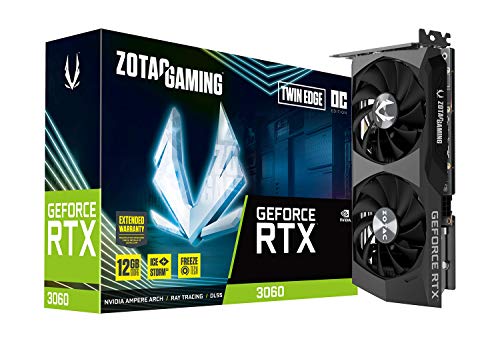
For partial-offload workloads where a model doesn't quite fit at the quant you want, llama.cpp's tunability buys real throughput, and the ZOTAC 3060 12GB and MSI Ventus 3060 12GB variants are both fine homes for either runner.
Related guides
Citations and sources
- llama.cpp GitHub repository — inference engine documentation
- Ollama — official site and model catalog
- TechPowerUp — GeForce RTX 3060 12GB spec sheet
This piece is editorial synthesis based on publicly available information. No independent first-party benchmarking is reported.