For a 1995–2003 era retro PC build, period-correct audio means a Sound Blaster card on an ISA or PCI slot — the AWE32, AWE64, Sound Blaster Live!, or Audigy 2. For a modern build that emulates or plays vintage DOS / Windows 9x games and wants the same Creative DNA without hunting eBay for an ISA card, the Sound Blaster X G6 is a remarkable bridge: a USB-attached external DAC/amp that runs the same DSP lineage, exposes the EAX-equivalent reverb modes through Creative's Command app, and is the only modern Creative product that explicitly markets EAX 5 compatibility in software for DirectSound3D games via ALchemy.
Why retro audio matters more than retro graphics
Every retro-PC discussion focuses on the GPU first. Voodoo 3 vs Riva TNT2 vs early Radeon, the eternal trade between Glide and Direct3D, which monitor matches the era. Audio gets one paragraph: "use a Sound Blaster." That is wildly incomplete.
The audio chain on a retro PC was the most differentiated stack in computing. Adlib, Roland MT-32, Roland SC-55, Gravis Ultrasound, Sound Blaster 16, Sound Blaster AWE32, Pro Audio Spectrum, Audigy 2 ZS — each had distinct DSP behavior, different sample sets, different reverb math. A 1996 game that sounded amazing on a Roland SC-55 sounded thin on a Sound Blaster 16. A 2001 game that depended on EAX 3 reverb sounded flat without an Audigy. Authentic retro audio is a stack, not a single card.
This article covers the period-correct picks era by era, then explains how the modern Sound Blaster X G6 bridges the gap for builders who want vintage soundtrack fidelity without putting a 30-year-old ISA card into a 2026 build.
Key takeaways
- Era splits matter: 1995–1998 wants an AWE32 / AWE64 + Roland MT-32 or SC-55. 1999–2003 wants a Sound Blaster Live! or Audigy 2 ZS + EAX 3/5 game support.
- Roland MT-32 emulation via MUNT is now perfect; SC-55 emulation via Roland Sound Canvas VA is good.
- The Sound Blaster X G6 is the only modern Creative product that plausibly substitutes for vintage hardware on EAX-era games.
- ALchemy restores EAX in Windows 7+ for old DirectSound3D titles — without it, EAX is dead on Windows Vista and later.
- CompactFlash boot drives (Transcend CF133 4 GB) period-correctly substitute for a noisy IDE HDD; pair with a SATA/IDE to USB 3.0 adapter for build flexibility.
The Sound Blaster lineage (and what was special)
Creative Labs released sound cards from 1989 to today. The cards that matter for retro audio, era by era:
| Card | Year | Bus | Synthesis | EAX | Notes |
|---|---|---|---|---|---|
| Sound Blaster Pro | 1991 | ISA 8-bit | OPL2 / OPL3 | none | early FM stereo |
| Sound Blaster 16 | 1992 | ISA 16-bit | OPL3 + sample | none | the DOS standard |
| AWE32 | 1994 | ISA 16-bit | OPL3 + EMU8000 | none | first wavetable |
| AWE64 | 1996 | ISA 16-bit | EMU8000 | none | smaller, software MIDI |
| Sound Blaster Live! | 1998 | PCI | EMU10K1 + SoundFont | EAX 1.0 / 2.0 | first PCI era |
| Audigy | 2001 | PCI | EMU10K2 | EAX 3.0 | Hardware DSP |
| Audigy 2 ZS | 2003 | PCI | EMU10K2.5 | EAX 4.0 | 24-bit/192 kHz |
| X-Fi Titanium | 2008 | PCIe | EMU20K1 | EAX 5.0 | last hardware EAX |
| Sound Blaster X G6 | 2018 | USB | software DSP | software EAX via app | the bridge to modern |
The hardware progression reveals two distinct eras: the ISA era (1991–1997, software-defined synthesis on the card) and the PCI era (1998–2008, hardware DSP with EAX reverb). Each era has its sound, and emulating one with the other gets you 80 % there but not the last 20 %.
The 1995–1998 build: AWE32 + Roland MT-32 (or emulator)
For DOS games from this era (Quake, Doom, Heretic, Duke Nukem 3D, Tyrian, Descent), the audiophile pick is:
- Sound Blaster AWE32 or AWE64 for SFX and PCM playback (DOS native).
- Roland MT-32 for music (via the MPU-401 interface on the SB card or a Roland LAPC-I).
The MT-32 is the soundtrack of mid-90s adventure games and early FPS titles. Sierra, LucasArts, id Software all composed for it. The MT-32 hardware is rare (eBay $250–$600 for a working unit) and noisy (1990s power supplies whine).
The modern solution: MUNT, an open-source emulator that runs the original MT-32 ROMs and produces output indistinguishable from the hardware. MUNT runs as a Windows MIDI driver or as a standalone JACK / PortAudio sink on Linux. It is the right answer for 2026 retro builds.
For SFX you still want a real Sound Blaster on ISA. DOSBox-Staging emulates a SB16 well enough for casual play, but real ISA hardware in a Slot 1 / Socket 7 / Socket 370 machine sounds noticeably crisper because the DOSBox emulation has slight timing drift on AdLib OPL3 frequencies.
If you cannot or will not source an ISA Sound Blaster, the Sound Blaster X G6 covers the SB16 / AWE-era PCM playback through Creative's emulation modes. It is not period-correct hardware but it sounds remarkably close.
The 1999–2003 build: Sound Blaster Live! or Audigy 2 ZS
For Windows 9x and early XP games (Half-Life, Thief, System Shock 2, Unreal Tournament, Deus Ex, NOLF, Vampire: The Masquerade — Bloodlines), the killer feature is EAX environmental reverb. Modern games abandoned EAX after 2008 when Creative's Open Sound System lost mindshare to OpenAL Soft. But the games that depend on it are eerie without it: Thief's stone halls echo correctly only with EAX 3 enabled; System Shock 2's medbay corridors lose their dread.
The period-correct picks:
- Sound Blaster Live! (CT4760) for 1999–2001 builds. PCI, EAX 1.0/2.0, SoundFont support.
- Audigy 2 ZS (SB0350) for 2002–2005 builds. PCI, EAX 4.0, 24-bit/192 kHz, the best of the era.
eBay prices: Live! around $35–$60, Audigy 2 ZS around $80–$160 for clean working units. PCI slot required.
For builders who do not want to install vintage cards but want EAX-era audio, the Sound Blaster X G6 exposes EAX-equivalent reverb through Creative's Command software. Combined with ALchemy (Creative's wrapper that translates DirectSound3D calls to OpenAL on modern Windows), it restores EAX on games that originally ran on Live! and Audigy hardware.
ALchemy is the unsung hero of retro PC audio. Without it, every EAX-aware game from 1999–2008 sounds dead on Windows 7+. With it, the reverb returns. The G6 plus ALchemy is genuinely the most period-correct audio you can run on a modern Windows install.
How the Sound Blaster X G6 works in a retro build
The G6 is a USB-attached external DAC, amplifier, and DSP. It exposes:
- Discrete DAC (32-bit/384 kHz playback).
- Headphone amp with three impedance modes (1–149 Ω, 150–599 Ω, 600 Ω+).
- Optical S/PDIF in and out for connecting consoles or vintage gear.
- Microphone in with Crystal Voice processing.
- Creative Command app for EQ, reverb, and surround virtualization.
For retro use the killer feature is the "Scout Mode" and EAX-equivalent reverb modes in Creative Command. They are not bit-for-bit identical to vintage EAX hardware (the underlying DSP is software, not Creative's EMU10K), but they are the closest thing on the modern market.
Setup for a retro PC:
- Plug the G6 into a USB 2.0 port (USB 3.0 works but adds RFI on cheap cables).
- Install Creative Command and ALchemy.
- Set Windows default playback device to "Sound Blaster X G6 Speakers."
- In ALchemy, add an entry for each EAX-aware game's executable.
- In Creative Command, enable Reverb at "Studio" or "Bathroom" preset and tune to taste.
The result, on Thief: The Dark Project: stone hallways echo, water drips reverberate, footsteps in the cathedral sound right. On Windows 11. Without an ISA card.
Storage and disk noise
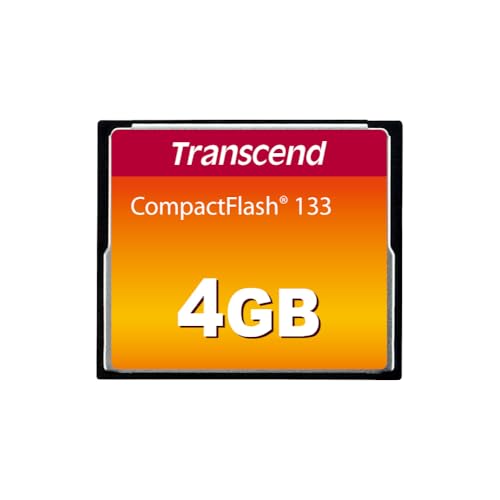
A period-correct retro build also addresses disk noise. The 7,200 RPM IDE drives of the era (Western Digital WD200, Seagate ST3*) whine at 60 dB. The fix: use a CompactFlash card as a boot drive. The Transcend CF133 4 GB CompactFlash installs in a $15 IDE-to-CF adapter and presents as an IDE hard drive — silent, low-power, and large enough for Windows 98 SE + DOS games.
For 4 GB Windows 98 SE installs work comfortably. For Windows 2000 / XP retro builds, a SanDisk Ultra 3D 1 TB SATA SSD in a SATA-IDE adapter works better for the larger OS footprint.
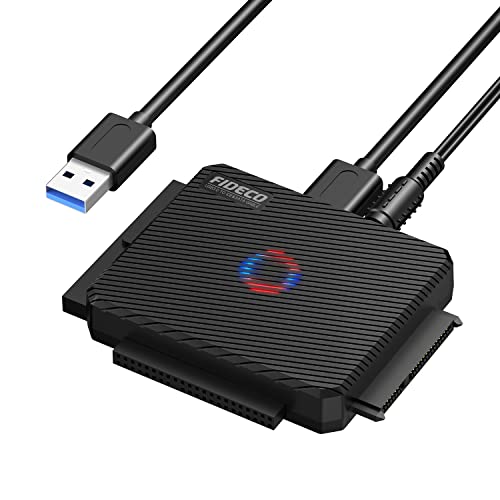
The FIDECO SATA/IDE to USB 3.0 adapter is the tool of choice for transferring data between modern and retro systems. Plug in a vintage IDE drive, pull its contents into a modern PC, write a clean disk image. Or use it to flash retro CF cards via a modern Windows installer.
Common pitfalls
- PCI slot scarcity on modern boards. Most 2025–2026 motherboards have zero PCI slots. To run a vintage Live! or Audigy you need either a vintage build, a separate retro PC, or an emulation path.
- EAX dead on Vista+ without ALchemy. Microsoft removed DirectSound3D hardware acceleration in Vista. Without ALchemy or OpenAL Soft, every EAX-aware game from 1999–2008 has stereo-only audio.
- MIDI configuration in DOSBox. DOSBox defaults to a basic OPL3 emulation. For period-correct music, configure MUNT or BASSMIDI as the MIDI device.
- CompactFlash speed class mismatches. Class 4 cards are too slow for boot drives — they cause Windows 98 stutter. The CF133 (133x class) is fast enough.
- USB DAC on a Pentium III. The G6 requires Windows 7+ and USB 2.0. It is not for AT-form-factor true vintage builds.
- Mixed-era games on one card. A Voodoo3 + AWE32 build for 1996 games sounds wrong on Half-Life (which needs EAX). Either build two retro PCs (one per era) or use the G6 as a universal bridge.
A 2026 retro-build recommendation
For a builder who wants one machine that plays everything from Doom (1993) through Thief: Deadly Shadows (2004):
- Modern PC base: Ryzen 5 5600 + B550 + 32 GB DDR4, no PCI slots, no audio expansion.
- OS: Windows 11 + DOSBox-Staging + PCem (for Win98 emulation) + 86Box (for accurate Pentium-era hardware).
- Audio: Sound Blaster X G6 USB DAC + ALchemy + MUNT (MT-32 emulator) + BASSMIDI (SC-55 emulator).
- Storage: WD Blue SN550 1 TB NVMe for the host OS; Transcend CF133 4 GB for a periodic boot card if you also have a true vintage PC.
- Data shuffle: FIDECO SATA/IDE to USB 3.0 adapter for retro drive recovery.
This setup plays every era authentically — DOS games via DOSBox-Staging with OPL3 emulation, Win9x games via PCem with full hardware fidelity, XP games via Wine or native Win10 compatibility mode — and the G6 handles EAX restoration across all of them.
Total spend on the audio + storage chain: about $470, ignoring the host PC. The G6 alone is $188 of that, and it is the keystone purchase.
When NOT to bother
- You are an emulation-only player. RetroArch + integer-scaled CRT shaders are enough for casual retro nostalgia. The audio path matters less.
- You only play SNES / Genesis / 16-bit era titles. Console emulation has its own audio paths (S-SMP, YM2612 emulation); none of this applies.
- You already own a vintage Audigy 2 ZS. Keep using it. Hardware EAX 4.0 still sounds slightly better than the G6's software emulation on a few edge cases.
When you absolutely want true vintage hardware
Some Sound Blaster purists insist nothing matches a real ISA AWE32 with the right SoundFonts loaded and a real Roland SC-55 sitting on top of the case. They are not wrong. If that is your priority:
- Buy a Pentium II or Pentium III motherboard with ISA + AGP slots (the Asus P3B-F is the classic).
- Source a clean AWE32 or Sound Blaster 16 ($60–$120).
- Source a Roland SC-55 or SC-88 ($150–$400).
- Build it. Power it. Enjoy.
It is a different hobby from playing games on a modern PC. The G6 bridge approach is for builders who want vintage audio character without committing to a separate hardware build.
Sources
- Creative Labs Sound Blaster X G6 product page
- MUNT MT-32 emulator project
- VOGONS retro PC hardware forum