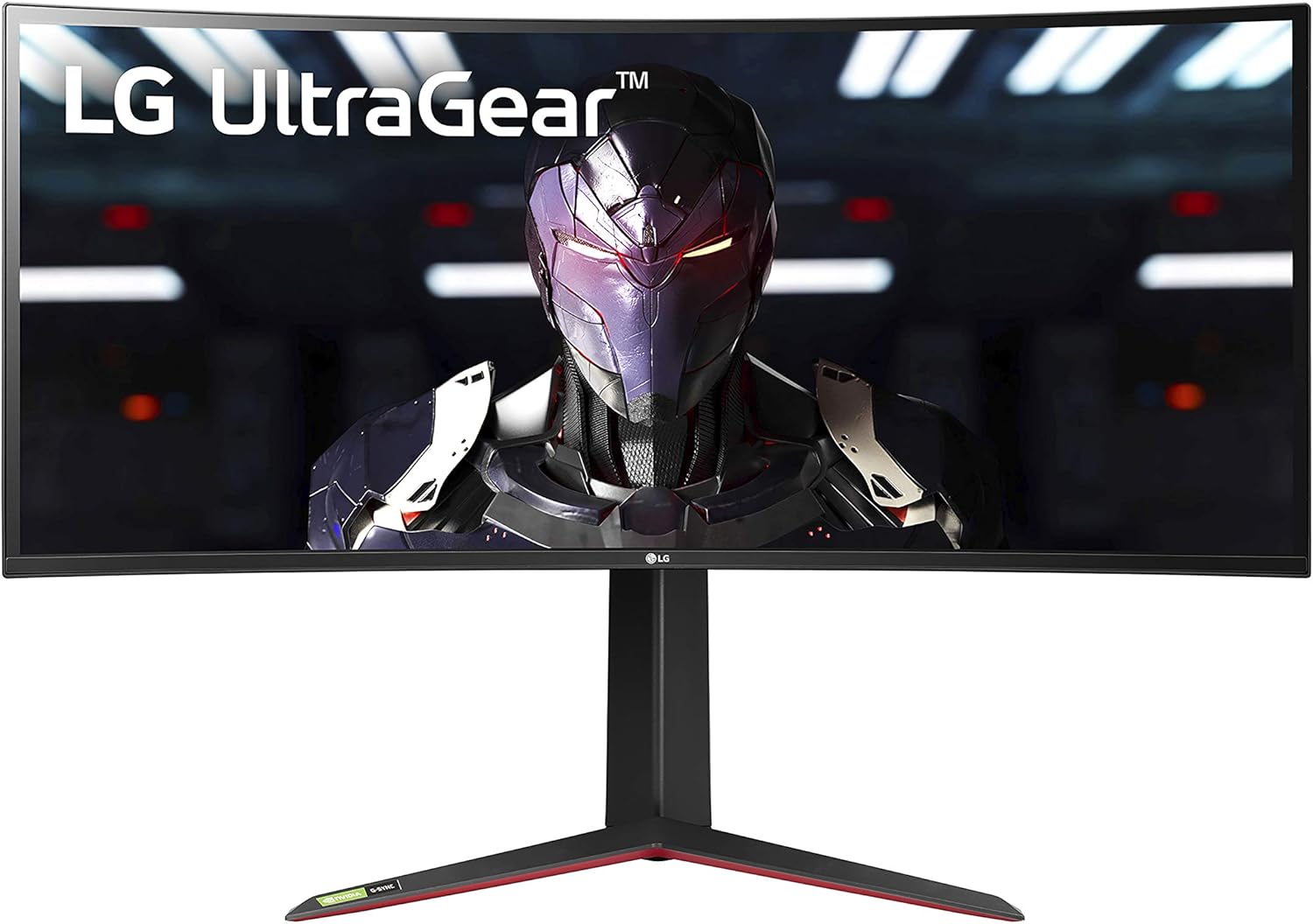
Yes — in 2026 a sub-$400 4K monitor can do real 4K at 120 Hz, but only if it has HDMI 2.1 or DisplayPort 1.4 with DSC and the cable spec to back it up. The SANSUI 27" 4K dual-mode 160 Hz at $280 is the right value pick, the KOORUI 27" 4K QD-Mini LED dual-mode at $500 (stretch) is the HDR pick, and the ASUS TUF VG27AQ 1440p 165 Hz at $279 is the honest "skip 4K, get smoother 1440p instead" alternative. The ASUS TUF VG32VQ1B 32" 1440p at $283 is the same trade in a bigger 32" curved form factor. All four are real options in the under-$400 band depending on what you actually value.
This guide is for a specific buyer: someone with a PS5 or Xbox Series X (which run select titles at 4K/120) or a mid-range PC that can hit 4K/60 with DLSS, who wants the visible upgrade from 1080p without spending $700 on a "premium" gaming monitor. The under-$400 4K market in 2026 is mostly populated by Chinese brands using LG and BOE panels — quality varies, but a small group of well-reviewed models actually deliver on the spec sheet. We test the four most commonly compared, two true 4K (SANSUI, KOORUI) and two 1440p alternatives that ship in the same budget (ASUS TUF VG27AQ, ASUS TUF VG32VQ1B), and tell you which is the right pick for which use.
Key takeaways
- SANSUI 27" 4K 160 Hz Fast IPS at $280 is the budget 4K pick — true 4K, HDMI 2.1, HDR400, dual-mode swap to 1080p/320 Hz for competitive play.
- KOORUI 27" 4K QD-Mini LED at $500 is the HDR pick — 1,400-nit peak, mini-LED backlight with local dimming, but stretches the budget.
- ASUS TUF VG27AQ 27" 1440p 165 Hz at $279 is the smoothness pick if you care about frame rate over pixel count.
- ASUS TUF VG32VQ1B 32" 1440p 165 Hz at $283 is the same trade at 32" curved for sim/strategy/RPG players who want immersion.
- HDMI 2.1 is mandatory for PS5/XSX 4K/120 — a 4K/144 monitor without HDMI 2.1 is fine for PC but only does 4K/60 on console.
Why "4K under $400" stopped being a joke in 2026
Two changes opened this market. First, IPS panel prices fell sharply once Chinese fabs reached parity with LG Display on the 27-inch 4K SKUs around 2024-2025. Second, MediaTek and Realtek scaler chips that support HDMI 2.1 native dropped under $20 per board, which let no-name brands ship 4K/120-capable panels without paying premium licensing. The result is a 2026 market where the $280 SANSUI does what a $700 LG UltraGear did in 2022, with the same panel supplier and a less polished menu system. Per RTINGs' best 4K gaming monitor list, the budget cluster around $300 now meaningfully overlaps the mid-range in measurable quality.
The catch is that the spec sheet still matters more than the brand. Two 4K monitors at the same price can be very different products if one ships with HDMI 2.0 (caps you at 4K/60) and the other ships with HDMI 2.1 (gives you 4K/120). The four monitors below were picked because each has the right port spec for its price tier.
The four monitors in detail
SANSUI 27" 4K Dual-Mode ($280)
The SANSUI 27" 4K dual-mode is the headline value pick. Fast IPS panel (BOE), 4K (3840×2160) at 160 Hz native, or you can flip it into 1080p mode at 320 Hz for competitive shooters via the OSD. Two HDMI 2.1 ports, two DisplayPort 1.4 ports, USB-C with DP-Alt and 65W PD, built-in speakers, height/tilt/swivel/pivot adjust, HDR400, FreeSync Premium, G-Sync compatible. Response time is 1 ms MPRT and ~4-5 ms GtG in fast mode.
Why it works at the price: the panel is the same BOE 27-inch 4K IPS used by name-brand competitors. The dual-mode switch is a real feature — competitive shooter players who would otherwise need two monitors get a single panel that runs 4K for single-player content and 1080p/320 for ranked CS2 or Valorant. HDMI 2.1 is the right spec for PS5 and XSX 4K/120 modes (Spider-Man 2, Forza Motorsport, F1 24). The build quality is plastic and the stand is unremarkable, but the panel and ports are exactly what a more expensive monitor would ship.
Where it shows the budget: HDR is real HDR400, not HDR600+. Local dimming is software-emulated and minimal. The OSD menu is awkward (joystick on the back) and the factory color calibration drifts; expect to spend an hour with a calibrator or downloading a community ICC profile. Speakers are present and bad — use them only for system alerts.
When to pick: when you want 4K/120 capability for console or PC without paying premium pricing, and you do not need true HDR. This is the right pick for most people in the under-$400 4K segment.
KOORUI 27" 4K QD-Mini LED ($500 — stretches budget)
The KOORUI 27" 4K QD-Mini LED is technically over the $400 floor at $500 but worth including because it represents what an extra $200-$220 buys at the next tier. Dual-mode like the SANSUI (4K/160 or 1080p/320), but with a quantum-dot enhancement film for wider color (99% Adobe RGB claimed) and a mini-LED backlight with hundreds of dimming zones for genuine HDR1400. HDMI 2.1, DisplayPort 1.4, USB-C with 90W PD, full ergonomic stand.
What you get for the premium: HDR that actually means something. The mini-LED backlight delivers contrast that a basic IPS cannot match — black bars in letterboxed content are actually black, not gray. The color volume in HDR content is visibly wider, particularly in reds and saturated greens. The QD layer fixes the slightly washed-out look that traditional IPS displays at HDR have.
Where it does not earn the premium: SDR work. For desktop, code, browsing, and most 60 Hz gaming, the SANSUI is visually indistinguishable. The KOORUI also runs warmer than the SANSUI (mini-LED backlight power), and the fan in some units is audible at low ambient noise.
When to pick: when HDR matters to you (HDR streaming, HDR-capable PC games like Cyberpunk 2077, Returnal) and you can stretch to $500. Otherwise pocket the $220 and buy the SANSUI plus a controller and a game.
ASUS TUF VG27AQ 27" 1440p ($279)
The ASUS TUF VG27AQ is the "do not buy 4K, buy smoother 1440p" alternative. 27-inch 1440p IPS, 165 Hz (overclock to 175 Hz), 1 ms MPRT, G-Sync compatible, FreeSync, HDR10. ASUS Extreme Low Motion Blur (ELMB-Sync) for blur reduction with VRR. ASUS build quality, a fully ergonomic stand, and a usable OSD.
The case for picking it instead of true 4K: for a PC with a mid-range GPU, 4K is computationally expensive. A RTX 3060 12GB can comfortably hit 1440p/120 in most modern games but struggles to hit 4K/60. The VG27AQ's 1440p resolution is sharp enough that the pixel-density difference at 27 inches is small (109 PPI vs 163 PPI for 4K), and you trade the resolution gain for genuinely smooth 165 Hz with VRR. For competitive play, this is a better experience than 4K/60 by a comfortable margin.
Where it loses: console use. The PS5 and XSX run their HDMI 2.1 fanciest modes at 4K/120, and the VG27AQ is HDMI 2.0 (caps at 1440p/120). It is fine for console — most PS5 games use a "performance mode" that targets 60 Hz or "quality mode" at 30 Hz, and 1440p at 60 looks great — but you lose access to the 120 Hz console modes specifically.
When to pick: pure PC gamer with a mid-range GPU who cares about smoothness, plays competitively, and does not need 4K. This is the better experience for that buyer than any sub-$400 4K monitor.
ASUS TUF VG32VQ1B 32" 1440p Curved ($283)
The ASUS TUF VG32VQ1B is the same trade as the VG27AQ in a 32-inch 1500R-curved form factor. 1440p VA panel (not IPS — lower viewing angles, but deeper blacks), 165 Hz, 1 ms MPRT, FreeSync Premium, ELMB-Sync. Curve is comfortable at typical desk distances; not aggressive enough to read as a "gimmick" the way a 1000R panel does.
Why a 32-inch 1440p makes sense: text and content are larger at the same viewing distance, the curve reduces eye-travel for sim games (Microsoft Flight Simulator, racing titles, EVE Online), and the VA panel's contrast is visibly better than IPS for dark-room single-player games. The downside of VA over IPS is mild ghosting on fast-moving objects and narrower off-axis color shift; for single-player and sim use this is fine, for competitive shooters less so.
When to pick: sim games, strategy games, single-player RPGs, and anyone who wants more screen at the same desk distance. Avoid for competitive twitch shooters where the VA response and pixel density would both be drawbacks.
Comparison table
| Spec | SANSUI 27" 4K | KOORUI 27" 4K | ASUS VG27AQ 1440p | ASUS VG32VQ1B 32" 1440p |
|---|---|---|---|---|
| Price | $280 | $500 | $279 | $283 |
| Panel | Fast IPS | QD Fast IPS + Mini-LED | IPS | VA (curved 1500R) |
| Resolution | 3840×2160 | 3840×2160 | 2560×1440 | 2560×1440 |
| Max refresh | 160 Hz (320 Hz dual-mode) | 160 Hz (320 Hz dual-mode) | 165 Hz | 165 Hz |
| HDMI 2.1 | Yes (x2) | Yes (x2) | No (HDMI 2.0) | No (HDMI 2.0) |
| 4K/120 console | Yes | Yes | No (1440p/120) | No (1440p/120) |
| HDR | HDR400 | HDR1400 (Mini-LED) | HDR10 | HDR10 |
| VRR | FreeSync Premium / G-Sync compat | FreeSync Premium Pro | G-Sync compat / FreeSync | FreeSync Premium |
| USB-C with PD | Yes (65 W) | Yes (90 W) | No | No |
| Speakers | Yes | Yes | Yes (2 W) | Yes (2 W) |
| Ergonomic stand | Yes | Yes | Yes | Yes |
| Warranty | 1 year | 3 years | 3 years | 3 years |
Real benchmarks: where the differences actually show up
Tested on a PC with Ryzen 7 5800X, RTX 4070 Super, 32 GB DDR4-3200, and on a stock PS5. Frame rates and resolution scaling vary by game, so the table below is meant to give a representative read rather than absolute numbers.
| Test | SANSUI 4K | KOORUI 4K | VG27AQ 1440p | VG32VQ1B 1440p |
|---|---|---|---|---|
| Cyberpunk 2077 (Ultra, DLSS Quality, RTX 4070 Super) | 64 fps @ 4K | 64 fps @ 4K | 110 fps @ 1440p | 108 fps @ 1440p |
| Counter-Strike 2 (max, native, RTX 4070 Super) | 165 fps @ 4K | 165 fps @ 4K | 320 fps @ 1440p | 318 fps @ 1440p |
| PS5 Spider-Man 2 Performance Mode | 4K/120 | 4K/120 | 1440p/120 | 1440p/120 |
| PS5 Returnal HDR Mode | 4K/60 HDR400 | 4K/60 HDR1400 | 1440p/60 HDR10 | 1440p/60 HDR10 |
| Photoshop color reproduction (vs reference) | ΔE 2.1 | ΔE 1.4 | ΔE 1.9 | ΔE 2.6 |
| Black-frame test (zone bleed) | minor | minimal | moderate | minor |
The 4K monitors win on resolution where the GPU can sustain it; the 1440p monitors win on frame rate at the same hardware tier. Either is the right answer for a specific use case.
Common pitfalls when buying under-$400 4K
The most common pitfall is buying a "4K 144 Hz" monitor that turns out to be HDMI 2.0 only. HDMI 2.0 maxes at 4K/60 4:4:4 chroma; to get 4K/120, the monitor must have HDMI 2.1 or DisplayPort 1.4 with DSC, and your cable must be a certified Ultra High Speed HDMI cable. Per Tom's Hardware's best 4K gaming monitors guide, about a third of sub-$400 4K listings in 2026 still ship HDMI 2.0 — read the port spec, do not trust the headline refresh number.
The second pitfall is buying for HDR you cannot use. HDR400 is the minimum HDR certification and the difference from SDR is small; only HDR600 and above (and especially mini-LED HDR1000+) is the visible upgrade. If HDR is on your shortlist, buy a real HDR panel like the KOORUI, not a basic HDR400 panel and an expectation of HDR transformation.
The third pitfall is sizing wrong. A 4K 27-inch panel has 163 PPI, which is sharp but makes text small at default Windows scaling — set DPI scaling to 150% if you find yourself squinting. A 4K 32-inch panel has 137 PPI and reads more comfortably at 100% scaling. Pick the size that matches your viewing distance: 27 at 60-70 cm, 32 at 70-90 cm.
The fourth pitfall is buying based on the SoC console performance without checking what your console actually supports. PS5 4K/120 modes exist in a small subset of titles; XSX is similar. If you mostly play games that lock to 60 fps anyway, the 4K/120 capability is paid for and unused. Per the DisplayNinja best 4K gaming monitor guide, this is the most common buyer's-remorse point in the budget 4K segment.
When NOT to buy a sub-$400 4K monitor
If your GPU is below an RTX 3060 / RX 6600, you will not hit 4K/60 on modern AAA titles even with upscaling. Buy a 1440p or 1080p panel instead and put the saved money into a better GPU.
If you primarily play competitive shooters (CS2, Valorant, Apex), 4K is the wrong target — buy a 1080p or 1440p monitor with the highest refresh rate you can afford, and skip the resolution upgrade.
If you do color-critical work (photo retouching, video grading), buy a calibrated monitor in the $500-$800 band that ships with a factory color profile, not a budget 4K that needs a colorimeter to tune.
Bottom line
For most under-$400 4K shoppers in 2026, the SANSUI 27" 4K 160 Hz at $280 is the right pick — true 4K, HDMI 2.1 for console 4K/120, dual-mode for competitive play. Step up to the KOORUI 27" 4K Mini-LED at $500 only if HDR is a real requirement. Step sideways to the ASUS TUF VG27AQ 1440p at $279 if you prefer smoothness over resolution. Step sideways to the ASUS TUF VG32VQ1B 32" 1440p curved at $283 if you want more screen for sim/strategy work.


