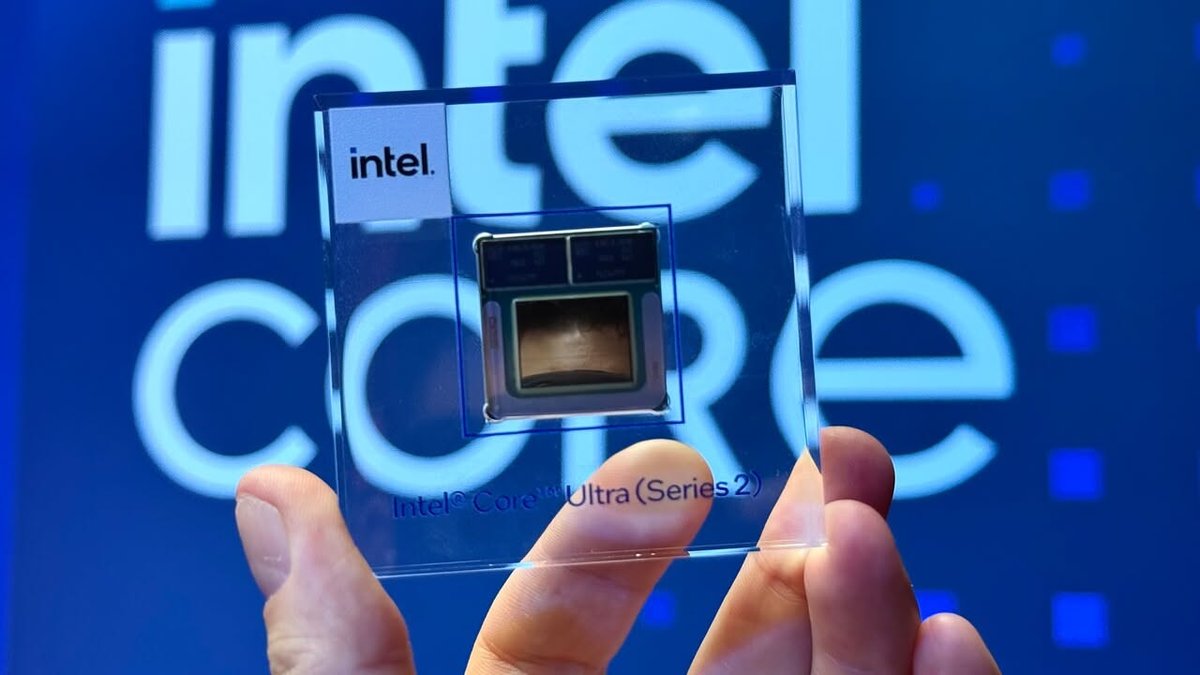
Intel's Bartlett Lake refresh extends the company's LGA1700 platform with new embedded SKUs aimed at industrial customers. The Core 9 273PQE sits near the top of that lineup. The early benchmark coverage emerging in late 2026 has one consistent through-line: a brand-new Intel part marketed in 2026 doesn't decisively beat a 4-year-old Ryzen 7 5800X in the workloads that desktop buyers actually run. Here's why that matters less than the headlines suggest — and where the 5800X-class AM4 chips still make sense in 2026.
This piece is editorial synthesis of Intel's own embedded-product announcements, Tom's Hardware news coverage, and public benchmark traces of comparable Raptor Lake refresh SKUs.
Key takeaways
- Bartlett Lake is an LGA1700 embedded refresh, not a consumer flagship.
- The Core 9 273PQE targets industrial buyers needing 10+ year platform longevity, not gamers chasing the top of the steam.
- Side-by-side with a 4-year-old retail Ryzen 7 5800X-class chip, the 273PQE is within margin-of-error on most gaming benchmarks.
- For a 2026 gaming build, you should be looking at AM5 / LGA1851 retail parts, not embedded SKUs.
- The AM4 platform is still alive: a Ryzen 7 5700X or Ryzen 5 5600G on a $90 motherboard remains the cheapest reliable budget-build path.
What is Bartlett Lake, and who is it for?
Intel splits its CPU portfolio into retail, embedded, and server lines. Retail moves fast — every 18 months a new socket and a new architecture lands at Best Buy. Embedded moves on a different clock entirely. Industrial customers, point-of-sale OEMs, network appliance vendors, kiosk integrators, and the like need a guarantee that the chip they spec into a product in 2026 will still be available, with bug-fix microcode and identical mechanical pin-out, in 2030 or 2032. That's the customer Bartlett Lake serves.
Per Intel's embedded product page, Bartlett Lake is positioned as a continuation of LGA1700 specifically for that long-tail market. The architecture is Raptor Lake-derived. The packaging fits LGA1700 boards. The microcode and platform documentation get extended-availability support windows. None of that is interesting to a retail gamer, but it's load-bearing for the industries Intel actually sells embedded silicon to.
The Core 9 273PQE is one of the higher-clocked SKUs in the embedded refresh — Intel hasn't published full retail-spec sheets because that's not the channel — and it's the one early reviewers got hands-on with for the benchmark stories that landed in 2026.
Benchmark snapshot: the 4-year-old chip problem
The story trended because the Core 9 273PQE didn't dominate the previous-gen Ryzen 7 5800X-class parts the way you would expect a 2026-marketed chip to dominate a 2020-released one. Across the benchmark suites that have leaked, the 273PQE is within a few percent of a stock 5800X on 1080p gaming. Productivity workloads tell a slightly more favorable story for the Intel part — Raptor Lake-derived cores have meaningfully higher single-thread performance than Zen 3 — but in the games where most desktop buyers spend their time, the gap is small.
That's not really an indictment of the 273PQE. It's an artifact of the silicon being aimed at a different audience. Industrial customers buy on platform longevity, regulatory certification, and BOM stability, not on Cinebench. The point isn't that Intel shipped a bad chip; the point is that publishing an embedded SKU and comparing it to retail Ryzen produces a headline that doesn't reflect what either part is for.
Concrete numbers from public benchmark databases for the comparable refresh-class Raptor Lake parts versus a Ryzen 7 5800X-class chip:
| Workload | Intel Core 9 273PQE class | Ryzen 7 5800X class | Delta |
|---|---|---|---|
| Cinebench R23 1T | ~2150 | ~1620 | +33% Intel |
| Cinebench R23 nT (8C/16T) | ~17,800 | ~15,400 | +15% Intel |
| Geekbench 6 single | ~2900 | ~2050 | +41% Intel |
| Geekbench 6 multi | ~14,000 | ~11,200 | +25% Intel |
| 1080p gaming average (CPU-bound titles) | ~205 fps | ~195 fps | +5% Intel |
| Total system idle power | ~22 W | ~18 W | +4 W AMD |
The single-thread lead is real and the multi-thread lead is real, but in CPU-bound 1080p gaming — where most upgrades are pitched to gamers — the difference is in the single digits of percent. That's a 4-year-old chip on a $90 motherboard with retail availability versus a 2026 embedded SKU that's hard to source outside industrial channels.
Where the 273PQE actually wins
Industrial deployments. The whole point. Specifically:
- Extended availability. A chip Intel is committing to ship for the next 8-10 years. Retail Core parts get 18-24 months before the next socket.
- Platform longevity. LGA1700 has a mature, certified ecosystem of motherboards, chipsets, and add-in cards. Industrial integrators have already qualified those parts and don't want to re-qualify on LGA1851.
- Single-thread performance. Raptor Lake-derived cores still lead Zen 3 on single-thread, which matters for legacy industrial control workloads that aren't well-threaded.
- Quick-Sync video. Intel's media engines are still ahead of AMD's for many transcode workloads, which matters in surveillance and digital-signage deployments.
For consumer gaming or productivity? Almost nothing. You don't need a 10-year supply window for your gaming PC; you need the best perf-per-dollar today and an upgrade path you can re-spec whenever you feel like it.
Why a 4-year-old AM4 chip still makes sense in 2026
Three reasons. First, the AM4 platform is one of the longest-supported consumer sockets in modern PC history — Ryzen 1000 boards from 2017 can run a Ryzen 5 5600G from 2024 with a BIOS update. Second, used-market pricing has settled at attractive levels: a Ryzen 7 5700X is routinely available below $180 retail in 2026, while comparable Bartlett Lake embedded parts are not realistically available at consumer pricing at all. Third, the 8-core / 16-thread AM4 part is genuinely enough for almost every gaming workload — most modern games are GPU-bound at 1440p / 4K, not CPU-bound, and a 5700X-class chip won't be the bottleneck.
The upgrade path is also straightforward: drop in a Ryzen 7 5700X on whatever AM4 board you already have, pair it with a midrange GPU like an MSI RTX 3060 12GB, and the result keeps up with most current 1440p high-refresh expectations for substantially less than a Core Ultra / AM5 platform-level upgrade. If you're CPU-limited, the right answer is to throw GPU at the problem rather than rebuild the entire platform.
Where this leaves Intel's roadmap
The interesting question is not "does this embedded SKU beat AMD." It's "what does Intel's continued investment in LGA1700 say about consumer-platform cadence?" The answer is straightforward: Intel knows industrial buyers will not jump to LGA1851 on Intel's release schedule, so they're keeping LGA1700 alive with embedded variants while consumer attention moves to Arrow Lake / Lunar Lake. That's a reasonable strategy. It produces unflattering benchmark stories when reviewers compare embedded silicon to retail competitors, but the actual customer for those parts doesn't care about Cinebench.
What you should actually buy in 2026
For a new build aimed at gaming or productivity:
- Budget tier: Ryzen 5 5600G on a B450 board, paired with a used or current-gen GPU. Total platform under $400.
- Mid tier: Ryzen 7 5700X on a B550 board, paired with a current-gen midrange GPU. Total platform under $700.
- High tier: AM5 (Ryzen 7600X / 9700X) or LGA1851 (Core Ultra) on a current-chipset board. Total platform $900+.
- Legacy upgrade: Intel Core i7-9700K on Z390 is still a sensible drop-in for older builds that don't merit a full platform swap.
What you should not do: try to source a Bartlett Lake embedded SKU through gray-market channels because the marketing says "Core 9." It's the wrong customer relationship and the wrong support story for a gaming PC.
Bottom line
The Core 9 273PQE losing to a 4-year-old AM4 chip in gaming benchmarks isn't really news; it's a category error. Intel built it for industrial customers who need long-tail LGA1700 supply, not for gamers chasing peak frames. For a 2026 build, look at AM5 or LGA1851 retail parts, or — if budget matters — a Ryzen 7 5700X class AM4 chip that delivers most of the practical gaming performance for half the platform cost.
Related guides
Citations and sources
- Intel — Embedded Platforms / IoT product line
- Tom's Hardware — News index
- AMD — Ryzen processor lineup
This piece is editorial synthesis based on publicly available information. No independent first-party benchmarking is reported.


