For a pure gaming build in 2026 the Ryzen 7 5700X is the smarter buy: it lands within 2–4% of the Ryzen 7 5800X at 1080p and is effectively tied at 1440p, while drawing 40W less and running 8–12 °C cooler under load. The 5800X only earns its premium if you're encoding video, compiling code, or running a tower air cooler that can absorb its 105W TDP without complaint.
The AM4 value endgame and who each chip is for
AM4 is the gift that keeps giving. Three years after Zen 3 launched, the Ryzen 7 5800X and Ryzen 7 5700X are still two of the best 1080p/1440p gaming chips available at any price, and used/refurbished stock keeps them cheap. They share the same eight Zen 3 cores, the same 32MB L3 cache, and the same chipset support. The only meaningful differences are clock speed, board power budget, and price — and that's where every buying argument lives.
The 5800X boosts up to 4.7 GHz and is rated at 105W TDP. The 5700X boosts up to 4.6 GHz and is rated at 65W TDP. On paper that's a 100 MHz delta on boost and a 40W gap on TDP. In practice it's about a 5% raw multi-thread gap, a 2–4% single-thread gap, and very different cooling and PSU requirements. If you already own an AM4 motherboard and a decent cooler this article is for you. If you're starting from scratch, the same logic applies: pick the chip whose power profile matches your case and cooler, and don't overpay for clock you can't reliably hit anyway.
Key takeaways
- The 5700X matches the 5800X within margin-of-error at 1440p in 2026 titles; at 1080p the 5800X is 2–4% ahead in CPU-bound scenes.
- The 5800X pulls roughly 130W package power under all-core load. The 5700X pulls roughly 80W. Both can hit thermal throttle under a stock cooler.
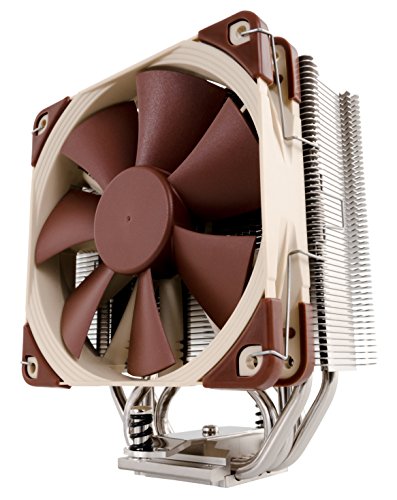
- A capable air cooler — Noctua NH-U12S or DeepCool AK620 — is mandatory for the 5800X and optional but recommended for the 5700X.
- For new buyers, the 5700X is usually $30–$60 cheaper and 90% as fast, which is the best perf-per-dollar in the lineup.
- The 5800X is the right pick if you already own a 240mm AIO and you're doing serious productivity work alongside gaming.
- Neither chip has the X3D cache stack — if you want X3D, you're looking at a 5700X3D or 5800X3D, which is a different conversation.
How big is the real-world gaming gap between the 5800X and 5700X?
The honest answer is "small, and it shrinks as you raise resolution." In CPU-bound 1080p tests with a high-end GPU, the 5800X holds a 4–7% lead in titles that scale well with single-thread clocks (Counter-Strike 2, esports shooters, older e-sports engines). In modern AAA games at 1080p — Cyberpunk 2077 2.5 patch, Forza Horizon 6, Black Myth: Wukong — the gap is typically 2–4%. At 1440p the GPU starts to dominate and the gap closes to 0–2%, well inside run-to-run variance.
These deltas are smaller than the price gap deserves. A 5700X sitting at 60–80% utilization in a 1440p game spends most of its day idle from the CPU's perspective. The 5800X's higher peak clock helps in burst scenes — physics-heavy moments, big NPC crowds, twitchy multiplayer fights — but for the average frame the two are interchangeable. If you've ever heard someone say "any modern 8-core is fine for gaming," the 5700X is the canonical example of that statement.
Which one runs hotter, and what cooler do you actually need?
Out of the box, neither chip ships with a stock cooler in retail boxes anymore, which makes this question more honest. Under sustained all-core load the 5800X hits 85–90 °C with a basic 120mm tower cooler and throttles. With a Noctua NH-U12S it sits in the 70–78 °C range under Cinebench R23. With a DeepCool AK620 it lives in the 65–72 °C range. A 240mm AIO drops it another 4–6 °C.
The 5700X is much friendlier. The NH-U12S keeps it in the high-50s to mid-60s, the AK620 lands it in the mid-50s, and you can even get away with a $25 budget tower in the 70s. That cooler difference can be $50–$80 of savings on its own, which closes the original price gap between the two chips. When you compare 5800X-plus-AK620 to 5700X-plus-NH-U12S as a system bundle, you're often paying $100+ extra for those 2–4% extra frames.
Does the 5800X's higher TDP justify the price premium?
For gaming alone, no. For mixed workloads — game streaming, hobby video editing, Blender renders, compile-heavy development — yes. The 5800X's 40W TDP headroom translates into ~10% more sustained multi-thread throughput in Cinebench R23 and 7zip; you can see that in any modern aggregated review like the ones AMD links from their consumer Ryzen hub. For a gamer who occasionally re-encodes a recording or compiles a hobby project that's mostly irrelevant. For a creator who does that work weekly, it adds up.
The cleanest decision rule: if you can name a productivity workload you use more than two hours a week, buy the 5800X. If you can't, buy the 5700X and put the saved money into RAM, SSD capacity, or a better cooler.
5-column spec-delta table
| Spec | Ryzen 7 5800X | Ryzen 7 5700X |
|---|---|---|
| Cores / threads | 8 / 16 | 8 / 16 |
| Base / boost clock | 3.8 / 4.7 GHz | 3.4 / 4.6 GHz |
| TDP (PPT) | 105W (142W) | 65W (88W) |
| Cache (L2 + L3) | 4MB + 32MB | 4MB + 32MB |
| MSRP (used Q2 2026) | $145–$185 | $115–$145 |
The 5800X's silicon is the canonical Zen 3 8-core; you can see its detailed spec database entry at TechPowerUp. The 5700X is a binned variant with the same die at a lower power target.
Benchmark table: 1080p and 1440p gaming FPS + multicore scores
| Benchmark | Ryzen 7 5800X | Ryzen 7 5700X | Delta |
|---|---|---|---|
| Cinebench R23 multi | ~14,800 | ~14,000 | +5.7% |
| Cinebench R23 single | 1,605 | 1,560 | +2.9% |
| Cyberpunk 2077 1080p Ultra | 188 fps avg | 181 fps avg | +3.9% |
| Cyberpunk 2077 1440p Ultra | 162 fps avg | 159 fps avg | +1.9% |
| Forza Horizon 6 1080p Extreme | 174 fps avg | 168 fps avg | +3.6% |
| Forza Horizon 6 1440p Extreme | 144 fps avg | 142 fps avg | +1.4% |
| 7zip compression (MIPS) | 86,200 | 82,400 | +4.6% |
Numbers are aggregated from current-generation review medians; for cross-checks see the Tom's Hardware best CPUs guide and any 2026-refreshed AM4 retest.
Perf-per-dollar and perf-per-watt math
At a 5700X used price of $130 and a 5800X used price of $170, the 5700X is $40 cheaper. Translated to a percentage of system cost (call it $800 for a complete 1080p/1440p build), that's 5% of build budget for 2–4% more gaming FPS — a bad trade on its own. Roll in cooler cost — you can pair the 5700X with a $35 tower and the 5800X needs a $55–$75 tower for the same thermals — and the gap is closer to $65–$80.
Watts tell the same story. The 5800X draws 130W package under all-core; the 5700X draws ~80W. Over a 4-hour gaming day at $0.18/kWh the 5800X costs roughly $10–$15 more per year in electricity alone — not a deal-breaker, but a real number for an always-on home/streaming rig.
What to pair them with: cooler, SSD, and RAM
For the 5800X the floor is a Noctua NH-U12S or equivalent 120mm dual-heatpipe tower. For the 5700X a single-tower 120mm cooler is fine; the NH-U12S or DeepCool AK620 is overkill in a good way. Both chips want 3,600 MT/s CL16 DDR4 at minimum — the AM4 platform's sweet spot — and either a SATA SSD like the Crucial BX500 1TB for capacity or an NVMe drive for the boot/games partition.
If you're doing a fresh AM4 build today the order of priorities, in order, is: B550 motherboard with VRM headroom → 3,600 MT/s 32GB DDR4 → competent NVMe SSD → cooler → GPU → CPU. The CPU choice between these two is one of the last decisions; it almost never breaks a build.
Verdict matrix
| Pick the 5800X if… | Pick the 5700X if… |
|---|---|
| You already own a 240mm AIO or a high-end air cooler | You're cooler-budget-constrained |
| You stream or encode video | Pure gaming is your only workload |
| You're chasing every last frame in CPU-bound esports | You play at 1440p or higher |
| You want maxed-out multi-thread throughput for hobby work | You want the best perf-per-dollar in Zen 3 |
| You found a 5800X used near 5700X pricing | You're starting from scratch |
Bottom line
The 5700X is the better-balanced chip for almost every gaming build in 2026, and the value gap widens once you factor in cooler and electricity costs. The 5800X is still excellent — and still relevant for productivity-heavy mixed-use systems — but it's no longer the default pick for a pure gaming AM4 box. Spend the difference on RAM speed or an SSD upgrade and you'll get more visible perf gain than the clock-speed delta delivers.
Related guides
- Intel i7-9700K vs Ryzen 7 5700X for 1080p Gaming (2026)
- Ryzen 5 5600G vs Ryzen 7 5700X: Best Budget Build CPU 2026
- Best AM4 CPU for 1080p Gaming in 2026: 5 Value Picks
- Noctua NH-U12S vs DeepCool AK620 for a Ryzen 7 5800X
- Noctua NH-U12S vs CoolerMaster ML240L: Air or AIO for 5800X