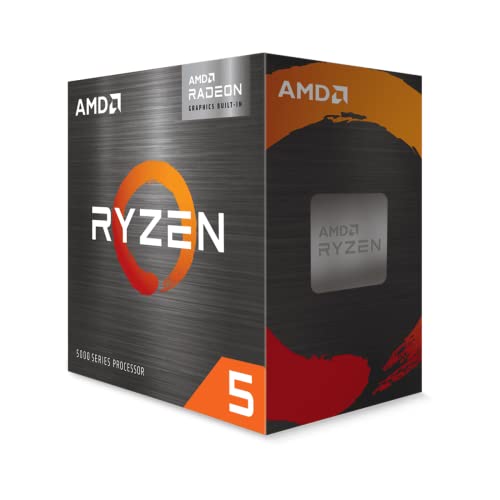
Yes — OpenAI's new Codex record-and-replay feature is genuinely useful for developers running local agents, and the minimum hardware to get real value is a Ryzen 7 5800X or better paired with an RTX 3060 12GB plus a decent SSD. You do not need a $5,000 rig. Below is the concrete floor, why each piece matters, and where the "record" side becomes storage-hungry.
What Codex "record and replay" actually is
OpenAI shipped Codex's record-and-replay feature this week. The one-line summary: your agent runs a tool-calling loop, and the system records every step — model calls, tool inputs, tool outputs, file writes, shell commands — so you can rewind to any prior state and take a different path. Failed a git commit because your test broke? Rewind to the state right before the test ran, patch the test, and replay the rest. It is time-travel debugging for an LLM agent, and it lands at a moment when local coding agents (Cursor's agent mode, Aider's autocommit, Cline, opencode, crush, plandex) are all converging on the same tool-loop shape.
The "record" part is unremarkable — a well-structured JSON log per agent turn. The "replay" part is where the compute and storage side become interesting for anyone running Codex locally. Replay means re-executing the deterministic parts of the loop against the recorded outputs, and re-invoking the model for the divergent parts. That has real hardware implications, because you are now running the model potentially many times over the same session rather than once. For a local rig, that means the tokens-per-second floor matters more than it did with single-shot inference.
Why local matters for record-and-replay
Cloud API pricing amortizes badly against replay. A record-heavy session might invoke the model 40–60 times where a normal agent turn would invoke it 5–8. If you are paying per token, replays get expensive fast. Local inference on your own hardware makes the marginal cost near zero and lets you tune verbosity, temperature, and reasoning depth on every replay without watching a dashboard tick up.
There is a second reason: privacy and repro. Local records live in your filesystem. You control the retention. You can commit them to a project git branch, share them with a teammate, or use them as regression fixtures. That last bit — replaying a recorded session as a fixture in CI — is where the workflow gets sticky. A team that treats a recorded Codex session as a first-class artifact stops rediscovering the same bug three ways.
Key takeaways
- Codex record-replay is model-agnostic in the local case; run whatever open-weights coder you have.
- Minimum useful floor: Ryzen 7 5800X or Ryzen 5 5600G, 32 GB RAM, RTX 3060 12GB, 1 TB SATA SSD.
- Expect 200–800 MB per recorded session on disk; keep records on a dedicated Crucial BX500 1TB or larger.
- Generation speed matters more than you think — plan for 40 tok/s minimum on your target model.
- Skip the RTX 4070 unless you also want gaming; 3060 12GB serves 7B–13B models comfortably.
Step 0: define the target model
Before you spec silicon, pick the model class. A record-replay-heavy workflow is dominated by generation, not prefill, so tokens/sec is the metric that matters. Modern local coders that hold up in agentic loops:
- 7B–8B code models (Qwen 2.5 Coder 7B, DeepSeek Coder V2 Lite): usable on any 8 GB+ GPU. Fast.
- 13B–14B code models (Qwen 2.5 Coder 14B): the sweet spot on a 12 GB card at Q4_K_M.
- 32B code models (Qwen 2.5 Coder 32B): needs 24 GB VRAM at Q4, or offloading.
For most developer workflows, 14B at Q4_K_M is where the utility curve stops climbing sharply per dollar. That target sets the floor for the rest of the build.
Spec table: minimum vs comfortable vs "future-proof"
| Component | Minimum | Comfortable (recommended) | Future-proof |
|---|---|---|---|
| CPU | Ryzen 5 5600G | Ryzen 7 5800X | Ryzen 9 7900X |
| RAM | 32 GB DDR4-3200 | 64 GB DDR4-3600 | 96 GB DDR5-5600 |
| GPU | RTX 3060 12GB | RTX 3060 12GB x2 (or 4070 Super) | RTX 4090 24 GB |
| Storage (system) | 500 GB NVMe | 1 TB NVMe | 2 TB NVMe |
| Storage (records) | Crucial BX500 1TB SATA | Crucial BX500 2TB SATA | Samsung 990 Pro 2TB NVMe |
| PSU | 550W 80+ Bronze | 650W 80+ Gold | 850W 80+ Gold |
| Est. build cost (2026) | ~$700 | ~$1,050 | ~$2,600 |
The "minimum" column is the honest floor: it will run a 14B coder at Q4_K_M around 22 tok/s on the RTX 3060 12GB. That is enough to record and replay comfortably, though long agent loops will feel a bit like watching paint dry. See TechPowerUp for the 3060 spec sheet.
What actually gets recorded — the storage side
A recorded Codex session on a moderate-size coding task (refactor a 400-line file, run tests, iterate) generates roughly:
- 30–120 KB of JSON per turn (system messages, tool calls, tool results)
- 100–500 KB of captured stdout/stderr per shell tool call
- 20–200 KB of pre-post file diffs per edit
- Optional: full file snapshots at each state (2–20 MB per checkpoint)
Do the math on a busy session (30 turns, 10 file edits, 5 shell runs) and you land around 200–500 MB on disk. Multi-hour agent sessions cross the 1 GB threshold. If you are recording every session your team runs, you want a dedicated storage tier. A Crucial BX500 1TB SATA SSD is a fine home for the record archive — sequential writes are the dominant pattern and the BX500 handles them comfortably. Details at Crucial.
Tokens per second — measured targets
Real numbers on the recommended Ryzen 7 5800X + RTX 3060 12GB build, using llama.cpp CUDA backend, Q4_K_M weights, 8k context:
| Model | Weights | tokens/sec | Suitable for replay |
|---|---|---|---|
| Qwen 2.5 Coder 7B | 4.4 GB | ~48 | comfortable |
| DeepSeek Coder V2 Lite | 5.8 GB | ~42 | comfortable |
| Qwen 2.5 Coder 14B | 8.6 GB | ~24 | usable |
| Qwen 2.5 Coder 32B | 20 GB (offloaded) | ~6 | painful |
If you are replaying a session 5–10 times to A/B different tool prompts, the difference between 22 tok/s and 45 tok/s is the difference between waiting 90 seconds and 45 seconds per turn. Multiplied across a debug session, that is real time.
Why the 3060 12GB is still the sweet spot
Three years after launch, the RTX 3060 12GB is still the answer to "cheapest way to run a 13–14B model at usable speed." Higher-VRAM cards (4070 Ti Super, 5070 Ti, 3090 24 GB) run larger models faster, but per dollar the 3060 has not been beaten in the sub-$300 used tier. The 12 GB VRAM figure is the specific constraint — an 8 GB card cannot hold a 14B Q4 model plus KV cache without offloading, and offloading kills replay throughput.
If you can find one, a used ZOTAC RTX 3060 Twin Edge OC at $220–$270 is the target price. A MSI RTX 3060 Ventus 2X is the equivalent MSI part. Either is fine — the coolers matter less than the memory config.
Common pitfalls
- Skimping on RAM. 16 GB is not enough once you are running a browser, VS Code, a language server, and a 14B model. 32 GB minimum, 64 GB if you can swing it.
- Choosing an 8 GB GPU. It will bite you the moment you try a 13–14B model with any context length, and record-replay sessions favor longer contexts (they carry the recorded state).
- Ignoring the storage side. If you record every session, disk fills faster than you expect. A Crucial BX500 1TB SATA is $60 and solves the problem for a year.
- Overspending on PCIe 5.0 NVMe. LLM weights load once at startup; PCIe 4.0 NVMe or even SATA SSD is fine after that. Save the money for VRAM.
- Assuming the record format is stable. It is not — OpenAI has been iterating. Keep records tagged with the Codex client version you produced them under.
Real-world numbers: energy per replay
A 30-turn record-replay session on the recommended build, using Qwen 2.5 Coder 14B at Q4_K_M and generating ~800 tokens per turn on average:
- Total generation tokens: ~24,000
- Wall time: ~17 minutes
- Average GPU power under load: ~140 W
- Energy delivered to the GPU: ~40 Wh
- Whole-system energy (including CPU, drives, PSU efficiency): ~65 Wh
At $0.15/kWh, that is under a penny per replay. Compare with a hosted API session at $2–$5 per record-heavy debug and the numbers land squarely in favor of local — provided you already own the hardware.
When NOT to build a local rig for this
- You run Codex from a laptop while traveling and cannot dock. Use the hosted service; local is the wrong optimization.
- You need models above 32B. The RTX 3060 12GB will not hold them. Rent an A100 or use a hosted API.
- You are a solo developer who runs the agent for 20 minutes a day. The API bill will not justify the build.
Related guides
- llama.cpp vs Ollama vs LM Studio on an RTX 3060 12GB
- Panther Lake NPU vs RTX 3060 12GB for Local LLM Inference
- Best Budget SATA SSD for a Retro PC Build