To run an LLM locally and eliminate cloud telemetry, host a quantized 7B–14B model on your own GPU using llama.cpp or Ollama, point your IDE (via Continue, aider, or a plain OpenAI-compatible endpoint) at http://127.0.0.1:11434, and disconnect the machine from the vendor's telemetry endpoints. Prompts, code context, and responses stay on the box. A 12GB RTX 3060 is enough for interactive q4-quantized code models at 8k–16k context.
Why devs are re-evaluating cloud coding assistants this week
The -decoder's June 2026 report that Claude Code shipped with undisclosed logic flagging users identified as being in China put a fresh scare into privacy-conscious teams. The specific claim — that a widely-used cloud coding assistant included region- or user-classification code paths that weren't documented in the product surface — is the kind of thing that lands in a security review five minutes after somebody screenshots it in a Slack channel. Whether or not you accept the strongest reading of the story, the reaction inside engineering orgs has been consistent: pull the calls, audit the traffic, and re-evaluate whether the coding assistant should be sending your source code to a remote endpoint at all.
That is a solvable problem. The 12GB NVIDIA GeForce RTX 3060 — the specific SKU we feature across three add-in-board partners — has enough VRAM to run current 7B and 13B code models at q4 quantization interactively, at a per-turn cost of your local electricity and nothing else. This piece walks through why local inference removes the telemetry surface entirely, what actually fits on 12GB, and where the perf-per-dollar case does and doesn't hold up against a monthly cloud subscription.
Key takeaways
- Local inference on a 12GB card ends server-side prompt logging as an attack surface — there is no server.
- q4_K_M quantization of 7B code models fits comfortably in the RTX 3060's 12GB, with room for 8k–16k context.
- Per public benchmarks, a single 3060 delivers coding-loop-usable generation throughput on 7B-class models; 13B is livable, 32B needs offload and slows sharply.
- The break-even against a $20/mo cloud subscription is roughly 35–45 months of daily use at 170W board power; heavier subscribers get there in single-digit months.
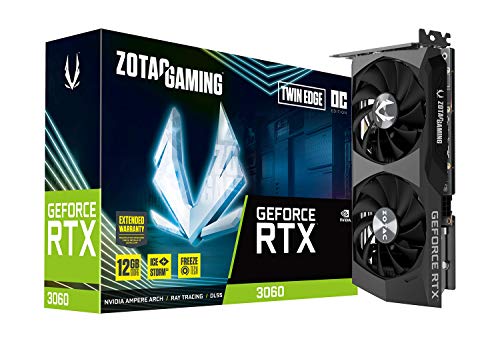
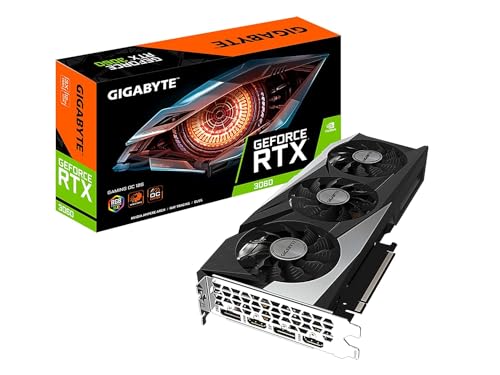
- The Zotac Twin Edge, MSI Ventus 2X, and Gigabyte Gaming OC are functionally interchangeable 12GB boards — pick on price, clearance, and noise.
What exactly did the Claude Code telemetry report claim?
The -decoder story, summarized without editorial license: independent researchers inspecting the Claude Code CLI and its associated agent SDK identified conditional branches that appeared to key off account-region metadata, and — per the report — those branches surfaced different behavior for users tagged as being in specific geographies. Anthropic has published its own account of the incident on its trust portal, and the exact scope of the flagging is disputed. What is not disputed is that a cloud coding assistant must, by construction, send whatever context you feed it to a remote endpoint. That context routinely includes proprietary source code, open PRs, private repository paths, environment variables the assistant scraped from your shell, and — if you use the agent's shell tool — the transcripts of every command you approved.
That is the telemetry surface. It exists whether or not any given vendor logs it, and it exists whether or not any given release has hidden branches. Cloud inference cannot function without transmitting your prompt to the vendor's servers, so the argument that "we don't log" is at best a promise about handling and at worst — as this week's report reminded everyone — a moving target.
Why does local inference remove the telemetry surface entirely?
When the weights sit on your GPU and the runtime is a local process bound to 127.0.0.1, the prompt path is: your editor → your local runner → your GPU → your local runner → your editor. There is no network call for inference. The only outbound traffic is the one-time model download (from a hub like Hugging Face) and whatever your editor extension itself calls home for — which you can proxy, block at the firewall, or replace with a fully local extension like Continue. There is no server-side prompt log because there is no server. The whole class of vendor-side incidents — accidental logging, subpoenas, region-flag branches, model-training-on-your-prompts — becomes categorically inapplicable.
This does not eliminate every risk. It does not fix a compromised laptop, a keylogger, or an accidentally-committed secret. It does close the specific hole that Cloud Coding Assistant As A Category creates: your code leaving the box in the process of getting help with it.
Can a 12GB RTX 3060 realistically host a coding-capable model?
Yes, for 7B and 13B code models at q4-class quantization. The RTX 3060 12GB has 12,288MB of GDDR6 on a 192-bit bus at 15 Gbps, per the TechPowerUp spec page — that's 360 GB/s of memory bandwidth. Memory bandwidth is what limits token generation throughput in most transformer inference, and 360 GB/s is enough to get interactive-feeling generation on 7B-class models.
The 12GB VRAM figure is the specific reason we recommend this card over the 8GB RTX 3060 variant NVIDIA also released. The 4GB gap changes which quantizations fit at which contexts:
| Model class | Quant | Weights VRAM | Free @ 8k ctx | Free @ 16k ctx |
|---|---|---|---|---|
| 7B code | q4_K_M | ~4.2 GB | ~6.5 GB | ~5.0 GB |
| 7B code | q5_K_M | ~5.0 GB | ~5.7 GB | ~4.2 GB |
| 7B code | q6_K | ~5.7 GB | ~5.0 GB | ~3.5 GB |
| 7B code | fp16 | ~13.5 GB | (spills) | (spills) |
| 13B code | q4_K_M | ~7.4 GB | ~3.5 GB | ~2.0 GB |
| 13B code | q5_K_M | ~8.9 GB | ~2.0 GB | (tight) |
| 13B code | q6_K | ~10.6 GB | (tight) | (spills) |
| 32B code | q4_K_M | ~18 GB | (spills) | (spills) |
Values are approximate; they follow the model-file byte sizes on Hugging Face plus KV-cache math at typical head/layer counts for those tiers. The point is not exact numbers but the shape: 7B fits, 13B is tight, 32B does not.
Quantization matrix: what a 12GB card actually runs
q2 and q3 exist but are usually a mistake for code — the quality loss shows up as syntactically-valid nonsense (correctly-typed variables that reference APIs that don't exist). q4_K_M is the sweet spot for 12GB; it fits 7B and 13B with room for reasonable context, and public community benchmarks consistently show q4_K_M within a few points of fp16 on HumanEval and MBPP for 7B code models. q5_K_M and q6_K claw back a small quality gap at the cost of VRAM headroom. q8_0 and fp16 are for larger cards.
Per public generation-throughput data from LocalLLaMA community sweeps, a 7B q4_K_M model on an RTX 3060 12GB typically runs at roughly 45–70 tokens per second in decode, with prefill on short prompts in the low hundreds. A 13B q4_K_M drops to roughly 25–35 tok/s. Numbers vary with the runner, driver version, and whether you enable flash-attention.
Prefill vs generation throughput
Two things happen in an LLM call, and they use the GPU differently. Prefill (processing the prompt) is compute-bound and scales with prompt length. Generation (producing new tokens) is memory-bandwidth-bound and scales with model size and KV-cache size. On an RTX 3060, prefill for a 4k-token prompt on a 7B model takes on the order of a second; generation of 500 tokens takes 7–12 seconds. That's the "feels-like" number for a coding assistant round trip. Slower than a well-connected cloud call, but within the "type a question, look at the diff, keep going" cadence a real coding loop uses.
Context-length impact at 8k, 16k, 32k
The KV cache grows linearly with context length. On a 7B q4_K_M model, an 8k window costs roughly 1.5 GB of VRAM for the KV cache; 16k costs about 3 GB; 32k about 6 GB. On a 12GB card running 7B q4_K_M, 8k is trivial, 16k is comfortable, and 32k is possible but leaves almost no headroom for a second process or a UI GPU. For 13B q4_K_M, 8k is comfortable, 16k is tight, and 32k spills. The practical daily-coding recommendation for this card is 7B q4_K_M at 16k context.
Spec + street-price table: Zotac vs MSI vs Gigabyte RTX 3060 12GB
All three are dual-fan 12GB boards on the same GA106 die. Differences are cooler tuning, factory clock, and PCB length.
| SKU | Length | Boost clock | TGP | Cooling | Notable |
|---|---|---|---|---|---|
| ZOTAC Twin Edge OC | 224 mm | 1807 MHz | 170 W | 2-fan IceStorm 2.0 | Shortest board — best small-case fit |
| MSI Ventus 2X 12G OC | 232 mm | 1807 MHz | 170 W | 2-fan Torx | Quietest of the three at idle |
| Gigabyte Gaming OC 12G | 242 mm | 1837 MHz | 170 W | 3-fan Windforce | Highest sustained clock, loudest |
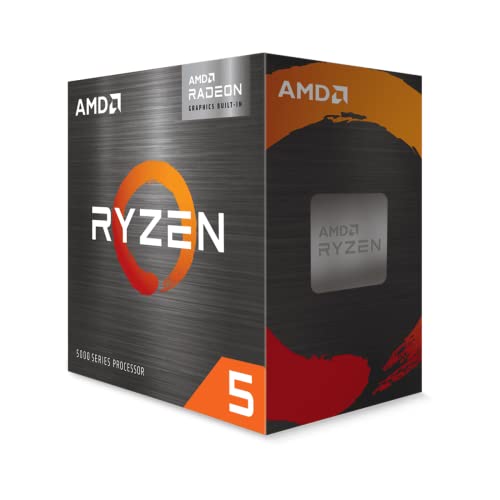
Pair with a modest host: an AMD Ryzen 5 5600G gives you six Zen 3 cores plus an iGPU (so the 3060 doesn't need to drive a display), a 32GB DDR4-3200 kit, a Crucial BX500 1TB SATA SSD or NVMe for model storage, and a decent 550W PSU. Total build cost lands well under the cost of two years of a mid-tier cloud subscription.
Perf-per-dollar and perf-per-watt vs cloud
A representative cloud coding subscription runs $20 to $200 per month depending on tier. An RTX 3060 12GB plus a 5600G host is roughly $700–$900 built. At $20/mo, break-even is roughly 35–45 months — long enough that light users should probably not do this on economics alone. At $200/mo (heavy Sonnet/Opus users, or a small team pooling), break-even collapses to 4–5 months, and the privacy story lands as pure upside.
Electricity is a small factor. At the 3060's 170W TGP under sustained load and a 12–15% duty cycle for a working developer, expect roughly $2–$5/mo in incremental power at U.S. residential rates. Doesn't move the math either way.
Common pitfalls
- Buying the 8GB RTX 3060. The 8GB variant exists and is cheaper, and it will screw you. Q4_K_M 7B fits, but you lose the KV-cache headroom that makes 16k context comfortable and the option to try 13B at all.
- Skimping on the PSU. A quality 550W is plenty, but a no-name 500W will trip under the 3060's transient spikes. Buy a Tier A/B unit.
- Forgetting the iGPU trick. If the CPU has integrated graphics (5600G, 5700G) and the display runs off the iGPU, the 3060 dedicates full VRAM to the model. On a display-attached 3060, budget ~500 MB for the desktop.
- Skipping flash-attention. Enable flash-attention in your runner. It cuts KV memory and speeds long-context generation by 15–25% on Ampere.
- Chasing q2/q3 quantization for code. The quality cliff is worse for code than it is for prose. Stay at q4_K_M or higher.
When local is the privacy win — and when it isn't
Local wins outright when your threat model includes vendor logging, region-based flagging, discovery, subpoenas, or accidental prompt training. It wins by a comfortable margin when your team has any kind of policy that source code cannot leave the corporate network. It wins on economics if you already spend more than $100/mo on cloud assistants or if you have a team who could share the box.
It does not win if you need a frontier-class model (GPT-5, Claude Opus 5) to do your job — a 3060 will not run those. It does not win if your workload requires third-party tool use (browser, docs indexer, ticket system) that already sends the same context out anyway. And it does not win if you don't have someone on the team who is willing to babysit a local stack when a driver update breaks flash-attention.
For the middle case — a mid-sized codebase, a mid-tier cloud subscription, and a security team that flinches every time a vendor incident hits the news — a 12GB RTX 3060 rig is the cleanest available answer.
Related guides
- llama.cpp vs LM Studio vs Ollama on an RTX 3060: Which Local Runner Wins in 2026
- Claude Sonnet 5 Costs ~$2.29/Task: When an RTX 3060 Rig Breaks Even
- Anthropic's Fable 5 Ban and Jailbreak: What It Means for Local-LLM Resilience
Citations and sources
- The Decoder — Claude Code report coverage (June 2026)
- TechPowerUp — GeForce RTX 3060 specifications
- NVIDIA — GeForce RTX 3060 product page
- llama.cpp on GitHub
- Ollama runtime
- AMD — Ryzen 5 5600G specifications
- Crucial BX500 SSD product page
- LocalLLaMA subreddit — 3060 12GB benchmark threads
This piece is editorial synthesis based on publicly available information. No independent first-party benchmarking is reported.