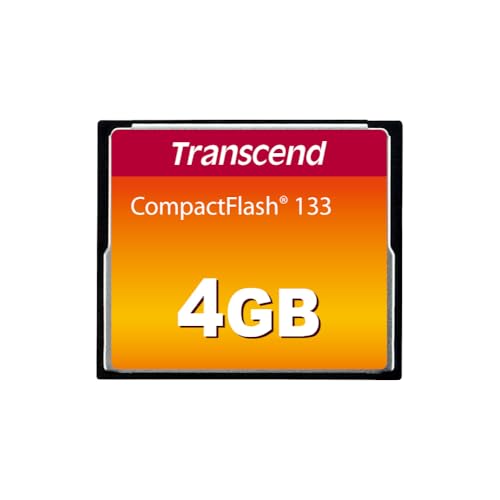
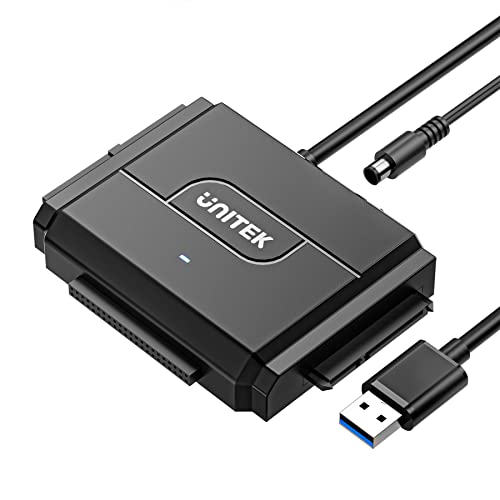
To boot Windows 98 from a CompactFlash card, you need a CF card that reports as a fixed disk, a CF-to-IDE adapter, and a modern PC with a SATA/IDE-to-USB adapter to image the card outside the retro machine. The Transcend CF133 CompactFlash Memory Card is the reference community pick because it presents itself as fixed storage, which Win98's Setup and boot loader require. Image the card on a modern PC using a Crucial BX500 1TB SATA SSD or SanDisk SSD Plus 480GB as your working disk, then transplant the CF card into the period-correct rig.
Why CF-as-boot is now the standard retro-PC upgrade
If you're keeping a Pentium II, K6-2, or early Pentium III era PC alive for period-correct gaming, DOS, or Win98 work, spinning hard drives are a liability. Original IDE hard drives from that era were expected to last 3-5 years. Every year past that, the odds of a bearing failure, head crash, or PCB electrolytic capacitor leak climb. The Vogons retro-community forums are full of threads about "my drive just started clicking" — because 25-plus years is a long time to keep any mechanical device alive.
CompactFlash is electrically IDE-compatible. A CF card in a passive CF-to-IDE adapter appears to the system BIOS as an IDE hard drive, with no drivers required. It runs silently, has no moving parts, is shock-immune, and — with the right card — lasts effectively forever for the light write duty a retro OS puts on it.
The catch is the right card part. Not every CF card presents itself as fixed storage. Cards optimized for cameras report as removable media. Windows 98 Setup will fail — or install, and then not boot — from a removable-media CF card. This is the single most-searched pitfall for the setup, which is why the Transcend CF133 has become a community-favorite for this specific job.
Key takeaways
- The Transcend CF133 is the widely-used community pick because it presents as a fixed disk.
- A cheap passive CF-to-IDE adapter puts the card on your retro rig's IDE bus — no drivers.
- Image the CF card on a modern PC using a Unitek SATA/IDE to USB 3.0 Adapter — dramatically faster and less error-prone than fighting a period BIOS.
- BIOS gotchas cluster around CHS geometry, cable-select/master jumpers, and boot order.
- Longevity is excellent for a retro OS; keep a backup image, not just a backup card.
What you'll need — checklist
- One Transcend CF133 CompactFlash card (any capacity sufficient for Win98 + your software — 2-8 GB is plenty)
- A passive CF-to-IDE adapter (40-pin for full-size IDE; 44-pin variant for laptop IDE)
- A Unitek SATA/IDE to USB 3.0 Adapter for imaging the card on a modern PC
- A Windows 98 install ISO or extracted install files
- Optional: a fast SATA SSD like the Crucial BX500 1TB or SanDisk SSD Plus 480GB on the modern PC as scratch space
- The retro PC with a supported IDE controller
Total parts cost is modest — well under what a replacement period IDE drive of comparable capacity would run.
Why the Transcend CF133 works where cheap CF cards fail
The Transcend CF133 is documented on manufacturer sites and by the retro community as reporting to the host in fixed-disk mode. Its MLC NAND, ECC, and 133x speed rating are secondary — the primary reason it earns the pick is IDE-fixed-disk behavior. Cheap camera-oriented CF cards frequently report as removable media, which breaks Win98 Setup and DOS FDISK.
Sustained write speed on the CF133 (~20-30 MB/s) is more than fast enough for a Pentium II or III IDE controller, which typically caps at 33 MB/s effective throughput anyway. The IDE bus is the bottleneck, not the card. Buy for compatibility, not headline speed rating.
For manufacturer detail, see Transcend's product page — the CF133 line is documented as fixed-disk-mode CF for embedded and industrial use, which is exactly what a retro Win98 boot drive is.
How to prep and image the card on a modern PC
The safest imaging workflow uses a modern PC as the imaging station. It's faster, has better tools, and avoids fighting a period BIOS for every write.
- Connect the Transcend CF133 to the CF-to-IDE adapter.
- Connect the CF-to-IDE adapter to the Unitek SATA/IDE-to-USB 3.0 Adapter.
- Plug the USB end into a modern PC.
- Use your preferred imaging tool (Rufus, dd, or a Win98 image tool) to write a prepared Win98 image to the CF card.
- Alternatively: partition and format the CF card as FAT16/FAT32 with the correct CHS geometry for your retro BIOS, boot the retro PC from a Win98 install disc/floppy, and run Setup directly against the CF card.
If option 4 fails at boot on the retro rig, fall back to option 5 — running Setup on the target hardware is slower but eliminates a whole class of "wrong host geometry" bugs.
Spec-delta table: CF vs SD-to-IDE vs SCSI2SD vs original HDD
| Option | Speed | Noise | Reliability | Cost | Notes |
|---|---|---|---|---|---|
| Transcend CF133 + adapter | Moderate (~20-30 MB/s) | Silent | Excellent | Low | The mainstream retro pick |
| SD-to-IDE adapter | Moderate | Silent | Good | Very low | Watch for fixed-disk-mode chipset |
| SCSI2SD (for SCSI systems) | Fast | Silent | Excellent | Higher | Only if your machine is SCSI |
| Original IDE HDD | Historical speeds | Loud (unless modern replacement) | Aging | Variable | Aging failure risk |
For most Win98-era IDE machines, the CF card is the right answer — pick SCSI2SD only if you have a SCSI-based machine (Mac IIci, some workstations).
BIOS + jumper gotchas: the "won't boot" checklist
Common failures and their causes:
BIOS doesn't detect the drive. Enter BIOS setup and force the geometry to the CF card's exact CHS numbers (cylinders/heads/sectors) instead of trusting auto-detect. Old BIOSes sometimes hallucinate on CF geometry.
BIOS sees it, but Win98 won't boot. Almost always the CF card isn't reporting as fixed-disk. Swap for the Transcend CF133 or verify your card's mode.
Boot fails with "invalid system disk". Boot partition isn't marked active. Use FDISK to set the partition active.
Cable-select confusion. If your CF-to-IDE adapter puts the card at the wrong device position, set the jumper explicitly to Master rather than Cable Select. Old cables and BIOSes often mishandle CS.
Adapter alignment. The CF-to-IDE adapter must be oriented correctly; pin 1 alignment matters. Verify against the adapter's silkscreen before power-on.
Setup halts on "no hard disk found". Check that the retro BIOS's LBA/CHS mode matches the CF card's reported capacity. Some old BIOSes limit CHS to specific capacity thresholds — a 4 GB or smaller partition avoids most of these.
The retro community forums at Vogons and archives on sites like retronn.de have specific writeups for the older BIOSes you're likely to encounter.
Does CF speed actually matter for Win98 game load times?
Somewhat. The CF card eliminates the seek latency of the original spinning drive, so level-load moments feel snappier and disk-thrashing pauses shorten. But the IDE bus on a Pentium II/III maxes out around 33 MB/s, and your original hard drive rarely ran that fast. The absolute upper bound on speed is the bus, not the card — which is why buying a headline 400x CF card offers no advantage over the more modest 133x rating on the Transcend CF133.
What you actually get is silence, reliability, and consistent access times. In-game hitches from a dying original HDD disappear. Load times improve modestly. Overall the machine feels better, not measurably faster on synthetic benchmarks.
Longevity: write-cycle reality for a retro OS drive
Flash memory has finite write cycles. For a retro OS drive that boots, loads games, and runs the same handful of applications, day-to-day writes are minimal. A quality CF card in this role lasts decades — the physics of NAND endurance says a card rated 100K cycles at a workload of ~1 GB written per day would exceed its endurance well after the vintage motherboard has died.
Practical hygiene:
- Disable pagefile if your RAM is generous enough for your workload
- Reduce disk-log verbosity
- Keep the image as your real backup; the CF card is a physical instance you can re-flash instantly
If a card ever fails, just re-flash a spare from your backup image and swap it in. Total downtime: minutes.
Bottom line: the period-correct-but-reliable boot setup
The right rig for a 2026 retro-Win98 build is: a period-correct motherboard, CPU, and RAM (the original character of the machine); a Transcend CF133 on a CF-to-IDE adapter as the boot drive (silent, reliable, no rotating parts); and a Unitek SATA/IDE to USB 3.0 Adapter on your bench for imaging and maintenance. Keep the imaging PC on a modern SATA SSD like the Crucial BX500 1TB or the cheaper SanDisk SSD Plus 480GB so backups, ISOs, and prepared images have somewhere fast to live.
That combination gives you the visual and audio character of the original hardware, none of the mechanical failure risk, and a maintenance workflow that takes minutes rather than hours.
Sources and citations
- Transcend — official CF card specifications and fixed-disk documentation
- Vogons — retro-computing community forum, canonical for period BIOS gotchas
- retronn.de — retro hardware and boot-setup writeups
This piece is editorial synthesis based on publicly available information. No independent first-party benchmarking is reported.