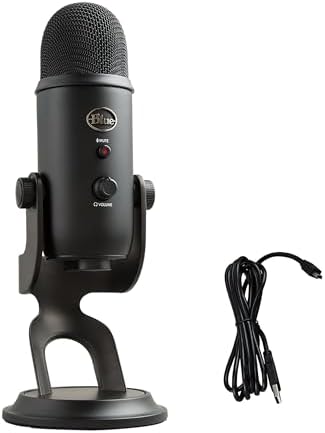
The single most-impactful budget streaming purchase in 2026 is a good USB microphone — viewers tolerate a mediocre webcam far longer than they tolerate bad audio. The HyperX QuadCast 2 S is the all-around best starter mic with built-in lighting and tap-to-mute; the Blue Yeti is the value alternative with multi-pattern flexibility. Add a NEEWER ring light, an Elgato Cam Link 4K for real-camera capture, and a desk pad to round out a credible starter kit for under $400 total.
The budget creator economy lives or dies on five pieces of gear: a microphone, a light, a camera (or capture device for one), a desk surface, and the OBS Studio software that ties them together. Each is straightforward in isolation; the trap is overspending on the wrong piece. A $300 camera with a $40 mic gets worse stream quality than a $150 camera with a $90 mic. This guide picks the value-and-best in each category so you can spend smart.
Comparison at a glance
| Pick | Best for | Key spec | Price | Verdict |
|---|---|---|---|---|
| HyperX QuadCast 2 S (B0DG9X4WHW) | Best overall mic | Tap-to-mute, RGB lighting, cardioid | ~$95 | The polished single-person streaming mic |
| Blue Yeti (B00N1YPXW2) | Best value mic | 4 patterns, multi-use | ~$92 | The flexible workhorse for podcasts and streams |
| Elgato Cam Link 4K (B07K3FN5MR) | Real-camera/console capture | HDMI 4K30 / 1080p60 to USB 3.0 | ~$90 | Turns any HDMI source into a webcam |
| NEEWER 18" Ring Light Kit (B01LXDNNBW) | Best lighting | 55W LED, adjustable color temp | ~$113 | Transforms any webcam image |
| SteelSeries QcK Mouse Pad XXL (B00WAA2704) | Budget desk pick | 36"×16" cloth surface | ~$30 | Clean desk surface for any gameplay stream |
🏆 Best Overall Mic: HyperX QuadCast 2 S
The QuadCast 2 S is the polished single-person streaming mic. Its standout features are the capacitive tap-to-mute (a touch on the top of the mic mutes; no fumbling for a software hotkey), built-in RGB lighting that doubles as a mute indicator (red when muted, your chosen color when live), and a cardioid pickup pattern that rejects keyboard noise effectively.
The included shock mount and pop filter add value many competitors charge separately for. Sound quality is genuinely good for the price — full-range, low noise floor, no compression artifacts at typical speaking levels. The USB-C connection works on any modern PC without driver installation; advanced users get HyperX's NGENUITY software for EQ and gain control.
Where it loses: cardioid-only (no flexibility for multi-person podcasting), the LED ring is more cosmetic than informative, and it's larger than a desk-clip lavalier. For a primary streaming mic on a single-person setup, those aren't real downsides.
💰 Best Value Mic: Blue Yeti
The Blue Yeti is the multi-pattern workhorse. Four pickup patterns (cardioid, bidirectional, omnidirectional, stereo) make it the most flexible mic in this comparison — solo streaming, two-person interview, room recording for podcast purposes, and instrument capture all work with the same hardware.
It's been on the market long enough that every common complaint is solved. The included desk stand isolates better than the originals; gain control on the front works without entering software; the mute button is reliable. Sound quality is full-range with a slight midrange emphasis that flatters spoken voice without sounding hyped.
Where it loses to the QuadCast: no tap-to-mute, no built-in shock mount (the stand transmits desk noise), no lighting. It's also larger and heavier, which matters if you ever travel with your setup. For someone whose use case includes anything beyond a single-person stream, the Yeti's flexibility is the deciding factor.
🎯 Best for Real-Camera and Console Capture: Elgato Cam Link 4K
The Elgato Cam Link 4K is the device that converts any HDMI output into a clean USB 3.0 webcam input. Its primary use cases: (1) treating a real DSLR or mirrorless camera as a webcam for vastly better stream image quality than any built-in webcam, (2) capturing console gameplay through HDMI passthrough, (3) pulling input from a second PC for a multi-PC stream setup.
It supports 4K30 or 1080p60 input. 1080p60 is the sweet spot for streaming — most streaming platforms cap at 1080p60 anyway, and 4K30 looks juddery for fast motion. Plug-and-play on Windows and macOS via UVC; no drivers needed. OBS sees it as a standard webcam source.
Where it loses: no audio capture (use a separate mic or audio interface), no passthrough on the cheaper SKU (gameplay capture for a console requires either an HDMI splitter or accepting that the console-side feed runs at the capture resolution), and a USB 3.0 port requirement (USB 2.0 won't carry the bandwidth). For DSLR-as-webcam use, it's the cheapest reliable path.
⚡ Best Lighting: NEEWER 18-inch Ring Light Kit
The NEEWER 18" ring light kit is the high-value lighting pick that transforms any webcam image. Even a cheap webcam looks dramatically better with proper front lighting; the ring's even, soft light eliminates harsh shadows and lets the camera's auto-exposure stop hunting in dim rooms.
The 18" diameter is the right size for a single-person desk setup — large enough to wrap soft light around your face, small enough to not dominate the desk. Adjustable color temperature (3200K to 5600K) matches the typical mix of warm room lighting and daylight; the included diffuser softens the catch-light reflection in glasses or eyes. The phone holder included in the kit is irrelevant for PC streaming use and can be removed.
Where it loses: the stand is desk-mount only (not a floor stand), assembly takes 10 minutes the first time, and the power supply is a separate brick. None are dealbreakers. The lighting transformation is genuinely the cheapest visible-quality upgrade you can make to any stream setup.
🧪 Budget Desk Pick: SteelSeries QcK Mouse Pad XXL
The SteelSeries QcK XXL is the rounding-out pick — a large cloth desk pad that gives consistent mouse tracking and keeps your desk looking tidy on camera. At 36×16 inches, it covers the area under your keyboard and mouse, presents a uniform surface on a webcam shot, and adds a soft layer that reduces typing noise into your mic.
It's the small, high-value buy that completes a starter setup. The QcK fabric is the most-popular esports mouse pad surface for a reason: low friction, consistent glide, and durability. Cleaning is a wipe with a damp cloth.
Where it loses to premium pads: no wrist support, no edge stitching on the basic SKU (the surface frays over years), no RGB. None of these matter for the use case.
What to look for in starter streaming gear
Audio first. A quality USB mic is the single highest-impact buy. Cardioid pickup patterns reject room noise effectively; multi-pattern mics give flexibility at the cost of more controls to manage.
Lighting before camera. A $100 light makes a $30 webcam look better than a $200 webcam in bad light. Front lighting is non-negotiable; key + fill is overkill for solo streaming.
Capture for upgrades only. You don't need a capture card for PC-only streaming with a webcam. You need one specifically when you want to use a real camera or capture console gameplay through HDMI.
Desk surface. A large cloth pad gives consistent mouse tracking, looks clean on camera, and quiets typing into your mic. Cheap and high-impact.
Software. OBS Studio is free, open-source, and handles every common streaming workflow. No paid alternative is meaningfully better for solo streaming; reserve paid software for specific advanced needs (auto-replay, multi-channel mixing).
Recommended starter kit
For someone starting a stream or content channel in 2026 with a $400-ish budget, the recommended kit is the Blue Yeti ($92), NEEWER 18" ring light ($113), SteelSeries QcK XXL ($30), and OBS Studio (free), with the Cam Link 4K ($90) added when you upgrade from a webcam to a real camera. The QuadCast 2 S is the alternative pick for someone who specifically wants a single-person streaming mic with tap-to-mute and lighting integration.
Tom's Hardware best microphones coverage corroborates the Yeti-and-QuadCast picks as the standard starter recommendations in their respective price tiers.
Citations and sources
- OBS Studio — free open-source streaming software
- Elgato — Cam Link 4K product page
- Tom's Hardware — best USB microphones roundup
This piece is editorial synthesis based on publicly available information. No independent first-party benchmarking is reported.
— Mike Perry