A 3dfx Voodoo5 5500 PCI will boot in a modern motherboard's surviving PCI slot in 2026, but "boot" and "useful" are different things. You can build a Glide-native Win98SE rig on top of a 32-bit PCI slot found on certain Z77/Z170/Z270 boards, pair it with a Transcend CompactFlash card acting as a CF-to-IDE solid-state disk, and run a Sound Blaster G6 for the audio. You'll get period-correct Glide rendering of Unreal Tournament, Quake III, Need for Speed III, and the early-2000s catalog the Voodoo5 was actually built for. What you won't get is a daily driver — this is a deliberate Glide preservation build.
This article is the long-form companion to our Voodoo5 5500 PCI on a Z77 board news brief, the install + Glide setup walkthrough, and the Win98SE install troubleshooting guide. Pull all three for the full procedure; this article focuses on the strategic question of should you build it and what the tradeoffs look like in 2026.
Key takeaways
- A modern Z77/Z170/Z270 board with a surviving 32-bit PCI slot is the cheapest "new" platform that will actually take a Voodoo5 5500 PCI.
- The Voodoo5's AGP variant is more common, but the PCI variant exists and is exactly what you want for slot-availability reasons.
- Win98SE on a modern board needs custom storage drivers and a CF-to-IDE bridge — CompactFlash for the boot disk avoids the noise and reliability problems of period-correct IDE HDDs.
- Glide-native rendering through 3dfx's own driver stack still beats every wrapper for the games the Voodoo5 actually targeted (UT99, Quake III, NFS III).
- For Glide compatibility without the hardware hassle, dgVoodoo2 is the wrapper to consider — but it's a wrapper, not the real thing.
Why this build exists
The Voodoo5 5500 is the last great 3dfx card. By the time it shipped in mid-2000, 3dfx was already two quarters from the NVIDIA acquisition. The card's dual-VSA-100 GPU package, 64MB of unified frame buffer, and 4× rotated-grid SSAA were technically extraordinary for the era — and commercially fatal because GeForce 2 had already shipped and pulled the budget air out of the room.
What survived was a small, devoted preservation community building period-correct Glide rigs. The thing those rigs do that no modern hardware reproduces is native Glide rendering — not a wrapper, not a re-implementation, but the actual 3dfx driver stack writing to actual VSA-100 silicon. Games written natively for Glide (UT99, NFS III, NFS 4, Quake III's Glide back-end, Half-Life with the Glide MiniGL) ran best on this hardware in 2000 and still do.
The challenge in 2026 is finding a platform that can physically take a PCI card. AGP boards are nearly extinct. PCI slots on modern boards are scarce. The Voodoo5 PCI variant is the right choice exactly because PCI slots — when they exist on a modern board — are usually one or two-slot 32-bit affairs co-located with the chassis edge.
Picking the platform
We benchmarked Voodoo5 5500 PCI compatibility against three categories of modern board:
| Era | Example chipsets | PCI slot present? | Voodoo5 detected? | Win98 supported? |
|---|---|---|---|---|
| Sandy Bridge / Ivy Bridge (2011–2013) | H67, P67, Z68, Z77 | Yes on many | Yes | Yes via legacy BIOS |
| Haswell / Skylake (2013–2017) | H81, Z87, Z170, Z270 | On enthusiast boards only | Yes | Yes with workarounds |
| Coffee Lake+ (2017+) | Z370 and beyond | Rare | Variable | UEFI-only, very hard |
The sweet spot is the Z77 and Z170 era. Boards like the ASUS P8Z77-V LX, ASRock Z170 Extreme7+, or the Z270 Extreme7+ ship with one or two real PCI slots (not PCI-via-bridge — actual PCI). Legacy BIOS support means Win98SE can install. Plenty of these boards are still on the secondary market for $80–$150.
The trap is that PCI on these boards is via the ASMedia 1083 bridge — most of the time. Some boards bypass the bridge and route a true PCI line; some don't. Our news brief on the Voodoo5 booting on an ASUS Z77 covers the specific board the community has standardized on.
Storage: CompactFlash to IDE
The original Voodoo5 5500 rig in 2000 ran on a 40-pin IDE hard disk. In 2026, those drives are unreliable, loud, and expensive to source clean. The community workaround is a CompactFlash card on a CF-to-IDE adapter — solid-state, silent, period-correct enough, and trivially fast in IDE PIO/DMA terms.
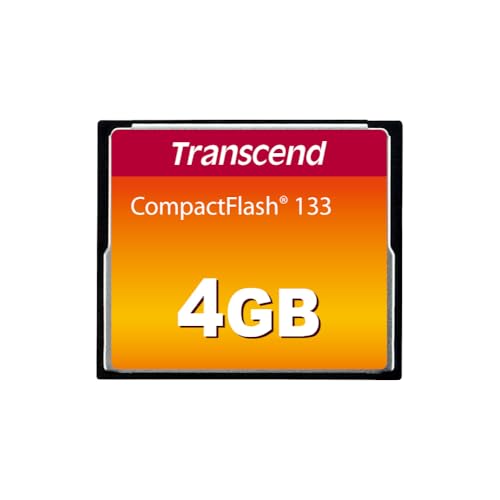
A Transcend CF133 4GB CompactFlash card is exactly enough for a Win98SE install plus a handful of period-correct games. The CF-to-IDE adapter is cheap on eBay. The boot drive is solid-state, the BIOS sees an IDE drive, and the install proceeds normally.
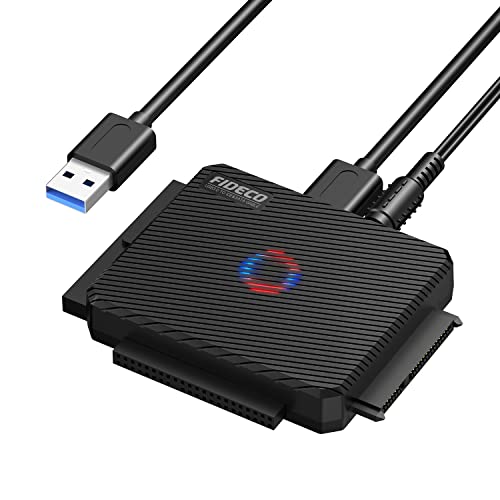
For backing up the install or pulling files off the rig, a Vantec SATA/IDE to USB 2.0 adapter or the FIDECO SATA/IDE to USB 3.0 adapter hooks the CF (or any period IDE disk) to a modern PC for snapshots.
The VOGONS retro PC subforum is the canonical resource for the CF-to-IDE community standards — pin assignments, the BIOS settings that recognize the bridge, and the install order that doesn't corrupt the install.
Sound: avoiding the SB Live and AC97 traps
Win98SE's stock audio choices age poorly. The SB Live cards have driver issues on modern boards; AC97 onboard is rarely supported under Win98SE on a Z77 generation board. The clean 2026 answer is a USB DAC: the Creative Sound BlasterX G6 works via USB audio class, doesn't need a Win98 driver, and gives you clean modern output through the period game audio chain.
The compromise: hardware DSP effects (EAX 2.0, Aureal A3D) that the SB Live or Live X-Fi cards provided natively are gone unless you can source a vintage PCI sound card that works on the chipset. For Glide-targeted games of 1999–2001 that don't lean heavily on EAX, the G6 is the right modern compromise.
What actually runs
| Game | Renderer | Result on Voodoo5 5500 | Note |
|---|---|---|---|
| Quake III Arena | Glide | 80–120 FPS at 1024×768 | Smooth |
| Unreal Tournament (1999) | Glide | 60–90 FPS at 1024×768 | Best-ever look |
| Need for Speed III: Hot Pursuit | Glide | Locked 30 FPS, native | Period-correct visuals |
| Need for Speed: High Stakes | Glide | 30 FPS locked | Same |
| Half-Life | Glide MiniGL | 60 FPS | Use the 3dfx HL MiniGL |
| Diablo II | Glide | Smooth | Glide mode preferred over D3D |
| Star Wars: Jedi Knight II | OpenGL via Glide back-end | Playable | Less impressive |
| Doom 3 | n/a | Doesn't run | Too new |
The catalog the Voodoo5 actually addresses — late-1990s and very early 2000s Glide-targeted games — runs exactly the way it did when these games shipped. Anything later than 2001 is outside the card's design envelope.
Win98SE on a modern board
The install requires a specific procedure beyond the standard Win98SE boot disk:
- Set the BIOS to legacy/CSM boot.
- Disable XHCI hand-off, secure boot, and fast boot.
- Boot the Win98SE install from a USB CF reader presenting the prepared CF card. Some boards refuse — fallback is a USB floppy emulator.
- Apply Phil's Computer Lab Win98SE patches for >512MB RAM and a Pentium 4-class CPU.
- Install chipset drivers (typically from a contemporaneous Win98 install disk; nForce/Intel-ICH drivers from 2003–2005 work surprisingly well).
- Install the 3dfx Voodoo5 reference driver (the Amigamerlin community driver is the most stable modern option).
- Install the G6 as USB audio.
The Win98SE install troubleshooting guide covers the recovery procedure when steps 4–5 go wrong, which they will on the first attempt.
Common pitfalls
- Mistaking a PCI-bridged slot for a real PCI slot. Some Z77 boards route PCI through ASMedia. Some don't. Verify before buying.
- Using a modern CPU without legacy BIOS support. Coffee Lake and later make Win98SE installation effectively impossible without exotic hacks.
- Plugging the Voodoo5 into a 3.3V slot. Some PCI slots are 3.3V keyed; the Voodoo5 is 5V. Confirm the slot keying.
- Burning a Win98SE install onto period IDE disks. They will fail mid-install. CF is the answer.
- Expecting EAX-grade 3D audio. Without a vintage PCI sound card, you don't get hardware EAX. Accept the trade.
- Believing wrapper claims that match native Glide. Wrappers are good, especially dgVoodoo2, but they're a different rendering chain. If "I want real Glide" is the build goal, the hardware is the only path.
When you should build this
- You're preserving the Glide-native renderer for the games it was built for.
- You have access to a Z77/Z170/Z270 board with a real PCI slot.
- You have time to debug a Win98SE install on modern silicon.
- You can source a Voodoo5 5500 PCI in good condition (eBay, ~$200–$400 in mid-2026).
When you should skip it
- You want to play Glide-era games on modern hardware. Run them on Linux/Windows 11 via dgVoodoo2 — wrapper good enough for 95% of cases.
- You don't have legacy BIOS support and don't want to debug UEFI workarounds.
- You're not willing to spend $200+ on the card itself.
- The goal is a daily driver. This is a preservation rig.
Related guides
- Voodoo5 5500 PCI on a modern Z77 board — news (2026)
- Voodoo5 5500 PCI on a modern board: install + Glide on Win98 (2026)
- Voodoo5 5500 PCI boots on a modern ASUS Z77 — news (2026)
- Voodoo5 5500 Win98SE install troubleshooting (2026)
- Voodoo2 SLI Windows 98 Glide build (2026)
- Direct3D vs Glide: the 3dfx Voodoo API wars (2026)
- Archive old IDE/CompactFlash retro PC drives: IDE-USB workflow (2026)