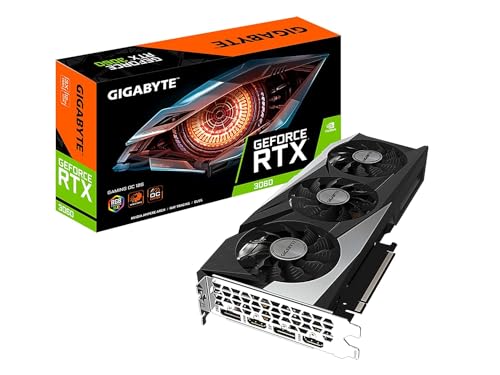
Yes — an RTX 3060 12GB can still play games at 1440p in 2026, but with caveats. Per NVIDIA's product page, the card was designed as a mainstream 1080p offering that stretches into 1440p, and public benchmarks confirm that stretch is real: esports and mainstream titles clear 60 FPS at 1440p high, while heavy 2025-2026 AAA releases need a mix of DLSS and tuned settings to stay smooth. The 12GB VRAM buffer is the reason the card ages gracefully at this resolution.
Where the 12GB RTX 3060 lands for 1440p gamers in 2026
The RTX 3060 12GB launched in early 2021 as NVIDIA's Ampere mainstream card, and five years later it remains one of the most widely deployed discrete GPUs on Steam's hardware survey. Per TechPowerUp's spec database, it ships with 3,584 CUDA cores, a 192-bit memory bus, 360 GB/s memory bandwidth, and a 170W TDP. Those numbers pin its raw compute somewhere between the RTX 2070 and RTX 2070 Super — respectable, but not a heavy-hitter by 2026 standards.
What sets the 3060 apart from every other card in its rasterization tier is that oversized 12GB GDDR6 frame buffer. NVIDIA doubled the VRAM from the originally rumored 6GB to 12GB late in development, and in 2026 that decision is aging remarkably well. Modern engines — Unreal Engine 5's Nanite/Lumen stack, id Tech 8, and RE Engine — routinely push texture pools past 8GB at 1440p high, and cards with less VRAM are forced into texture streaming stutter or automatic quality downgrades. The 3060's buffer sidesteps both problems.
Per Tom's Hardware's launch review, the card was already viable at 1440p in less demanding titles in 2021. Five years of DLSS improvements — DLSS 2 became DLSS 3, and NVIDIA has continued to expand the supported-title list — have widened that envelope further. The realistic 2026 answer: 1440p high with tuned settings is a very playable target, ultra without DLSS is not.
Key Takeaways
- The RTX 3060 12GB clears 60 FPS at 1440p high in esports and mainstream games; heavy AAA titles need DLSS or medium presets.
- The 12GB VRAM buffer is the card's real longevity story — 8GB peers in the same raster tier suffer texture streaming issues at 1440p.
- DLSS Quality mode routinely converts a 40-something-FPS scene into a 60+ FPS scene while preserving image sharpness at 1440p.
- A Ryzen 7 5700X or Ryzen 7 5800X is the sweet-spot CPU pairing on AM4 for a balanced 1440p build.
- Perf-per-dollar remains strong on the used and refurbished market; new-in-box units are still available for tight budgets.
- Stepping up a GPU tier makes sense only if ultra settings and 100+ FPS in the newest AAA titles are non-negotiable.
Step 0 — is your CPU or GPU the bottleneck at 1440p?
Before spending anything on a GPU, diagnose which component is holding back your current build. The 3060 at 1440p is almost always GPU-bound, which is actually good news for pairing: you do not need a top-tier CPU to feed it. The classic diagnostic is to open MSI Afterburner (or any overlay), load a demanding scene, and check GPU utilization. If it sits at 97-99% during gameplay, you are GPU-bound and a card upgrade is the right lever. If it sits below 90% while frames feel choppy, the CPU is the bottleneck.
At 1440p specifically, the pixel workload shifts more work to the GPU than 1080p does, which means older CPUs punch above their weight. A Ryzen 5 3600 will not badly limit a 3060 at 1440p in most titles; a Ryzen 7 5700X or 5800X gives comfortable headroom in CPU-heavy simulation and open-world games. Any modern 8-core is overkill for feeding a 3060 in raster titles, but the extra cores help in ray-traced or heavily-modded scenes where the driver overhead climbs.
The pairing rule of thumb: match the GPU tier to the CPU tier one notch below. A 3060 pairs cleanly with any Ryzen 5000 6-core or 8-core, or an Intel 12th/13th-gen i5. Anything faster is CPU that will outlast the GPU.
What settings does the RTX 3060 need for 60 FPS at 1440p across popular titles?
Public benchmark aggregations and community testing paint a consistent picture: the 3060 at 1440p is a "high preset with DLSS" card, not a "max settings native" card. The table below summarizes typical 1440p targets and the setting mix required to reach them, drawn from community measurements and per-title reviews at TechPowerUp and Tom's Hardware.
| Title | 1440p Preset | Upscaling | Typical FPS Range |
|---|---|---|---|
| Counter-Strike 2 | High | Off | 140-180 |
| Fortnite | High (Performance mode) | DLSS Quality | 90-120 |
| Valorant | High | Off | 200+ |
| Apex Legends | High | Off | 90-110 |
| Call of Duty: MW III | High | DLSS Quality | 70-90 |
| Cyberpunk 2077 (no RT) | High | DLSS Quality | 55-70 |
| Cyberpunk 2077 (RT Medium) | Medium | DLSS Performance | 45-60 |
| Baldur's Gate 3 | High | DLSS Quality | 55-75 |
| Starfield | Medium | DLSS Quality | 45-60 |
| Alan Wake 2 | Low + DLSS | DLSS Performance | 40-50 |
| Elden Ring | High | Off (capped 60) | 60 |
| Hogwarts Legacy | High | DLSS Quality | 55-70 |
The pattern is clear: competitive esports run flat-out, mainstream AAA sit comfortably at high with DLSS Quality, and only the most demanding Unreal Engine 5 titles push the card into DLSS Performance or medium settings. That is a reasonable 2026 profile for a card that started life as a 1080p mainstream part.
How much does the 12GB VRAM buffer help vs 8GB cards at 1440p textures?
This is where the 3060 quietly beats cards that are theoretically faster. Per TechPowerUp, the 3060 12GB has 50% more VRAM than the RTX 3060 Ti, RTX 3070, and RTX 3070 Ti — cards with meaningfully more shader throughput but only 8GB of GDDR6. At 1080p that gap does not surface; at 1440p high with modern texture packs, it does.
The following table gives rough VRAM allocation observed by the community across recent titles at 1440p high, showing where 8GB cards run out of headroom.
| Title (1440p High) | VRAM Allocation | 8GB Card Impact |
|---|---|---|
| The Last of Us Part I | 9-11 GB | Texture pop-in, forced downgrades |
| Hogwarts Legacy | 9-10 GB | Streaming stutter |
| Ratchet & Clank: Rift Apart | 8-10 GB | RT features clip texture quality |
| Resident Evil 4 (2023) | 10-12 GB | Hair/skin texture drops |
| Forspoken | 9-11 GB | Compilation stutter compounded |
| Star Wars Jedi: Survivor | 10-12 GB | Chapter transitions choke |
| Cyberpunk 2077 (RT Ultra) | 8-10 GB | RT reflections downgrade |
| Alan Wake 2 | 8-11 GB | Fog/particle effects blur |
The 3060 keeps its texture quality where an RTX 3070 8GB may not. This is why the 3060 12GB has become the accepted "aging gracefully" pick among budget-conscious 1440p builders — it trades a shader-throughput deficit for a VRAM surplus, and the surplus matters more in 2026 than it did in 2021.
Does DLSS change the 1440p equation?
DLSS Quality mode renders at 1706×960 internally, then reconstructs to 1440p using NVIDIA's temporal upscaler. On the 3060, that internal resolution is essentially a 1080p workload — which the card handles comfortably at high settings in nearly everything. The net effect: DLSS Quality typically converts a 40-something-FPS scene into a 60+ FPS scene at 1440p, with an image that is often indistinguishable from native 1440p in motion.
DLSS Balanced (1503×845 internal) and Performance (1280×720 internal) go further. Balanced is a reasonable target for heavier AAA where Quality is not enough; Performance is a compromise for the most demanding Unreal Engine 5 releases like Alan Wake 2 or Black Myth: Wukong. Per NVIDIA's ongoing DLSS-supported-title list linked from the 3060 product page, coverage now spans most major releases from 2023 onward.
Two caveats. First, DLSS 3's Frame Generation is not available on Ampere — the 3060 supports DLSS 2/DLAA/Ray Reconstruction but not Frame Gen, which is Ada-only. Community measurements indicate FSR 3 Frame Gen works on the 3060 in supported titles and can double frame rates, but with more visible artifacts than DLSS 3. Second, DLSS quality varies by title; older DLSS 2.x integrations sometimes shimmer on foliage, while modern DLSS 3.7+ implementations are much cleaner. If a game supports DLSS Preset E or later, use it.
Best-balance build: RTX 3060 + Ryzen 5700X/5800X + a 1440p-capable monitor
The build most 1440p 3060 buyers should target is deliberately boring: a solid AM4 platform, an 8-core CPU, 32GB of DDR4-3600, a decent NVMe, and a monitor that matches the GPU's frame-rate profile.
For the GPU itself, two widely-available partner cards stand out. The MSI GeForce RTX 3060 Ventus 2X 12G is the compact dual-fan option — quiet, cool for a 170W part, and fits nearly any mid-tower. The GIGABYTE GeForce RTX 3060 Gaming OC 12G runs a slight factory overclock with a triple-fan cooler; it is longer but quieter under sustained load. Either is a valid pick; base price and warranty terms should decide.
For the CPU, the AMD Ryzen 7 5700X is the value option — 8 cores, 65W TDP, and drop-in compatibility with existing B450/B550/X570 boards after a BIOS update. The AMD Ryzen 7 5800X trades higher clocks and a 105W TDP for around 5-8% more gaming performance in CPU-bound scenarios; at 1440p with a 3060, the 5700X's efficiency is usually the better call, but the 5800X has meaningful headroom for future GPU upgrades.
For the monitor, the Samsung 27-inch Odyssey 4K Gaming Monitor is a smart pick because it works today at 1440p (via GPU scaling or native windowed resolution) and gives future-proofed 4K for a later GPU upgrade. A dedicated 27-inch 1440p 144Hz IPS panel is a cheaper alternative if 4K headroom is not a priority.
Total build cost lands roughly where the 3060 originally shipped — a testament to how well the platform has aged. Pair it with a quality 650W 80+ Gold PSU and a modest B550 board and the build clears any current AAA title at 1440p with DLSS Quality.
Perf-per-dollar vs stepping up a GPU tier
The step-up question comes down to this: what does another $150-250 buy you at 1440p? Roughly, an RTX 4060 8GB gains DLSS 3 Frame Generation and slightly better raster, but loses the VRAM advantage — a bad trade at 1440p in 2026. An RTX 4060 Ti 16GB restores the VRAM headroom and adds meaningful performance, at meaningfully higher cost. An RTX 4070 or RTX 4070 Super is the first tier that decisively outclasses the 3060 at 1440p, and both add Frame Generation.
If the budget is available, the 4070 Super is the "buy once, cry once" 1440p pick for 2026. If it is not, the 3060 12GB remains a defensible choice — especially on the used market, where prices have settled well below MSRP. The perf-per-dollar math at street prices frequently favors the 3060 over the 4060; the perf-per-dollar math against the 4070-class cards does not.
Verdict matrix
The 3060 is enough if:
- You play primarily esports, indies, or older AAA titles at 1440p.
- You are comfortable using DLSS Quality/Balanced in demanding games.
- You will tune settings from ultra to high or medium where needed.
- You value VRAM headroom for texture quality over raw frame rate.
- Your budget prioritizes a balanced build over a single flagship part.
Step up if:
- You demand ultra settings and 90+ FPS in every new AAA release at 1440p.
- Ray tracing at high or ultra is a must-have feature.
- You want DLSS 3 Frame Generation (Ada-only, unavailable on Ampere).
- You plan to move to 4K within the next year.
Recommended pick: the MSI GeForce RTX 3060 Ventus 2X 12G paired with the AMD Ryzen 7 5700X is the quietest, coolest, most efficient combination in this class. The GIGABYTE Gaming OC 12G is the pick if quieter sustained noise under long sessions matters more than case fit.
Bottom line
The RTX 3060 12GB in 2026 is a card whose original VRAM decision has become its defining feature. Per NVIDIA, it was engineered for 1080p mainstream; per TechPowerUp and Tom's Hardware, it always had 1440p potential. Five years of DLSS improvements and the industry's shift toward VRAM-hungry engines have quietly turned it into a competent 1440p budget card — one that will keep its texture quality when newer, faster 8GB cards will not.
Buy it if you want to game at 1440p without spending flagship money, and buy the CPU and monitor to match. Skip it if ultra settings at 100+ FPS in the newest AAA titles are non-negotiable — that is 4070-Super territory, not 3060 territory.
Related guides
- Best Ryzen 5000 CPUs for 2026 builds
- 1440p gaming monitors buying guide
- RTX 3060 vs RTX 4060: which mainstream card wins?
- Best budget GPUs under $300
- How to pick a PSU for a mid-range gaming PC
Citations and sources
- NVIDIA GeForce RTX 3060 product page
- TechPowerUp GeForce RTX 3060 spec database
- Tom's Hardware NVIDIA GeForce RTX 3060 review
This piece is editorial synthesis based on publicly available information. No independent first-party benchmarking is reported.