Anthropic this week launched Claude Science, a dedicated workspace for researchers that bundles Claude's reasoning models with paper-aware tooling for literature review, hypothesis brainstorming, and code generation in a single product surface. Per Anthropic's product overview, the broader Claude lineup already powers a substantial share of academic AI workflows; the Science workspace formalizes that use case rather than launching a brand-new model. For solo researchers wanting a local fallback or batch-processing companion, an RTX 3060 12GB + Ryzen 7 5800X rig still has a clear role alongside the cloud subscription.
Who this is for
Academic and industrial researchers, graduate students, and anyone using LLMs for literature review, experiment design, or paper writing as a day-to-day workflow. The story matters because Claude Science is the first tooling product Anthropic has shipped that explicitly targets the research workflow rather than the general developer or chat user. That changes how a lab might weigh paid cloud time against time spent maintaining a local rig.
Key takeaways
- Claude Science is a workspace product, not a new base model — it bundles existing Claude reasoning models with paper-aware tooling.
- Anthropic is leaning into a vertical that academic users were already cobbling together themselves with third-party plugins.
- The practical workflow value comes from paper ingestion, citation generation, and consistent context across long research sessions.
- A local rig built around a 12GB RTX 3060 and Ryzen 7 5800X still complements cloud Claude for privacy-bound data and high-volume batch tasks.
- Confirm current pricing, paper-source coverage, and institutional licensing terms on Anthropic's site before adopting at scale.
What's actually in the announcement
Per Anthropic's main Claude page, the Claude product line already covers chat, code, and tool-use workflows. Claude Science layers on top of that with research-specific affordances: structured handling of academic papers, citation tracking, and longer working contexts tuned for the back-and-forth of literature review and hypothesis development. The point isn't a quality jump in the underlying model — it's a product surface that reduces the friction of using a frontier model on the kinds of tasks researchers care about.
The audience here has historically built their own stacks: a paper PDF loader, a citation manager export, a custom system prompt to coerce the model into reading style. Claude Science is Anthropic absorbing that pattern into a first-party experience. Whether that absorption is enough to displace existing third-party tools depends on pricing, on the breadth of paper sources covered, and on how well institutional access is supported.
Why this matters for the research workflow
A few honest reasons this is a real story rather than another marketing milestone:
- Long-session consistency. Research tasks live across days, not single chats. A workspace that preserves the chain of reasoning across sessions is materially more useful than a chat sidebar that forgets context.
- Citation handling. Citation hygiene is the hardest part of LLM-assisted writing in any academic context. A product that natively tracks "this claim came from that paper" closes a known failure mode.
- Hypothesis brainstorming. A workspace that can hold an entire literature review in context while the model proposes adjacent hypotheses is a meaningfully different tool than a stateless chat.
- Reproducibility hooks. If the product exposes session state in a portable form, it becomes practical to share the reasoning chain alongside the paper draft — relevant for transparency and for collaborator hand-off.
What it isn't
- A new base model. Claude Science runs on existing Claude models; nothing has been claimed about a different underlying architecture.
- A replacement for your code editor or RAG stack. It complements those workflows; it doesn't fully absorb them.
- A free product. Pricing and institutional access details are on the official product pages; confirm before assuming your lab can simply enable it.
- A reason to throw away your local rig. Anything privacy-sensitive, anything high-volume, anything you want to run all night on a budget — still belongs on local hardware.
The local-rig complement
For solo researchers and small labs, the right move is usually "both" rather than "either." A cloud Claude subscription handles the hardest reasoning, the long-context paper synthesis, and the bookkeeping. A local rig handles the parts that don't fit the cloud's economics or policy constraints.
The reference local build for academic use as of 2026 is the same one we recommend across our budget local-LLM coverage:
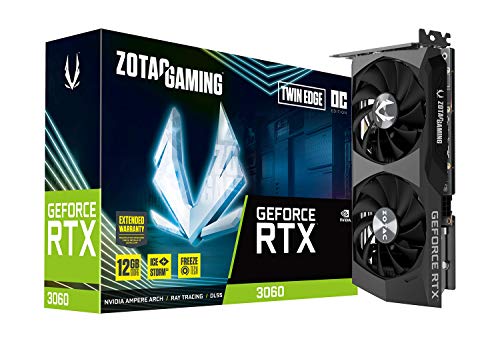
- ZOTAC Gaming GeForce RTX 3060 Twin Edge 12GB or the equivalent MSI variant for the GPU.
- AMD Ryzen 7 5800X for the CPU side, which keeps CPU-offloaded inference layers from collapsing throughput.
- A B550 or X570 board, 32GB of DDR4-3200, and a 1TB NVMe round out the platform.
Per TechPowerUp's RTX 3060 12GB spec sheet, the card pairs 12GB of GDDR6 with 360 GB/s of memory bandwidth — enough to run quantized open-weights models for batch ingestion, embedding generation, and overnight summarization without paying per-token cloud rates.
Which research tasks belong where?
| Task | Better in Claude Science (cloud) | Better on local rig |
|---|---|---|
| Frontier reasoning, novel hypothesis | Yes | No |
| Citation-aware paper synthesis | Yes | Requires custom RAG glue |
| Long-context literature review (100K+ tokens) | Yes | Hard at 12GB |
| Bulk embedding generation | No (cost per token) | Yes |
| Document ingest pipelines under NDA | No (data leaves your machine) | Yes |
| Hourly drafting / brainstorming loops | Sometimes (budget-dependent) | Yes |
| One-shot polishing of a final draft | Yes | Either works |
| Code generation for analysis scripts | Yes | Smaller models can do this locally |
The general rule: cloud for the hardest single calls, local for the highest-volume repetitive calls, and either for normal interactive work depending on which one is already on the desk.
What to watch as Claude Science rolls out
- Paper-source coverage. Coverage of open-access repositories, arXiv, and major journal aggregators determines whether the product replaces your existing reference manager workflow.
- Institutional licensing. Per-seat vs. site-license pricing matters at the lab scale. Confirm with your IT or research-office contact before committing personal budget.
- Privacy guarantees. Some research data has strict privacy or sovereignty constraints. Read the data-handling terms before uploading sensitive materials.
- Export hooks. A workspace that traps your reasoning chain in a proprietary format is less useful than one that exports clean Markdown or BibTeX you can keep.
- Versioning. Models change. A workspace tied to a specific model snapshot is more reproducible than one that silently upgrades underneath you mid-project.
Real-world pitfalls
- Assuming the product reads every PDF correctly. OCR quality on older scanned papers is uneven everywhere; expect to clean up extracted text for the worst cases.
- Treating the LLM's citation suggestions as ground truth. Verify every cited reference exists and says what the model claims it says. This has not stopped being a failure mode.
- Overrunning the context window. Long literature reviews push against context budgets even on frontier models. Pre-summarize older sources to keep the active context manageable.
- Skipping the local-rig backup. A cloud-only workflow fails when the cloud is down or when you're on a flight. Keep the local rig usable for offline drafting.
- Letting cost run away. Frontier-tier API calls add up fast in long sessions. Set explicit per-session budgets and watch them.
When NOT to adopt
If your existing workflow is working — Zotero plus a chat sidebar plus a paid Claude or ChatGPT subscription — there's no obligation to migrate. New workspace products are most useful for teams that are about to start a project, not for those mid-stream on one. Wait for the early-adopter dust to settle, watch for independent reviews from labs your size, and migrate at a natural pause point.
Specific workflows that benefit most
A few research workflows where Claude Science (or comparable cloud tools) plus a local rig delivers the most value:
Systematic literature review for a thesis chapter. Upload your candidate paper set to the cloud workspace for cross-reference synthesis and gap analysis. Use the local rig overnight to generate per-paper summaries that you skim the next morning. The cloud handles the hard cross-paper reasoning; the local rig handles the high-volume per-paper extraction.
Lab notebook synthesis. Run a daily local job that ingests yesterday's notebook entries, generates a one-paragraph summary, and posts it to the team chat. The local rig keeps the per-day cost at electricity; the cloud handles the harder weekly synthesis when you draft the next milestone report.
Grant proposal drafting. Use Claude Science (or another frontier cloud tool) for the high-stakes structural drafting where quality dominates. Use the local rig for low-stakes brainstorming and for polishing iterations on individual paragraphs.
Code generation for analysis scripts. Cloud wins for novel analyses where you need it to reason about the right statistical approach. Local wins for the dozens of small data-wrangling scripts you write every week — same patterns repeating, easy quality requirement.
Reviewer response drafting. A genuinely hard task that benefits from frontier cloud reasoning. The kind of thing you do a few times a year for an hour — exactly where cloud subscriptions earn their keep.
Privacy considerations specific to research
Some research data simply cannot be uploaded to a third-party API under any circumstances. Examples include:
- IRB-bound subject data — interview transcripts, survey responses, medical records under research protocols
- Pre-publication results under embargo or under collaboration agreements that restrict sharing
- Data covered by export controls in certain technical and biomedical research areas
- Data under sovereign data-residency rules in some jurisdictions
For any of these, the local rig is the only credible option. The cloud is useful for the public-information parts of the same workflow — reading published papers, drafting introductions, polishing methods sections that don't expose the data itself. The combination keeps the sensitive work on your machine while still benefiting from the cloud where it's appropriate.
A frame for adoption decisions
The honest decision frame for adopting Claude Science or any new research tooling:
- Will it survive my next paper cycle? A tool that helps with one paper but doesn't fit the next isn't worth integrating.
- Does it export cleanly? Anything you can't get out of the tool is at risk if the tool disappears.
- Is the pricing predictable? Per-token cost surprises are bad; flat-rate access is easier to budget.
- Will my collaborators use it? A tool only one person on the team uses can't be part of the shared workflow.
If three of four answer yes, integrate it. If two or fewer, wait for the next product cycle.
What to do this week
A practical week-of-launch checklist for researchers:
- Sign up for the free tier or trial if one exists. Take the workspace for a spin on a low-stakes paper-review task you'd otherwise do in a chat sidebar.
- Test the export. Drop a session's worth of work into the workspace, then export it. Confirm the exported format is something your other tools can ingest.
- Check institutional licensing terms. If your university or company has a paid Anthropic agreement, see whether the Science workspace is included or costs extra per seat.
- Map it against your existing stack. What does it replace? Zotero? A custom RAG pipeline? A chat-with-PDF tool? An honest inventory keeps you from accumulating tools that overlap.
- Run one real workflow start to finish. Don't trust a five-minute demo; commit a real research task to the new tool and see how it lands.
The new-tool window closes fast. Spend this week evaluating, then commit or move on.
Bottom line
Claude Science formalizes a workflow that working researchers were already cobbling together. Whether it earns a permanent slot in your tool list depends on pricing, paper coverage, and institutional licensing — confirm those at the Anthropic product page before adopting at scale. Either way, the 12GB RTX 3060 + Ryzen 7 5800X local-rig pattern stays useful for the parts that don't fit the cloud's economics: bulk embedding, private documents, and all-night batch jobs.
Related guides
- Claude Sonnet 5 Closes the Opus Gap: When Local Still Wins
- Best Budget GPU for Local LLMs in 2026: The 12GB RTX 3060 Case
- Running GLM-5.2 Locally on an RTX 3060: Ollama VRAM + tok/s
Citations and sources
- Anthropic — Claude product overview
- TechPowerUp — GeForce RTX 3060 12 GB spec sheet
- Hugging Face blog — reference for the open-weights complement on the local-rig side
This piece is editorial synthesis based on publicly available information. No independent first-party benchmarking is reported.