Which is actually the best beginner racing wheel in 2026?
For someone buying their first PC sim-racing wheel in 2026, the Logitech G920 Driving Force is the right pick for the $250-300 budget — it has real force feedback, a steel paddle-shifter wheel, and works on Xbox + PC. The HORI Racing Wheel Overdrive at $90-110 is the right pick if you cannot stretch past $100 and you understand you're buying a non-force-feedback wheel suitable for casual arcade racers. The two are not direct competitors; they are anchors of different beginner tiers.
Why this comparison is the real decision tree for new sim racers
The "best beginner racing wheel" question dominates r/simracing every week because the wheel market splits at exactly the price point most beginners are considering. Below roughly $200, you get input-only wheels with simulated feedback (rumble motors, vibration). At $250+, you get real motor-driven force feedback that simulates road feel. The G920 sits just above that line; the HORI Overdrive sits well below it. Anyone shopping in this band is implicitly choosing between those two tiers, even when they don't realize it.
For the SpecPicks reader audience — typically PC gamers expanding into sim racing with Forza, F1, Assetto Corsa, or Gran Turismo on PS5 — the choice matters because force feedback is the single largest input-quality differentiator. A wheel without force feedback teaches you to oversteer; a wheel with force feedback teaches you to listen to grip. That's not marketing copy; it's the actual reason sim-racing communities push beginners toward FFB-equipped wheels.
Key takeaways
- The Logitech G920 has real motor-driven force feedback (helical gears + dual motor). The HORI Overdrive does not.
- The HORI Racing Wheel Overdrive is officially licensed for Xbox Series X|S and works on PC; the G920 is also Xbox + PC.
- Wheel rotation: G920 is 900° lock-to-lock; HORI Overdrive is 270°. For sim racing, more rotation is better; for arcade racing, less is fine.
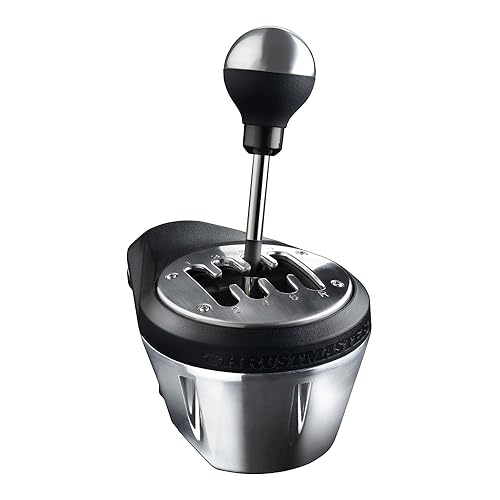
- Both include pedals; only the G920's pedals have a brake load cell-like progressive feel. Stretch later to a Thrustmaster TH8A H-pattern shifter once you commit.
- If your budget is under $130 and you only play Forza Horizon / Mario Kart-style arcade games, the HORI is fine. For anything more serious, save up for the G920.
How the two wheels actually compare
| Spec | Logitech G920 | HORI Racing Wheel Overdrive | ||
|---|---|---|---|---|
| Force feedback | Yes — dual motor, helical gears | No — vibration motor only | ||
| Rotation | 900° lock-to-lock | 270° lock-to-lock | ||
| Wheel material | Hand-stitched leather wrap | Plastic | ||
| Paddle shifters | Steel | Plastic | ||
| Pedal set | 3 pedals (clutch, brake, throttle) | 2 pedals (brake, throttle) | ||
| H-pattern shifter | Sold separately (Logitech Driving Force Shifter) | Not supported | ||
| Platforms | Xbox Series X | S, Xbox One, PC | Xbox Series X | S, PC |
| Typical 2026 price | $250-300 | $90-110 |
The pedal-set difference is underrated. The G920 ships with three pedals — clutch, brake, throttle — and the brake pedal has a progressive resistance that approximates load-cell behavior. The HORI Overdrive ships with two pedals and the brake is a simple linear potentiometer.
What "force feedback" actually means and why it matters
Force feedback (FFB) wheels use one or two motors connected to the wheel column to push the wheel back against your hands. The simulator computes the lateral force on the front tires and translates it to a torque on the wheel. When you exceed the grip limit, the wheel goes light (the steering rack loses load); as you build front grip, the wheel weights up. That feedback is how real drivers feel grip, and it's how sim drivers learn to drive cleanly.
Wheels without FFB substitute vibration or rumble. The HORI Overdrive uses a vibration motor that buzzes when you go off-track or hit a wall — useful for arcade-style "you crashed" feedback, useless for learning to balance the car at the grip limit.
For Forza Motorsport, F1 24, Assetto Corsa, iRacing, or any sim that rewards smooth inputs at the grip limit, FFB is the entire point. Without it, you are guessing.
Rotation: 270° vs 900° and what it costs you
Modern road cars typically have 2.5-3 turns lock-to-lock (900-1080°). Race cars and rally cars vary; rally is often 540°, formula is closer to 270°.
- 900° (G920): you can sim-rotate the wheel the same way the real car rotates. Drift and rally are realistic.
- 270° (HORI): you reach full lock in a quarter turn. Arcade games with assisted steering compensate; sims feel twitchy and unnatural.
In Forza Horizon 5 with steering assist on, 270° is fine. In Assetto Corsa Competizione, 270° will make the car nearly undriveable.
Sample workflow: which wheel for which game?
| Game | HORI Overdrive | Logitech G920 |
|---|---|---|
| Forza Horizon 5 (arcade) | Fine | Better |
| Forza Motorsport | Marginal | Recommended |
| F1 24 | Marginal | Recommended |
| Assetto Corsa | Not recommended | Required tier |
| iRacing | Not supported well | Entry tier |
| Gran Turismo 7 (PS5 — note G920 is not PS5) | n/a | n/a (use G29 instead) |
| Mario Kart-style arcade | Fine | Overkill |
Important: the G920 is the Xbox/PC variant. The G29 is the PlayStation/PC variant. They are physically identical but the platform compatibility differs. If you primarily play on PS5, buy the G29 instead of the G920.
Pedal feel: the underappreciated half of the rig
Pedal quality matters as much as the wheel for lap times. The G920's brake pedal uses a progressive elastomer that gets stiffer as you press; the HORI Overdrive's brake is a linear spring. Real-world brake pedals — and load-cell sim pedals like the Fanatec ClubSport — get stiffer non-linearly because brake force at the disc grows non-linearly with line pressure.
The practical upshot: the G920's brake feel is closer to real, and that translates to more consistent braking points. The HORI's brake feels like a video-game trigger.
A common upgrade path: keep the G920, replace the pedal set with a load-cell aftermarket option (Heusinkveld Sprint, Simagic P2000) once you commit to sim racing. The G920 wheelbase outlasts the pedals.
What about the Thrustmaster TH8A shifter?
A real H-pattern shifter changes the experience in any game that supports manual transmission (Assetto Corsa, F1, classic Forza Motorsport titles). The Thrustmaster TH8A is the well-regarded H-pattern shifter at the prosumer tier; it works with the G920 over USB and adds H-pattern + sequential modes. The Logitech Driving Force Shifter is the cheaper option and the natural pairing for a G920 ecosystem build.
Neither pairs with the HORI Overdrive — it does not have a shifter input.
Common pitfalls beginners hit
- Mounting the wheel to a flexy desk. The G920 generates 2-3 Nm of FFB torque. A flimsy desk flexes under load; the FFB feel collapses. Use a wheel stand or a thick desk.
- Buying a G29 thinking it's PC + Xbox. The G29 is PS3/PS4/PS5/PC. The G920 is Xbox/PC. They are not cross-platform identical.
- Ignoring software setup. G920 FFB feel out of the box is too heavy. Drop FFB strength in Logitech G Hub to 70-80%, lower in-game.
- Pedals on carpet. Pedals slide on soft carpet. Use a pedal tray or screw the pedals to a wood base.
- Expecting Bluetooth. Neither wheel is wireless. You need a free USB port and a power outlet for the G920.
When NOT to buy a wheel at all
If you mostly play first-person shooters and occasionally launch a racing game, a wheel is a high-friction purchase. It takes desk space, takes power, and takes 20 minutes to set up the brake-pedal angle correctly. A high-quality controller like the 8BitDo SN30 Pro with adjustable Hall-effect sticks is the right answer for casual racing. Buy the wheel when you've decided sim racing is the thing you want to invest in.
Beginner build: total cost of entry
For a serious beginner sim-racing build in 2026, total damage:
| Item | Cost |
|---|---|
| Logitech G920 (wheel + pedals) | $250-300 |
| Wheel stand (Wheel Stand Pro or budget Amazon) | $100-150 |
| Thrustmaster TH8A or Logitech Driving Force Shifter | $80-200 |
| Sim seat (optional) | $200-400 |
| Minimum viable | ~$430 (G920 + stand) |
| Comfortable | ~$700 |
For the HORI Overdrive path: $90-110 + a flat desk. That's the appeal.
Bottom line
For most beginners with sim-racing ambitions, the Logitech G920 is the right wheel — real force feedback, 900° rotation, three-pedal set, Xbox + PC compatibility, and a clear upgrade path. The HORI Racing Wheel Overdrive is the right wheel for someone who genuinely just wants a wheel for arcade racing and has decided not to spend $250+. Don't buy the HORI thinking you can grow into sim racing with it — the rotation and lack of FFB make that path frustrating. Buy it knowing you'll outgrow it if you get serious, and that's fine.
Related guides
Citations and sources
This piece is editorial synthesis based on publicly available information. No independent first-party benchmarking is reported.
How to set up your wheel + pedals correctly the first time
Most disappointing-first-experience reports trace to setup, not the wheel itself. The 30-minute calibration that makes the G920 feel like the product reviews describe:
- Mount the wheel rigid. A flexy desk or a clamp on a thin tabletop ruins FFB feel. Use a wheel stand (Wheel Stand Pro, Next Level Racing F-GT Lite, or a DIY 2×4 frame) or a heavy wood desk.
- Pedals on a flat, non-slip surface. Carpet kills pedal precision. Use a pedal tray (the Logitech-bundled tray, or a custom wood baseplate) and check the spring tension on the brake pedal — the G920 has an adjustable elastomer in the brake assembly.
- Driver setup. Install Logitech G Hub. Drop the default FFB strength from 100% to about 75%; you'll bring it back up gradually as your hands adjust.
- In-game wheel rotation: set to 900° in Assetto Corsa / iRacing, 540° in F1 24, and let the game auto-detect for Forza Motorsport.
- Deadzone: zero for the steering, small (3-5%) for the throttle. The brake should be linear or set to "load cell" curve in games that offer it.
This setup is the difference between "the wheel feels unnatural" and "the wheel changes how I play."
Wheel stands worth buying
- Wheel Stand Pro Deluxe V2: $150-180. Solid, foldable, fits the G920 cleanly. The reference budget pick.
- Next Level Racing F-GT Lite: $300-380. Integrated seat + wheel stand foldable rig. Best below-$500 cockpit.
- DIY 2×4 frame: $30-50 in lumber. Genuinely works; uglier than commercial stands.
Buying used vs new
The G920 is one of the most-resold wheels on the used market. Buying used at $130-180 is a credible path; check that:
- The FFB motor doesn't grind or click at lock-to-lock rotation.
- The paddle shifters click cleanly with no double-tap.
- The pedal potentiometers don't show a dead zone in the middle of travel.
- The USB cable isn't worn at the wheel base (a common failure point).
Most G920 issues are mechanical and visible. A 5-minute test drive in the seller's setup tells you whether the wheel is good.
The "should I just save up for a Fanatec/Moza" question
The natural next step after a G920 is a direct-drive belt or DD wheelbase. Fanatec CSL DD ($350-500 base), Moza R5 ($400-500), or Simagic Alpha Mini ($600-800) are the entry tiers. They are dramatically better than the G920 — smoother FFB, more torque, no gear noise. If you know you're going to be a serious sim racer, skipping the G920 and saving directly for a DD base is reasonable.
The G920 case is for the buyer who isn't sure yet. It's $250-300 to find out whether sim racing is the hobby you want; if it is, you sell the G920 used and step up. The HORI Overdrive is the same case at a lower price tier.
A note on PS5 compatibility
The G920 is Xbox + PC. The G29 is PS3/PS4/PS5/PC. They look identical and you can mistake them. If you primarily play Gran Turismo 7 on a PS5, the G29 is the right wheel; the G920 will not work.
The HORI Overdrive's specific quirks
The HORI Racing Wheel Overdrive deserves a closer look since it's the most-common alternative buy. A few things the marketing doesn't tell you:
- The 270° rotation is fixed in hardware — no software toggle.
- Force feedback is replaced by a vibration motor in the wheel base, similar to a controller rumble pack.
- The wheel base mounts via a single C-clamp that's adequate but flexes under hard input.
- The pedal set has no clutch and no adjustable resistance.
- The included paddle shifters are plastic and click but have no tactile detent.
- Official Xbox licensing means it works on Xbox without third-party adapters.
For Forza Horizon 5 / Need for Speed / Mario Kart-style arcade racing, none of this matters. For F1 24 or Forza Motorsport, all of it matters incrementally — and adds up to the conclusion that the HORI is the wrong wheel for a sim-racer-in-training.
Why the G29 vs G920 split exists
A common point of confusion: Logitech makes two physically near-identical wheels — the G29 (PS3/PS4/PS5/PC) and the G920 (Xbox/PC). The chip inside that handles platform authentication differs; that's the only meaningful difference. You can't cross-flash one to the other.
In practice: pick the wheel that matches your dominant console. PC-only buyers can pick either (both work fine on PC), but the resale market is slightly stronger for the G29 because PS5 owners are a larger sim-racing audience than Xbox owners. If you sell the wheel later, the G29 is easier to move.