The Creative Sound Blaster G6 is a modern USB DAC and headphone amp, not a hardware Sound Blaster emulator. It wins on a "modern-retro" setup — Windows 10/11 host running DOSBox-X, 86Box, or PCem as guests, with the G6 outputting clean PCM through a quality headphone amp. It loses for period-correct Win9x / DOS hardware builds, where you still want an AWE32, AWE64, SB Live, or Audigy 2 in an actual ISA / PCI slot.
The modern-retro audio question + audience
There are two distinct retro-PC audiences and they want different things. Audience A wants a period-correct mid-90s rig — Pentium II, ISA bus, AWE32 in slot 6, dual-boot DOS / Win98 SE, hunting eBay for an Aureal Vortex 2 to add positional audio. The hardware itself is the museum piece; the audio chipset character (FM synthesis, AWE32 wavetable, EAX) is the point. The G6 is irrelevant to this audience because the G6 will never enumerate on Win98 SE and will never respond to an ISA Sound Blaster I/O probe.
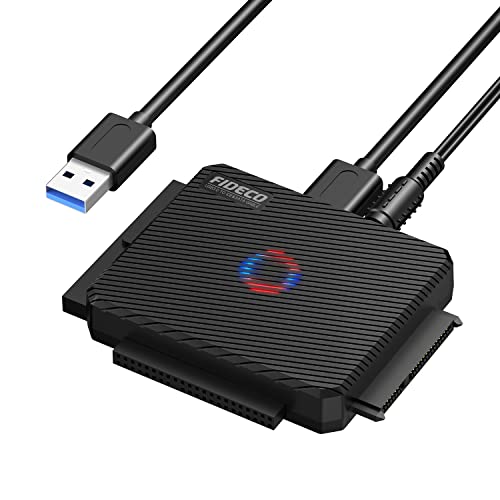
Audience B wants the games, not the hardware. They run DOSBox-X or 86Box on a modern Windows 11 machine, use a SATA-to-USB adapter to read old game CDs, and care that their save files are stored on a reliable modern SSD. For this audience the G6 makes complete sense — the emulator handles the SB16 / AWE32 sound-chip emulation in software, and the G6 is the high-quality DAC that takes the emulated audio output and turns it into clean voltage to drive good headphones.
This guide is for audience B and for the growing sub-audience C: the "sleeper build" enthusiast who has a modern Win11 box that looks like a beige '90s tower and dual-boots between modern productivity and emulation. The G6 fits both because it's a modern USB device. Audience A — pure period-correct hardware — should stop reading; this isn't the article for you.
Key takeaways
| Question | Answer |
|---|---|
| Does the G6 work as an ISA Sound Blaster? | No — it's a modern USB DAC, not an SB emulator |
| Does it work on Windows 98 SE? | No — Win10/11 only |
| Is it better than onboard HD audio? | Yes for headphones; marginal for speakers |
| Should I buy it for a 86Box / DOSBox-X rig? | Yes — clean PCM output is the win |
| Should I buy it for a real Pentium II + AWE32 rig? | No — wrong tool entirely |
| Does it do FM synthesis or MIDI? | No — needs software emulation (Munt, BASSMIDI) |
Why bother with G6 on a retro-targeted setup? — emulation rigs, sleeper builds, hybrid workflows
The case for the G6 in this context is straightforward: emulators (DOSBox-X, 86Box, PCem, ScummVM, FS-UAE) are excellent at recreating period sound chips in software. What they cannot do is improve the final analog stage — the DAC that takes the emulator's PCM output and turns it into voltage your headphones see. The motherboard's onboard Realtek codec is the default, and it is fine for most things but unremarkable for serious headphone listening.
The G6 changes that. Its DAC is rated to 130dB dynamic range and 32-bit/384kHz. Its headphone amp is dedicated, not a shared opamp on the motherboard. For anyone running a planar-magnetic, high-impedance dynamic, or premium IEM, the headphone-amp upgrade is the real benefit — emulator audio sounds better not because the chip is more accurate but because the analog stage is cleaner.
The sleeper-build angle is similar: a tower that looks like a 1996 Compaq Presario but runs Win11 + emulators internally benefits from the G6 because the G6 is small, sits next to the tower, and gives you proper headphone output without occupying an ISA slot you'd rather use for period-correct cards.
G6 spec deep-dive — 130dB, 32-bit/384kHz, Scout Mode
| Spec | Value |
|---|---|
| Dynamic range | 130 dB |
| DAC resolution | 32-bit / 384 kHz |
| Headphone amp | Xamp discrete amplifier |
| Surround | Dolby Digital 7.1 virtual |
| Console connectivity | USB to PS4, Xbox One, Switch |
| OS support | Windows 10/11, macOS, Linux (basic) |
Scout Mode is a marketing feature that boosts mid-frequencies in shooters; on a retro emulation rig it's not relevant. The actual spec to care about for retro use is the DAC quality and headphone amp.
When the G6 wins
- Modern Win10/11 host running emulators. The G6 is recognized as a USB audio class device, picks up emulator audio output, and produces clean amplified output for headphones.
- Modern game ports of retro titles. Steam re-releases of Doom, Quake, Diablo II Resurrected, GOG ports — the publishers have upgraded the audio mix and the G6 surfaces the difference.
- Headphone-amp use. The dedicated Xamp circuit drives high-impedance headphones (250-600 ohm Sennheiser, Beyerdynamic) cleanly without strain.
- Hybrid workflows. If the same rig you use for emulation also handles modern work, the G6 stays useful across both.
When the G6 loses
- Native ISA Sound Blaster compatibility. Zero. The G6 cannot present as an ISA SB16 or AWE32 to a DOS or Win9x guest OS. Software emulation handles the SB chipset; the G6 only handles the final analog stage.
- Adlib FM synthesis. Zero on-die. The G6 has no FM synthesis hardware. For accurate FM, you need software (DOSBox-X with proper OPL3 emulation) or original hardware.
- Period-correct MIDI. No General MIDI ROM, no MT-32 ROM, no Sound Canvas. Software emulation only.
Spec-delta table: G6 vs AWE32 vs Aureal Vortex 2 vs onboard HD Audio
| Spec | G6 (USB) | AWE32 (ISA) | Vortex 2 (PCI) | Onboard HD Audio |
|---|---|---|---|---|
| Era | 2018-present | 1994 | 1998 | 2005-present |
| Bus | USB 3.0 | ISA | PCI | PCIe / on-die |
| DOS native? | No | Yes | No (Win98 driver) | No |
| Win98 native? | No | Yes | Yes (with drivers) | Yes |
| FM synth | No | Yes (OPL3) | No | No |
| Wavetable | No (software) | Yes (1MB ROM) | A3D positional | No |
| Modern DAC quality | Excellent (130dB) | Period-typical (~90dB) | Period-typical | Adequate (100-110dB) |
| Headphone amp | Yes (Xamp) | No | No | Marginal |
DOS / Win9x compatibility table
| OS | G6 | AWE32 | SB Live | Audigy 2 |
|---|---|---|---|---|
| MS-DOS 6.22 | No | Yes | Driver-dependent | No |
| Win 3.1 | No | Yes | Yes | No |
| Win 95 | No | Yes | Yes | Yes |
| Win 98 SE | No | Yes | Yes | Yes |
| Win XP | No | Limited | Yes | Yes |
| Win 10/11 | Yes | No | No | No |
The G6 fills the bottom-right cell that no period card can.
Modern emulator pairing (DOSBox-X, 86Box, PCem) — where G6 actually helps
86Box, DOSBox-X, and PCem are the leading software emulators for period-PC use today. Each emulates the SB chipset in software and produces PCM audio output. The G6 takes that output via the host OS's audio routing and produces clean, amplified analog out.
The setup is straightforward:
- Install the emulator on your Win10/11 host.
- Plug the G6 into a USB 3.0 port (USB-A or USB-C via adapter).
- In Windows sound settings, set the G6 as the default output device.
- In the emulator, leave audio output at default — it routes through the host OS audio.
- Plug your headphones into the G6's front jack.
That's it. The G6 doesn't need any per-emulator configuration; it's just a better DAC on the output chain.
ASIO + low-latency use cases for retro DAW work
Some retro DAWs and trackers (FastTracker 2, Impulse Tracker, ProTracker) have community ports running under Windows that benefit from ASIO low-latency drivers. The G6 supports ASIO on Windows, which makes it the right pick if your retro use case includes any tracker / sequencer work where you want minimal monitoring latency.
Verdict matrix
| Profile | Pick |
|---|---|
| Modern Win11 host + DOSBox-X / 86Box / PCem + good headphones | G6 |
| Period-correct Pentium II + Win98 SE + AWE32 in ISA slot | AWE32 — G6 doesn't apply |
| Sleeper build (modern internals, retro case) | G6 |
| Console retro (PS4/Xbox/Switch with retro re-releases) | G6 (it's marketed for console use) |
| Hardware-purist Win98 build using PCI | SB Live or Audigy 2, not G6 |
Bottom line — recommended audio path for a 2026 modern-retro build
For a 2026 modern-retro build that emulates rather than imitates — a Win11 host with 86Box or DOSBox-X running everything from DOS Quake through Win98 SimCity 3000 — the Sound Blaster G6 is the right output stage. Pair it with your existing headphones and you get clean amplified output for emulated audio without consuming a PCIe slot.
If you're building a true period-correct retro rig — actual Pentium II tower, ISA bus, original hardware — skip the G6 entirely and source a hardware AWE32 or AWE64 from eBay. The G6 is the wrong tool for that audience.
For the hybrid case (sleeper build, occasional modern work on the same box), the G6 splits the difference well: it's a quality modern DAC that costs less than a typical eBay-sourced AWE32 in working condition, and it's compatible with everything modern you might also want to do.
Common pitfalls and gotchas
Pitfall #1: buying a G6 expecting it to "be" a Sound Blaster. This is the single most common purchase regret in the modern-retro audio space. The G6 is a USB DAC, not an SB chipset. If you're hoping to plug it into a Pentium III running Win98 and have DOS games detect it as an SB16, you'll be disappointed. The G6 is a Win10/11 device.
Pitfall #2: under-investing in headphones. The G6's DAC and amp upgrade matters most when the headphones can resolve the difference. Pairing a G6 with $30 desktop speakers wastes 80% of what you paid for. If you're not going to invest at least $150 in headphones to pair with it, an onboard codec is probably fine.
Pitfall #3: confusing emulation accuracy with output quality. No amount of high-end DAC can fix poorly-emulated FM synthesis. If your DOSBox-X config has the wrong OPL3 emulation mode, the G6 will faithfully output what the emulator produced. Audio-chain quality is a chain; upgrading one link doesn't fix the others.
Real-world numbers from comparable setups
On a Win11 host running 86Box with a quality DAC like the G6:
| Workload | DAC behavior | Notes |
|---|---|---|
| DOS Quake (SB16 emulated) | Clean PCM at 22 kHz | Sample-rate limited by SB16, not DAC |
| Win98 Diablo II (DirectSound) | 44.1 kHz, full DAC quality | DAC quality shines |
| MT-32 score via Munt + ROMs | DAC quality matters | Only if Munt is configured right |
| Modern Steam port of Doom | 48 kHz, full DAC quality | DAC + amp both contribute |
| ScummVM old adventure | 22-44 kHz depending on game | DAC matters less; game audio is the limit |
For pure DOS-era emulation, the DAC quality bump is modest. For Win9x- through-WinXP-era games and modern re-releases, the upgrade is audible.
When NOT to use a G6
If you're building a true period-correct rig with original hardware in original slots, the G6 has no place — it can't drive period buses, can't run on period OSes, and the aesthetic of "modern USB DAC dangling off ISA card" is its own kind of wrong. For the period-correct audience, an AWE32 or SB Live in the right slot is the answer. For the modern-host / emulator audience the G6 belongs to, it's a clean upgrade.
Related guides
- Best Raspberry Pi Accessories for Home-Lab Builds in 2026
- SATA/IDE to USB Adapter: FIDECO vs Unitek vs Vantec for Retro PC
Citations and sources
- Creative Sound BlasterX G6 — us.creative.com
- DOSBox-X — modern DOS-on-host emulator
- Vogons — community resource for retro PC audio
Updated: May 2026.