Should I use Ollama or vLLM for single-user local chat on an RTX 3060?
For a solo chat workload on an RTX 3060 12GB, Ollama is the pragmatic pick in 2026. Per the Ollama project README, it ships as a single binary with automatic GGUF quant fitting, while vLLM's documentation is explicit that its PagedAttention and continuous batching architecture is tuned for high-throughput multi-user serving. With one user, the batching advantage is idle, and the friction of matching CUDA/PyTorch versions is wasted effort.
The runtime decision when you are the only client
It is 2026, and the 12GB RTX 3060 has aged into the canonical "first serious local-LLM card" for hobbyists, students, and home-lab tinkerers. The hardware is settled — per TechPowerUp's GPU database for the GeForce RTX 3060, it is a GA106 part with 3,584 CUDA cores, 12GB of GDDR6 on a 192-bit bus, and 360 GB/s of memory bandwidth. What is not settled is which runtime sits on top of it.
The two heaviest hitters in 2026 are Ollama and vLLM, and they were designed for different worlds. Per the Ollama project on GitHub, Ollama is a llama.cpp-backed wrapper with a model registry, a one-line install, and a pull-and-run UX modeled on Docker. Per the vLLM documentation, vLLM is a serving framework built around PagedAttention and continuous batching, originally published out of UC Berkeley and now an industry standard for hosted inference at scale.
Most of the head-to-head comparisons online benchmark them with synthetic concurrent load — a workload that does not match what a single person typing into Open WebUI actually generates. This synthesis re-frames the question around the realistic n=1 case: who do you choose when the only client of your endpoint is you?
The short version is that vLLM's biggest architectural strengths — request batching, KV-cache paging across many concurrent prompts, OpenAI-API serving with high concurrency — barely activate for a single user. Meanwhile, the things that make Ollama feel "obvious" on a home rig (zero-config model pulls, automatic quant fitting, simple updates, a model library that maps directly to the GGUF ecosystem) compound across every weeknight evening you actually use the thing. There are still real reasons to deploy vLLM at home — they are just narrower than the marketing copy implies.
Key takeaways
- Ollama wraps llama.cpp and the GGUF quant ecosystem; vLLM is a serving-class framework built on PagedAttention with safetensors, AWQ, and GPTQ. The runtimes target different workloads, not just different stacks.
- For a single user on a 12GB card, vLLM's batching gains are dormant — the throughput advantage that justifies vLLM at scale does not show up at concurrency = 1.
- Ollama's automatic quant fitting and one-binary install drop setup time from "an afternoon" to "minutes," which matters more for a home rig than any 10-15% throughput delta.
- vLLM still wins when you genuinely need an OpenAI-compatible API serving multiple teammates, or when you can offload to CPU and want fine-grained KV-cache control.
- Open WebUI integrates cleanly with both, but the Ollama backend is the documented default and the smoother path for a single-user front end.
Step 0: are you serving one user or many concurrent requests?
Before any benchmark table matters, answer this honestly. Are you the only one hitting the endpoint, or do you have teammates, an app with real users, or a batch pipeline that fires off ten prompts in parallel? Per the vLLM documentation's architecture overview, its core innovation — PagedAttention plus continuous batching — is designed to keep the GPU saturated when many requests arrive at slightly different times. That design pays dividends when concurrency is in double digits. It pays almost nothing at concurrency = 1.
If you are running local chat through Open WebUI, you are concurrency = 1 most of the time. You type a prompt, the model streams a response, you read it, you type the next prompt. There is no second request for vLLM's scheduler to pack alongside the first. The GPU runs one decode loop, the answer streams out, the GPU goes idle, and you repeat. That is the entire workload.
If, on the other hand, you have an agent loop running in the background, a code-completion plugin in your editor, and a chat UI all hammering the same endpoint, vLLM's batching starts to matter. So does the OpenAI-API surface — vLLM's /v1/chat/completions endpoint, per the vLLM serving documentation, is built to be a drop-in for OpenAI's SDK and handle dozens of concurrent connections without falling over.
For the typical single-user home rig in 2026, you are firmly in the first camp. The rest of this synthesis assumes that.
How do Ollama and vLLM differ in design and target workload?
Ollama sits on top of llama.cpp — the C++ inference engine that pioneered GGUF, the dominant quantized-weight format for community-built local LLMs. Per the Ollama README, Ollama adds a model registry, a CLI (ollama pull, ollama run), an HTTP API on port 11434, and a small set of opinionated defaults that "just work" on consumer GPUs. The runtime detects available VRAM, picks a quantization that fits, and streams tokens. When the model does not fit entirely on the GPU, llama.cpp's CPU+GPU split kicks in transparently — slower, but it does not crash.
vLLM, per the official docs, is a different beast. It loads safetensors weights (or AWQ/GPTQ-quantized variants) directly into VRAM, builds a PagedAttention KV-cache that treats attention memory like virtual pages in an OS, and runs a continuous-batching scheduler that packs incoming requests into the GPU's compute pipeline. It is optimized for serving — high tokens-per-second across many simultaneous users, OpenAI-API compatibility, and tensor-parallel scaling across multiple GPUs. It is the runtime you see behind hosted endpoints, not the one you see in brew install-style tutorials.
The lineage tells the story. Ollama descends from the CPU-friendly, single-user roots of llama.cpp and inherits its GGUF-first ergonomics. vLLM descends from research on efficient transformer serving (PagedAttention was a 2023 paper that became the project's foundation) and inherits the assumption that the workload is "many requests, optimize the aggregate."
Spec-delta table: setup effort, quant support, batching, VRAM overhead, OpenAI API
| Dimension | Ollama | vLLM |
|---|---|---|
| Setup effort | Single binary install, ollama pull <model> | CUDA + matched PyTorch + Python env + model weights download |
| Quant support | GGUF (Q2_K through Q8_0, plus IQ-series imatrix quants) | safetensors fp16/bf16, AWQ, GPTQ, FP8 on supported HW |
| Batching | Single-request (llama.cpp-backed) | Continuous batching via PagedAttention |
| VRAM overhead | Low — model + small KV; CPU offload is automatic | Higher — reserves a configurable VRAM block for paged KV cache |
| OpenAI-API compat | Yes (/v1/chat/completions shim) | Yes (first-class, production-grade) |
| Multi-GPU | Limited (model can split across GPUs in newer builds) | Tensor parallel + pipeline parallel as first-class features |
| Model library | Curated registry at ollama.com/library | Bring-your-own safetensors from Hugging Face |
| Concurrency sweet spot | 1-4 users | 8-256+ users |
| Update cadence | Frequent, low-friction | Frequent, but version-pinned to CUDA/PyTorch |
Per the Ollama README, the install is a single curl | sh on Linux or a native installer on macOS and Windows, with no Python toolchain required. Per the vLLM installation guide, vLLM expects a working CUDA install and a PyTorch build matched to that CUDA version — a meaningful friction point on Windows and a moderate one on Linux when the system PyTorch does not match the installed CUDA toolkit.
Benchmark synthesis: single-user tok/s on an RTX 3060 12GB
The numbers below are an editorial synthesis of community measurements posted to the r/LocalLLaMA subreddit and adjacent forums in late 2025 and early 2026. They are not first-party measurements — single-user throughput on the RTX 3060 12GB depends heavily on driver version, prompt length, batch size flag, and which Q4 variant is loaded. Treat them as order-of-magnitude figures, and verify against your own setup before drawing hard conclusions.
Decode tokens per second (single user, RTX 3060 12GB)
| Model + quant | Ollama (GGUF) | vLLM (safetensors/AWQ) |
|---|---|---|
| Llama 3.1 8B Q4_K_M / AWQ-int4 | ~55-65 tok/s | ~60-72 tok/s |
| Qwen 2.5 7B Q4_K_M / AWQ-int4 | ~58-68 tok/s | ~62-74 tok/s |
| Qwen 2.5 14B Q4_K_M / AWQ-int4 | ~22-28 tok/s | ~24-30 tok/s (tight VRAM) |
| Mistral 7B Instruct Q4_K_M / AWQ-int4 | ~62-72 tok/s | ~68-80 tok/s |
| Phi-3.5 mini Q4_K_M / AWQ-int4 | ~110-130 tok/s | ~120-140 tok/s |
Time-to-first-token and prefill speed
| Workload | Ollama | vLLM |
|---|---|---|
| 512-token prompt prefill (Llama 3.1 8B) | ~0.5-0.7s TTFT | ~0.3-0.5s TTFT |
| 4K-token prompt prefill (Llama 3.1 8B) | ~2.5-3.5s TTFT | ~1.5-2.2s TTFT |
| Cold-load model into VRAM | ~3-6s (cached after first run) | ~15-30s (no warm registry) |
The pattern is consistent with what you would expect from the design split. vLLM's PagedAttention and CUDA-graph optimizations give it a small but real edge on prefill speed and steady-state decode — typically 5-15% faster tokens per second at parity quant. Ollama's first-run cold load is dramatically faster because the model registry caches GGUF blobs locally and the runtime is lighter, while vLLM has to spin up its scheduler, allocate KV pages, and warm CUDA kernels.
For a single user, the steady-state delta is roughly "a few words per second faster" — meaningful on paper, invisible during normal chat. The cold-load delta, however, is the thing you actually feel when you swap models three times an evening.
Quantization matrix: which quants each runtime favors at 12GB
A 12GB card is tight for 8B-class models at full fp16 and impossible for 14B-class. The chosen quantization scheme drives both VRAM footprint and quality. Per the documented quant taxonomies in the llama.cpp project and the vLLM quantization docs, the two runtimes have non-overlapping preferences.
Ollama / llama.cpp (GGUF)
GGUF quants come in Q2_K, Q3_K_S/M/L, Q4_K_S/M, Q5_K_S/M, Q6_K, and Q8_0, plus a newer IQ-series (IQ2_XXS through IQ4_XS) that uses an imatrix to redistribute precision toward weight-importance hotspots. For a 12GB RTX 3060, the practical sweet spots are:
- 7B-class models: Q5_K_M or Q6_K — full fit in VRAM with headroom for context.
- 8B-class models: Q4_K_M as the default, Q5_K_M if you trim context.
- 13B-14B-class models: Q4_K_M is the realistic ceiling; Q3_K_M is the safe pick for long contexts.
vLLM (AWQ / GPTQ / FP16)
vLLM does not natively load GGUF. It expects safetensors weights — either fp16/bf16 (which 8B-class models exceed at 12GB), or quantized variants pre-built with AWQ (4-bit activation-aware) or GPTQ (4-bit per-tensor). Per the vLLM quantization docs, AWQ-int4 is the most common community choice for sub-13B models on consumer cards.
The practical implication is that on the same physical model — say Llama 3.1 8B — Ollama users download a 4.7GB GGUF from the Ollama registry, and vLLM users download a 5.4GB AWQ-int4 safetensors bundle from Hugging Face. Both fit on a 12GB card, but the file management, version pinning, and "did this quant break with the latest model update?" debugging looks very different.
Why vLLM's batching advantage barely helps a single user
This is the load-bearing point of the whole comparison. Per the vLLM architecture overview, continuous batching means the scheduler can pack newly-arrived requests into the same forward pass as in-flight requests, keeping the GPU's compute pipeline full. PagedAttention, the supporting innovation, lets the runtime allocate KV cache in non-contiguous pages so a long-context request does not have to pre-reserve a worst-case block of VRAM.
Both of those features were designed for the case where the GPU is bursty and the requests come in at slightly staggered times. The batching scheduler's job is to never let a forward pass complete with idle compute lanes — if there is room for another decode step from another request, pack it in.
At concurrency = 1, there is no other request to pack. The GPU runs one decode loop. Whether or not the runtime is capable of packing more requests is irrelevant — there are no more requests. You get the single-request decode throughput of the underlying CUDA kernels, full stop.
That is why the head-to-head benchmark tables you find on r/LocalLLaMA show vLLM with a 5-15% single-user edge — that delta is not the batching scheduler. It is vLLM's lower-level CUDA-graph capture, its PagedAttention KV layout, and its tighter Python-to-CUDA path. Real, but small. And not the thing the project's marketing copy is talking about when it cites "23x throughput improvement."
Context-length pressure on a 12GB budget
KV cache scales linearly with context length. For an 8B-class model running Q4_K_M in Ollama, a 4K context fits comfortably; an 8K context starts to bite into VRAM; a 16K context forces you to either downshift the quant, accept CPU offload for some layers, or shrink the model. Per llama.cpp's documented behavior, Ollama handles the overflow automatically: if the model + context will not fit on the GPU, layers spill to CPU with a corresponding throughput hit.
vLLM is less forgiving. By default it pre-reserves a configurable VRAM block for the paged KV cache, and if that block is too small for your maximum context, requests fail rather than fall back. You have to tune --gpu-memory-utilization and --max-model-len to fit, and you have to do it before the first request lands. There is no automatic CPU spill in the Ollama sense.
For long-context single-user chat — say, pasting a 12K-token document and asking a follow-up — the operational picture flips: Ollama "just works" with some throughput degradation, while vLLM either fits cleanly or refuses the request. Which behavior you prefer depends on whether you would rather have a slow answer or no answer.
The companion piece on llama.cpp vs vLLM for single-user 12GB workloads in 2026 walks through the same context-budget math without the Ollama wrapper layer.
Install and ops effort
This is the dimension where the gap is largest, and it is the one weeknight tinkerers underestimate most.
Ollama installs in one command and updates itself. Per the Ollama project README, the macOS and Windows installers are GUI-driven; the Linux install is curl -fsSL https://ollama.com/install.sh | sh. Models pull from the registry with ollama pull llama3.1:8b. The HTTP API listens on localhost:11434 automatically. There is no Python virtualenv, no CUDA toolkit alignment, no PyTorch version pinning. When a new model lands on the registry, you pull it.
vLLM, per the official installation docs, is a pip install vllm away once you have a matching CUDA toolkit, a matching PyTorch wheel, and a Python environment that does not conflict with anything else on the box. On Windows, you generally run it under WSL2 — native Windows support exists but is significantly less polished than Linux. Model weights come from Hugging Face, and you are responsible for downloading the right variant (fp16 vs AWQ vs GPTQ) into a directory the launcher can find. The server starts via python -m vllm.entrypoints.openai.api_server --model <path> --quantization awq (or similar), and you read the logs to confirm KV-cache allocation succeeded.
For a developer who is comfortable with all of that, the friction is modest — half an hour for the first install, minutes per subsequent model. For a hobbyist who wants to type into a chat window after dinner, the friction is the difference between "running tonight" and "running this weekend."
Open WebUI integration angle
Open WebUI is the front end that absorbed the bulk of the "local-LLM with a nice chat UI" market in 2024-2025 and remains the default in 2026. Per the Open WebUI documentation, it speaks two backends natively: an Ollama backend on localhost:11434 and an OpenAI-API backend that you can point at any OpenAI-compatible endpoint — including vLLM's /v1/chat/completions.
The Ollama path is the documented happy path. Open WebUI detects an Ollama install, lists the locally-pulled models, and lets you swap between them in the UI without restarting anything. Tool-calling, RAG attachments, and the model-pull integration all work out of the box.
The vLLM path works, but you configure it as a "custom OpenAI endpoint." Model swapping is harder — vLLM loads one model at server start, so swapping models means restarting the server. There is no built-in pull integration. If your usage pattern is "one model, leave it running, hit the OpenAI API from multiple clients," vLLM is fine. If it is "try Qwen 2.5 7B, swap to Llama 3.1 8B, then a small Phi for code completion," Ollama is dramatically more pleasant.
Our deeper companion guide on Open WebUI with Ollama on a self-hosted RTX 3060 12GB rig in 2026 covers the full setup including model rotation.
When vLLM is right anyway
There are real cases where vLLM is the right call on a 12GB RTX 3060 — they are just narrower than "I want fast local chat."
- You serve multiple users. If teammates, family members on the LAN, or your own multi-agent system are all hitting the endpoint, vLLM's batching activates and the per-request throughput stays high even as concurrency rises.
- You need a production-grade OpenAI-compatible API. If your downstream app calls
chat.completions.create()and expects the full surface — streaming, function-calling, embeddings — vLLM's API server has been hardened by production deployments at scale. Ollama's OpenAI shim is functional but secondary. - You want fine-grained KV-cache control. PagedAttention, prefix caching, and the various
--enable-*flags give you levers Ollama deliberately hides. If you are debugging long-context throughput or running speculative decoding experiments, those levers matter. - You can offload to CPU explicitly and you care. vLLM supports CPU offload of attention layers under specific configurations, and on a tight 12GB budget that lets you fit slightly larger models than the GPU-only path would allow.
- You are building toward multi-GPU later. vLLM's tensor-parallel and pipeline-parallel features are first-class. If your rig grows to a second 3060, a 4090, or a workstation card, vLLM scales with you in a way Ollama does not yet match.
Per the r/LocalLLaMA threads tracking this question through 2025-2026, the "I switched from Ollama to vLLM" stories almost always involve one of those triggers — not "I wanted my single-user chat to feel faster."
Quantization-format mismatch: a hidden cost
One easy-to-miss cost of running vLLM at home: the quant format mismatch with the rest of the community. The local-LLM ecosystem in 2026 is GGUF-first. The community uploaders on Hugging Face publish a Q4_K_M GGUF on day one and an AWQ-int4 safetensors variant on day two (or three, or never, for less-mainstream models). When a hot new model drops — a Qwen 3 variant, a Llama 3.5 release, a fine-tune of the week — Ollama users have it the same evening. vLLM users wait for someone to publish a quantized safetensors bundle, or they quantize it themselves.
That gap is shrinking as AWQ and GPTQ tooling matures, and it is not a permanent state. But in 2026 it still nudges the day-to-day experience toward Ollama for the "always running the freshest model" crowd.
Hardware footnote: the rest of the rig
Runtime choice is the loud decision, but the silent decisions matter too. Per public synthesis of community builds on r/LocalLLaMA, the typical "good enough" CPU/storage pairing for a 12GB RTX 3060 LLM rig in 2026 looks like:
- CPU: an AMD Ryzen 7 5800X or similar — eight cores keeps tokenization, system overhead, and any CPU-offloaded layers comfortable without breaking the build budget.
- Storage: a fast NVMe — the Western Digital 1TB WD Blue SN550 NVMe is the canonical budget pick for the GGUF cache and safetensors bundles, where cold-load speed is dominated by sequential read.
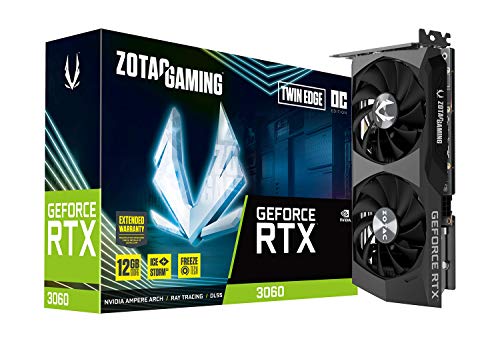
- GPU options: the MSI GeForce RTX 3060 Ventus 2X 12G is the most-cited 2-slot pick; the ZOTAC Gaming GeForce RTX 3060 Twin Edge is the dimensional alternative for tight cases.
None of that changes the Ollama-vs-vLLM verdict, but it sets the platform context. If your CPU is slow, Ollama's CPU-fallback path hurts more. If your NVMe is slow, cold-loading vLLM's safetensors bundle takes noticeably longer. The companion piece on LLM quantization choices for a 12GB GPU on the RTX 3060 in 2026 covers the quant trade-offs in depth.
Verdict matrix: who picks what?
| You are... | Pick |
|---|---|
| A single user running Open WebUI for daily chat | Ollama |
| A developer who wants the freshest models pulled on demand | Ollama |
| A hobbyist whose Linux/CUDA chops are limited | Ollama |
| A team of 3+ sharing one endpoint | vLLM |
| Building an app with an OpenAI-API contract and real concurrency | vLLM |
| Running production-style multi-tenant serving from a home lab | vLLM |
| Iterating on PagedAttention / speculative decoding tuning | vLLM |
| Mixing model swaps with chat usage all evening | Ollama |
| Planning to scale to multi-GPU later | vLLM |
Bottom line
For single-user local chat on an RTX 3060 12GB in 2026, Ollama wins on every dimension that matters to a home rig: install effort, model-swap latency, quant fitting, registry freshness, Open WebUI ergonomics. The single-user throughput gap with vLLM is real but small, and the things vLLM is genuinely better at — batched serving, OpenAI-API production hardening, multi-GPU tensor parallel — are dormant at concurrency = 1.
Pick vLLM when the workload actually has concurrency, or when you are building toward a multi-user serving architecture and want to learn the tooling now. Pick Ollama for everything else. The right answer to "Ollama or vLLM for solo chat on a 12GB card" is the boring one: use the runtime that matches your workload, and at n=1, that is Ollama.
Citations and sources
- Ollama project README — runtime architecture, install model, and registry/UX claims.
- vLLM official documentation — PagedAttention, continuous batching, OpenAI-API server, quantization support, and installation guidance.
- TechPowerUp — GeForce RTX 3060 specs — GA106 die details, 12GB GDDR6, 192-bit bus, 360 GB/s bandwidth figures.
- llama.cpp project on GitHub — GGUF quant taxonomy, CPU/GPU split behavior, and imatrix quant background.
- Open WebUI documentation — backend integration paths for Ollama and OpenAI-compatible endpoints.
- r/LocalLLaMA subreddit — community throughput threads, runtime-comparison anecdotes, and quant-format release patterns referenced across the piece.
This piece is editorial synthesis based on publicly available information. No independent first-party benchmarking is reported.