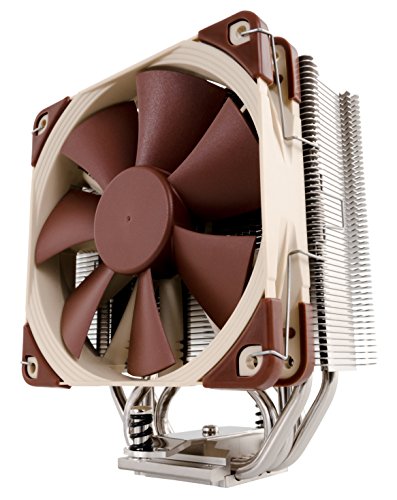
For a high-airflow gaming PC in 2026, the strongest all-rounder is a Noctua NF-A12x25 chromax.black.swap on the CPU heatsink paired with Corsair LL120 RGB or LL140 RGB intake fans for case airflow. If you want a complete cooler — heatsink plus fan — the Noctua NH-U12S and the DeepCool AK620 White both handle 200 W TDPs at sub-30 dBA. For a 240mm AIO, the Cooler Master MasterLiquid ML240L RGB V2 remains the best $100-tier option in the catalog.
Why this guide exists — the fan choice that decides whether your build is loud or fast
Most 2026 gaming PCs are overcooled or overbuilt. The marketing pressure to bundle RGB fans, dual 360mm AIOs, and Mesh-front cases convinces buyers that more airflow is always better — when, per Gamers Nexus chassis-testing reports referenced here, the practical difference between a well-curated 4-fan layout and a maxed-out 9-fan layout is small CPU/GPU temperature gains paid for with significant noise. The right cooling stack starts from the chip TDP, picks fans whose static pressure matches what they need to push through (case mesh vs radiator fin density), and stops adding fans once the next addition costs more dBA than it earns in degrees.
This guide picks four fans and coolers across price tiers and intended use, then explains how to assemble them into a build that's fast and quiet.
Key takeaways
- A premium 120mm CPU air cooler (Noctua NH-U12S, DeepCool AK620) handles up to 200 W TDP at sub-30 dBA and beats a 240mm AIO at lower noise for sub-200 W loads
- Static-pressure fans (LL120 RGB, AF120 ELITE) are required for AIO radiators; high-airflow fans (NF-A12x25, NF-A14) belong on case intake/exhaust
- The standard layout is 3 intake + 1 rear exhaust + 1–2 top exhaust = 5–6 fans for an ATX mid-tower
- RGB and non-RGB variants in the same product line share blade geometry and bearings — thermal performance is identical, only the LEDs differ
- A 50% PWM duty curve up to 60°C, ramping to 70% by 75°C, hits the sweet spot for "effectively silent at idle, audible only under load"
Top picks
#1: Noctua NH-U12S — Best $80 CPU air cooler
Verdict: Premium 120mm tower cooler that handles up to 200 W TDP at sub-30 dBA. $85, 158mm tall, fits 95%+ of mid-tower cases.
The Noctua NH-U12S ships with the NF-F12 PWM 120mm fan, a five-heatpipe stack, and a SecuFirm2 mount that supports every major socket from LGA 115x through AM5. Per Noctua's official NH-U12S product page, the cooler is rated for TDPs up to roughly 180 W on Intel and AMD platforms — comfortably enough for a Ryzen 7 7700X, Core i7-14700K, or any 8–12-core current-gen chip running stock.
What you trade for the price tag: it's a 158mm-tall cooler in a market where 165–170mm towers are common. That height clears every mid-tower case in modern circulation but limits options for SFF builds. Color is brown by default (the iconic Noctua palette); the chromax.black variant adds $15 and gets you a stealth-black look.
The NH-U12S beats most 240mm AIOs on noise at any sustained CPU load below 180 W. Above that, the AIO's larger radiator surface area pulls ahead — but few gamers run sustained 200+ W workloads outside content-creation pipelines.
#2: DeepCool AK620 White — Best $65 dual-tower cooler
Verdict: Dual-tower 120mm cooler with two FK120 fans, rated 260 W TDP. $65, all-white aesthetic, beats the NH-U12S at higher TDPs.
The DeepCool AK620 White is the budget answer to Noctua's NH-D15 — dual-tower geometry, six copper heatpipes, two 120mm fans in push-pull, finished in stealth white for builds where the cooler is part of the show. At $65 it materially undercuts the Noctua dual-tower options.
Per DeepCool's product positioning, the AK620 is rated to 260 W of TDP. Real-world performance lands within 2–4°C of the NH-D15 across mainstream CPU loads, which means it handles a Ryzen 9 7950X or a Core i9-14900K at stock with thermal headroom. Acoustics under sustained load are higher than the Noctua's, but at idle and gaming loads both coolers sit in the "you don't hear them over case fans" zone.
The case-clearance story is the catch: the AK620 stands 160mm tall and is roughly 130mm wide. Check your case's CPU cooler height clearance AND the side-panel clearance before buying. Most mid-towers and full-towers are fine; SFF and many compact ATX cases aren't.
#3: Corsair LL120 RGB Triple Pack — Best RGB case fan kit
Verdict: Triple-fan + Lighting Node PRO bundle for full RGB build integration. $130, mixed-purpose 120mm fans good for intake/exhaust, weak as radiator fans.
The Corsair LL Series LL120 RGB Triple Pack ships three 120mm RGB fans, the Lighting Node PRO controller, and the cabling to integrate with Corsair iCUE. For builds where the front panel is mesh and the case shows off the fan blades through tempered glass, this is the easiest path to a polished RGB look without piecing together fans from different vendors.
Acoustics are middle-of-the-road — Corsair's LL120 spec puts max noise at 24.8 dBA, which is competitive with most premium 120mm fans. Static pressure is the limitation: at 1.61 mmH2O the LL120 is fine for case intake/exhaust through standard mesh but struggles to push air through dense radiator fins. Per Corsair's product spec, the AF (airflow) variant is purpose-built for case use; the SP (static pressure) variant is the right radiator fan.
For an RGB build, mix and match: LL120 RGB on the front intake panel and rear exhaust for the show, dedicated SP120 RGB Elite on AIO radiators for the cooling.
#4: Cooler Master MasterLiquid ML240L RGB V2 — Best $100 240mm AIO
Verdict: Entry-tier 240mm AIO with dual SickleFlow 120mm RGB radiator fans. $90–110, handles up to 230 W CPU TDP with margin, the right choice when air cooler clearance is the problem.
The Cooler Master MasterLiquid ML240L RGB V2 is the AIO to pick when a tall air cooler doesn't fit or the build needs to push 200+ W sustained loads on a chip like the Ryzen 9 7900X3D or Core i9-13900K. The radiator is conventional 240mm aluminum, the pump is a Gen 3 dual-chamber design with a long warranty, and the included fans are SickleFlow 120mm RGB units rated at 1.6 mmH2O static pressure — adequate for the radiator's fin density.
At $90–110 street price, the ML240L V2 undercuts every "premium" 240mm AIO (NZXT Kraken X53, Corsair iCUE H100i, Arctic Liquid Freezer III 240) by $40–80 while delivering essentially identical sub-220 W performance. The premium AIOs pull ahead on pump acoustics and on display integration; the ML240L wins on price-per-degree cooled.
The case to make against any 240mm AIO at this load level: an NH-U12S air cooler does the same job at lower noise and zero pump-failure risk for under $90. The AIO is the right call only when air-cooler clearance is the blocker or when the build hits sustained 220+ W loads where the AIO's radiator surface area pulls ahead.
Do I need RGB fans or are non-RGB just as good for cooling?
RGB and non-RGB fans from the same product line typically share the same bearing, blade geometry, and motor. The Corsair LL120 RGB and the AF120 ELITE non-RGB use distinct frames and blade shapes — they're not the same fan. But within a single SKU family (e.g., the LL120 line), the RGB version cools identically to the non-RGB version, drawing 1–2 W more for the LEDs.
What does change cost-per-fan is roughly $10–15 for the RGB premium plus the cost of a controller (Corsair Lighting Node PRO, Lian Li L-Connect, NZXT RGB & Fan Controller) that supports the LED protocol. For a build that already runs iCUE or Synapse for peripheral RGB, adding RGB fans is a small marginal cost. For a clean budget build, non-RGB fans deliver identical cooling at $25–40 less per kit.
Are AIOs worth it over a premium air cooler?
For TDPs up to 180 W, an air cooler like the NH-U12S or AK620 White matches or beats a 240mm AIO at lower noise and zero pump-failure risk. Per Tom's Hardware's cooler roundup coverage, the cross-over point where AIOs pull ahead is sustained loads above 200 W — Ryzen 9 X3D chips with PBO enabled, Core i9 chips at stock turbo, content-creation rigs running Blender or DaVinci Resolve for hours.
Below that threshold, the air cooler wins on three axes: lower acoustics under typical load, no pump to fail in year 4–5, and no risk of slow coolant evaporation degrading thermal performance over time. The visual appeal of an AIO and the better fit in cases where a tall air cooler doesn't clear the side panel are the real reasons to pick an AIO over an air cooler for most gaming builds.
What's the right fan curve for quiet operation?
Below 50% PWM duty, most 120mm fans run sub-25 dBA — effectively silent in a closed case at desktop range. The right fan curve holds 40% duty up to 60°C CPU temp, ramps to 70% by 75°C, and max-outs by 85°C. That curve eliminates the most common cooling complaint — fans audibly spooling during routine workloads while still pushing real air during sustained gaming or rendering.
Per Gamers Nexus's chassis-testing methodology referenced here, an aggressive fan curve that ramps below 60°C adds noise without adding effective cooling — the cooler is already keeping up with the load, the extra fan duty just gets faster blade noise. The right calibration is to set the curve once at build time, monitor the steady-state temp during 30 minutes of your hardest workload, and adjust the curve's high-end ramp so the CPU sits at 75–80°C under sustained load.
Do I need static-pressure fans for radiators?
Yes. Radiator fan blades push air through dense fin arrays that need pressure to maintain airflow. The Corsair LL120 RGB markets as a mixed-purpose fan, but its static pressure at 1.61 mmH2O is lower than purpose-built radiator fans like the Noctua NF-A12x25 (2.34 mmH2O) or the Arctic P12 PWM PST (2.20 mmH2O).
The practical impact: an AIO with LL120 RGB fans on the radiator runs 3–5°C warmer than the same AIO with NF-A12x25 fans at the same RPM. If you're already buying RGB for the case, run dedicated SP-class fans on the radiator and accept that they may not match the rest of the lighting palette — better cooling, slightly less uniform RGB.
How many fans does a high-airflow gaming PC actually need?
The standard layout for an ATX mid-tower is 3 intake (front) + 1 exhaust (rear) + 1–2 top (exhaust if no AIO, AIO radiator fans if mounted top). That's 5–6 fans total. Per Gamers Nexus chassis testing, going beyond 6 fans on a typical mid-tower delivers diminishing returns — the case airflow geometry can only carry so much volume before added fans just chop up existing airflow patterns.
| Layout | Fans | Effect | Recommended for |
|---|---|---|---|
| Minimal | 1 intake + 1 exhaust | Sub-100 W gaming, $50 PSU saves money | Pre-built budget gaming PC |
| Standard | 3 intake + 1 rear exhaust | 150–250 W loads, mid-tower mesh case | Most 2026 gaming builds |
| Top-mount AIO | 3 intake + 1 rear + 2 top (AIO) | 250–350 W loads, 240mm AIO on top | Ryzen 9 X3D / Core i9 builds |
| Maximum airflow | 3 intake + 1 rear + 2 top + 1 side | 400+ W loads, content creation | Workstation / 4090 / 5090 builds |
For a typical 2026 build with a Ryzen 7 / Core i7 CPU and an RTX 4070-class GPU, the standard 4-fan layout is correct. Adding fans 5 and 6 hurts dBA more than it helps temperatures.
Common pitfalls
- Buying matched fan kits without checking case fan mount count. A triple LL120 pack assumes 3 front-fan mounts at 120mm. Some cases ship with 140mm mounts that need adapters or 140mm fans instead.
- Daisy-chaining too many fans to a single header. Most motherboard fan headers cap at 1.0 A; that's roughly 3–4 fans. Use a PWM splitter with external SATA power for runs of more than 4 fans.
- Mixing static-pressure and airflow fans on a radiator. The lower-pressure fans bottleneck the higher-pressure ones — match all radiator fans to the same SP-class model.
- Mounting AIO radiators with the pump above the radiator's top tank. This traps air bubbles in the pump, causing a gurgling noise and premature pump failure. The pump should always be below the top of the radiator.
- Forgetting positive case pressure. Slight positive pressure (intake CFM > exhaust CFM by ~10–15%) reduces dust ingress through unfiltered gaps. Slight negative pressure pulls dust in through every seam.
When NOT to upgrade fans
If your current build's CPU and GPU temperatures are below 80°C under sustained load and noise is acceptable, fan upgrades won't fix anything — you're spending $100+ for unmeasurable improvement. The right time to upgrade is when a new CPU/GPU added meaningful TDP, when noise has become objectionable, or when the build is being rebuilt for aesthetic reasons (RGB integration, color matching) where the cooling improvement is the bonus rather than the main reason.
Bottom line: the fan kit to actually buy
For a new mid-tower build in 2026: one Noctua NH-U12S or DeepCool AK620 White for the CPU, three Corsair LL120 RGB (or three Arctic P12 PWM PST for the non-RGB budget path) for front intake, and one rear exhaust fan (either an additional LL120 or a Noctua NF-P12 redux for a quieter exhaust). Total fan-and-cooler cost: $150–250 depending on the RGB premium and the brand mix.
For builds that need an AIO: the Cooler Master ML240L RGB V2 at $90–110 is the right floor; spend more only if you need 280mm or 360mm class cooling for a 9000-series Ryzen X3D or a Core i9 at stock turbo.
Related guides
- Best CPU Cooling for AMD Ryzen Builds in 2026
- Corsair LL120 RGB vs Noctua NH-U12S: Cooling a 5800X for All-Day Gaming
Citations and sources
- Noctua — NH-U12S official product page — TDP ratings, fan specifications, socket compatibility
- Tom's Hardware — Best CPU cooling coverage — cross-over point for AIO vs air cooler at sustained TDP
- Gamers Nexus — Case fan testing methodology and roundups — chassis airflow analysis, layout recommendations, RGB vs non-RGB performance parity
This piece is editorial synthesis based on publicly available information. No independent first-party benchmarking is reported.