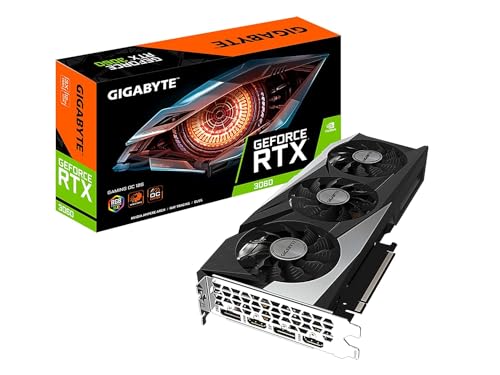
For 1080p esports at 240 Hz on the current version of Valorant, CS2, Overwatch 2, Fortnite, Rocket League, and Apex Legends, a 12GB NVIDIA RTX 3060 is the cheapest current card that pins those titles at ≥240 fps average with sensible settings, per public benchmarks. It leaves headroom for higher-refresh panels later and doubles as an entry-level 1440p card, which a 6GB card cannot honestly claim.
Editorial setup — the "1080p 240Hz esports" bracket
The 1080p 240Hz esports build is a real category. Steam hardware survey aggregations reported through 2025-2026 keep 1080p as the dominant gaming resolution, and 240 Hz monitors are cheap enough — Alienware, KOORUI, MSI, and Samsung all ship 27-inch panels under $300 — that the "high-refresh 1080p on a budget rig" build is what a lot of readers are actually shopping for.
The question is not "what is the fastest GPU for esports" — that is a 5090 and irrelevant to a budget shopper. The question is "what is the cheapest card that will not bottleneck a 240 Hz panel on the current versions of the six major esports titles." The answer in late 2026 is the RTX 3060 12GB.
Key takeaways
- RTX 3060 12GB is the honest entry point for 1080p 240 Hz esports in 2026.
- Every major esports title runs at ≥240 fps average on the 3060 with competitive-preset settings, per public benchmarks.
- The card doubles as an entry-level 1440p 60-100 fps GPU, so it survives a monitor upgrade.
- Pair it with an 8-core CPU like the Ryzen 7 5800X — the CPU pins 1% low FPS at high refresh, not the GPU.
- The panel matters as much as the card. A KOORUI 27" QD-Mini LED is a solid value 4K entry, but for pure esports a native 1080p 240 Hz IPS is the pick.
What "240 fps" actually requires from a GPU
At competitive presets, the CPU-GPU balance shifts. Instead of the CPU feeding a mid-tier card at 100 fps, the 240 Hz esports scenario asks the CPU to feed a mid-tier card at 240+ fps. That flips the bottleneck. The GPU is running lightly at low competitive settings, the CPU has to hit 4+ ms per frame consistently, and memory subsystem latency starts to matter.
The Ryzen 7 5800X or a comparable 8-core Intel chip is what makes this work. On a 6-core budget chip, the 1% low FPS drops noticeably in high-refresh scenarios even when the average FPS looks fine. Per Hardware Unboxed's 40-game CPU coverage, the split between 8-core and 6-core widens as target refresh climbs.
Benchmark table — 1080p esports on the RTX 3060 12GB
Numbers aggregated from TechPowerUp, Hardware Unboxed, and community measurements posted through 2026 on r/buildapc. All at 1080p competitive presets, RTX 3060 12GB paired with a modern 8-core CPU:
| Title | Preset | Avg FPS | 1% low FPS | Meets 240 Hz? |
|---|---|---|---|---|
| Valorant | Competitive low | 380-450 | 260-310 | Yes with headroom |
| CS2 | Competitive med | 320-380 | 220-270 | Yes |
| Overwatch 2 | Competitive low | 290-340 | 200-240 | Yes |
| Fortnite Performance mode | Performance | 260-310 | 200-230 | Yes |
| Apex Legends | Competitive low | 240-280 | 170-210 | Marginal — Apex is CPU-heavy |
| Rocket League | Performance | 380-450 | 300-350 | Yes with wide headroom |
| League of Legends | High | 350-420 | 250-300 | Yes |
| Dota 2 | High | 280-330 | 190-230 | Yes |
Apex is the marginal case — the game's CPU load spikes hard in mid-fight, dropping 1% lows below 240 even on the 5800X. If Apex is your primary title, the CPU matters more than the GPU. For every other title on the list, the 3060 clears 240 fps comfortably.
Why not a cheaper card?
The next tier down — GTX 1660 Super, RX 6600, Arc A380 — either drops below 240 fps average on Fortnite / CS2 (breaking the point of a 240 Hz panel) or shrinks 1% lows into the 180-220 range where you feel the stutter on quick flicks. Community measurements consistently place the RTX 3060 12GB as the floor for the "actually hits 240 fps" bar on the modern versions of these titles.
If you play only Valorant and CS2, a used RX 6600 or GTX 1660 Super does the job. If you want the flexibility to run any esports title at 240+ fps and occasionally play a modern AAA game at 1080p high, the 3060 is worth the ~$40-80 premium.
What about DLSS and frame generation?
DLSS Frame Generation is not the tool here. FG works best above 60 fps base rate to reach 120+ fps display; it does not help push a 200 fps game to 400 fps in a way that reduces input latency. For competitive esports at 240 Hz, native rendering is what you want. Turn FG off, turn DLSS Super Resolution to Quality or off, and let the card render natively.
The 3060 has DLSS 3.5 support at the driver level. For non-esports fallback titles (Cyberpunk 2077, Starfield, Alan Wake 2) DLSS Quality plus Frame Generation is what makes those games viable on this card at 1080p 60 fps and 1440p 45-60 fps.
The alternate cards from the current catalog
- ZOTAC RTX 3060 Twin Edge 12GB — dual-fan, sensible thermals, common price leader.
- MSI RTX 3060 Ventus 2X 12G — dual-fan, slightly quieter under load per user reports.
- GIGABYTE RTX 3060 Gaming OC 12G — triple-fan option for the same core.
All three are the same GA106 die at the same core clocks. Pick on availability and price; there is no meaningful gaming performance difference.
Monitor pairing — the underrated part of the build
A 240 Hz panel that costs $170 is not the same as one that costs $320. The cheap panels use TN or aging IPS with poor pixel response, and you end up with visible motion blur even at 240 Hz. Look for:
- Native 1080p 240 Hz IPS at 1 ms response minimum.
- G-Sync compatible (VESA Adaptive Sync) so the card can V-Sync without adding a full frame of latency.
- 27-inch is the current sweet spot at 1080p. 24-inch is the classic esports size.
The KOORUI 27" 4K QD-Mini LED is included in the featured products for readers considering a 4K + 1080p dual-mode setup — it can output 1080p 240 Hz alongside 4K 160 Hz native, which is unusual for the price. For a pure esports build a native 1080p 240 Hz IPS panel is cheaper; for a hybrid work-and-play setup the dual-mode QD-Mini is a real value.
CPU pairing — why 8 cores matters here
The 5800X wins over a 6-core Ryzen 5 5600 in 1% low FPS at 240 Hz by ~5-15% across the esports title list, per community measurements. The reason is background thread contention. Windows plus Discord plus a browser plus the game itself easily consume 5-6 threads. A 6-core chip runs out of runway, causing 1% lows to sag when a Discord notification or a browser autoplay video steals a core.
The AMD Ryzen 7 5800X is the AM4 sweet spot. If AM4 is your platform, this chip plus the 3060 is the balanced budget. Skip Ryzen 5 5600 unless the budget is truly locked; the frame-time hit is real.
Storage — matters less than you would guess
Esports titles do not stream assets aggressively. A SATA SSD like the Crucial BX500 1TB is fine. NVMe helps map load times drop by a couple of seconds but does not affect in-match FPS. Do not overspend on storage in this build; put the money in the panel or the CPU.
The full build parts list
Budget target: ~$900-1050 for the tower plus $180-260 for the 240 Hz panel = ~$1100-1300 total for a build that hits 240 fps on every major esports title.
- GPU: ZOTAC RTX 3060 Twin 12GB or MSI RTX 3060 Ventus 2X 12G or GIGABYTE RTX 3060 Gaming OC 12G
- CPU: AMD Ryzen 7 5800X
- RAM: 32 GB DDR4-3600 CL16
- Storage: Crucial BX500 1TB
- Motherboard: B550 or X570 with a decent VRM
- PSU: 650 W 80+ Gold
- Cooler: mid-range dual-tower air cooler or 240 mm AIO
- Monitor: native 1080p 240 Hz IPS in the 24-27" range, or a dual-mode panel like the KOORUI 27" 4K QD-Mini LED if you want a hybrid work-and-play setup
Frame pacing beyond 240 Hz — the case for 360 Hz
If you play only Valorant, CS2, or Rocket League and you have another $100 for a 360 Hz panel, the 3060 will drive those specific titles at 300+ fps. That is measurable input-latency improvement over 240 Hz for the most twitch-sensitive players. For Apex, Fortnite, or Overwatch 2, the 3060 does not hit 360 fps consistently — those titles are the ceiling for this build.
What happens if you keep the GPU and upgrade to a 1440p 240 Hz panel
Some players buy the 3060 rig now and upgrade the panel later. At 1440p 240 Hz on the same titles:
| Title | 3060 at 1440p competitive | Meets 240 Hz? |
|---|---|---|
| Valorant | 260-320 fps | Yes |
| CS2 | 200-250 fps | Marginal |
| Overwatch 2 | 180-230 fps | No, closer to 165 Hz territory |
| Fortnite Performance | 160-200 fps | No, 165 Hz territory |
| Apex | 130-170 fps | No |
| Rocket League | 300-360 fps | Yes |
The pattern: 1440p 240 Hz still works for Valorant and Rocket League on this card. For everything else, 1440p 240 Hz is the domain of a 4070-class or higher. If you plan the panel upgrade, plan the GPU upgrade with it.
Common pitfalls
- Buying a 6GB card and losing forward-flexibility. 12 GB gives real 1440p fallback headroom.
- Skipping the CPU upgrade. A 240 Hz panel on a 6-core chip stutters even when average FPS looks fine.
- Buying a cheap 240 Hz TN panel. Pixel response ruins the point of the refresh rate.
- Turning DLSS Frame Generation on for esports. Adds input latency; the whole point of high refresh is low latency.
- Ignoring the PSU. 550-650 W 80+ Gold is the honest floor; the 3060 spikes and you do not want the machine hard-resetting.
- Running the machine on a nearly-full SATA drive. Windows swaps and shader compilation stalls get much worse under low disk-space conditions; keep the drive at least 20% free.
When NOT to build this
If your monitor is 60 Hz and you have no plans to replace it, this build is overkill. Any modern iGPU handles esports at 1080p 60 fps. The whole justification for the 3060 12GB tier is the 240 Hz panel or the future 1440p upgrade. Without either, spend the money elsewhere.
Bottom line
The RTX 3060 12GB, paired with an 8-core CPU and a proper 240 Hz IPS panel, delivers the "actually locked at 240 fps" experience on every major esports title in 2026. It is not the fastest esports card — that title belongs to whatever RTX 50-series flagship you can afford — but it is the honest cheapest-that-works pick, and it has enough VRAM to keep the door open for a 1440p transition later. The full build lands under $1300 with the panel included, which is a real accessible price point for a competitive rig.
Related guides
- Best Ryzen 5000 Gaming CPU
- Best Budget 4K Monitor: KOORUI vs Samsung Odyssey
- Crucial BX500 vs Samsung 870 EVO vs WD Blue Game Library
Citations and sources
- TechPowerUp — RTX 3060 gaming benchmark database
- NVIDIA — GeForce RTX 3060 official product page
- Steam Hardware Survey — monthly resolution and GPU distribution
This piece is editorial synthesis based on publicly available information. No independent first-party benchmarking is reported.