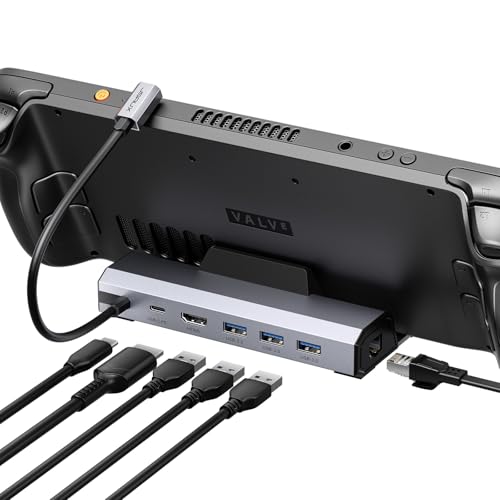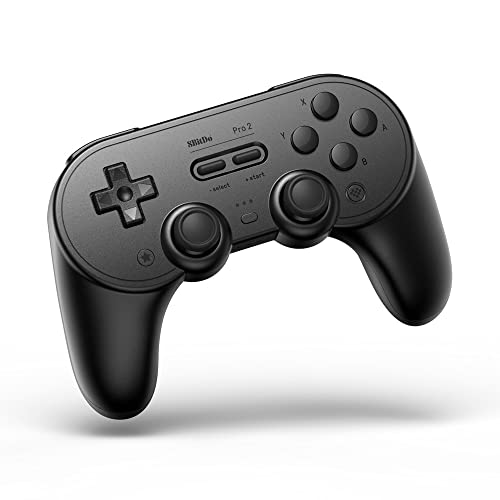
The best Forza Horizon 6 setup on Steam Deck pairs a balanced graphics preset with a 40 FPS cap and matching 40Hz refresh for the smoothest battery-friendly experience, then completes the rig with a 4K dock for living-room play, an external or upgrade SSD for the game's large install, and a full-size controller like the 8BitDo Pro 2 when docked. Forza Horizon 6 is well optimized for the handheld, so you get a great-looking racer on the go and a couch-ready setup when you dock.
Why Forza Horizon 6 shines on Steam Deck
Forza Horizon 6 turned into a Steam Deck darling almost immediately, and the reason is the same optimization that makes it run well on modest desktops. The Steam Deck is a fixed, well-understood target, and a game tuned to stream assets efficiently and scale its settings gracefully fits the handheld perfectly. Players across the community report a genuinely good portable racing experience — sharp enough, smooth enough, and stable enough to play for a full session.
What limits the Deck is not this game's design but the handheld's fundamentals: a power and thermal budget measured in watts, a 1280×800 screen, and finite battery. The art of running Forza Horizon 6 well on Deck is spending that budget wisely — keeping the settings that matter for a racer (texture clarity, draw distance) and trimming the ones that cost the most for the least visible gain (heavy shadows and reflections). Do that, and you get a console-quality racer in your hands.
The other limit is storage. Modern open-world racers carry a large install footprint, and the Deck's base storage fills fast. Planning storage before you install — not after the "disk full" warning — is part of a good Forza-on-Deck setup, which is why this guide treats the dock, the drive, and the controller as part of the package, not afterthoughts.
Key takeaways
- Target a balanced preset with a 40 FPS cap and 40Hz refresh for the smoothest, most battery-efficient Forza Horizon 6 on Deck.
- Lower shadows and reflections first — they cost the most performance for the least visual gain; keep textures higher.
- A 4K dock transforms docked play by adding TV output, wired Ethernet, charging, and controller connectivity.
- Plan storage up front — Forza Horizon 6 is large; an external/upgrade SSD beats filling the base drive.
- Use a full-size controller when docked — the 8BitDo Pro 2 is far more comfortable than handheld controls for long races.
Best Forza Horizon 6 settings: battery vs quality
Community measurements converge on a balanced approach rather than maxing or minimizing everything. The single most effective move is capping the frame rate and matching the screen's refresh, which keeps frame pacing smooth and stops the GPU from burning watts chasing frames you cannot see.
| Setting area | Battery-first | Quality-first | Notes |
|---|---|---|---|
| FPS cap / refresh | 40 FPS / 40Hz | 40-50 FPS | 40/40 is the sweet spot for smoothness + battery |
| Shadows | Low | Medium | Biggest performance cost; trim first |
| Reflections | Low | Medium | Expensive; little visible gain in motion |
| Textures | Medium-High | High | Cheap on VRAM-light scenes; keep these up |
| Upscaling | Quality/Balanced | Quality | Recovers performance with minimal blur |
Because Forza Horizon 6 is well optimized for the handheld, you can keep textures higher than usual without trouble. Start from a balanced preset, apply the 40/40 cap, drop shadows and reflections, and tune from there to your taste between battery life and image quality.
What FPS does it hit, and how do you keep it stable?
The realistic, comfortable target on Deck is a locked 40 FPS, which feels noticeably smoother than 30 and is far more sustainable on battery than chasing 60. Stability matters more than peak numbers in a racer — a steady 40 is better than a 30-to-55 swing that makes the car feel inconsistent.
| Goal | Approach | Result |
|---|---|---|
| Smoothest feel | 40 FPS cap + 40Hz | Stable pacing, good battery |
| Max battery | 30 FPS cap + 30Hz | Longest sessions, less fluid |
| Max fluidity | 50-60 FPS uncapped | Higher drain, more variance |
Keep it stable by capping FPS, matching refresh, using upscaling at Quality, and keeping shadows/reflections low so dense scenes do not tank the frame rate. We track Deck-specific Forza coverage in our Forza Horizon 6 Steam Deck news roundup, and the desktop GPU picture in our best GPU for Forza Horizon 6 guide.
Does docking help, and which dock?
Docking does not raise the Deck's internal GPU performance — raw frame rate at the same settings is similar to handheld — but it transforms the experience for living-room play. A dock outputs to a TV or monitor, connects a wired controller and Ethernet, and charges while you play. For a racing game that looks fantastic on a big screen, docking plus a gamepad is the ideal couch setup.
The featured JSAUX 4K Docking Station covers the essentials: 4K output, USB ports for peripherals, wired Ethernet for stable online play, and pass-through charging. One caution worth setting expectations on: if you raise the output resolution to match a 4K TV, you may need to lower settings or lean on upscaling to hold a stable frame rate, because the Deck's GPU is doing the same work regardless of the panel it feeds. Keep the render resolution sensible and let the TV's scaler do the rest. The official Steam Deck store page lists dock compatibility details.
How much storage does Forza Horizon 6 need, and how do you add it?
Plan for a large install. Forza Horizon 6, like other modern open-world racers, occupies a big chunk of storage, and the Deck's base capacity fills quickly once you add a few titles. You have two expansion paths:
- microSD card — the convenient route; cheap and easy, though slower than internal storage. Fine for many games.
- External SSD (docked) or internal SSD upgrade — the best speed and capacity per dollar. A drive like the SanDisk Ultra 3D in a USB enclosure works well when docked, and an internal M.2 2230 upgrade is the cleanest permanent fix.
For a game that benefits from fast asset streaming, an SSD is the better long-term answer than a slow card. We compare Deck storage options in detail in our best SSD for Steam Deck and Steam Deck / ROG Ally SSD upgrade guides. The WD Blue SN550 is a solid value NVMe choice if you are building external fast storage for a docked setup.
Best controller when docked
When the Deck is docked, you are effectively playing on a PC, and a full-size gamepad is far more comfortable than the handheld's built-in controls for long racing sessions. The 8BitDo Pro 2 is a strong match: a comfortable grip, back paddles for extra bindings, and reliable wireless. Pair it over Bluetooth or the included 2.4GHz receiver and remap as needed in Steam Input. Our best controller for docked Steam Deck guide covers the alternatives.
Accessory comparison
| Accessory | Role | Key spec | Best for |
|---|---|---|---|
| JSAUX 4K Dock | TV output + charging | 4K, USB, Ethernet | Living-room play |
| SanDisk Ultra 3D SSD | External storage | SATA, 1TB | Expanding a big library |
| WD Blue SN550 | NVMe storage | PCIe, 1TB | Fast external/upgrade storage |
| 8BitDo Pro 2 | Docked controller | Wireless + paddles | Comfortable long sessions |
Perf-per-watt: tuning for battery life
The Deck's whole appeal is portability, so battery life is a real performance metric. The 40 FPS / 40Hz cap is the highest-leverage setting because frames you do not render are watts you do not spend. Lowering shadows and reflections trims GPU load further, and capping the TDP in the Deck's performance overlay can extend a session significantly with little visible cost in a well-optimized game like this one. Handheld-first players should tune aggressively for battery; docked players plugged into the wall can relax those limits.
Common pitfalls Steam Deck players hit with Forza Horizon 6
- Chasing 60 FPS on battery. It drains the Deck fast and the frame rate is hard to hold. A locked 40 FPS at 40Hz feels smoother and lasts far longer.
- Leaving shadows and reflections high. These are the most expensive settings for the least visible gain in motion. Drop them first; keep textures up.
- Installing to the base drive and running out of space. Forza Horizon 6 is large. Plan a microSD or SSD before you install, not after the "disk full" warning.
- Cranking output resolution when docked. A 4K TV does not make the Deck's GPU faster — pushing native 4K tanks the frame rate. Keep render resolution sensible and let upscaling and the TV's scaler do the work.
- Using the handheld controls for long docked sessions. Once docked, a full-size pad is far more comfortable for extended racing.
A worked setup: handheld and docked from one Deck
Here is a setup that covers both modes without compromise. On the go, run the balanced preset with a 40/40 cap, low shadows and reflections, Quality upscaling, and a TDP limit to stretch battery — you get a smooth portable racer for a couple of hours per charge. At home, drop the Deck into the JSAUX 4K dock connected to your TV and wired Ethernet, pair the 8BitDo Pro 2, and keep the render resolution modest so the frame rate stays locked on the big screen. Store the game on a roomy external WD Blue SN550 or SanDisk Ultra 3D so your base storage stays free for other titles. The same Deck becomes a portable console and a living-room racing rig depending on which dock you walk up to.
Perf-per-dollar: which accessory to buy first
If you can only buy one accessory, buy storage — running out of space stops you playing entirely, and an SSD also speeds asset streaming. The dock is the next-best spend for anyone who wants couch play, since it unlocks the TV, wired networking, and charging in one purchase. A controller is the finishing touch that makes docked sessions comfortable. Spending in that order — storage, dock, controller — gets you the most usable improvement per dollar for Forza Horizon 6 on Deck.
Verdict matrix
- Handheld-first setup: balanced preset, 40/40 cap, low shadows/reflections, Quality upscaling, microSD or internal SSD. Maximize battery and portability.
- Docked living-room setup: JSAUX 4K dock, 8BitDo Pro 2, external SSD, sensible render resolution with upscaling for the TV. Maximize comfort and screen size.
Bottom line
Forza Horizon 6 is one of the best racing experiences on Steam Deck because it is genuinely well optimized — apply a balanced preset with a 40/40 cap, trim shadows and reflections, and you have a smooth portable racer. Complete the setup based on how you play: a 4K dock and full-size controller for the couch, and an SSD planned up front so the game's large install does not leave you deleting titles to make room.
A note on updates and Proton
One reason Forza Horizon 6 runs so well on Deck is the maturity of Proton, Valve's compatibility layer that lets Windows games run on the Deck's Linux-based SteamOS. Keep SteamOS and Proton current, because driver and compatibility-layer updates frequently improve performance and fix stutters in popular titles over their first months on the platform. If a game update or a Proton change shifts performance, revisit your settings — the 40/40 target is a stable starting point, but the optimal preset can move slightly as the software stack matures. Checking the community's current recommended settings after a major patch takes a minute and can recover lost frames. This is the handheld equivalent of keeping GPU drivers updated on a desktop, and it is worth the small habit for a game you will return to often.